



الصفحة 1
الصفحة 1
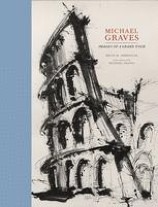
Michael Graves : Images of a grand tour
Michael Graves: Images of A Grand Tour collects for the first time the stunning artwork produced during this trip. Delicate pencil sketches, striking ink washes, and colorful photographs show the deep connection Graves had to the places he visited, from the Roman Forum to the Grecian Acropolis to Wiltshires Stonehenge. They also tell something of the education of an architect, bringing to light the classical buildings that caused Graves to reexamine his early devotion to modernism. A foreword by Graves reflects on these travels from the distance of forty years

Icons of Space : Advances in Hierotopy
Brings together important scholars of Byzantine religion, art, and architecture, to honour the work of renowned art historian Alexei Lidov. As well as his numerous publications, Lidov is well known for developing the concept of hierotopy, an innovative approach for studying the creation of sacred spaces. Hierotopy and the related concepts of ‘spatial icons’ and ‘image-paradigms’ emphasize fundamental questions about icons, including what defines them as structures, spaces, and experiences.

History of Science, History of Text
This book explores the hypothesis that the types of inscription or text used by a given community of practitioners are designed in the very same process as the one producing concepts and results. The book sets out to show how, in exactly the same way as for the other outcomes of scientific activity, all kinds of factors, cognitive as well as cultural, technological, social or institutional, conjoin in shaping the various types of writings and texts used by the practitioners of the sciences. To make this point, the book opts for a genuinely multicultural approach to the texts produced in the context of practices of knowledge
From Summetria to Symmetry : The Making of a Revolutionary Scientific Concept
The concept of symmetry is inherent to modern science, and its evolution has a complex history that richly exemplifies the dynamics of scientific change. This study is based on primary sources, presented in context: the authors examine closely the trajectory of the concept in the mathematical and scientific disciplines as well as its trajectory in art and architecture. The principal goal is to demonstrate that, despite the variety of usages in many different domains there is a conceptual unity underlying the invocation of symmetry in the period from antiquity to the 1790s which is distinct from the scientific usages of this term that first emerged in France at the end of the 18th century.

Fading Foundations : Probability and the Regress Problem
This book addresses the age-old problem of infinite regresses in epistemology. How can we ever come to know something if knowing requires having good reasons, and reasons can only be good if they are backed by good reasons in turn? The problem has puzzled philosophers ever since antiquity, giving rise to what is often called Agrippa's Trilemma. The current volume approaches the old problem in a provocative and thoroughly contemporary way. Taking seriously the idea that good reasons are typically probabilistic in character, it develops and defends a new solution that challenges venerable philosophical intuitions and explains why they were mistakenly held. Key to the new solution is the phenomenon of fading foundations, according to which distant reasons are less important than those that are nearby.

Executing magic in the modern era : Criminal bodies and the Gallows in popular medicine
This book explores the magical and medical history of executions from the eighteenth to the early twentieth century by looking at the afterlife potency of criminal corpses, the healing activities of the executioner, and the magic of the gallows site. The use of corpses in medicine and magic has been recorded back into antiquity. The lacerated bodies of Roman gladiators were used as a source of curative blood, for instance. In early modern Europe, a great trade opened up in ancient Egyptian mummies and the fat of executed criminals, plundered as medicinal cure-alls. However, this is the first book to consider the demand for the blood of the executed, the desire for human fat, the resort to the hanged man’s hand, and the trade in hanging rope in the modern era. It ends by look at the spiritual afterlife of dead criminals.

Early Islamic Art, 650-1100 : Constructing the Study of Islamic Art ; Vol. I : Variorum Collected Studies
Represent major contributions to the understanding of the formative centuries of Islamic art, focusing on the Umayyad (661-750) and Fatimid (969-1171) dynasties in Greater Syria and in Egypt, and on the Mediterranean or Iranian antecedents of early Islamic art. Historical, cultural, and religious themes, including the role of court ceremonies, the growth of cities, and the importance of the Qur'an, are introduced to help explain how a new art was formed in the central lands of the Near East and how its language can be retrieved from visual or written sources.

Claude-Nicolas Ledoux : Architecture and uopia in the era of the French revolution
Claude-Nicolas Ledoux (1736-1806) is today regarded as chief representative of French revolutionary architecture. With his extraordinary inventiveness he projected the architectural ideals of his era. Ledoux's influential buildings and projects are presented and interpreted both aesthetically and historically in this book. His best-known projects - the Royal Saltwords of Arc-et-Senans, the tollgates of Paris, the ideal city of Chaux - reveal the architect's allegiance to the principles of antiquity and Renaissance but also illustrate the evolution of his own utopian language. With the French Revolution, Ledoux ceased building as his contemporaries perceived him as a royal architect. He focused on the development of his architectural theory and redefined the vision of the modern architect

Building Theories : Architecture as the Art of Building
Discusses the content of treatises, essays, articles, and letters by those who have been, throughout history, committed to the art of building. In this, Building Theories argues for the return of a practice of architectural theory that is set amongst building, buildings, and builders. This journey of close reading reinterprets the words of Vitruvius, Alberti, de L’Orme, Le Camus de Mézières, Boullée, Laugier, Rondelet, Semper, Viollet-le-Duc, Hübsch, Bötticher, Berlage, Muthesius, Wagner, Behrendt, Gropius, and Arup. With chapters dedicated to texts from antiquity, the Renaissance, and the nineteenth century, and with a critical eye on architectural theory popularized in the Anglo-Saxon world post-1968, readers are introduced to a wider, more inclusive definition of architectural ideas.
Apprehension and Argument : Ancient Theories of Starting Points for Knowledge
This book offers the first synoptic study of how the primary elements in knowledge structures were analysed in antiquity from Plato to late ancient commentaries, the main emphasis being on the Platonic-Aristotelian tradition. It argues that, in the Platonic-Aristotelian tradition, the question of starting points was treated from two distinct points of view: from the first perspective, as a question of how we acquire basic knowledge; and from the second perspective, as a question of the premises we may immediately accept in the line of argumentation. It was assumed that we acquire some general truths rather naturally and that these function as starting points for inquiry. In the Hellenistic period, an alternative approach was endorsed: the very possibility of knowledge became a central issue when sceptics began demanding that true claims should always be distinguishable from false ones.
Ancient Philosophy of the Self
This volume explores the various ways in which selfhood was approached and conceptualised in antiquity. They also describe how the ancient philosophers understood human agents as capable of causing changes and being affected in and by the world. The themes of persistence, identity, self-examination and self-improvement recur in many of these essays. The articles of the collection combine systematic and historical approaches to ancient sources that range from Socrates to Plotinus and Augustine.
An Introduction to Number Theory
An Introduction to Number Theory provides an introduction to the main streams of number theory. Starting with the unique factorization property of the integers, the theme of factorization is revisited several times throughout the book to illustrate how the ideas handed down from Euclid continue to reverberate through the subject. In particular, the book shows how the Fundamental Theorem of Arithmetic, handed down from antiquity, informs much of the teaching of modern number theory. The result is that number theory will be understood, not as a collection of tricks and isolated results, but as a coherent and interconnected theory. A number of different approaches to number theory are presented, and the different streams in the book are brought together in a chapter that describes the class number formula for quadratic fields and the famous conjectures of Birch and Swinnerton-Dyer. The final chapter introduces some of the main ideas behind modern computational number theory and its applications in cryptography.

An Illustrated Guide to Furniture History
Provides upper-level students and instructors with an alternative visual analytical approach to learning about furniture history from Antiquity to Postmodernism. Following an immersive teaching model, it presents a Nine-Step Methodology to help students strengthen their visual literacy and quickly acquire subject area knowledge. Moving chronologically through key periods in furniture history and interior design, such as the Renaissance, the Arts and Crafts Movement, and Modernism, it traverses Europe to America to present a comprehensive foundational guide to the history of furniture design.
