



الصفحة 1
الصفحة 1

Omega-3 fatty acids : Keys to nutritional health
Argues for the importance of essential nutrients in our diet. Over the last two decades there has been an explosion of research on the relationship of Omega-3 fatty acids and the importance of antioxidants to human health. Expert authors discuss the importance of a diet rich in Omega-3 Fatty acids for successful human growth and development and for the prevention of disease. Chapters highlight their contribution to the prevention and amelioration of a wide range of conditions such as heart disease, diabetes, arthritis, cancer, obesity, mental health and bone health.

Nutrition in Kidney Disease
The field of kidney disease has evolved over the years to encompass a broad and sophisticated knowledge base. There has been a proliferation of scientific information and technical advances in the field. In Nutrition in Kidney Disease, the authors provide a comprehensive perspective of the emerging science in nutrition in kidney disease. This important book is written by a collaborative group of distinguished dietitians and physicians in the specialized field of kidney disease and clinical nutrition, who have devoted their careers to the care of patients with kidney disease. At the end of key chapters, case studies assess knowledge of the subject within the context of didactic curriculums.
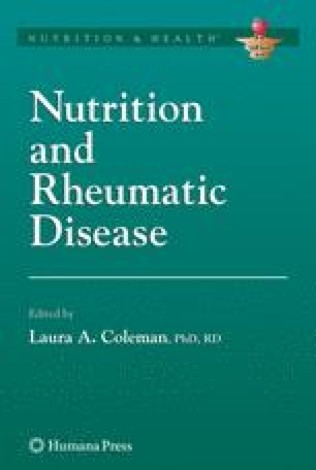
Nutrition and Rheumatic Disease
It is difficult, if not impossible, for health care providers to remain at the forefront of knowledge for all aspects of nutrition and rheumatic diseases. In Nutrition and Rheumatic Disease, experts provide a comprehensive review of current knowledge regarding nutrition and dietary management for the complex set of rheumatic conditions. Within the disease-specific chapters, the authors present a historical perspective, a discussion of the major clinical features, current management and treatment, a review of the literature related to nutritional status and diet, and dietary recommendations, based on current scientific evidence. The field of rheumatic diseases includes a wide variety of pathologic processes. Adequate reviews of the scientific literature on each of the rheumatic diseases in Nutrition and Rheumatic Disease alleviate the inherent confusion surrounding the risks and benefits of various dietary therapies.

Nutraceuticals in obesity management and control
Provides detailed information on nutraceuticals that can be helpful in the control and management of obesity. It clarifies key aspects of nutraceuticals that include sources, extraction, chemistry, mechanisms of action, pharmacology, bioavailability, safety, and various applications. Beginning with a concise overview of the prevalence of obesity, complications related to obesity, and current treatment regimens, the volume delves into the roles of functional foods and nutraceuticals for the management of body weight and for alleviating obesity comorbidities. It goes on to discuss the effect of some of the most commonly and frequently used naturally occurring nutraceutical substances, along with their mechanisms of action in controlling obesity. The volume looks at the role of nutraceutical fruits as well as the beneficial aspects of carotenoids in fruits and vegetables and explores antioxidant-rich nutraceuticals, the role of vitamins and supplements, the use of green tea, and the potential of pseudocereals and spices in the management of metabolic syndrome.

Nutraceuticals in arthritis and psoriasis : Management and prevention of diseases
Explores plant-derived nutraceuticals that can be used as crucial therapeutic tools in the prevention and treatment of arthritis and psoriasis, providing detailed information on the use of plant-derived nutraceuticals, such as microalgae and other marine botanicals, omega polyunsaturated fatty acids, glucosamine and chondroitin sulphate, plant-based gum, vitamins and oils, probiotic supplements, and others in the treatment and management of arthritis and psoriasis. The book relates the recent scientific evidence on the effectiveness of each of these nutraceutical treatments, offering case studies, results of clinical studies, and more.

Novel Drug Delivery Systems for Chinese Medicines
Describes the essential and cutting-edge concepts based on the frontier of pharmaceutical research in TCM, underlying scientific principles, and current advancements of drug delivery systems for Chinese medicines, including sustained-release drug delivery systems, trans-nasal drug delivery systems, dermal and transdermal drug delivery systems, etc. Novel carriers and emerging technologies (such as 3D printing) are also covered. The book provides readers with an overall picture of drug delivery systems for Chinese medicines and also yields benefits for the pharmaceutical industry with regard to TCM-based drug development.

New approach to deal with fibromyalgia
You must have walked once among the colorful fields of flowers, enjoying their colors, aromas and touches, but have you ever thought that these beautiful creatures could contain many constituents that have healing properties and be one day a part of your therapy ! Aromatherapy is a holistic healing treatment that uses natural plant extracts to promote health and well-being; it is used in the management of many diseases including a very common syndrome nowadays: Acute or chronic stress/ pain in localized body spots may trigger or aggravate symptoms knowon as fibromyalgia (FM). In this research we're going to discuss this syndrome which is very widespread, but rarely well-diagnosed and associated with many complex and unclear mechanisms. A new approach to deal with FM will be introduced to you subsequently.

Modern medicines from plants : Botanical histories of some of modern medicine’s most important drugs
Features information on plants from which we obtain modern prescription medicines. It outlines their historical uses as herbal medicines in the past two millennia, using primary sources, and describes how extracts from them, and their semisynthetic and synthetic derivatives, were developed to be today’s therapeutic drugs and diagnostic chemicals. This book describes medicinal plants and their habitats, the diseases that their medicines treat, and the science of how they work.
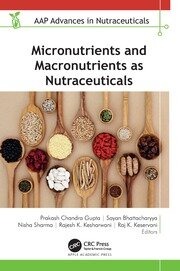
Micronutrients and macronutrients as nutraceuticals
Explains in detail the properties of micronutrients and macronutrients and their diverse uses as nutraceuticals for their beneficial properties, such as their antioxidant activity and immunity-boosting properties and how they can be incorporated into the human diet for optimum health, for growing beneficial bacteria in the gut, and inhibition of pathogens. Interestingly, the authors look at how disease-promoting habits often unfold in childhood, even prenatally, and employing nutrigenomics early on goes a long way toward curbing these chronic diseases later on in life.

Medicinal plants : From farm to pharmacy
Discuss current research on medicinal plants that connects traditionally accumulated botanical wisdom with current bioprospecting trends and (pre-clinical studies Provide an account of recent research activities on select medicinal plants from various phytogeographical regions all over the world Cater to the interest of a wide range of readers including lay enthusiasts, traditional practitioners as well as research and clinical professionals
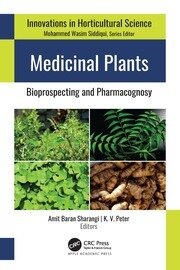
Medicinal plants : Bioprospecting and pharmacognosy
Touches on a diverse selection of topics related to medicinal plants. Chapters look at the use of medicinal plants in healthcare and disease management, such as to treat inflammation, anti-hyperglycemia, and obesity and as immunity boosters. The authors also address the conservation, maintenance, and sustainable utilization of medicinal plants along with postharvest management issues. Topics include consumption, supply chain, marketing, trade, and future directions of research. Some specific plants discussed include fennel, basil, clove, ginger, lavender, turmeric, ginsing, and asparagus in connection with their various therapeutic properties, including anti-rheumatic, anti-asthmatic, anti-diabetic, carminative, diuretic, fever-reducing, and hypotensive. Medicinal Plants: Bioprospecting and Pharmacognosy will prove informative for scientists and researchers in medicinal plants as well as for faculty and students, pharmaceutical researchers, and others.

Irritable Bowel syndrome I.B.S
Irritable bowel syndrome (IBS) is a chronic gastrointestinal disorder with a range of symptoms that significantly affect quality of life for patients. Is currently one of the most common disorders of the digestive system in the Western society? Almost 2 out of 10 people suffer from IBS, and it is associated with abdominal pain, bloating and altered stool consistency and imposes a heavy burden for the affected patients. The difficulty of differential diagnosis and its treatment may significantly delay initiation of optimal therapy. Hence, persons with IBS often self-treat symptoms with non-prescribed pharmacological regimens and/or complementary and alternative medicines (CAM) and by modifying diet and daily activities.
Integrative Pain Medicine : The Science and Practice of Complementary and Alternative Medicine in Pain Management
This important book fills a need in the developing area of Pain Medicine, providing physicians with an up-to-date resource that would detail the current understanding about the basic science underlying the mechanism of action of the various CAM therapies used for pain, summarizing the clinical evidence both for efficacy and safety, and then end with practical guidelines about how such treatments could be successfully and safely integrated into a Pain practice.
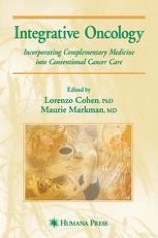
Integrative Oncology : Incorporating Complementary Medicine into Conventional Cancer Care
Integrative Oncology: Incorporating Complementary Medicine into Conventional Cancer Care is a platform from which accomplished professionals describe the various aspects of their programs and present their insights to those seeking to start or improve an integrative oncology program.

Indian Medicinal Plants : An Illustrated Dictionary
This volume lists the taxonomy and medicinal usage of Indian plants. Also given are both traditional Indian and international synonyms along with details of the habitats of the plants. Indian Medicinal Plants. An Illustrated Dictionary is aimed at bringing out an updated Acute Study Dictionary of plant sources of Indian medicine. The text is based on authentic treatises which are the outcome of scientific screening and critical evaluation by eminent scholars.

Herbals of Asia : Prevalent diseases and their treatments
Excellent source of information by identifying hundreds of medicinal herbs and unfolding their medicinal uses for treatment of prevalent diseases Presents recent developments in research on medicinal plants for different diseases, formulation of products, and market strategy Research scholars in relevant field, health practitioners, herbalists and pharmaceutical industries will benefit from the text’s rich list of references as well as plant field photographs Demonstrates the global relevance of sharing local knowledge, and highlights the need to make information on plants available on a worldwide basis

Herbal medicine in India : Indigenous knowledge, practice, innovation and its value
Covers Indian herbal medicines, health products, pharmaceuticals, nutraceuticals, and cosmetics. Highlights the status quo and future prospects of traditional medicine in India / Provides information on drug discovery, ethnobotany, isolation of phytochemicals, importance of herbal nutraceuticals, etc. / Covers innovation, validation and IPR issues related to Indian traditional medicine

Flavonoids as nutraceuticals
Flavonoids are well-known plant metabolites that have extraordinary properties that can be used for treating health issues. The pharmaceutical importance of flavonoids is due to their anti-depressant, anti-viral, anti-inflammatory, and antioxidant capacities. They are also of great importance when it comes to neuroprotection, cardiovascular disorders, and many types of cancer. Flavonoids are also easily available and produce less harmful side effects than some conventional therapeutics. This new volume examines the growing use of flavonoids for prevention and treatment of diseases and discusses their beneficial mechanisms. Chapters in the volume address diverse uses as anti-aging tools, as anti-inflammatory agents, for treating pregnancy-induced disorders, as a promising tool to combat infection of Covid-19, etc. The book explores their specific therapeutic antiviral potentials, the gene expression by flavonoids, and the role of flavonoids in agriculture.

Contemporary Medical Acupuncture : A Systems Approach
Contemporary Medical Acupuncture aims to bridge the gap between classical acupuncture therapy and contemporary medicine to achieve their ultimate integration. Based on updated reviews and systematic analyses, the meridians are actually systems of physiological and pathological reflexes in the body, and whole body reflex zones is proposed, which may efficiently inherit and clarify the meridian system. The systems methodology, together with the authors’ clinical expertise of 40 years, is applied to raise the reproducibility of effectiveness in treating various indications of acupuncture, especially intractable cases. Outstanding features of the book are its incisive and concrete descriptions about theories and techniques of clinical acupuncture, a novel systems approach, and a great deal of case studies.
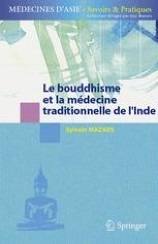
Le bouddhisme et la médecine traditionnelle de lInde = Buddhism and traditional medicine from India
Aims to return to ancient India, to the sources of Buddhism. It is a question of comparing the religious bodies of Buddhism of the origins with the treatises relating to Ayurveda, the medicine practiced in India at that time.
