



الصفحة 1
الصفحة 1

Fundamentals of airplane flight mechanics
Airplane flight mechanics is the application of Newton's laws to the study of airplane trajectories (performance), stability, and aerodynamic control. This text is limited to flight in a vertical plane and is divided into two parts. The first part, trajectory analysis, is concerned primarily with the derivation of analytical solutions of trajectory problems associated with the sizing of commercial jets, that is, take-off, climb, cruise, descent, and landing, including trajectory optimization. The second part, stability and control, is further classified as static or dynamic. On each iteration of airplane sizing, the center of gravity is placed so that the airplane is statically stable. Dynamic stability and control is included to study the response of an airplane to control and gust inputs, which is needed for the design of automatic flight control systems. Algorithms are presented for estimating lift, drag, pitching moment, and stability derivatives.
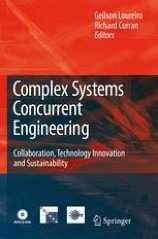
Complex systems concurrent engineering : Collaboration, technology innovation and sustainability
Concurrent engineering is well-established as an approach to engineer product parts. However, the concept has much broader application. Complex Systems Concurrent Engineering: Collaboration, Technology Innovation and Sustainability demonstrates how concurrent engineering can be used to benefit the development of complex systems, to produce results that sustain balanced stakeholder satisfaction over time. Gathered from the 14th ISPE International Conference on Concurrent Engineering, the collected papers cover all aspects of the sustainable and integrated development of complex systems, such as airplanes, satellites, space vehicles, automobiles and ships.
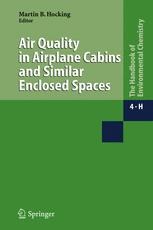
Air quality in airplane cabins and similar enclosed spaces
The editor of this volume invited a wide range of experts to provide an in-depth treatment of virtually all aspects of aircraft cabin air quality. The topics are covered at a level comprehensible to all who fly as well as being of sufficient depth to be informative to decision makers concerned with purchase, design, operation, and servicing of passenger aircraft. Topics are grouped under: Control of Aircraft Cabin Air Quality; Possible Effects of Low Humidity, Decreased Outside Air Flows; and Effects of Some Aircraft Malfunctions on Cabin Air Quality. The volume concludes with Air Quality Systems for Related Enclosed Spaces, in which chapters cover air quality in buildings, ships, submarines, and spacecraft, which provide novel approaches potentially applicable to aircraft.
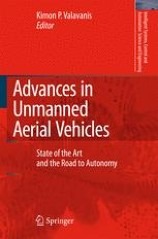
Advances in Unmanned Aerial Vehicles : State of the Art and the Road to Autonomy
There has been tremendous emphasis in unmanned aerial vehicles, both of fixed (airplanes) and rotary wing (vertical take off and landing, helicopters) types over the past ten years. Applications span both civilian and military domains, the latter being the most important at this stage. This edited book provides a solid and diversified reference source related to basic, applied research and development on small and miniature unmanned aerial vehicles, both fixed and rotary wing. As such, the book offers background information on the evolution of such vehicles over the years, followed by modeling and control fundamentals that are of paramount importance due to unmanned aerial vehicle model complexity, nonlinearity, coupling, inhirent instability and parameter values uncertainty. Aspects of navigation, including visual-based navigation and target tracking are discussed, followed by applications to attitude estimation on micro unmanned aerial vehicles, autonomous solar unmanned aerial vehicle, biomimetic sensing for autonomous flights in near-earth environments, localization of air-ground wireless sensor networks, decentralized formation tracking, design of an unmanned aerial vehicle for volcanic gas sampling and design of an on-board processing controller for miniature helicopters.
