



الصفحة 1
الصفحة 1

Indian Agriculture Towards 2030 : Pathways for Enhancing Farmers’ Income, Nutritional Security and Sustainable Food and Farm Systems
The book comprises of ten contributions. Apart from the overview chapter on transformational change and the concluding chapter on pathways for 2030, there are eight thematic chapters on topics such as transforming Indian agriculture, dietary diversity for nutritive and safe food; climate crisis and risk management; water in agriculture; pests, pandemics, preparedness and biosecurity natural farming; agroecology and biodiverse futures; science, technology and innovation in agriculture; and structural reforms and governance.
Food Price Volatility and Its Implications for Food Security and Policy
This book provides fresh insights into concepts, methods and new research findings on the causes of excessive food price volatility. It also discusses the implications for food security and policy responses to mitigate excessive volatility. The approaches applied by the contributors range from on-the-ground surveys, to panel econometrics and innovative high-frequency time series analysis as well as computational economics methods. It offers policy analysts and decision-makers guidance on dealing with extreme volatility.
Finance for Food : Towards New Agricultural and Rural Finance
Reflects the current state of discussion about agricultural and rural finance in developing and transition countries. It provides insight into specific themes, such as commodity value chains, farm banking, risk management in agricultural banking, structured finance, crop insurance, mobile banking, and how to increase effectiveness in rural finance. Case studies illustrate various aspects of agricultural and rural finance in developing economies. The book is based on one of the yearly financial Sector Development Symposia held by the KfW Development Bank.
Economic Loss Caused by Genetically Modified Organisms : Liability and Redress for the Adventitious Presence of GMOs in Non-GM Crops
The cultivation of genetically modified (GM) crops in the EU may lead to cases, in which traditional agricultural products contain detectable traces of GMOs. On the one hand, such admixture may result from inadequate application of segregation measures by farmers. On the other hand, as agriculture is an open process that does not allow the complete isolation of individual fields, a certain degree of admixture between neighbouring crops is unavoidable in practice. The presence of GMOs in traditional products may lead to their devaluation, which would entail an economic damage to the producer of
Building a Resilient and Sustainable Agriculture in Sub-Saharan Africa
What are the challenges and action points for agricultural sustainability in Sub-Saharan Africa? This collection of papers offers technical analyses, policy recommendations and an overview of success stories to date. Each carefully selected paper provides valuable insights for improved policy making and defines relevant strategic priorities on Africa’s sustainable transformation process, which is in line with the international development agenda. Although agriculture remains the main source of income for Africa’s population, the sector is rain-fed subjecting it to the vagaries of weather and climate change. This volume demonstrates the rationale of developing a competitive, inclusive and sustainable agribusiness sector for Africa’s food security and structural transformation.
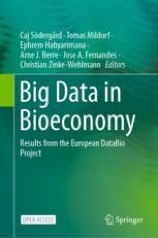
Big Data in Bioeconomy : Results from the European DataBio Project
This book presents the comprehensive outcome of The European DataBio Project, which examined new data-driven methods to shape a bioeconomy. These methods are used to develop new and sustainable ways to use forest, farm and fishery resources.
Atlas of global change risk of population and economic systems
Iillustrates the spatial distribution of the global change risk of population and economic systems with the maps of environment, global climate change, global population and economic systems, and global change risk. The risks of global change are mapped at 0.25 degree grid unit. The risk results and their contribution rates of the world at national level are unprecedentedly derived and ranked. The book can be a good reference for researchers and students in the field of global climate change and natural disaster risk management, as well as risk managers and enterpriser to understand the global change risk of population and economic systems.

Agriculture for Economic Development in Africa : Evidence from Ethiopia
This book explores the role of agriculture in long-term economic growth. With a particular focus on Ethiopia, the role of the state in igniting agricultural growth and in sustaining economic growth is highlighted as essential for low-income countries. Taking ideas from both economic history and development economics, the ability of Ethiopia and the rest of Africa to sustain recent rapid growth into something that can tackle the development agenda is discussed, alongside policy suggestions.

Agricultural value chains in India : Ensuring competitiveness, inclusiveness, sustainability, scalability, and improved finance
This book provides a clear holistic conceptual framework of CISS-F (competitiveness, inclusiveness, sustainability, scalability and access to finance) to analyse the efficiency of value chains of high value agricultural commodities in India. It is based on the understanding that agriculture is an integrated system that connects farming with logistics, processing and marketing. Farmer’s welfare being central to any agricultural policy makes it very pertinent to study how a value chain works and can be strengthened further to realize this policy goal.
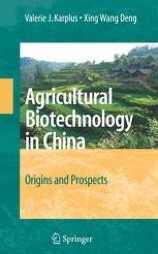
Agricultural Biotechnology in China : Origins and Prospects
Building on a long tradition of agricultural advances, Chinese scientists have applied biotechnology techniques to develop hundreds of novel crop varieties suited to local farming conditions and challenges.Agricultural Biotechnology in China: Origins and Prospects is a comprehensive examination of how the origins of biotechnology research agendas, along with the effectiveness of the seed delivery system and biosafety oversight, help to explain current patterns of crop development and adoption in China. Based on firsthand insights from China’s laboratories and farms, Valerie Karplus and Dr. Xing Wang Deng explore the implications of China’s investment for the nation’s rural development, environmental footprint, as well as its global scientific and economic competitiveness.
