



الصفحة 1
الصفحة 1

Fracture Mechanics of Ceramics ; Active Materials, Nanoscale Materials, Composites, Glass, and Fundamentals
The 8th International Symposium on fracture mechanics of ceramics was held in on the campus of the University of Houston, Houston, TX, USA, on February 25-28, 2003. With the natural maturing of the fields of structural ceramics, this symposium focused on nano-scale materials, composites, thin films and coatings as well as glass. The symposium also addressed new issues on fundamentals of fracture mechanics and contact mechanics, and a session on reliability and standardization.
Forest Radioecology in Fukushima : Radiocesium Dynamics, Impact, and Future
This book provides holistic information on the radioactive contamination of forests. Topics are highly interdisciplinary, ranging from the dynamics of radioactive cesium in forest ecosystems to the radiation protection or the socio-economic aspects of radiation effects. It is designed to help people understand the radioactive contamination in forests and provide hints of how to cope with it and restore their livelihoods. The book is characterized by its well-balanced structure that allows the reader to understand the whole picture without going into too much scientific content. After explaining the basics of radioactive materials and radiation, the book illustrates the radioactive contamination of forests, it also describes the impacts on the forestry and life of local people and the measures taken by. Few books address the concerns about how to deal with radioactive contamination of forests and the future perspectives. In this book, people can learn all about the Fukushima nuclear accident of forests, forest products, and people with abundant reference materials.

Biomimetic restorative dentistry
Biomimetic dentistry represents a significant advancement in restorative practices, emphasizing the preservation of natural tooth structure and the use of innovative materials that closely mimic biological tissues. This article explores the potential impact of biomimetic approaches on patient outcomes, highlighting key findings that demonstrate improved longevity of dental restorations and reduced incidence of secondary caries.

Biodentine : Properties and clinical applications
A comprehensive guide to BiodentineTM, an innovative biocompatible and bioactive material based on pure tricalcium silicate that can permanently replace dentin and can also serve as a temporary enamel substitute. Although BiodentineTM has been widely used across the world for the past decade, this is the first book to be devoted to its properties, interactions with the soft and hard tissues, and its multiple clinical applications. The coverage encompasses applications in primary and permanent teeth, in specialties as diverse as restorative dentistry, endodontics, paediatric dentistry, dental traumatology, and prosthetic dentistry. BiodentineTM application both in vital pulp therapy and endodontic procedures is illustrated and clinical step by step protocols are provided. The book provides a detailed update on BiodentineTM use to preserve the pulp vitality in direct/indirect pulp capping, pulpotomy and irreversible pulpitis treatment. It also details BiodentineTM use for non-vital teeth treatment in indications such as root/furcation perforation repair, apexification as well as in regenerative endodontic procedures.

Bioactive Materials in Dentistry : Remineralization and Biomineralization
Addresses the use of different bioactive materials in dentistry, considering the performance of these biomaterials in the hard tissues of the tooth, and the response of the dental pulp, as well as the influence of the composition of these materials and of the individual’s systemic alterations in bioactivity and in antimicrobial activity. The several in vivo and in vitro tests to evaluate the bioactivity of a biomaterial will also be addressed.
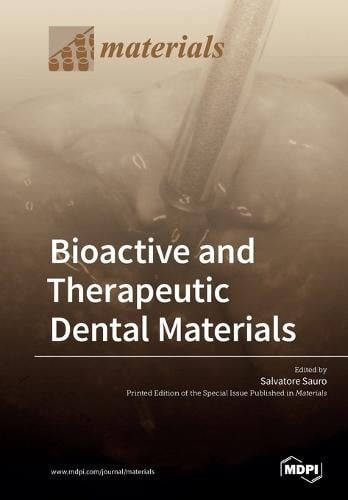
Bioactive and therapeutic dental materials
Special attention has been given to bioactive materials developed to induce cells differentiation/stimulation, hard tissue formation and exert antimicrobial actions. New innovations are necessary to continue to help reinforcing existing technologies and to introduce new paradigms for treating dental disease and restoring teeth seriously compromised by caries lesions via biomimetic and more biological operative approaches. Dental bioactive materials is arguably the latest research area in dentistry and thus the amount of new research is overwhelming. However, in this day and age of evidence based practice it important for this new information to be distilled into a practical and understandable format.
Agricultural Implications of the Fukushima Nuclear Accident (III)
Reports on studies undertaken at contaminated sites such as farmland, forests, and marine and freshwater environments, with a particular focus on livestock, wild plants and mushrooms, crops, and marine products in those environments. It also provides additional data collected in the subsequent years to show how the radioactivity levels in agricultural products and their growing environments have changed with time and the route by which radioactive materials entered agricultural products as well as their movement between different components (e.g., soil, water, and trees) within an environmental system (e.g., forests). The book covers various topics, including radioactivity testing of food products; decontamination trials for rice and livestock production; the state of contamination in, trees, mushrooms, and timber; the dynamics of radioactivity distribution in paddy fields and upland forests; damage incurred by the forestry and fishery industries; and the change in consumers’ attitudes. Chapter 19 introduces a real-time radioisotope imaging system, a pioneering technique to visualize the movement of cesium in soil and in plants.

Advances in the toxicity of construction and building materials
Presents the potential and toxic effects of building materials on human health, along with tactics on how to minimize exposure. Chapters are divided into four sections covering the toxicity of indoor environments, fire toxicity, radioactive materials, and toxicity from plastics, metals, asbestos, nanoparticles and construction wastes. Key chapters focus on the reduction of chemical emissions in houses with eco-labelled building materials and potential risks posed by indoor pollutants that may include volatile organic compounds (VOC), formaldehyde, semi-volatile organic compounds (SVOC), radon, NOx, asbestos and nanoparticles.
Adaptronics and Smart Structures : Basics, Materials, Design, and Applications
Adaptronic structures and systems can adapt automatically to variable operating and environmental conditions through the use of feedback control. But in contrast to conventional control loops, in which each function is fulfilled by a separate component, adaptronics is characterized by multifunctional components that are preferably integrated into the structure or the system. The goal is a lightweight and simple construction for conserving material and energy resources. The authors of this book have taken on the task of displaying the current state of the art in this highly modern and strongly interdisciplinary field. Selected application examples are also presented and current development trends demonstrated.
