



الصفحة 1
الصفحة 1

Ontologies for Agents : Theory and Experiences
On the other hand, ontologies have established themselves as a powerful tool to enable kno- edge sharing, and a growing number of applications have bene?ted from the use of ontologies as a means to achieve semantic interoperability among heterogeneous, distributed systems. In principle ontologies and agents are a match made in heaven, that has failed to happen. What makes a simple piece of software an agent is its ability to communicate in a ”social” environment, to make autonomous decisions, and to be proactive on behalf of its user. Communication ultimately depends on und- standing the goals, preferences, and constraints posed by the user. Autonomy is theabilitytoperformataskwithlittleornouserintervention,whileproactiveness involves acting autonomously with no need for user prompting. Communication, but also autonomy and proactiveness, depend on knowledge. The ability to c- municate depends on understanding the syntax (terms and structure) and the semantics of a language. Ontologies provide the terms used to describe a domain and the semantics associated with them. In addition, ontologies are often comp- mented by some logical rules that constrain the meaning assigned to the terms. These constraints are represented by inference rules that can be used by agents to perform the reasoning on which autonomy and proactiveness are based.

Nonlinear Dynamics and Heterogeneous Interacting Agents
Economic application of nonlinear dynamics, microscopic agent-based modelling, and the use of artificial intelligence techniques as learning devices of boundedly rational actors are among the most exciting interdisciplinary ventures of economic theory over the past decade. This volume provides us with a most fascinating series of examples on "complexity in action" exemplifying the scope and explanatory power of these innovative approaches.

New Tools of Economic Dynamics
New Tools of Economic Dynamics gives an introduction and overview of recently developed methods and tools, most of them developed outside economics, to deal with the qualitative analysis of economic dynamics. It reports the results of a three-year research project by a European and Latin American network on the intersection of economics with mathematical, statistical, and computational methods and techniques. Focusing upon the evolution and manifold structure of complex dynamic phenomena, the book reviews and shows applications of a variety of tools, such as symbolic and coded dynamics, interacting agents models, microsimulation in econometrics, large-scale system analysis, and dynamical systems theory. It shows the potential of a comprehensive analysis of growth, fluctuations, and structural change along the lines indicated by pioneers like Harrod, Haavelmo, Hicks, Goodwin, Morishima, and it highlights the explanatory power of the qualitative approach they initiated.

Neural Preprocessing and Control of Reactive Walking Machines: Towards Versatile Artificial Perception-Action Systems
This book presents biologically inspired walking machines interacting with their physical environment. It describes how the designs of the morphology and the behavior control of walking machines can benefit from biological studies. The purpose of this book is to develop a modular structure of neural control generating different reactive behaviors of the physical walking machines, to analyze the neural mechanisms underlying the reactive behaviors, and to demonstrate the sensor fusion technique leading to smooth switching between appropriate behaviors, like obstacle avoidance and sound tropism.

Natural Skincare Cosmetics
Aging skin is suffering of decrease pigment-containing cells and overproduction of melanin in the skin, also changes in the connective tissue reduce the skin's strength and elasticity. Over the last 20 years, clinical and laboratory studies have identified the benefits of an array of natural ingredients for skin care. A variety of skin care products exist in today’s marketplace. They fulfill a variety of functions by either acting directly on the skin (e.g., moisturizers) or being a cosmetically elegant vehicle for the delivery of specific active ingredients (e.g., sunscreens or antipruritic or antiacne medicaments). Certain ingredients used in cosmeceuticals may be claimed to be therapeutic for common skin diseases. These ingredients are regulated as over the counter (OTC) drug monographs for acne, dermatitis/psoriasis, skin protectant, topical analgesia and sunscreens, by the Food and Drug Administration (FDA)

Nanotechnology : Assessment and Perspectives
A new definition of Nanotechnology by the authors is used as an anchor for the various sections of the book. This leads to an integrated text reflecting the multidimensional challenges occurring around Nanotechnology. The most important results of the study are transferred into acting recommendations concerning scientific progress, industrial relevance, economic potential, educational needs, potential adverse health effects and philosophical aspects of Nanotechnology.

Multirate Statistical Signal Processing
This book introduces a statistical theory for extracting information from signals that have di?erent sampling rates. This new theory generalizes the conventional (deterministic) theory of multirate systems beyond many of its constraints.Furthermore,itallowsfortheformulationofseveralnewproblems such as spectrum estimation, time-delay estimation and sensor fusion in the realm of multirate signal processing. I have arrived at the theory presented here by integrating concepts from diverse areas such as information theory, inverse problems and theory of - equalities. The process of merging a variety of concepts of di?erent origin results in both merits and shortcomings. The former include the fresh and - di?erentiated view of an amateur, providing scope of application. The latter include a lack of in-depth experience in each of the original ?elds. Granted, this may lead to gaps in continuity, however it goes without saying that a complete theory can seldom be achieved by one person and in a short time.

Multiphase Reacting Flows : Modelling and Simulation
This book entitled ''Multiphase reacting flows: modelling and simulation'' contains the lecture notes of the CISM (International Centre for Mechanical Sciences) course held in Udine, Italy, on July 3-7, 2006, and it describes various modelling approaches for dealing with polydisperse multiphase reacting flows. A multiphase reacting system is characterized by the presence of multiple phases and in this book we focus on disperse multiphase systems, where one phase can be considered as a continuum, whereas the additional phases are dispersed in the continuous one. In other words, in this book we deal with multiphase systems constituted by particles, droplets or bubbles (i.e., solid particles suspended in a continuous liquid phase, liquid droplets in a gaseous phase, or gas bubbles in liquid.) The other important characteristic elements of the systems discussed in this book are the presence of one or more chemical reactions and the turbulent nature of the flow. The chemical reactions usually involve all the phases present in the system and might be responsible for the formation or disappearance of the disperse and/or continuous phases.

Multiparadigm Programming in Mozart/Oz ; 2nd International Conference, MOZ 2004, Charleroi, Belgium, October 7-8, 2004, Revised Selected Papers
Oz's concurrency model yields simplicity and clarity (because Oz makes it easier to express complex programs with many interacting components), g- erality, and better interfaces (because the data?ow model automatically makes interfaces more lightweight). Constraint programming in Oz again yields simplicity and clarity (because theprogrammercanexpresswhatneedstobetrueratherthanthemorecomplex issue of how to make it true), and o?ers a powerful mathematical notation that is di?cult to implement on top of languages that do not support it natively. Mozart's distributed computing model makes for improved interfaces and eases the evolution of systems. In my own work, one of the most important concernsistobeabletoquicklyscaleupaprototypeimplementationintoalar- scale service that can run reliably on thousands of computers, serving millions of users.

Molecular Mechanisms of Neurotransmitter Release
Within the complex neuronal network of the nervous system, neuron-to-neuron communication occurs mainly through chemical synapses, where the presynaptic nerve terminal releases neurotransmitters that control the function of postsynaptic neurons by acting on postsynaptic receptors. Recent decades have brought groundbreaking new developments and a wealth of knowledge to this field. In Molecular Mechanisms of Neurotransmitter Release, leading experts provide concise, up-to-date information on all major molecular mechanisms involved, with complete background information and figures and diagrams to further elucidate key concepts or experiments.Comprehensive and cutting-edge, Molecular Mechanisms of Neurotransmitter Release is sure to provide a learning tool for neuroscience students, a solid reference for neuroscientists, and a source of knowledge for all those who have a general interest in the ever-evolving field of neuroscience.

Molecular Biology of the Parathyroid
Caintaining extracellular calcium concentrations within a narrow range is critical for the survival of most vertebrates. PTH, together with vitamin D, responds to hypocalcemia to increase extracellu M lar calcium levels, by acting on bone, kidney and intestine. The recent intro duction of PTH as a major therapeutic agent in osteoporosis has directed renewed interest in this important hormone and in the physiology of the parathyroid gland. The parathyroid is unique in that low serum calcium stimulates PTH secretion. As hypocalcemia persists, there is also an increase in PTH synthesis. Chronic hypocalcemia leads to hypertrophy and hyper plasia of the parathyroid gland together with increased production of the hormone. Phosphate is also a key modulator of PTH secretion, gene expres sion and parathyroid cell proliferation. Understanding the biology of the parathyroid as well as the mecha nisms of associated diseases has taken great strides in recent years. This book summarizes the molecular mechanisms involved in the function of the para thyroid gland. The first chapter reviews the development of the parathyroid gland and the genes involved in this process as identified using genetically manipulated mice. Then the biosynthetic pathway of PTH from gene ex pression to its intracellular processing and the sequences in the gene control ling its transcription as well as those regulating mRNA processing, stability and translation are described.

Modulated Temperature Differential Scanning Calorimetry : Theoretical and Practical Applications in Polymer Characterisation
This book provides both a basic and advanced treatment of the theory of the technique followed by a detailed exposition of its application to reacting systems, blends and semicrystalline polymers by the leaders in all of these fields. It is an essential text for anybody interested in calorimetry or polymer characterization, especially if they have found that conventional DSC cannot help them with their problems.

Modern Deep Learning Design and Application Development : Versatile Tools to Solve Deep Learning Problems
Learn how to harness modern deep-learning methods in many contexts. Packed with intuitive theory, practical implementation methods, and deep-learning case studies, this book reveals how to acquire the tools you need to design and implement like a deep-learning architect. It covers tools deep learning engineers can use in a wide range of fields, from biology to computer vision to business. With nine in-depth case studies, this book will ground you in creative, real-world deep learning thinking. You will: Improve the performance of deep learning models by using pre-trained models, extracting rich features, and automating optimization. Compress deep learning models while maintaining performance. Reframe a wide variety of difficult problems and design effective deep learning solutions to solve them. Use the Keras framework, with some help from libraries like HyperOpt, TensorFlow, and PyTorch, to implement a wide variety of deep learning approaches.

Modeling Complex Living Systems : A Kinetic Theory and Stochastic Game Approach
Using tools from mathematical kinetic theory and stochastic game theory, this work deals with the modeling of large complex systems in the applied sciences, particularly those comprised of several interacting individuals whose dynamics follow rules determined by some organized, or even "intelligent" ability. Traditionally, methods of mathematical kinetic theory have been applied to model the evolution of large systems of interacting classical or quantum particles. This book, on the other hand, examines the modeling of living systems as opposed to inert systems.

Microfinance Investment Funds : leveraging private capital for economic growth and poverty reduction
The surge in new investment funds - nearly 60 funds at last count - is an exciting sign that microfinance is attracting mainstream financial markets. Foreign investors bridge a crucial gap for MFIs and greenfield banks not yet able to attract deposits, debt or equity from local sources. Recognizing the ultimate goal of building those local financial markets that serve the poor, some foreign investors and funds are facilitating local intermediation with incentives like guarantees for local banks to lend to MFIs in local currency. Such contributions to local market building, combined with strengthening governance, increasing transparency and rigor make the new funds potentially very positive forces in microfinance.

Microbiologically Influenced Corrosion : An Engineering Insight
Microbiologically-influenced corrosion (MIC) is one of the greatest mysteries of corrosion science and engineering, due to the complexities resulting from the involvement of living things such as bacteria. Bacteria are not only able to affect our health, but are also capable of impacting upon everyday life through a wide range of industrial sectors and the economy. Microbiologically Influenced Corrosion: An Engineering Insight introduces a new approach to the basics of MIC and explains how to recognise, understand, mitigate and/or prevent this type of corrosion. Topics explored include stress corrosion cracking and microbial corrosion, the pros and cons of biocides, the involvement of magnetic bacteria in microbial corrosion, and a new interpretation of cathodic protection based on recent research in microbial environments.

Microbial Activity in the Rhizosphere
The rhizosphere is a very complex environment in which the effects of the plant on soil microorganisms and the effects of the microorganisms on the plant are interacting and are interdependent. Plant root exudates and breakdown products attract microbes and feed them and, in turn, the plants often benefit from the microbes. Interactions among microorganisms and plant roots are essential for nutritional requirements of the plant. Plant growth, development and productivity are largely dependent on the soil environment in the root region rhizosphere. The new techniques of studying the rhizosphere enables us to get a much better understanding of the dynamics of the rhizosphere population, such rhizosphere studies being of interest to agriculturists, soilbiologists, chemists, microbiologists and molecular biologists. The rhizosphere microbes in?uence the root environment in several ways. They may change the oxidation-reduction potential, influence the availability of moisture and nutrients, produce growth inhibiting or growth promoting substances in the form of exudates, provide competition and possibly induce many other effects. My corrhizal associations are beneficial in mineral uptake and in increasing root surface area for effective ion absorption. Antagonism, ompetition and synergism in soil and the rhizoplane (rhizosphere) are the most important microbial interactions to consider in the study of rhizosphere biology. With the growing information on the production of growth regulators, competitiveness of the microbes in the rhizosphere, microsymbionts, and other factors, their effect upon plant growth will become more evident. Experiments on the introduction of microbes or their products in the rhizosphere will help to improve our understandingofthebiologyoftherhizosphere.

Methods of Celestial Mechanics ; Vol. II : Application to Planetary System, Geodynamics and Satellite Geodesy
G. Beutler's Methods of Celestial Mechanics is a coherent textbook for students as well as an excellent reference for practitioners. Volume II is devoted to the applications and to the presentation of the program system CelestialMechanics. Three major areas of applications are covered: (1) Orbital and rotational motion of extended celestial bodies. The properties of the Earth-Moon system are developed from the simplest case (rigid bodies) to more general cases, including the rotation of an elastic Earth, the rotation of an Earth partly covered by oceans and surrounded by an atmosphere, and the rotation of an Earth composed of a liquid core and a rigid shell (Poincaré model). (2) Artificial Earth Satellites. The oblateness perturbation acting on a satellite and the exploitation of its properties in practice is discussed using simulation methods (CelestialMechanics) and (simplified) first order perturbation methods. The perturbations due to the higher-order terms of the Earth's gravitational potential and resonant perturbations are considered thereafter. Special attention is paid to satellites of the Global Navigation Satellite Systems and to geostationary satellites. The characteristics of and models for the two most important non-gravitational forces, atmospheric drag and radiation pressure, are presented as well as the most relevant forces acting on high- and low-orbiting satellites. (3) Evolution of the Planetary System. The outer planetary system consisting of the planets Jupiter to Pluto is studied over long time intervals using simulation methods and spectral analysis (CelestialMechanics). The properties of the inner systems, in particular of the Earth's orbit, are made visible by integrating the entire system over long time intervals relevant for climate change. The distribution of minor planets and their orbital properties, regular orbits, and chaotic orbits are easily generated and analyzed using CelestialMechanics. The volume concludes with the discussion of important mathematical tools of the program system and of the principles of spectral analysis.
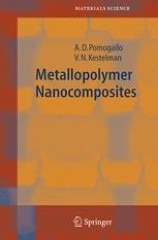
Metallopolymer Nanocomposites
Highly dispersed nanoscale particles in polymer matrices are currently attracting great interest in many fields of chemistry, physics and materials science. This book presents and analyzes the essential data on nanoscale metal clusters dispersed in, or chemically bonded with polymers. Special attention is paid to the in situ synthesis of the nanocomposites, their chemical interactions, and the size and distribution of the particles in the polymer matrix. Numerous novel nanocomposites are described with regard to their mechanical, electrophysical, optical, magnetic, catalytic and biological properties. Their applications, present and future, are outlined. The book is addressed both to researchers who actively use these materials and to students entering this multidisciplinary field.

Metakaolin and Fly Ash as Mineral Admixtures for Concrete
Deals with modern theoretical concepts related to the impact of fly ash and metakaolin admixtures on structure formation processes of concrete. Results of the effect of fly ash, metakaolin and their composition on properties of self-compacting and self-leveling concrete are presented. Based on mathematical models, obtained using mathematical experiments planning methodology, the impact of the main factors and their combination on workability, strength and other properties that determine efficiency and durability of concrete are analyzed. Using calculated dependencies, a methodology for designing optimal compositions of concrete containing active mineral admixtures and superplasticizers is proposed. Features of industrial production of concrete for the proposed compositions are discussed. The book is intended for specialists working in the production of concrete and reinforced concrete products and elements. It can also be used by construction engineers to design compositions of cost-effective self-compacting and self-leveling concrete as well as to determine the rational direction of using technogenic raw materials like ash and metakaolin.
