



الصفحة 1
الصفحة 1

Intermediate accounting IFRS, international adaptation
International financial reporting standards (IFRS) are a set of accounting standards and rules issued by the international accounting standards board (IASB) that govern how particular types of transactions and events should be reported in financial statements. by presenting IFRS in light of current accounting practice, this book not only offers a more comprehensive understanding of IFRS standards but also emphasizes fair value, proper accounting for financial instruments, and new developments in international accounting. in addition to covering the latest IFRS standards and how they are applied in practice, this edition provides new learning aids such as accounting matters and analytics in action.

Financial Analysis of Mergers and Acquisitions : Understanding Financial Statements and accounting Rules with Case Studies
Helps its readers better analyze M&A transactions using information provided in financial statements. Covering accounting and reporting of consolidations, goodwill, non-controlling interests, step acquisitions, spin-offs, equity carve-outs, joint ventures, leveraged buyouts, disposal of subsidiaries, special purpose entities, and taxes, it focuses on the link between underlying economic events and the information in financial statements and how this link affects the assessment of corporate performance. The first part of the book provides description of the accounting rules governing M&A transactions, while the second part includes cases of M&A transactions. Each case focuses on a different element of an M&A transaction, and it is followed by a detailed solution with a complete analysis. Unlike other books in this field, this textbook focuses exclusively on accounting and financial analysis for graduate and upper undergraduate level courses in financial analysis, corporate finance, and financial accounting.
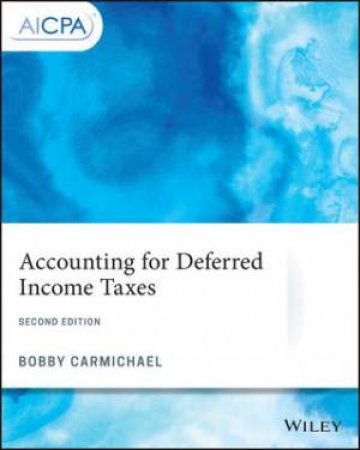
Accounting for deferred income taxes
Incorporates the new tax rates and other impacts of the Tax Cuts and Jobs Act and will assist you in understanding FASB ASC 740, Income Taxes, and how it establishes guidelines for accounting for income taxes, including income tax expense, classification of deferred tax accounts, and related disclosures.

A Stakeholder Rationale for Risk Management : Implications for Corporate Finance Decisions
Ordinarily, only the interests of shareholders, debtholders, and corporate management are taken into account when analyzing corporate financial decisions while the interests of non-financial stakeholders are often neglected. Gregor Gossy develops a so-called stakeholder rationale for risk management arguing that firms which are more dependent on implicit claims from their non-financial stakeholders, such as customers, suppliers, and employees, prefer conservative financial policies. In order to perform panel data analyses of the determinants of corporate financial decisions, the author uses data from Austrian and German industrial companies. He shows that variables for a firm’s most important non-financial stakeholders explain the firm’s capital structure and cash holding decisions. His findings suggest that a firm’s choice of accounting standards have a moderating effect on the determinants of corporate finance decisions.
