



الصفحة 1
الصفحة 1

Life as We Know It
Life As we Know It ["LAKI"] covers several aspects of Life, ranging from the prebiotic level, origin of life, evolution of prokaryotes to eukaryotes and finally to various affairs of human beings. Although it is hard to define Life, one can, however, characterize it and describe its features. Topics treated are categories of bacteria, algae and fungi, conscience, philosophy, theology, aesthetics, appearance of sport and life destiny, life after clinical death, and thoughts of the world to come ("Olam Haba"). The various chapters have been written so that they are accessible to all - from the avid lay reader to the specialist – and make available multidisciplinary sources of information about Life. This volume will interest open minded scholars, students at all levels of general sciences, natural and Life science, researchers of philosophy, theology, history of Life, astrobiology, and those who wish to widen their knowledge about "who are we in the universe".

Lectures in Astrobiology ; Vol. II
Based on material delivered at several summer schools, this book is the first comprehensive textbook at the graduate level encompassing all aspects associated with the emerging field of astrobiology. Volume II gathers another set of extensive lectures covering topics so diverse as the formation and the distribution of elements in the Universe, the concept of habitability from both the planetologists' and the biologists' point of view and artificial life. The contributions are held together by the common goal to understand better the origin of life, its evolution and possible existence outside the Earth's realm.
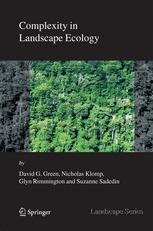
Complexity in landscape ecology
Interactions matter. To understand the distributions of plants and animals in a landscape you need to understand how they interact with each other, and with their environment. The resulting networks of interactions make ecosystems highly complex. Recent research on complexity and artificial life provides many new insights about patterns and processes in landscapes and ecosystems. This book provides the first overview of that work for general readers. It covers such topics as connectivity, criticality, feedback, and networks, as well as their impact on the stability and predictability of ecosystem dynamics. With over 60 years of research experience of both ecology and complexity, the authors are uniquely qualified to provide a new perspective on traditional ecology.

Artificial life models in software
Artificial Life Models in Software presents software tools, environments and realities dealing with creation, imitation and analysis of artefactual, virtual and living forms, written by those who personally design and produce software, hardware and art installations in artificial life, simulated complex systems and virtual worlds. This timely volume offers a nearly exhaustive overview and original analysis of major non-profit artificial life software packages. The carefully selected topics include: · simulation of real and imaginary life forms and their evolution · self-organization · emergent behaviours · swarm intelligence · evolutionary robotics · agent-based simulations · adaptive, complex and biologically inspired ecosystems · creative computer art There has long been a need within the academic and research community for an informal introduction and guidance to modern software tools for modelling and simulation of life-like phenomena – Artificial Life Models in Software fills this gap and provides invaluable information to both professional and amateur readers, offering detailed reviews of contemporary software for artificial life.
Artificial intelligence : Theories, models and applications ; 5th Hellenic Conference on AI, SETN 2008, Syros, Greece, October 2-4, 2008. Proceedings
This book constitutes the refereed proceedings of the 5th Hellenic Conference on Artificial Intelligence, SETN 2008, held at Syros, Greece in October 2008.
Artificial evolution ; 7th International Conference, Evolution artificielle, EA 2005, revised selected papers
This book constitutes the thoroughly refereed post-proceedings of the 7th International Conference on Artificial Evolution, EA 2005, held in Lille, France, in October 2005. They cover all aspects of artificial evolution: genetic programming, machinelearning, combinatorial optimization, co-evolution, self-assembling, artificial lifeand bioinformatics.In addition, the program included an invited talk by David Corne on “Evolu-tionary Computation in Bioinformatics: How to Save Lives and Make ScientificBreakthrough.

Applications of computational intelligence
Computational intelligence (CI) is the theory, design, application, and development of biologically and linguistically motivated computational paradigms. Traditionally, the three main pillars of CI have been neural networks, fuzzy systems, and evolutionary computation. However, in time, many nature-inspired computing paradigms have evolved. Thus, CI is an evolving field, and, at present, in addition to the three main constituents, it encompasses computing paradigms such as ambient intelligence, artificial life, cultural learning, artificial endocrine networks, social reasoning, and artificial hormone networks. CI plays a major role in developing successful intelligent systems, including games and cognitive developmental systems.
Anticipatory Behavior in Adaptive Learning Systems : From Brains to Individual and Social Behavior
Anticipatory behavior in adaptive learning systems is steadily gaining the - terest of scientists, although many researchers still do not explicitly consider the actual anticipatory capabilities of their systems.The introductory chapter of this volume therefore does not only provide an overview of the contributions included in this volume but also proposes a taxonomy of how anticipatory mechanisms can improve adaptive behavior and learning in cognitive systems. During the workshop it became clear that ant- ipations are involved in various cognitive processes that range from individual anticipatory mechanisms to social anticipatory behavior.
Advances in natural computation ; Vol. 3610 ; 1st International conference, ICNC 2005, Changsha, China, August 27-29, 2005, Proceedings, Part I
Featured the most up-to-date research results in computational algorithms inspired from nature, including biological, ecological, andphysical systems. It is an exciting and emerging interdisciplinary area in which a wide range of techniques and methods are being studied for dealing with large, complex, and dynamic problems. The joint conferences also promoted cross-fertilization over these exciting and yet closely-related areas, which had a sig-nificant impact on the advancement of these important technologies. Specificareas included neural computation, quantum computation, evolutionary com-putation, DNA computation, chemical computation, information processing incells and tissues, molecular computation, computation with words, fuzzy com-putation, granular computation, artificial life, swarm intelligence, ants colonies

Advances in Artificial Reality and Tele-Existence ; 16th International Conference on Artificial Reality and Telexistence, ICAT 2006, Hangzhou, China, November 28 - December 1, 2006, Proceedings
ICAT is the oldest international conference on virtual reality and tele-existence. ICAT 2006 not only looked for innovations in the technology itself, but also explored novel ways to transfer and express information and creative ideas to the society and people. The 16th International Conference on Artificial Reality and Telexistence was held at the Zhejiang University of Technology, Hangzhou, P. R. China from November 29 to December 1, 2006. The main purpose of the conference is to provide opportunities for researchers and practitioners to present their research findings and exchange opinions on the development and use of such systems.

Advances in Artificial Life ; 9th European Conference, ECAL 2007, Lisbon, Portugal, September 10-14, 2007, Proceedings
This book is organized in topical sections on conceptual articles, morphogenesis and development, robotics and autonomous agents, evolutionary computation and theory, cellular automata, models of biological systems and their applications, ant colony and swarm systems, evolution of communication, simulation of social interactions, self-replication, artificial chemistry, and posters.

Advances in artificial life ; 8th European Conference, ECAL 2005 , Canterbury, UK, September 5-9, 2005, Proceedings
The Artificial Life term appeared more than 20 years ago . Since then the area has developed dramatically, many researchersjoining enthusiastically and research groups sprouting everywhere.a conceptual track, where papers were judged on criteria like importance and/or novelty of the concepts proposed rather than the experimental / theoretical results, has been introduced this year. A conference on a theme as broad as Artificial Life is bound to be very di-verse, but a few tendencies emerged. First, fields like ‘Robotics and Autonomous Agents’ or ‘Evolutionary Computation’are still extremely active and keep onbringing a wealth of results to the A-Life community. Even there, however, new tendencies appear, like collective robotics, and more specifically self-assembling robotics, which represent now a large subsection. Second, new areas appear.‘Morphogenesis and Development’ which used to be the subject of only a fewpapers, is now one of the largest subsections, and seems to be on the brinkof becoming a field of its own. Finally, most classical themes of A-Life re-search like ‘Artificial Chemistry’, ‘Ant-Inspired Systems’, ‘Cellular Automata’,‘Self-Replication’, ‘Social Simulations’ or ‘Bio-realist Simulations’ are still goingstrong and are well represented within this volume.
Advances in Applied Self-organizing Systems
This book presents the state-of-the-practice in successfully engineered self-organizing systems, and examines ways to balance design and self organization in the context of applications.
Advanced distributed systems ; 5th International School and Symposium, ISSADS 2005, Guadalajara, Mexico, January 24-28, 2005, Revised Selected Papers
Poses the papers accepted and presented at the 5th Int- national School and Symposium on Advanced Distributed Systems (ISSADS) in this LNCS volume. The papers presented in the sessions of the symposium cover the subjects of distributed systems from the system level and applications, but also contributions from the area of theory and artificial intelligence concepts.
