



الصفحة 1
الصفحة 1

Mycorrhiza : State of the Art, Genetics and Molecular Biology, Eco-Function, Biotechnology, Eco-Physiology, Structure and Systematics
This third updated and revised edition emphasises strongly on genetics and molecular biology. It contains new chapters, which are written by the leading experts in their respective field of knowledge and expertise.Mycorrhizas are symbioses between fungi and the roots of higher plants. As more than 90% of all known species of plants have the potential to form mycorrhizal associations, the productivity and species composition and the diversity of natural ecosystems are frequently dependent upon the presence and activity of mycorrhizas. The biotechnological application of mycorrhizas is expected to promote the production of food while maintaining ecologically and economically sustainable production systems.

Innovation in Life Cycle Engineering and Sustainable Development
Business models, which aims at determining how efficient can be a life cycle strategy from different point of view (customer, policy, environment, economics,…). End of life strategies, presenting recent approaches and technological solutions for end-of life treatments. Product development for sustainability, which aims at showing how designers integrate environmental conside- tions to improve their solutions. Product life cycle management, dealing with methods and tools to support life cycle considerations.

Green Consensus and High Quality Development : CCICED Annual Policy Report 2020
This book is based on the research outputs of China Council for International Cooperation on Environment and Development (CCICED) in 2020. It covers major topics of Chinese and international attention regarding green development, such as climate, biodiversity, ocean, BRI, urbanization, sustainable production and consumption, technology, finance, value chain, and so on. It also looks at the progress of China’s environmental and development policies,and the impacts from CCICED.

Essential oils as antimicrobial agents in food preservation
As the food industry responds to the increasing consumer demand for green, safe and sustainable products, it is reformulating new products to replace chemical synthetic food additives. Essential Oils as Antimicrobial Agents in Food Preservation provides a comprehensive introduction to the antimicrobial activity of plant essential oils and their application strategies in food preservation. It is aimed at food microbiology experts, food preservation experts, food safety experts, food technicians and students.

Designing sustainable energy for all : Sustainable product-service system design applied to distributed renewable energy
This open access book addresses the issue of diffusing sustainable energy access in low- and middle-income contexts.The book analyses, discusses and classifies the promising Sustainable Product-Service System (S.PSS) business models to deliver Distributed Renewable Energy systems in an effective, efficient and sustainable way. Its message is supported with cases studies and examples, discussing the economic, environmental and socioethical benefits as well as its limitations and barriers to its implementation. An innovative design approach is proposed and a set of design tools are supplied, enabling readers to create and develop Sustainable Product-Service System (S.PSS) solutions to deliver Distributed Renewable Energy systems.Practical applications of the book’s design approach and tools by companies and practitioners are discussed and the book will be of interest to readers in design, industry, govermanetal institution, NGOs as well as researchers.

Designing sustainability for all : The design of sustainable product-service systems applied to distributed economies
This book introduces design for Sustainable Product-Service Systems (S.PSS) and for Sustainable Distributed Economies (S.DE). These are introduced as technical and operative tools for the development of a new generation of designers, responsible and capable of designing environmentally-sustainable products.

Design for Environmental Sustainability
Design for Environmental Sustainability is a technical and operative contribution to the United Nations "Decade on Education for Sustainable Development" (2005-2014), aiding the development of a new generation of designers, responsible and able in the task of designing environmentally sustainable products.

Consumer and sensory evaluation techniques : How to sense successful products
Consumer and sensory evaluation techniques speaks to management and decision-makers within organizations and addresses the main questions (eg: "How much will it cost?" and "How quickly can it be achieved?") that are faced when developing and testing new products before a launch. Chapters cover: The pillars of good consumer and sensory studies; Sensory profile of a product: Mapping internal sensory properties; The foundations of consumer evaluation; Study plans and strategy sustainable short, mid and long-term vision; Real-life anticipation with market factors: Concept, price, brand, market channel; And internal studies versus sub-contracting. Also uses examples from multiple sectors to show how to build a sustainable product evaluation strategy analyses the critical milestones to follow and the pitfalls to avoid.
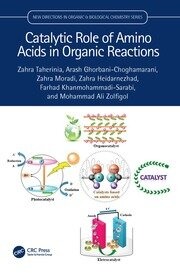
Catalytic role of amino acids in organic reactions
Asymmetric organometallic and organocatalytic processes have attracted great interest. Asymmetric synthesis using both natural and unnatural amino acids has been tremendously important from synthetic as well as industrial viewpoints, and numerous new methodologies have been developed in the last decades. Herein we provide an overview of old and very recent (since 1900 till now) advances and applications in the area of heterogeneous catalysis, homogeneous catalysis, electrocatalysis, photocatalysis, organocatalysis, thermal catalysis using amino acids [proline, glycine, alanine, valine, serine, threonine, cysteine, methionine, asparagine, glutamine, lysine, arginine, histidine, aspartate, glutamate, phenylalanine, and tryptophan], (supported or unsupported), an amino acid containing materials or amino acids derivatives as an essential component of catalysts, this book highlights the most important and recent developments to immobilize or support amino acids on various support materials. This book is suitable as supplementary reading for courses targeting the design, synthesis, and application of chiral catalysts, asymmetric catalysis, and sustainable production.
Biotechnology for Fuels and Chemicals : The Twenty-Ninth Symposium
In Biotechnology for Fuels and Chemicals: The Twenty-Ninth Symposium, leading US and international researchers from academia, industry, and government exchange cutting-edge technical information and update current trends in the development and application of biotechnology for sustainable production of fuels and chemicals. This symposium emphasizes advances in biotechnology to produce high-volume, low-price products from renewable resources, while improving the environment. The major areas of interest include advanced feedstock production and processing, enzymatic and microbial biocatalysis, bioprocess research and development, opportunities in biorefineries, and commercialization of biobased products. International and domestic progress on producing liquid biofuels, especially ethanol and biodiesel, is highlighted, and related topics, including bioseparations and optimal integration of biochemical and thermochemical conversion technologies, are featured.
Biotechnology for fuels and chemicals : The Twenty-Eighth symposium
In Biotechnology for Fuels and Chemicals: The Twenty-Eighth Symposium, leading US and international researchers from academia, industry, and government exchange cutting-edge technical information and update current trends in the development and application of biotechnology for sustainable production of fuels and chemicals. This symposium emphasizes advances in biotechnology to produce high-volume, low-price products from renewable resources, while improving the environment. The major areas of interest include advanced feedstock production and processing, enzymatic and microbial biocatalysis, bioprocess research and development, opportunities in biorefineries, and commercialization of biobased products.

Antifouling Compounds
Increasing awareness of the deleterious effects of toxic components in antifouling coatings has raised interest in the potential for nontoxic alternatives. This book examines how marine organisms from bacteria to invertebrates and plants use chemicals to communicate and defend themselves. Chemicals that prevent colonisation of living surfaces are particularly pertinent to antifouling technology and may inspire new solutions. The challenge is to identify such compounds, identify the means for sustainable production and incorporate them into coatings to give long-term antifouling efficacy.
