



الصفحة 1
الصفحة 1

Object Recognition, Attention, and Action
This book provides an excellent introduction to the issues that are involved, with chapters that address the ways in which humans and machines attend to, recognize, and act toward objects in the visual environment.

Nicotinic Acetylcholine Receptor Signaling in Neuroprotection
Presents the roles and mechanisms of signal transduction triggered by nicotinic acetylcholine receptors (nAChRs) stimulation in neuroprotection against toxic effects of risk factors of neurodegenerative diseases. Accumulating evidence suggests that nAChRs in the CNS play important roles not only in excitatory neurotransmission but also in neuronal survival and related functions. Neuroprotection mediated by nAChRs in neurodegenerative diseases such as Alzheimer's disease is the major topic of this book. In response to rapidly evolving areas in clinical and laboratory neuropharmacology and neurochemistry, this volume provides in-depth coverage of neuroprotection in basic research and future developments in the clinical application of effective neuroprotective strategies in neurodegenerative diseases. This work appeals to both basic and clinical researchers in several fields, such as neuroscience, neurology, and pharmacology.
New trends in computational vision and bio-inspired computing : Selected works presented at the ICCVBIC 2018, Coimbatore, India
Gathers selected, peer-reviewed original contributions presented at the International Conference on Computational Vision and Bio-inspired Computing (ICCVBIC) conference which was held in Coimbatore, India, on November 29-30, 2018. The works included here offer a rich and diverse sampling of recent developments in the fields of Computational Vision, Fuzzy, Image Processing and Bio-inspired Computing. The topics covered include computer vision; cryptography and digital privacy; machine learning and artificial neural networks; genetic algorithms and computational intelligence; the Internet of Things; and biometric systems, to name but a few. The applications discussed range from security, healthcare and epidemic control to urban computing, agriculture and robotics.
Neuroscience in Medicine
This up-to-date edition alternates scientific and clinical chapters that explain the basic science underlying neurological processes and then relates that science to the understanding of neurological disorders and their treatment.
Neuropsychiatric Disorders : An Integrative Approach
This multidisciplinary book includes current research papers and reviews in the areas of basic neuroscience, neural mechanisms underlying neurodegenerative disorders. It further includes new approaches for neuroprotective treatments, clinical, neurobiological and treatment aspects of psychiatric disorders. The book was conceived as a celebration of the professional life and work of Peter Riederer to mark the occasion of his retirement.

Neuroprotection : Method and protocols
Contains cutting-edge molecular biology methods on neuroprotective mechanisms and specific preclinical models of the CNS injury, iseases and planning translation. Chapters guide readers through neuropathology, neuroprotection, Alzheimer’s disease, amyotrophic lateral sclerosis, ALS, Huntington’s disease , multiple sclerosis, Parkinson’s disease, spinal cord injury, traumatic brain injury, and ischemic brain injury. Written in the highly successful Methods in Molecular Biology series format, chapters include introductions to their respective topics, lists of the necessary materials and reagents, step-by-step, readily reproducible laboratory protocols, and tips on troubleshooting and avoiding known pitfalls.

Neuropathology Review
The scope of neuropathology continues to expand, as evidenced by increasing numbers of multivolume and specialty texts, which have been published in recent years. For those in the neuroscience disciplines, the ever increasing amount of information one needs to assimilate and master can be challenging and even at times daunting. As with the first edition, this second edition of Neuropathology Review summarizes, in outline form, the essentials of neuropathology. The objective is twofold: 1) to provide an overview of neuropathology for those initially encountering the discipline and, 2) to provide a framework for review for those preparing for in-service and board examinations in the disciplines of neurology, neurosurgery and pathology, which require some knowledge of neuropathology.

Neuronal cell death : Methods and protocols
Covers comprehensive methods on ways to assess structural and ultrastructural changes in the mitochondria, cytoskeleton, and microglia using state-of-the-art microscopy techniques including super-resolution imaging, electron microscopy, and ultra-high field MRI. The chapters in this book cover topics such as analysis of neurodegeneration in the post-mortem characterization of preclinical animal models, in vivo modeling in cell death in different model systems and brain organoids, single cell clonal analysis using Mosaic Analysis with Double Markers in genetic mouse models, and genome and proteomic methods for analysis of mRNA dynamics and quantitation of targeted peptides.

Neuroimmune Pharmacology
This exciting new textbook, Neuroimmune Pharmacology, reflects the history and vision of the Society on NeuroImmune Pharmacology and of the Society’s official publication, the Journal of Neuroimmune Pharmacology. All three represent deliberations arising from a relatively young, interdisciplinary, and dynamic field of research, which have major translational implications for neurodegenerative, neuroinflammatory, neuropsychiatric diseases, and infections of the nervous system. They all demonstrate the synergistic value of integrating the parts: Neuroscience, Immunology, and Pharmacology. The extraordinary accomplishment of Neuroimmune Pharmacology is its comprehensive nature.
Neuroendocrine Correlates of Sleep/Wakefulness
This new volume on Neuroendocrine Correlates of Sleep/Wakefulness is an up-to-date resource of research summaries and reviews written by major contributors to the fields of sleep, biological rhythms and neuroendocrinology.

Neuroeconomia, neuromarketing e processi decisionali = Neuroeconomics, neuromarketing and decision-making processes
The book covers a sector, that of the application of modern neuroscience techniques to the fields of economics and marketing, recently born and of great interest to the public, to advertisers as well as to neuroscience scholars. The book presents, in plain language and not for experts in the field, the structure and functioning of the brain (as it is known today) during human decision-making processes. Of interest is the analysis of how the different neuronal systems within the brain can cooperate with each other in generating decisions. All this simple physiological treatment is inserted in the context of the analysis of brain activity while watching commercial clips. In the original study presented in this book, the variables involved were those related to the recall of television advertising in a sample of normal young subjects. This study is simply the first that is carried out of this type in Italy and will be intended to be a reference point for subsequent studies in the sector.

Neurodynamics of Cognition and Consciousness
This book addresses dynamical aspects of brain functions and cognition. This volume gives an overview of recent advances in this interdisciplinary field of cognitive and computer science related to dynamics of cognition, including experimental studies, dynamical modelling and interpretation of cognitive experiments, and theoretical approaches.

Neurobiology of Human Values
Man has been pondering for centuries over the basis of his own ethical and aesthetic values. Until recent times, such issues were primarily fed by the thinking of philosophers, moralists and theologists, or by the findings of historians or sociologists relating to universality or variations in these values within various populations. Science has avoided this field of investigation within the confines of philosophy. Beyond the temptation to stay away from the field of knowledge science may also have felt itself unconcerned by the study of human values for a simple heuristic reason, namely the lack of tools allowing objective study. For the same reason, researchers tended to avoid the study of feelings or consciousness until, over the past two decades, this became a focus of interest for many neuroscientists

Neurobiology : Methods and protocols
Serves as a guide for students in the field of neurobiology, and be a bridge between basic science researchers, doctors, and surgeons in clinical practice. Written in the highly successful Methods in Molecular Biology series format, chapters include introductions to their respective topics, lists of the necessary materials and reagents, step-by-step, readily reproducible laboratory protocols, and tips on troubleshooting and avoiding known pitfalls.

Neuroanatomy for the Neuroscientist
Neurology, more than any other system of medicine, is rooted in the firm knowledge of basic science material (i.e., the anatomy, physiology, and pathology of the nervous system). This material enables students to readily arrive at diagnoses and to apply their knowledge at solving problems in clinical situations. Neuroanatomy for the Neuroscientist gives neuroscientists the tools to teach this material at levels appropriate for students at several levels of study, including undergraduate, graduate, dental, and medical school. The text also provides an updated approach to lesion localization in neurology, utilizing the techniques of computerized axial tomography (CT scanning), magnetic resonance imaging (MRI), and magnetic resonance angiography (MRA). Multiple illustrations demonstrating the value of these techniques in clinical neurology and neuroanatomical localization has been provided.
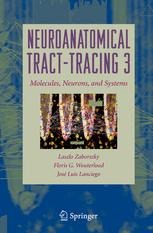
Neuroanatomical Tract-Tracing : Molecules, Neurons, and Systems
"The content of the book also serves to emphasize that neuroanatomy is, perhaps more than ever, a thriving and important part of the neurosciences...Most contributions have in common the combination of modern tract-tracing methods with other means of characterizing neural tissue, and thus the book also serves to highlight the gradual disappearance of borders between traditional neuroanatomy and other approaches to the study of the nervous system...this book should continue to be a useful source of information, and deserves to be available in all laboratories applying or considering to apply neuroanatomical methods."
Neuroactive Steroids in Brain Function, Behavior and Neuropsychiatric Disorders : Novel Strategies for Research and Treatment
Over the past few decades the involvement of neurosteroids in brain function and mental health has attracted much interest, not only from a neuroscience perspective, but also from clinical and therapeutic aspects. In recent years, much of the research has focused on the multifunctional position of neurosteroids in the nervous system. The areas that have been explored, in particular, are the cellular and molecular mechanisms involved in the activity of neurosteroids in the brain, the role of neurosteroids in brain development, neurodegeneration and neuroplasticity, and their pharmacological properties. The large increase in the number of publications highlights this amplified interest in neurosteroids. Over the last 7 years at least 400 papers have been published describing the putative role of neurosteroids in the modulation of basic brain function and in the etiology and treatment of psychiatric and neurological disorders.
Neural Preprocessing and Control of Reactive Walking Machines: Towards Versatile Artificial Perception-Action Systems
This book presents biologically inspired walking machines interacting with their physical environment. It describes how the designs of the morphology and the behavior control of walking machines can benefit from biological studies. The purpose of this book is to develop a modular structure of neural control generating different reactive behaviors of the physical walking machines, to analyze the neural mechanisms underlying the reactive behaviors, and to demonstrate the sensor fusion technique leading to smooth switching between appropriate behaviors, like obstacle avoidance and sound tropism.

Neural Information Processing ; 14th International Conference, ICONIP 2007, Kitakyushu, Japan, November 13-16, 2007, Revised Selected Papers, Part II
The 228 revised full papers presented were carefully reviewed and selected from numerous ordinary paper submissions and 15 special organized sessions. The 116 papers of the first volume are organized in topical sections on computational neuroscience, learning and memory, neural network models ,supervised /unsupervised/reinforcement learning, statistical learning algorithms, optimization algorithms, novel algorithms, as well as motor control and vision. The second volume contains 112 contributions related to statistical and pattern recognition algorithms, neuromorphic hardware and implementations, robotics, data mining and knowledge discovery, real world applications, cognitive and hybrid intelligent systems, bioinformatics, neuroinformatics, brain-conputer interfaces, and novel approaches.

Neural Information Processing ; 14th International Conference, ICONIP 2007, Kitakyushu, Japan, November 13-16, 2007, Revised Selected Papers, Part I
The 228 revised full papers presented were carefully reviewed and selected from numerous ordinary paper submissions and 15 special organized sessions. The 116 papers of the first volume are organized in topical sections on computational neuroscience, learning and memory, neural network models, supervised/unsupervised/reinforcement learning, statistical learning algorithms, optimization algorithms, novel algorithms, as well as motor control and vision. The second volume contains 112 contributions related to statistical and pattern recognition algorithms, neuromorphic hardware and implementations, robotics, data mining and knowledge discovery, real world applications, cognitive and hybrid intelligent systems, bioinformatics, neuroinformatics, brain-conputer interfaces, and novel approaches.
