



الصفحة 1
الصفحة 1

New insights in machine learning and deep neural networks
Gatheres ten exemplary papers, each delineating advancements within the spheres of machine learning and deep neural networks. Commencing with a thorough exploration by Figueira and Vaz, readers are introduced to the nuances of synthetic data generation and evaluation, followed closely by Silva and Pedroso's systematic approach to leveraging deep reinforcement learning within the intricate realm of delivery logistics. Kamran et al. contribute an astute methodology for camouflage object segmentation, whereas Pinheiro and collaborators offer a crafted semi-supervised strategy for predicting EGFR mutations via CT images. Subsequent contributions, such as Lee and Yoo's framework for portrait emotion recognition and Balakrishnan et al.'s analytical exploration of transformer models for Twitter disaster detection, further exemplify the depth of research contained herein.
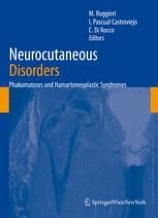
Neurocutaneous Disorders : Phakomatoses and Hamartoneoplastic Syndromes
Neurocutaneous diseases are a wide group of conditions that affect the nervous system but appear as lesions of the skin. Some of the more common entities have variable forms of expression that can confuse the diagnosis; for the rare conditions it is difficult to find descriptions in the literature. Recent insights into their cellular, biochemical and molecular genetic bases have shown the essential need for a new nosology and updated genotype-phenotype correlations. The book provides an authoritative source of knowledge about these difficult problems and bridges the gap between clinical recognition and the new molecular medicine. The editors, distinguished clinicians and geneticists, assembled an internationally renowned group of collaborators, many of them the experts who first described a particular disorder or established its present accepted definition.

Guide to Effective Grant Writing : How to Write a Successful NIH Grant Application
Guide to Effective Grant Writing: How to Write a Successful NIH Grant is written to help the 100,000+ post-graduate students and professionals who need to write effective proposals for grants. There is little or no formal teaching about the process of writing grants for NIH, and many grant applications are rejected due to poor writing and weak formulation of ideas. Procuring grant funding is the central key to survival for any academic researcher in the biological sciences; thus, being able to write a proposal that effectively illustrates one's ideas is essential. Covering all aspects of the proposal process, from the most basic questions about form and style to the task of seeking funding, this volume offers clear advice backed up with excellent examples. Included are a number of specimen proposals to help shed light on the important issues surrounding the writing of proposals. The Guide is a clear, straight-forward, and reader-friendly tool.

Formal Methods in Software and Systems Modeling : Essays Dedicated to Hartmut Ehrig on the Occasion of His 60th Birthday
By presenting state-of-the-art research results on various aspects of formal and visual modeling of software and systems, this book commemorates the 60th birthday of Hartmut Ehrig. The 24 invited reviewed papers are written by students and collaborators of Hartmut Ehrig who are established researchers in their fields. Reflecting the scientific interest and work of Hartmut Ehrig, the papers fall into three main parts on graph transformation, algebraic specification and logic, and formal and visual modeling.

Enterprise interoperability II : New challenges and approaches
Interoperability: the ability of a system or a product to work with other systems or products without special effort from the user is a key issue in manufacturing and industrial enterprise generally. It is fundamental to the production of goods and services quickly and at low cost at the same time as maintaining levels of quality and customisation. Interoperability is achieved if internal and external collaborators can interact on at least three levels: data, applications and business enterprise (through the architecture of an enterprise model and making allowance for the semantics of both partners). Not only a problem of software and IT technologies, it implies support for communication and transactions between different organisations that must be based on shared business references. Today, a new and important consideration must be taken into account – economic business evaluation and the definition of dissemination policy.

Enterprise interoperability : New challenges and approaches
Interoperability: the ability of a system or a product to work with other systems or products without special effort from the user is a key issue in manufacturing and industrial enterprise generally. It is fundamental to the production of goods and services quickly and at low cost at the same time as maintaining levels of quality and customisation. Interoperability is achieved if internal and external collaborators can interact on at least three levels: data, applications and business enterprise (through the architecture of an enterprise model and making allowance for the semantics of both partners). Not only a problem of software and IT technologies, it implies support for communication and transactions between different organisations that must be based on shared business references. Today, a new and important consideration must be taken into account – economic business evaluation and the definition of dissemination policy.

Elliptic and Parabolic Problems : A Special Tribute to the Work of Haim Brezis
This volume contains contributions by former students and collaborators of Haim Brezis given in honor of his 60th anniversary at a conference in Gaeta. H. Brezis has made significant contributions in the fields of partial differential equations and functional analysis. He is an inspiring teacher and counselor of many mathematicians in the front ranks. The collection of papers presented here grew out from his deep insight of analysis. In addition it reflects Brezis's elegant way of creative thinking

Drift-Driven Design of Buildings : Mete Sozen’s Works on Earthquake Engineering
Summarizes the most essential concepts that every engineer designing a new building or evaluating an existing structure should consider in order to control the damage caused by drift (deformation) induced by earthquakes. It presents the work on earthquake engineering done by Dr. Mete Sozen and dozens of his collaborators and students over decades of experimentation, analysis, and reconnaissance. Many of the concepts produced through this work are integral part of earthquake engineering today. Nevertheless, the connection between the concepts in use today and the original sources is not always explained.
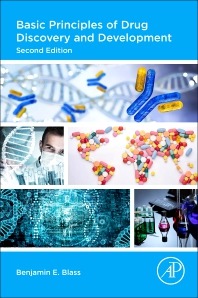
Basic principles of drug discovery and development ; 2nd ed.
Presents the multifaceted process of identifying a new drug in the modern era, which requires a multidisciplinary team approach with input from medicinal chemists, biologists, pharmacologists, drug metabolism experts, toxicologists, clinicians, and a host of experts from numerous additional fields. Enabling technologies such as high throughput screening, structure-based drug design, molecular modeling, pharmaceutical profiling, and translational medicine are critical to the successful development of marketable therapeutics. Given the wide range of disciplines and techniques that are required for cutting edge drug discovery and development, a scientist must master their own fields as well as have a fundamental understanding of their collaborator’s fields.
