



الصفحة 9
الصفحة 9

Information and communication technologies in tourism 2005 ; Proceedings of the International Conference in Innsbruck, Austria, 2005
The key objectives of this premier conference in ICT in travel and tourism are the dissemination of research findings and strong interaction among researchers and practitioners. The conference theme this year is "eBusiness is here ? – what is next?" The future is being explored by researchers from all perspectives – papers examine the basic architectures and systems underlying how toursim information is provided and how the marketplace is responding. Trip advisory research is now moving from the speculative to the sophisticated reflecting the rapidly changing individual skill sets, motivations and goals of today's tourist while an emerging collection of work is investigating the growing phenomenon of collaboration and community-building. A close examiniation of the 51 research papers will reveal the full extent of marketing-oriented research and show how strong the link is between ICT developments per se and business adoption and use of the new technologies and systems.

Information and communication technologies and real-life learning : New education for the knowledge society
The IFIP series publishes state-of-the-art results in the sciences and technologies of information and communication. The scope of the series includes: foundations of computer science; software theory and practice; education; computer applications in technology; communication systems; systems modeling and optimization; information systems; computers and society; computer systems technology; security and protection in information processing systems; artificial intelligence; and human-computer interaction. Proceedings and post-proceedings of referred international conferences in computer science and interdisciplinary fields are featured. These results often precede journal publication and represent the most current research. The principal aim of the IFIP series is to encourage education and the dissemination and exchange of information about all aspects of computing.

Informatics education - supporting computational thinking ; 3rd International Conference on informatics in secondary schools : Evolution and perspectives, ISSEP 2008 Torun Poland, July 1-4, 2008 Proceedings
Informatics Education – Supporting Computational Thinking contains papers presented at the Third International Conference on Informatics in Secondary Schools – Evolution and Perspective, ISSEP 2008, held in July 2008 in Torun, Poland. As with the proceedings of the two previous ISSEP conferences (2005 in Klag- furt, Austria, and 2006 in Vilnius, Lithuania), the papers presented in this volume address issues of informatics education transcending national boundaries and, the- fore, transcending differences in the various national legislation and organization of the educational system. Observing these issues, one might notice a trend. The p- ceedings of the First ISSEP were termed From Computer Literacy to Informatics F- damentals [1]. There, broad room was given to general education in ICT.

Infection control and management of hazardous materials for the dental team
Comprehensive coverage looks at infection control and prevention from the perspective of all dental team members. Easy-to-follow, step-by-step procedures are provided for skills that dental team members must master, each presented with a goal, materials, chronological steps, and rationales for the performance of each step. Review questions ensure your comprehension of the material and provide practice for classroom and board examinations. Key terms begin each chapter and are highlighted within text discussions and defined in a back-of-book glossary. Chapter learning objectives help you set goals for what you will accomplish and serve as checkpoints for comprehension and study tools in preparation for examinations.

Inessential Colors : Architecture on Paper in Early Modern Europe
Addresses color as a key player in the long history of rivalry and exchange between European traditions in architectural representation and practice.Featuring a wealth of previously unpublished drawings, Inessential Colors challenges the long-standing misreading of architectural drawings as illustrations rather than representations, pointing instead to their inherent qualities as independent objects whose beauty paved the way for the visual system architects use today.

Industrial competitiveness : Cost reduction
The objectives of industrial management are: - Implementation of the policy adopted by the owners or the board of directors - Optimum return on investment - Efficient utilization of Men, Machine and Money. In other words, industry must make profit. Manufacturing represents only one aspect of the activities of industrial management. Present-day manufacturing methodology does not consider making profit as their primary objective. The manufacturing process requires the knowledge of many disciplines, such as design, process planning, costing, marketing, sales, customer relations, costing, purchasing, bookkeeping, inventory control, material handling, shipping, and so on.

In Vitro Culture of Mycorrhizas
biologists have made important progress in understanding better the functioning of AM fungi. An in vitro technique has been developed using mycorrhizal root organ cultures, which made it possible to investigate the genetics, cell biology and physiology of AM fungi. We can now be objective enough to critically evaluate the impacts the in vitro technique has had to improve our knowledge on mycorrhizal symbiosis.

Improvements in System Safety ; Proceedings of the Sixteenth Safety-critical Systems Symposium, Bristol, UK, 5-7 February 2008
Improvements in System Safety contains the full complement of papers presented at the sixteenth annual Safety-critical Systems Symposium, held at Bristol, UK, in February 2008.The Symposium is for engineers, managers and academics in the field of safety, across all industry sectors, and so the papers included in this volume offer a wide-ranging coverage of major safety issues as well as a good blend of academic research and industrial experience. They include discussions of some of the most recent developments in the field.
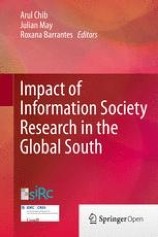
Impact of Information Society Research in the Global South
This book addresses two aspects— Impact of research: How is the research on ICTs in the Global South playing a role in creating an information society? (e.g. policy formulation, media coverage, implementation in practice) and Research on impact: What is the evidence for the impact of ICTs on society? (i.e. the objectives of socio-economic development). This volume brings together a multiplicity of voices and approaches from social scientific research to produce an engaging volume for a variety of stakeholders including academics, researchers, practitioners, policy-makers and those in the business and civil sectors of society.

Imaging planetario : Guida all’uso della webcam = Planetary Imaging : Guide to using the webcam
In this book, Martin Mobberley introduces the amateur to the use of webcams and digital image processing, while providing detailed tips for shooting the Sun, Moon and planets. Each object, with its specific shooting and processing techniques, is treated in a separate chapter. Through the images in this book, the amateur will be able to realize what can be done by applying a webcam to your telescope!

Image-Based Rendering
Image-based rendering (IBR) refers to a collection of techniques and representations that allows 3D scenes and objects to be visualized in a realistic way without full 3D model reconstruction. The potential for photorealistic visualization has tremendous appeal, especially for applications such as video games, virtual travel, and E-commerce, which stand to greatly benefit from this technology.

Image Processing Using Pulse-Coupled Neural Networks
This is the first book to explain and demonstrate the tremendous ability of Pulse-Coupled Neural Networks (PCNNs) when applied to the field of image processing. PCNNs and their derivatives are biologically inspired models that are powerful tools for extracting texture, segments, and edges from images.

Image and video processing and recognition based on artificial intelligence (Vol. II)
Focuses on challenging issues in the field of AI-based image and video processing and recognition, including the topics of AI-based image processing, understanding, recognition, compression, and reconstruction; AI-based video processing, understanding, recognition, compression, and reconstruction; computer vision based on AI; AI-based biometrics; AI-based object detection and tracking; approaches that combine AI techniques and conventional methods for image and video processing and recognition; explainable AI (XAI) for image and video processing and recognition; generative adversarial network (GAN)-based image and video processing and recognition; and approaches that combine AI techniques and blockchain methods for image and video processing and recognition.

Image Analysis and Recognition ; 5th International Conference, ICIAR 2008, Póvoa de Varzim, Portugal, June 25-27, 2008. Proceedings
The 110 revised full papers presented together with 2 invited papers were carefully reviewed and selected from 226 submissions. The papers are organized in topical sections on image restoration and enhancement, image and video segmentation, non-linear image processing, image and video coding and encryption, indexing and retrieval, computer vision, feature extraction and classification, shape representation and matching, object recognition, character recognition, texture and motion analysis, tracking, biomedical image analysis, biometrics, face recognition, and a special session on recent advances in multimodal biometric systems and applications.

Image Analysis and Recognition ; 4th International Conference, ICIAR 2007, Montreal, Canada, August 22-24, 2007, Proceedings
These papers cover image restoration and enhancement, image and video processing and analysis, image segmentation, computer vision, pattern recognition for image analysis, shape and matching, motion analysis, tracking, and more.

Image Analysis and Recognition ; 17th International Conference, ICIAR 2020, Póvoa de Varzim, Portugal, June 24–26, 2020, Proceedings, Part II
This two-volume set LNCS 12131 and LNCS 12132 constitutes the refereed proceedings of the 17th International Conference on Image Analysis and Recognition, ICIAR 2020, held in Póvoa de Varzim, Portugal, in June 2020. The 54 full papers presented together with 15 short papers were carefully reviewed and selected from 123 submissions. The papers are organized in the following topical sections: image processing and analysis; video analysis; computer vision; 3D computer vision; machine learning; medical image and analysis; analysis of histopathology images; diagnosis and screening of ophthalmic diseases; and grand challenge on automatic lung cancer patient management.

Image Analysis and Recognition ; 17th International Conference, ICIAR 2020, Póvoa de Varzim, Portugal, June 24–26, 2020, Proceedings, Part I
This two-volume set LNCS 12131 and LNCS 12132 constitutes the refereed proceedings of the 17th International Conference on Image Analysis and Recognition, ICIAR 2020, held in Póvoa de Varzim, Portugal, in June 2020. The 54 full papers presented together with 15 short papers were carefully reviewed and selected from 123 submissions. The papers are organized in the following topical sections: image processing and analysis; video analysis; computer vision; 3D computer vision; machine learning; medical image and analysis; analysis of histopathology images; diagnosis and screening of ophthalmic diseases; and grand challenge on automatic lung cancer patient management.

Image Analysis and Processing – ICIAP 2005 ; 13th International Conference, Cagliari, Italy, September 6-8, 2005, Proceedings
This volume contains the Proceedings of the 13th International Conference on Image Analysis and Processing (ICIAP 2005), held in Cagliari, Italy, at the conference centre “Centro della Cultura e dei Congressi”, on September 6–8, 2005. ICIAP 2005 was the thirteenth edition of a series of conferences organized every two years by the Italian group of researchersa?liated to the International Association for Pattern Recognition (GIRPR) with the aim to bring together researchers in image processing and pattern recognition from around the world. As for the previous editions, conference topics concerned the theory of image analysis and processing and its classical and Internet-driven applications. The central theme of ICIAP 2005 was “Pattern Recognition in the Internet and Mobile Communications Era”. The interest for such a theme was con?rmed by the large number of papers dealing with it, the special session devoted to pattern recognition for computer network security, and the emphasis of two invited talks on Internet and mobile communication issues. ICIAP 2005 received 217 paper submissions. Fifteen papers were collected into the two special sessions dealing with Pattern Recognition for Computer Network Security and Computer Vision for Augmented Reality and Augmented Environments.

Image Analysis ; 14th Scandinavian Conference, SCIA 2005, Joensuu, Finland, June 19-22, 2005, Proceedings
This proceedings volume collects the scienti?c presentations of the Scandinavian Conference on Image Analysis, SCIA 2005, which was held at the University of Joensuu, Finland, June 19–22, 2005. The conference was the fourteenth in the series of biennial conferences started in 1980. The name of the series re?ects the fact that the conferences are organized in the Nordic (Scandinavian) countries, following the cycle Sweden, Finland, Denmark, and Norway. The event itself has always been international in its participants and presentations. Today there are many conferences in the ?elds related to SCIA. In this s- uation our goal is to keep up the reputation for the high quality and friendly environment of SCIA. We hope that participants feel that it’s worth attending the conference. Therefore, both the scienti?c and social program were designed to support the best features of a scienti?c meeting: to get new ideas for research and to have the possibility to exchange thoughts with fellow scientists.

Ideals, Varieties, and Algorithms : An Introduction to Computational Algebraic Geometry and Commutative Algebra
Algebraic Geometry is the study of systems of polynomial equations in one or more variables.The solutions of a system of polynomial equations form a geometric object called a variety; the corresponding algebraic object is an ideal. There is a close relationship between ideals and varieties which reveals the intimate link between algebra and geometry. Written at a level appropriate to undergraduates, this book covers such topics as the Hilbert Basis Theorem, the Nullstellensatz, invariant theory, projective geometry, and dimension theory.
