



الصفحة 9
الصفحة 9

Forest Road Operations in the Tropics
This book brings together information on road planning, location, design, construction and maintenance to support environmentally acceptable operations in tropical forests. It highlights the challenges of road operations in the tropics, includes techniques that have been shown to be successful, and discusses newer technologies. It is intended as a reference book for the forest engineer and others interested in the planning and management of tropical forests. Numerical examples are provided to provide clarity for interpreting graphs, procedures, and formulas. The book covers the various facets of road management from design objectives through practices to control environmental impacts.
Flux-corrected transport : Principles, algorithms, and applications
Addressing students and researchers as well as CFD practitioners, this book describes the state of the art in the development of high-resolution schemes based on the Flux-Corrected Transport (FCT) paradigm. Intended for readers who have a solid background in Computational Fluid Dynamics, the book begins with historical notes by J.P. Boris and D.L. Book. Review articles that follow describe recent advances in the design of FCT algorithms as well as various algorithmic aspects. The topics addressed in the book and its main highlights include: the derivation and analysis of classical FCT schemes with special emphasis on the underlying physical and mathematical constraints; flux limiting for hyperbolic systems; generalization of FCT to implicit time-stepping and finite element discretizations on unstructured meshes and its role as a subgrid scale model for Monotonically Integrated Large Eddy Simulation (MILES) of turbulent flows. The proposed enhancements of the FCT methodology also comprise the prelimiting and 'failsafe' adjustment of antidiffusive fluxes, the use of characteristic variables, and iterative flux correction. The cause and cure of detrimental clipping/terracing effects are discussed. Many numerical examples are presented for academic test problems and large-scale applications alike.
Fluid Mechanics : An Introduction to the Theory of Fluid Flows
Advancements of fluid flow measuring techniques and of computational methods have led to new ways to treat laminar and turbulent flows. These methods are extensively used these days in research and engineering practise. This also requires new ways to teach the subject to students at higher educational institutions in an introductory manner. The book provides the knowledge to students in engineering and natural science needed to enter fluid mechanics applications in various fields. Analytical treatments are provided, based on the Navier-Stokes equations. Introductions are also given into numerical and experimental methods applied to flows. The main benefit the reader will derive from the book is a sound introduction into all aspects of fluid mechanics covering all relevant subfields.
Flow and transport in fractured porous media
This book addresses the characterization of flow and transport in porous fractured media from experimental and modeling perspectives. The volume explores porous media problems, from the origin of the present natural porous structures, to their characterization, and various flow and transport phenomena that exist within the porous media. Examples are miscible displacements in porous media and fractured rock and the physical and chemical interactions within porous fractured aquifers. The book is a comprehensive presentation of investigations performed and analysed on different scales, supporting the understanding and application of experimental studies and numerical simulations.
Finite Element Methods in Civil and Mechanical Engineering : A Mathematical Introduction
The finite element method is widely employed for numerical simulations in engineering and science due to its accuracy and efficiency. This concise introduction to the mathematical theory of the finite element method presents a selection of applications in civil and mechanical engineering including beams, elastic membranes, the wave equation, heat transfer, seepage in embankment, soil consolidation, incompressible fluids, and linear elasticity.

Finite element design of concrete structures : Practical problems and their solutions
In Finite Element Design of Concrete Structures: practical problems and their solutions the author addresses this 'blind belief' in computer results by offering a useful critique that 'important details are overlooked due to the flood of information' from the output of computer calculations. Indeed, errors in the numerical model may lead in extreme cases to structural failures as the collapse of the so-called Sleipner platform has demonstrated.

Finite Element Analysis for Civil Engineering with DIANA Software
Introduces readers to the finite element analysis software DIANA (DIsplacement ANAlyzer) and its applications in civil engineering. Developed by TNO Corporation in the 1970s, DIANA is frequently used in civil engineering and engineering mechanics. This book presents a simplified overview of the basic background theory to help beginners master the software quickly. It also discusses GUI operation and the command console in Python language, and includes examples involving classical modeling operations to help readers review each section.

Finite element analysis for building assessment : Advanced use and practical recommendations
Existing structures represent a heterogeneous category in the global built environment as often characterized by the presence of archaic materials, damage and disconnections, uncommon construction techniques and subsequent interventions throughout the building history. In this scenario, the common linear elastic analysis approach adopted for new buildings is incapable of an accurate estimation of structural capacity, leading to overconservative results, invasive structural strengthening, added intervention costs, excessive interference to building users and possible losses in terms of aesthetics or heritage values. For a rational and sustainable use of the resources, this book deals with advanced numerical simulations, adopting a practical approach to introduce the fundamentals of Finite Element Method, nonlinear solution procedures and constitutive material models.
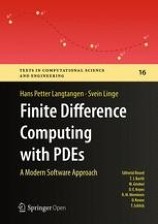
Finite Difference Computing with PDEs : A Modern Software Approach
This easy-to-read book introduces the basics of solving partial differential equations by means of finite difference methods. Unlike many of the traditional academic works on the topic, this book was written for practitioners. Accordingly, it especially addresses: the construction of finite difference schemes, formulation and implementation of algorithms, verification of implementations, analyses of physical behavior as implied by the numerical solutions, and how to apply the methods and software to solve problems in the fields of physics and biology.
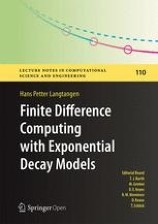
Finite Difference Computing with Exponential Decay Models
This text provides a very simple, initial introduction to the complete scientific computing pipeline: models, discretization, algorithms, programming, verification, and visualization. The pedagogical strategy is to use one case study – an ordinary differential equation describing exponential decay processes – to illustrate fundamental concepts in mathematics and computer science. The book is easy to read and only requires a command of one-variable calculus and some very basic knowledge about computer programming. Contrary to similar texts on numerical methods and programming, this text has a much stronger focus on implementation and teaches testing and software engineering in particular.
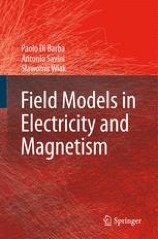
Field Models in Electricity and Magnetism
Covering the development of field computation in the past forty years, Field Models in Electricity and Magnetism intends to be a concise, comprehensive and up-to-date introduction to field models in electricity and magnetism, ranging from basic theory to numerical applications. The approach assumed throughout the whole book is to solve field problems directly from partial differential equations in terms of vector quantities. Theoretical issues are illustrated by practical examples. In particular, a single example is solved by different methods so that, by comparison of results, limitations and advantages of the various methods are made clear.

Fibre reinforced concrete : Improvements and innovations II : X rILEM-fib international symposium on fibre reinforced concrete (BEFIB) 2021
Highlights the latest advances, innovations, and applications in the field of fibre-reinforced concrete (FRC). It discusses a diverse range of topics concerning FRC: technological aspects, nanotechnologies related with FRC, mechanical properties, long-term properties, analytical and numerical models, structural design, codes and standards, quality control, case studies, Textile-Reinforced Concrete, Geopolymers.

Extreme Man-Made and Natural Hazards in Dynamics of Structures
The present threat of the terrorist attacks or accidental explosions, the climate change which brings strong stormy winds or yet the destructive earthquake motion that occurs in previously inactive regions or brings about tsunamis, are a few examples of the kind of applications we seek to address in this work.

Experimenting with Dynamic Macromodels : Growth and Cycles
This book presents a macroeconomic dynamic model à la Solow-Swan, including the market for labour, in a discrete time structure. Labour supply is modelled as a reversed S curve (derived in the appendix). The models are expanded to include expenditure on R&D (thus endogenous technical progress), and public expenditure on infrastructures. For each of the three models, numerical simulations are implemented in MAPLE, and the results are shown in time series figures, which make it easy to detect that even small changes in the parameters produce responses in the time behaviour of the main variables: from steady growth, to regular cycles, to chaotic-like time paths. The simulations show that cycles do not promote material welfare, as measured by total undiscounted consumption along the time horizon, and that the comparative action of R&D versus public expenditure is strictly linked to the values assigned to the parameters.

Experimental Unsaturated Soil Mechanics
These proceedings are a continuation of the series of International Conferences in Germany entitled "Mechanics of Unsaturated Soils." The primary objective is to discuss and understand unsaturated soil behaviour such that engineered activities are made better with times in terms of judgement and quality. We all realise by now that in addition to the knowledge on the classical concepts, it becomes an enormous challenging task to adapt convincing new concepts and present them in such a way that it could be used in engineering practices. The experimental studies reported primarily focus on the role of microstructure and fabric for the complex coupled hydro-mechanical behaviour of cohesive frictional materials. Several papers consider the relevance of temperature affecting the constitutive behaviour of clays. Common features of state of the art theoretical and numerical approaches, including theory of porous media and mixture theory, intend to describe the complex multi-field problems of fully coupled thermo-hydraulic-mechanical-chemical initial - boundary value problems.

Experimental Algorithms ; 7th International Workshop, WEA 2008 Provincetown, MA, USA, May 30-June 1, 2008 Proceedings
The Workshop on Experimental Algorithms, WEA, is intended to be an international forum for research on the experimental evaluation and engineering of algorithms, as well as in various aspects of computational optimization and its applications. The emphasis of the workshop is the use of experimental me- ods to guide the design, analysis, implementation, and evaluation of algorithms, heuristics, and optimization programs. WEA 2008 was held at the Provincetown Inn, Provincetown, MA, USA, on May 30 – June 1, 2008. This was the seventh workshop of the series.

Evolution, Monitoring and Predicting Models of Rockburst : Precursor Information for Rock Failure
Focuses on investigating predicting precursor information and key points of rockburst in mining engineering through laboratory experiment, theoretical analysis, numerical simulation and case studies. Understanding the evolution patterns for the microstructure instability of rock is a prerequisite for rockburst prediction. The book provides a guide for readers seeking to understand the evolution patterns for the microstrucure of rock failure, the predicting key point of rock failure and the rockburst predicting model. It will be an essential reference to understand mechanism of rockburst and sheds new light on dynamic disasters prediction. Chapters are carefully developed to cover (1) The evolution patterns for the microstructure instability of rock; (2) Rockburst hazard monitoring and predicting criterion and predicting models. The book addresses the issue with a holistic and systematic approach that investigates the occurrence mechanism of rockburst based on the evolution patterns for the microstructure of rock failure and establishes the predicting model of rockburst.

Evolution of Thin Film Morphology : Modeling and Simulations
Thin film deposition is the most ubiquitous and critical of the processes used to manufacture high tech devices. Morphology and microstructure of thin films directly controls their optical, magnetic, and electrical properties. This book focuses on modeling and simulations used in research on the morphological evolution during film growth. The authors emphasize the detailed mathematical formulation of the problem both through numerical calculations based on Langevin continuum equations, and through Monte Carlo simulations based on discrete surface growth models when an analytical formulism is not convenient. Evolution of Thin-Film Morphology will be of benefit to university researchers and industrial scientists working in the areas of semiconductor processing, optical coating, plasma etching, patterning, micro-machining, polishing, tribology, and any discipline that requires an understanding of thin film growth processes.

Euro-Par 2020 : Parallel Processing ; 26th International Conference on Parallel and Distributed Computing, Warsaw, Poland, August 24–28, 2020, Proceedings
This book constitutes the proceedings of the 26th International Conference on Parallel and Distributed Computing, Euro-Par 2020, held in Warsaw, Poland, in August 2020. The conference was held virtually due to the coronavirus pandemic. The 39 full papers presented in this volume were carefully reviewed and selected from 158 submissions. They deal with parallel and distributed computing in general, focusing on support tools and environments; performance and power modeling, prediction and evaluation; scheduling and load balancing; high performance architectures and compilers; data management, analytics and machine learning; cluster, cloud and edge computing; theory and algorithms for parallel and distributed processing; parallel and distributed programming, interfaces, and languages; multicore and manycore parallelism; parallel numerical methods and applications; and accelerator computing.

Euro-Par 2007 Parallel Processing ; 13th International Euro-Par Conference, Rennes, France, August 28-31, 2007, Proceedings
This book covering support tools and environments; performance prediction and evaluation; scheduling and load balancing; compilers for high performance; parallel and distributed databases; grid and cluster computing; peer-to-peer computing; distributed systems and algorithms; parallel and distributed programming; parallel numerical algorithms; distributed and high-performance multimedia; theory and algorithms for parallel computation; high performance networks; mobile and ubiquitous computing.
