



الصفحة 8
الصفحة 8

Multifunctional Barriers for Flexible Structure : Textile, Leather and Paper
The intent of this book is to give a complete overview of the present state of the art of flexible barrier materials such as textile, paper and leather, including methods for barrier evaluation. It will be of interest to readers in industries, consumers, and members of the scientific community. The scope of the field is clearly delineated here for the first time, and it deals with a number of specific topics such as barrier to fire, antibacterial properties, resistance to waves (electrostatic, electromagnetic, acoustics), anti-odor, etc. combined with characterization techniques as well as material nanotechnology.

Multi-dimensional Approaches Towards New Technology : Insights on Innovation, Patents and Competition
This open access edited book captures the complexities and conflicts arising at the interface of intellectual property rights (IPR) and competition law. To do so, it discusses four specific themes: (a) policies governing functioning of standard setting organizations (SSOs), transparency and incentivising future innovation; (b) issue of royalties for standard essential patents (SEPs) and related disputes; (c) due process principles, procedural fairness and best practices in competition law; and (d) coherence of patent policies and consonance with competition law to support innovation in new technologies.

Multidetector-Row CT of the Thorax
With the advent of multidetector-row technology, excitement has returned to computed tomography. Not only can we now image faster and with better resolution than ever before; more importantly, the development of sophisticated image acquisition techniques has enabled us to venture into areas previously considered to be beyond the scope of CT imaging. The knowledge, experience, and vision of a host of renowned international experts in cutting-edge thoracic applications of multidetector-row CT are condensed within this book. The result is a critical, comprehensive review of the novel opportunities, but also the new challenges, brought about by the development of ever-faster CT acquisition techniques.

Multi-Arm Cooperating Robots : Dynamics and Control
This book will be useful to a wide audience of engineers, ranging from undergraduate and graduate students, new and advanced academic researchers, to practitioners (mechanical and electrical engineers, computer and system scientists). It is intended for readers whose work involves manufacturing, industrial, robotics, automation, computer and control engineering, and who wish to find out about this important new technology and its potential advantages for control engineering applications.

Multi-Agent Systems and Applications IV ; 4th International Central and Eastern European Conference on Multi-Agent Systems, CEEMAS 2005, Budapest, Hungary, September 15-17, 2005, Proceedings
In the very competitive field of agent oriented conferences and workshops nowadays (such as AAMAS, WI/IAT, EUMAS, CIA, MATES) the special profile of CEEMAS is that it is trying to bridge the gap between applied research achievements and theoretical research activities. Our ambition is to provide a forum for presenting theoretical research with an evident application potential, implemented application prototypes and their properties, as well as industrial case studies of successful (but also unsuccessful) agent technology deployments. This is why the CEEMAS proceedings volume provides a collection of research and application papers. The technical research paper section of the proceedings (see pages 11–499) contains pure research papers as well as research results in application settings while the application papers section (see pages 500–530) contains papers focused on application aspects. The goal is to demonstrate the real life value and commercial reality of multi-agent systems as well as to foster communication between academia and industry in this field.

Multi-Agent Systems and Applications ; 9th ECCAI Advanced Course ACAI 2001 and Agent Link's 3rd European Agent Systems Summer School, EASSS 2001, Prague, Czech Republic, July 2-13, 2001. Selected Tutorial Papers
The Advanced Course on Artificial Intelligence ACAI 2001 with the subtitle M ulti- Agent Systems and Their Applications , held in Prague, Czech Republic, was a joint event of ECCAI (the European Coordinating Committee for Artificial Intelligence) and AgentLink, the European Network of Excellence for Agent-Based Computing. Whereas ECCAI organizes two-week ACAI courses on different topics every second year, AgentLink s European Agent Systems Summer School (EASSS) has been an annual event since 1999. This year, both of these important events were merged together, giving weight to the fact that multi-agent systems currently represent one of the hottest topics in AI research. The name, ACAI 2001 Summer School, is intended to emphasize that this event continues the tradition of regular ECCAI activities (ACAI), as well as the EASSS summer schools of AgentLink.
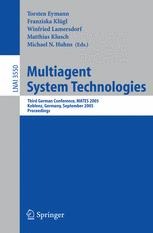
Multiagent System Technologies ; Vol. 3550 : 3rd German Conference, MATES 2005, Koblenz, Germany, September 11-13, 2005, Proceedings
After two successful MATES conferences in Erfurt 2003 and 2004, the 3rd G- man conference on Multi-agent System Technologies (MATES 2005) took place in Koblenz, Germany, in September 2005, and was co-located with the 28th German Conference on Arti?cial Intelligence (KI 2005). Building onotheragent-related events in Germany in the past, and organized by the GI German Special Interest Group on Distributed Arti?cial Intelligence, the MATES conference series aims at promoting the theory and applications of agents and multiagent systems. In corporating the 9th International Workshopon Cooperative Information Agents (CIA 2005), the topics of interest for MATES 2005 also covered the ?elds of intelligent information agents and systems for the Internet and the (Semantic) Web. As in recent years, MATES 2005 provided a distinguished, lively and int- disciplinary forum for researchers, users, and developers of agent technology, to present and discuss the latest advances of research and development in the area of autonomous agents and multiagent systems. Accordingly, the topics of MATES 2005 covered the whole range from the theory to applications of age- and multiagent technology. The technical program included a total of 24 sci- ti?c talks, and demonstrations of selected running agent systems, and both the MATES 2005 Best Paper and the CIA 2005 System Innovation awards.

Multi-Agent Programming : Languages, Platforms and Applications
Part I describes four approaches that are based on computational logic or process algebra--Jason, 3APL, IMPACT, and CLAIM/SyMPA. These programming languages have formal semantics and use heavy machinery based on formal methods, but also provide working platforms for the development of multi-agent systems. Part II presents agent languages and platforms that extend or are based on Java--JADE, Jadex, and JACKTM. Although these have no formal semantics, the languages are well documented and the platforms provide a variety of tools that have been extensively used in practice. Part III provides two significant industry specific applications--The DEFACTO System for coordinating human-agent teams for the future of disaster response, and the ARTIMIS rational dialogue agent technology. The book also features seven appendices, summarising each of the agent programming languages, hence facilitating comparison of the approaches. In particular, Appendix A describes the criteria used for comparing the agent languages and platforms.

Multiagent based Supply Chain Management
The authors takes a close look at what has been done recently in the field of supply chain management using agent technology and more specifically multiagent systems. The book contains sixteen chapters organized in four main parts; Introductory Papers; Multiagent Based Supply Chain Modeling, Collaboration and Coordination Between Agents in a Supply Chain and Multiagent Based Supply Chain Management: Applications. This book is intended as reference material for researchers, graduate students, and practitioners alike who are interested in pursuing research and development in this area, and who need for that, a comprehensive view of the existing literature, and some ideas for future directions.

Multi-access Edge Computing : Software Development at the Network Edge
The book aims not only at providing a comprehensive technology and standard reference overview for students, but also useful research insights and practical exercises for edge software developers and investigators in the area (and for students looking to apply their skills). A particular emphasis is given Multi-access Edge Computing (MEC) as defined in European Telecommunications Standards Institute (ETSI), in relationship with other standard organizations like 3GPP, thus in alignment with the recent industry efforts to produce harmonized standards for edge computing leveraging both ETSI ISG MEC and 3GPP specifications.
MSCs and Innovative Biomaterials in Dentistry
Presents the modern concepts of mesenchymal stem cells (MSCs) and biomaterials as they pertain to the dental field. The book is organized around three main topics: MSCs biology, advanced biomaterials, and clinical applications. The chapters present basic information on stem cell biology and physiology, modern biomaterials that improve bone tissue regeneration, the biomatrices like platelet-rich fibrin (PRF) used to functionalize the biomaterials surface, the strategic and safe intraoral seats of harvesting, the new sources for MSCs, as well as the future perspectives and new challenges in these exciting fields.
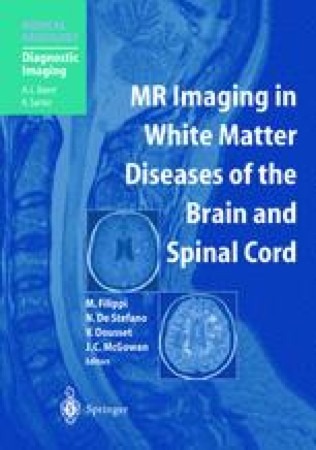
MR Imaging in White Matter Diseases of the Brain and Spinal Cord
Comprises a series of comprehensive and up-to-date reviews on the use of MR imaging in these major neurological conditions. The diverse available MR techniques, such as magnetization transfer MRI, diffusion-weighted MRI, MR spectroscopy, functional MRI, cell-specific MRI, perfusion MRI, and microscopic imaging with ultra-high field MRI, offer an extraordinarily powerful means of gaining fundamental in vivo insights into disease processes. The strengths and weaknesses of all these techniques in the study of multiple sclerosis and other relevant diseases are extensively considered. After an introductory section on neuroimaging technology, subsequent sections address disorders of myelination, demyelinating diseases, immune-mediated disorders, and white matter disorders related to aging and other conditions. This book provides a valuable summary of the state of the art in the field, and defines important areas for future research.

Moving Millions : Transport Strategies for Sustainable Development in Megacities
The Alliance for Global Sustainability is an international partnership among four of the leading scienti?c and technological universities worldwide: • The Massachusetts Institute of Technology (MIT-AGS); • The University of Tokyo (UT); • The Swiss Federal Institute of Technology (ETH); and • The Chalmers University of Technology. Created in 1997, the AGS today brings together hundreds of university scientists, engineers, and social scientists to address complex issues that lie at the intersection of environmental, economic, and social policy goals. Since its inception, the AGS has promoted and supported multidisciplinary research teams drawn from its partner institutions. Working on critical issues in sustainability across several ?elds encompassing energy and climate, mobility, urban systems, water and agriculture, cleaner technologies, public policy, and communications, these teams have developed a signi?cant body of new knowledge.

Mouse controller using electroencephalography (EEG) device
The growing technologies related to neuroscience has to lead many innovative applications, most importantly Electroencephalography, or EEG for short. This field of study has become recently a trend that many companies around the world have started to enter the race of conquering the brain and controlling everything from a mouse controller to the whole human body. This project aims to help disabled people use a computer with ease and simplicity without needing to use their hands, or anything really, which they can achieve by wearing a headset or get someone to put it on them. The headset is designed to read brain activities and send it to a computer program to understand where the user wants to move the mouse cursor on the computer screen using an Artificial Intelligence model. This project helps further researches in this field which pushes the technology even further from where it is now. The device designed for this project can be repurposed pretty easily to serve many different applications other than controlling a mouse.

Motion-Free Super-Resolution
With the explosion of Internet technology and graphics engines, digital images are now everywhere. Image capturing tools are all pervading - in our pockets to inside a satellite. And although imaging applications demand an availability to high resolution images, such images are not picture perfect and may be lacking sufficient details. This requires that these images be super-resolved for improved details. How to achieve this is what constitutes research in the area of image super-resolution. Motion-Free Super-Resolution explores new technology for image super-resolution - applying cues other than the motion cue in super-resolving a scene. This book will serve as an essential reference for both academecians and practicing engineers in the area of image processing and computer vision, as well as providing a basis for ongoing research in this field.

Moral reasoning at work : Rethinking ethics in organizations ; 2nd ed.
Moral Reasoning at Work offers a fresh perspective on how to live with them using ethics and moral psychology research. It argues that decision-makers must go beyond compliance and traditional approaches to ethics to prepare for moral dilemmas. The book has been updated with a range of examples from the author’s more recent research, to reflect current issues affecting organizations in the digital age. With two new chapters on artificial intelligence and social media, this new edition provides an up-to-date overview of ethical challenges in organizations.

Mono-Cycle Photonics and Optical Scanning Tunneling Microscopy : Route to Femtosecond Ångstrom Technology
"Mono-Cycle Photonics and Optical Scanning Tunneling Microscopy" deals with both the ultrashort laser-pulse technology in the few- to mono-cycle region and the laser-surface-controlled scanning-tunneling microscopy (STM) extending into the spatiotemporal extreme technology. The former covers the theory of nonlinear pulse propagation beyond the slowly-varing-envelope approximation, the generation and active chirp compensation of ultrabroadband optical pulses, the amplitude and phase characterization of few- to mono-cycle pulses, and the feedback field control for the mono-cycle-like pulse generation. In addition, the wavelength-multiplex shaping of ultrabroadband pulse is described. The latter covers the CW-laser-excitation STM, the femtosecond-time-resolved STM and atomic-level surface phenomena controlled by femtosecond pulses.

Monitoring and Modelling Lakes and Coastal Environments
Habitat environments of lakes and coastal wetlands are deteriorating due to their exploitative use and improper management. As rapid development and population growth continue in coastal areas, environmental degradation and over exploitation will further erode the biodiversity and undermine the productivity of these unique ecosystems. An earnest attempt has been made in the present book to find ways for restoration, conservation and management of lakes and coastal wetlands.

Molecular Technology ; Vol.2 : Life Innovation
Interdisciplinary and application-oriented, this ready reference focuses on methods and processes with a high practical aspect, covering new trends in drug delivery, in-vivo analysis, structure formation and much more.

Molecular Paradigms of Infectious Disease : A Bacterial Perspective
This comprehensive volume, written by leading authors in the field, provides a fundamental understanding of the complex cellular and molecular processes that are important for bacterial virulence and the infectious disease process. Written in a clear and engaging manner, the book highlights key techniques and methodologies that have driven recent discoveries in bacterial pathogenesis, major structures and mechanisms in bacteria that are important for the pathogenesis of these organisms, the regulation of these virulence determinants by global regulators, and bacterial biowarfare agents. Molecular Paradigms of Infectious Disease: A Bacterial Perspective is an ideal book for students, microbiologists, immunologists and scientists and researchers of bacterial pathogenesis.
