



الصفحة 8
الصفحة 8

Architecture and agriculture : A rural design guide
Presents architectural guidelines for buildings designed and constructed in rural landscapes by emphasizing their connections with function, culture, climate, and place. Following on from the author’s first book Rural Design, the book discusses in detail the buildings that humans construct in support of agriculture. By examining case studies from around the world including Australia, China, Japan, Norway, Poland, Japan, Portugal, North America, Africa and the Southeast Asia it informs readers about the potentials, opportunities, and values of rural architecture, and how they have been developed to create sustainable landscapes and sustainable buildings for rapidly changing rural futures.

Applications of evolutionary computing ; EvoWorkshops 2007 : EvoCOMNET, EvoFIN, EvoIASP, EvoINTERACTION, EvoMUSART, EvoSTOC, and EvoTransLog, Valencia, Spain, April 11-13, 2007, Proceedings
This volume contains contributions for EvoCOMNET, EvoFIN, EvoIHOT, EvoMUSART, EvoSTIM, and EvoTRANSLOC. The 51 revised full papers presented were carefully reviewed and selected from numerous submissions. This volume presents an overview about the latest research in EC. Areas where evolutionary computation techniques have been applied range from telecommunication networks to complex systems, finance and economics, games, image analysis, evolutionary music and art, parameter optimization, scheduling, and logistics. These papers may provide guidelines to help new researchers tackling their own problem using EC.

Anti-Obesity drugs
As a chronic and relapsing disease, obesity impairs metabolism and causes diabetes, cardiovascular diseases and cancer. Although behavioral modification is important for the treatment of obesity, it is difficult to achieve an ideal weight or sustain the process of long-term weight loss. Therefore, the obesity control guidelines strongly recommend lifestyle interventions along with medical treatment for patients who are overweight. There is sufficient evidence supporting that pharmacotherapy in combination with behavior-based interventions can result in significant weight loss and improvement of the health.

Antibiotic prescribing pattern for patients with community-acquired pneumonia in Syrian hospitals
Community-acquired pneumonia (CAP) is a leading cause of morbidity and mortality worldwide. The clinical presentation of CAP varies, ranging from mild pneumonia characterized by fever and productive cough to severe pneumonia characterized by respiratory distress and sepsis.Antibiotics are essential for CAP treatment, whereas inappropriate use of antibiotics might lead to increase in resistant bacteria and treatment failure
ANEMONA : A Mulit-agent Methodology for Holonic Manufacturing Systems
ANEMONA is a multi-agent system (MAS) methodology for holonic manufacturing system (HMS) analysis and design, based on HMS requirements. The development process of ANEMONA provides clear and HMS-specific modeling guidelines for HMS designers, and complete development phases for the HMS life cycle.

Allergic rhinitis
Allergic rhinitis is a very common disorder that affects people of all ages, peaking in the teenage years. It is frequently ignored, underdiagnosed, misdiagnosed, and mistreated, which not only is detrimental to health but also has societal costs. Although allergic rhinitis is not a serious illness, it is clinically relevant because it underlies many complications, is a major risk factor for poor asthma control, and affects quality of life and productivity at work or school. Management of allergic rhinitis is best when directed by guidelines. A diagnostic trial of a pharmacotherapeutic agent could be started in people with clinically identified allergic rhinitis; however, to confirm the diagnosis, specific IgE reactivity needs to be recorded.
Advances in Evolutionary Algorithms : Theory, Design and Practice
The goal of this book is to provide effective optimization algorithms for solving a broad class of problems quickly, accurately, and reliably by employing evolutionary mechanisms. In this regard, five significant issues have been investigated: Bridging the gap between theory and practice of GEAs, thereby providing practical design guidelines. Demonstrating the practical use of the suggested road map. Offering a useful tool to significantly enhance the exploratory power in time-constrained and memory-limited applications. Providing a class of promising procedures that are capable of scalably solving hard problems in the continuous domain. Opening an important track for multiobjective GEA research that relies on decomposition principle.
Advances in Diagnostic Imaging : The Value of Contrast-Enhanced Ultrasound for Liver
Takes into account the great impact of new technology on clinical practice for mass liver lesions. Its findings reflect a consensus meeting of experts assembled in order to develop guidelines for the use of ultrasound contrast agents in the diagnosis of liver diseases.

Accounting for deferred income taxes
Incorporates the new tax rates and other impacts of the Tax Cuts and Jobs Act and will assist you in understanding FASB ASC 740, Income Taxes, and how it establishes guidelines for accounting for income taxes, including income tax expense, classification of deferred tax accounts, and related disclosures.

Access to online resources : A guide for the modern librarian
The book offers a concise guide for librarians, helping them understand the challenges, processes and technologies involved in managing access to online resources. After an introduction the book presents cases of general authentication and authorisation. It helps readers understand web based authentication and provides the fundamentals of IP address recognition in an easy to understand manner. A special chapter is dedicated to Security Assertion Markup Language (SAML), followed by an overview of the key concepts of OpenID Connect. The book concludes with basic troubleshooting guidelines and recommendations for further assistance. Librarians will benefit from this quick and easy read, which demystifies the technologies used, features real-life scenarios, and explains how to competently employ authentication and access management.
A History of Radionuclide Studies in the UK : 50th Anniversary of the British Nuclear Medicine Society
The British Nuclear Medicine Society celebrates its 50th Anniversary with this booklet, which reflects the research of many of the pioneers in the use of radionuclides for the diagnosis and therapy of human disease. Since 1949 there have been remarkable advances in radionuclide techniques and imaging equipment: from the first devices “home-made” in the many physics departments throughout the UK, to the sophisticated multimodality imagers now in everyday use in Nuclear Medicine. The BNMS has been instrumental in promoting the use of radionuclide techniques in the investigation of pathology by supporting and providing education, research and guidelines on the optimum use of radiation to help patients.

A Guide to Good Occlusal Practice
Considers occlusion within the different disciplines of clinical dentistry, taking into account the challenges specific to each, in order to develop guidelines of good occlusal practice (GGOP). The GGOP for each discipline has benefited from an authoritative contribution of a recognised specialist in that field. Readers will find full description of what constitutes good occlusal practice in, for example, simple and advanced restorative dentistry, removable prosthodontics, the restoration of the worn dentition and implantology. It is clearly explained why and how the GGOP differ in the various branches of dentistry, the key point being that it is the support for the occlusal surfaces that determines GGOP.
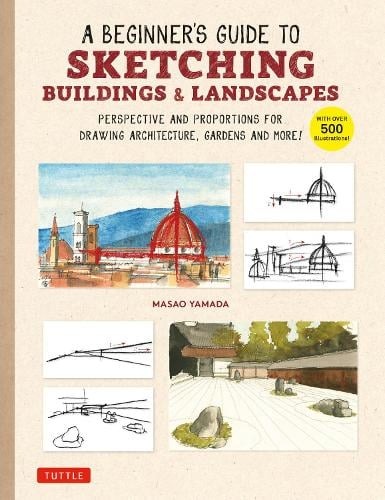
A Beginner's Guide to Sketching Buildings & Landscapes : Perspective and Proportions for Drawing Architecture, Gardens and More! (With over 500 illustrations)
Provides dozens of examples showing you how to establish accurate perspective guidelines and proportions for your initial pencil sketches, setting your drawings up to succeed right from the start. If a sketch's perspective and proportions are correct, your finished work will look crisp and beautiful. If not, you'll have a frustrating time trying to correct the problems at a later stage--and the finished work will never look quite right. A Beginner's Guide to Sketching Buildings & Landscapes is here to help you avoid those frustrations and set up your composition for a finished piece that will make you proud. The detailed step-by-step lessons in this indispensable guide teach you how to: Establish a composition's point of view correctly / Locate the horizon line, dividing land and sky / Break down complicated scenes into simple component shapes / Create the right relationship between foreground and background / Express 3D imagery using 2-point and 3-point perspective
