



الصفحة 8
الصفحة 8

Improving image quality in visual cryptography
This book comprehensively covers the important efforts in improving the quality of images in visual cryptography (VC), with a focus on cases with gray scale images. It not only covers schemes in traditional VC and extended VC for binary secret images, but also the latest development in the analysis-by-synthesis approach.

Immersive Audio Signal Processing
This text introduces graduate students and researchers to the basics of digital signal processing relevant to audio/acoustics and psychoacoustics and a variety of topics and latest results in immersive audio processing research.It Covers relevant background material adequately .Topics include immersive audio synthesis and rendering, multichannel room equalization, audio selective signal cancellation, signal processing for audio applications, surround sound processing, psychoacoustics and its incorporation in audio signal processing algorithms for solving various problems Real-world measurements depicted in the book demonstrate efficiency and power of the various solutions presented

Imaging planetario : Guida all’uso della webcam = Planetary Imaging : Guide to using the webcam
In this book, Martin Mobberley introduces the amateur to the use of webcams and digital image processing, while providing detailed tips for shooting the Sun, Moon and planets. Each object, with its specific shooting and processing techniques, is treated in a separate chapter. Through the images in this book, the amateur will be able to realize what can be done by applying a webcam to your telescope!

Image Processing : Dealing with Texture ; 2nd ed.
Updates the classic work on texture analysis theory and methods without abandoning the foundational essentials of this landmark work. Like the first, the new edition offers an analysis of texture in digital images that are essential to a diverse range of applications such as: robotics, defense, medicine and the geo-sciences. Designed to easily locate information on specific problems, the text is structured around a series of helpful questions and answers. Updated to include the most recent developments in the field, many chapters have been completely revised including: Fractals and Multifractals, Image Statistics, Texture Repair, Local Phase Features, Dual Tree Complex Wavelet Transform, Ridgelets and Curvelets and Deep Texture Features. The book takes a two-level mathematical approach: light math is covered in the main level of the book, with harder math identified in separate boxes.

Image and video encryption : From digital rights management to secured personal communication
Image and Video Encryption provides a unified overview of techniques for encryption of images and video data. This ranges from commercial applications like DVD or DVB to more research oriented topics and recently published material. This volume introduces different techniques from unified viewpoint, then evaluates these techniques with respect to their respective properties (e.g., security, speed.....). Encryption of visual data is an important topic in the area of mutimedia security, applications range from digital rights management (DVD, DVB) ) to secure personal communications. Within this topic area, we face several aims which contradict each other. What we thrive on is good compression, fast compression, high security, fast encryption, bitstream compliance, little power consumption and little memory requirements. The authors experimentally compare different approaches proposed in the literature and include an extensive bibliography of corresponding published material. Image and Video Encryption is designed for a professional audience composed of researchers and practitioners in industry. The book is also suitable for graduate-level students in computer science and electrical engineering.

Image and Signal Processing ; 3rd International Conference, ICISP 2008. Cherbourg-Octeville, France, July 1 - 3, 2008. Proceedings
This book constitutes the refereed proceedings of the Third International Conference on Image and Signal Processing, ICISP 2008, held in Cherbourg-Octeville, France, in July 2008.The 48 revised full papers and 22 revised poster papers presented were carefully reviewed and selected from 193 submissions. The papers are organized in topical sections on image filtering, image segmentation, computer vision, feature extraction, pattern recognition, graph-based representations, motion detection and estimation, new interfaces, document processing, and signal processing.

IEA International Computer and Information Literacy Study 2018 Assessment Framework
This book is designed to assess how well students are prepared for study, work and life in a digital world. The study measures international differences in students’ computer and information literacy (CIL): their ability to use computers to investigate, create, participate and communicate at home, at school, in the workplace and in the community. Participating countries also have an option for their students to complete an assessment of computational thinking (CT). The ICILS assessment framework articulates the basic structure of the study, providing a description of the field and the constructs to be measured. This book outlines the design and content of the measurement instruments, sets down the rationale for those designs, and describes how measures generated by those instruments relate to the constructs. Hypothesized relations between constructs provide the foundation for some of the analyses that follow.
Human-computer interaction – INTERACT 2005 ; IFIP TC 13 International Conference, Rome, Italy, September 12-16, 2005, Proceedings
We will be, sooner or later, not only handling personal computers but also mul- purpose cellular phones, complex personal digital assistants, devices that will be context-aware, and even wearable computers stitched to our clothes…we would like these personal systems to become transparent to the tasks they will be performing. In fact the best interface is an invisible one, one giving the user natural and fast access to the application he (or she) intends to be executed. The working group that organized this conference (the last of a long row!) tried to combine a powerful scientific program (with drastic refereeing) with an entertaining cultural program, so as to make your stay in Rome the most pleasant one all round: I do hope that this expectation becomes true. July 2005 Stefano Levialdi, IEEE Life Fellow INTERACT 2005 General Chairman [1] Peter J. Denning, ACM Communications, April 2005, vol. 48, N° 4, pp. 27-31. Editors’ Preface INTERACT is one of the most important conferences in the area of Human-Computer Interaction at the world-wide level. We believe that this edition, which for the first time takes place in a Southern European country, will strengthen this role, and that Rome, with its history and beautiful setting provides a very congenial atmosphere for this conference. The theme of INTERACT 2005 is Communicating Naturally with Computers.

Human Biology
Accomplishes the goal of improving scientific literacy, while establishing a foundation of knowledge inhuman biology and physiology. It also integrates a tested, traditional learning system with modern digital and pedagogical approaches.
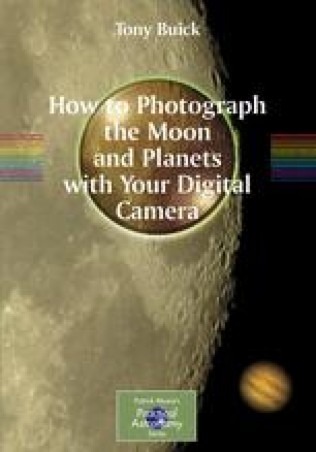
How to photograph the moon and planets with your Digital camera
Using just a regular digital camera along with an amateur astronomical telescope, anyone can produce spectacular photographs of the Moon, as well as surprisingly good images of major planets.Purpose-made astronomical CCD cameras are still very expensive, but technology has now progressed so that digital cameras – the kind you use for everyday photos – are more than capable of being used for astronomy. Tony Buick has written this illustrated step-by-step manual for anyone who has a telescope (of any size) and a digital camera. Look inside at the beautiful color images he has produced – you could do the same.

Home
Develops the conceptual and methodological underpinnings of a critical geography of home, drawing on key feminist, postcolonial, and housing thinkers as well as contemporary methodological currents in non-representational thinking and performance. The book’s chapters consider the making and unmaking of home across the domestic scale – house-as-home; the urban – city-as-home; national – nation-as-home; and homemaking in relation to transnational migration and diaspora. Each chapter includes illustrative examples from diverse geographical contexts and historical time periods. Chapters also address some of the key cross-cutting dimensions of home across these scales, including digital connectivity, art and performance, more-than-human constructions of home, and violence and dispossession.

High-Resolution If-To-Baseband ΣΔ Adc For Car Radios
High-Resolution IF-to-Baseband SigmaDelta ADC for Car Radios addresses the theory, system level design and circuit implementation of a high-resolution continuous-time IF-to-baseband quadrature SigmaDelta ADC. The target application of this ADC is in AM/FM/IBOC car radios. The ADC achieves a dynamic range of 118dB, which eliminates the need for an IF VGA or AM channel filter in car radios.

High-Performance Energy-Efficient Microprocessor Design
High Performance Energy Efficient Microprocessor Design is intended to be a useful companion book for every design engineer working in the related areas and a source of technical information as well as a comprehensive reference in the field. It should also serve as the source book for technical and business managers involved in microprocessor based design and manufacture. The chapters are organized in a way which makes it possible to use this book as a textbook for graduate courses in advanced digital and system design. The book is intended to highlight practical problems encountered in designing state of the art processors, while yet covering fundamental principles that are independent of technology.

High-Level Synthesis : From Algorithm to Digital Circuit
This book presents an excellent collection of contributions addressing different aspects of high-level synthesis from both industry and academia. High-Level Synthesis: from Algorithm to Digital Circuit should be on each designer’s and CAD developer’s shelf, as well as on those of project managers who will soon embrace high level design and synthesis for all aspects of digital system design.

Higher Education Landscape 2030 : A Trend Analysis Based on the AHEAD International Horizon Scanning
The digital transformation clearly highlights the role of universities and institutes of higher education in shaping a higher education system that is more open and provides education to everyone who can benefit from it

Higher Education in the Era of the Fourth Industrial Revolution
This collection examines how higher education responds to the demands of the automation economy and the fourth industrial revolution. Considering significant trends in how people are learning, coupled with the ways in which different higher education institutions and education stakeholders are implementing adaptations, it looks at new programs and technological advances that are changing how and why we teach and learn. The book addresses trends in liberal arts integration of STEM innovations, the changing role of libraries in the digital age, global trends in youth mobility, and the development of lifelong learning programs.

Higher Education in Romania : Overcoming Challenges and Embracing Opportunities
The book focuses on areas of interest for Romanian higher education, such as systemic measures to improve access, participation and completion for (vulnerable) students, better promotion of the Romanian higher education to attract students, as well as instruments for a more efficient use of data at higher education level. Each article includes evidence-based policy proposals that could support new strategic initiatives in higher education, including new legislation.

High-Dynamic-Range (HDR) Vision : Microelectronics, Image Processing, Computer Graphics
This first comprehensive account of high-dynamic-range (HDR) vision focusses on HDR real-time, high-speed digital video recording and also systematically presents HDR video transmission and display. The power of the eye-like, logarithmic optoelectronic conversion concept is demonstrated in machine-vision, medical, automotive, surveillance and cinematic applications, and it is extended to HDR sub-retinal implants for the vision impaired. While the book conveys the overall picture of HDR vision, specific knowledge of microelectronics and image processing is not required. It provides a quantitative summary of the major issues to allow the assessment of the state of the art and a glimpse at future developments. Selected experts share their know-how and expectations in this rapidly evolving art related to the single most powerful of our senses.

High performance computing for drug discovery and biomedicine
Explores the application of high-performance computing (HPC) technologies to computational drug discovery (CDD) and biomedicine. Collects CDD approaches that, together with HPC, can revolutionize and automate drug discovery process, such as knowledge graphs, natural language processing (NLP), Bayesian optimization, automated virtual screening platforms, alchemical free energy workflows, fragment-molecular orbitals (FMO), HPC-adapted molecular dynamic simulation (MD-HPC), and the potential of cloud computing for drug discovery. And delves into computational algorithms and workflows for biomedicine, featuring an HPC framework to assess drug-induced arrhythmic risk, digital patient applications relevant to the clinic, virtual human simulations, cellular and whole-body blood flow modeling for stroke treatments, prediction of the femoral bone strength from CT data, and many more subjects.

High Dielectric Constant Materials : VLSI MOSFET Applications
Issues relating to the high-K gate dielectric are among the greatest challenges for the evolving International Technology Roadmap for Semiconductors (ITRS). More than just an historical overview, this book will assess previous and present approaches related to scaling the gate dielectric and their impact, along with the creative directions and forthcoming challenges that will define the future of gate dielectric scaling technology. Topics include: an extensive review of Moore's Law, the classical regime for SiO2 gate dielectrics; the transition to silicon oxynitride gate dielectrics; the transition to high-K gate dielectrics (including the drive towards equivalent oxide thickness in the single-digit nanometer regime); and future directions and issues for ultimate technology generation scaling. The vision, wisdom, and experience of the team of authors will make this book a timely, relevant, and interesting, resource focusing on fundamentals of the 45 nm Technology Generation and beyond.
