



الصفحة 8
الصفحة 8

Distributed systems and mobile computing
About Distributed Systems and Mobile Computing. This is a branch of Computer Science devoted to the study of systems whose components are in different physical locations and have limited communication capabilities. Such components may be static, often organized in a network, or may be able to move in a discrete or continuous environment. The theoretical study of such systems has applications ranging from swarms of mobile robots (e.g., drones) to sensor networks, autonomous intelligent vehicles, the Internet of Things, and crawlers on the Web. The book includes five articles. Two of them are about networks: the first one studies the formation of networks by agents that interact randomly and have the ability to form connections; the second one is a study of clustering models and algorithms. The three remaining articles are concerned with autonomous mobile robots operating in continuous space.

Distributed Ledgers : Design and Regulation of Financial Infrastructure and Payment Systems
In this book, Robert Townsend steps back from the hype and controversy surrounding DLT (and the related, but not synonymous, innovations of blockchain and Bitcoin) to offer an economic analysis of what distributed ledgers can do and a blueprint for the optimal design and regulation of financial systems. He analyzes four crucial components of distributed ledgers—ledgers as accounts, e-messages and e-value transfers, cryptography, and contracts—assessing each in terms of both economics and computer science, and forges some middle ground. Relatedly, Townsend highlights hybrid systems in which some of these components allow useful innovation while legacy or alternative pieces deal with the problem of scale.

Distributed Event-Based Systems
Event-based architectures inherently decouple system components. Event-based components are not designed to work with specific other components in a traditional request/reply mode, but separate communication from computation through asynchronous communication mechanisms via a dedicated notification service.

Digitization in Dentistry : Clinical Applications
Provides evidence-based guidance on the clinical applications of digital dentistry, that is, the use of dental technologies or devices that incorporate digital or computer-controlled components for the performance of dental procedures. Readers will find practically oriented information on the digital procedures currently in use in various fields of dental practice, including, for example, diagnosis and treatment planning, oral radiography, endodontics, orthodontics, implant dentistry, and esthetic dentistry. The aim is to equip practitioners with the knowledge required in order to enhance their daily practice. To this end, a problem-solving approach is adopted, with emphasis on key concepts and presentation of details in a sequential and easy to follow manner. Clear recommendations are set out, and helpful tips and tricks are highlighted.

Digital Restorative Dentistry : A Guide to Materials, Equipment, and Clinical Procedures
Offers up-to-date, readily understandable guidance on the materials and equipment employed in digital restorative dentistry and on the specific clinical procedures that may be performed using the new technologies. The key components of digital restorative dentistry – image acquisition, prosthetic/restorative design, and fabrication – are fully addressed. Readers will find helpful information on scanners, the software for prosthetic design, and the materials and technologies for prosthesis fabrication, including laser sintering, 3D printing, CAD/CAM, and laser ablation. The section on clinical procedures explains all aspects of the use of digital technologies in the treatment of patients requiring removable partial dentures, complete dentures, fixed partial prostheses, crowns, endodontics, and implant surgery and prosthodontics. The field of restorative and prosthetic dentistry is undergoing rapid transition as these new technologies come to play an increasingly central role in everyday dental practice. In bridging the knowledge gap that this technological revolution has created in the field of dentistry, the book will satisfy the needs of both dentists and dental students.

Development and evaluation of setup strategies in printed circuit board assembly
The last decade has seen a rapid extension of electronic control devices for various types of technical products. In modern electronics manufacturing, highly automated assembly systems are used to mount the electronic components onto the printed circuit boards (PCBs). Maintaining high production flexibility in order to meet the desired product variety and, at the same time, achieving high utilization rates of the capital-intensive production equipment can only be achieved by applying highly sophisticated planning and control strategies for the operation of modern placement machines. Ihsan Onur Yilmaz develops a novel group setup strategy which integrates multiple problems of the PCB assembly, especially in a medium-variety production environment. At the core of his principle approach are the identification of similarities between different types of PCBs and the generation of PCB clusters upon which group setup strategies are based. The developed setup strategies are also innovative in the sense that they integrate the optimization of detailed machine operations. This integration has not been achieved in the classical approaches which primarily rely on statistical clustering techniques.

Determining Spectra in Quantum Theory
The main objective of this book is to give a collection of criteria available in the spectral theory of selfadjoint operators, and to identify the spectrum and its components in the Lebesgue decomposition. at the total spectral measure associated with it;often studying such ameasure meant looking at some transform of the measure. The transforms were of the form f,?(A)f which is expressible, by the spectral theorem, as ?(x)dµ (x) for some finite measure µ . The two most widely used functions were the sx ?1 exponential function?(x)=e and the inverse function?(x)=(x?z) . These functions are “usable” in the sense that they can be manipulated with respect to addition of operators, which is what one considers most often in the spectral theory of Schrodinger type operators. Starting with this basic structure we look at the transforms of measures from which we can recover the measures and their components in Chapter 1. In Chapter 2 we repeat the standard spectral theory of selfadjoint op- ators. The spectral theorem is given also in the Hahn–Hellinger form. Both Chapter 1 and Chapter 2 also serve to introduce a series of definitions and notations, as they prepare the background which is necessary for the criteria in Chapter 3.

Detection and Disposal of Improvised Explosives
It including: Methods of detection of Improvised Explosives (IE). Methods of detection of Improvised explosives devices (IED). Disposal and safe handling of ID and IED. The treatment of detection methods may be divided in the following groups: Overview about the different methods; Trace- and vapor detection; Electromagnetic methods; Neutron methods; Laser techniques. Because of different definitions of Improvised Explosives the parti- pants of the workshop agreed after some discussions with the following definition: An Improvised Explosive (IE) can be any chemical compound or mixture capable of an explosive reaction. They are normally easily prepared by a knowledgeable layman under simple conditions. Components of IE are typically inorganic salts containing molecular bound oxygen like nitrates, chlorates or perchlorates etc. or organic compounds with nitro-, nitami- or nitrate-groups or peroxides. Admixtures of military or commercial explosive materials are also used. From the chemical point of view IE can be divided into the following types: Salts containing chemical groups with oxygen (like nitrates, chlorates or perchlorates etc.) in mixtures with combustible substances like carbon-hydrogen compounds.

Designing Balanced Scorecard for International Bank for Trade and Finance in Syria
The research team tested the availability of the dimensions of the balanced scorecard in the Syrian Trade and Finance Bank. We conducted questionnaires and financial analysis, and it was found that the components of a balanced scorecard are not available at the Bank of Trade and Finance in Syria.

Design of Hybrid Structures : Where Steel Profiles Meet Concrete
Focuses on design approaches for concrete structures reinforced in an unconventional way by steel profiles. It explains force transfer mechanisms of steel profiles and oncrete interfaces, and an analysis of the characteristics of hybrid structures, including slendercomponents. Several types of hybrid designs are addressed: walls and columns with several embedded steel profiles, connections strengthened by steel profiles between steel and composite or reinforced concrete components, including the specific case of shear keys connecting deep beams or flat slabs to columns. The transition zones in partly reinforced concrete and partly composite columns are also covered.

Deployment and operation of complex software in heterogeneous execution environments : The SODALITE approach
This book provides an overview of the work developed within the SODALITE project, which aims at facilitating the deployment and operation of distributed software on top of heterogeneous infrastructures, including cloud, HPC and edge resources. The experts participating in the project describe how SODALITE works and how it can be exploited by end users. While multiple languages and tools are available in the literature to support DevOps teams in the automation of deployment and operation steps, still these activities require specific know-how and skills that cannot be found in average teams. The SODALITE framework tackles this problem by offering modelling and smart editing features to allow those we call Application Ops Experts to work without knowing low level details about the adopted, potentially heterogeneous, infrastructures. The framework offers also mechanisms to verify the quality of the defined models, generate the corresponding executable infrastructural code, automatically wrap application components within proper execution containers, orchestrate all activities concerned with deployment and operation of all system components, and support on-the-fly self-adaptation and refactoring.

Dense + Green : Innovative building types for sustainable urban architecture
Explores new architectural typologies that emerge from the integration of green components such as sky terraces, vertical parks and green facades, in high-density buildings. In-depth case studies on the most relevant building types are complemented by expert essays that demonstrate the current paradigm shift in the sustainable urban environment.

Deliberative public engagement with science : An empirical investigation
This compact open access reference delves beyond popular concepts of educated consumers and an informed public by examining the science behind deliberative engagement. Using data from four longitudinal studies, the authors assess public engagement methods in deliberative discussions of ethical, legal, and social issues concerning innovations in nanotechnology. Coverage includes the theoretical origins of the studies, forms of engagement and variations used, and in-depth details on cognitive, affective, and social components that go into the critical thinking process and forming of opinions. Not only are the findings intriguing in and of themselves, but researchers from varied fields will also find them useful in pursuing their own projects.
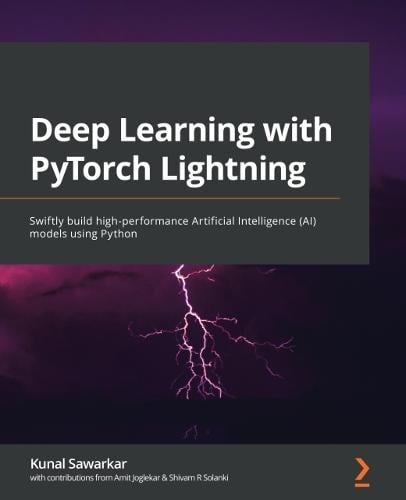
Deep Learning with PyTorch Lightning : Build and train high-performance artificial intelligence and self-supervised models using Python
You’ll learn how to configure PyTorch Lightning on a cloud platform, understand the architectural components, and explore how they are configured to build various industry solutions. You’ll build a neural network architecture, deploy an application from scratch, and see how you can expand it based on your specific needs, beyond what the framework can provide. In the later chapters, you’ll also learn how to implement capabilities to build and train various models like Convolutional Neural Nets (CNN), Natural Language Processing (NLP), Time Series, Self-Supervised Learning, Semi-Supervised Learning, Generative Adversarial Network (GAN) using PyTorch Lightning.

Data science in theory and practice : Techniques for big data analytics and complex data sets
Delivers a comprehensive treatment of the mathematical and statistical models useful for analyzing data sets arising in various disciplines, like banking, finance, health care, bioinformatics, security, education, and social services. Written in five parts, the book examines some of the most commonly used and fundamental mathematical and statistical concepts that form the basis of data science. The authors go on to analyze various data transformation techniques useful for extracting information from raw data, long memory behavior, and predictive modeling. Readers will also learn from topics like: Analyses of foundational theoretical subjects, including the history of data science, matrix algebra and random vectors, and multivariate analysis A comprehensive examination of time series forecasting, including the different components of time series and transformations to achieve stationarity Introductions to both the R and Python programming languages, including basic data types and sample manipulations for both languages An exploration of algorithms, including how to write one and how to perform an asymptotic analysis A comprehensive discussion of several techniques for analyzing and predicting complex data sets

Cytokines and Cancer
This volume provides a comprehensive review of the current knowledge on cytokines and cancer. Cytokines play a variety of roles in cancer, both as components of pathogenetic mechanisms, as well as agents used in the treatment of certain malignancies.The volume is divided in two sections. Section one focuses on current developments in the basic science field with particular emphasis on novel mechanisms of cytokine actions in malignant cells. The second section deals with translational and clinical research in the field, and many of the chapter authors were among the first to introduce several cytokines in the treatment of certain tumors.

Cyber-physical systems : A model-based approach
In this concise yet comprehensive textbook, future inventors are introduced to the key concepts of Cyber-Physical Systems (CPS). Using modeling as a way to develop deeper understanding of the computational and physical components of these systems, one can express new designs in a way that facilitates their simulation, visualization, and analysis. Concepts are introduced in a cross-disciplinary way.

Cybercrime in social media : Theory and solutions
Presents the important components for grasping the potential of social computing with an emphasis on concerns, challenges, and benefits of the social platform in depth. It discusses detection of social-cyber issues, including hate speech, cyberbullying, etc. using deep learning, natural language processing, etc.

Crypto-Finance, Law and Regulation : Governing an Emerging Ecosystem
Explores the emergence of a decentralised and disintermediated crypto-market and investigates the way in which it can transform the financial markets. It examines three components of the financial market – technology, finance, and the law – and shows how their interrelationship dictates the structure of a crypto-market. It focuses on regulators’ enforcement policies and their jurisdiction over crypto-finance operators and participants. The book also discusses the latest developments in crypto-finance, and the advantages and disadvantages of crypto-currency as an alternative payment product. It also investigates how such a decentralised crypto-finance system can provide access to finance, promote a shared economy, and allow access to justice.

Creating Web-based Laboratories
Remote web-based experimentation, enabling students and researchers to access the laboratory anytime via the Internet, is becoming an increasingly attractive way to complement or even replace traditional laboratory sessions. Placing a video camera & microphone before the equipment and apparatus to capture what is actually happening in the laboratory allows the images and audio data to be streamed to the client side. Researchers in different countries can share equipment and conduct research cooperatively and remotely. The authors summarise their research and discuss the development of the 5 web-based laboratories launched from the National University of Singapore. The principles, structure, and technologies required for the creation of Internet remote experimentation systems are discussed with particular emphasis on the integration of hardware and software systems. Also highlighted is the design and development of interfaces and components for use in typical web-based laboratories or similar web-control applications.
