



الصفحة 7
الصفحة 7

Greening the Supply Chain
Since the Rio summit in 1992, the paradigm of corporate environmental responsibility has gradually and consistently extended beyond complying with increasingly stringent environmental regulation and taking up the proactive initiatives of a few world-class companies. Research indicates that the business and financial performance of companies may depend directly on socially and environmentally responsible business practices. Many world-class companies now realize that customers and other stakeholders do not distinguish between a company and its suppliers. As a result, greening the supply chain is an innovative idea which is fast gaining attention in the industry.
Green economy in the transport sector : A case study of Limpopo Province, South Africa
This book provides policy framework on “towards a Green Economy in the Transport Sector” draws inspiration from the UNEP report on Green Economy Modeling (2014), which focused on South Africa with respect to Transport, Natural Resource Management, Agriculture, and Energy sectors. This is because in the last 10 years natural resources, environmental risks and ecological issues have come to the attention of the international community because the subject is fundamentally important for overarching sustainable growth. It is important to note that environmental problems such as greenhouse gas emissions and climate change in different regions of the world including South Africa result in significant problems.

Glutamate Receptors in Peripheral Tissue : Excitatory Transmission Outside the CNS
The book is divided into three sections— Part I is on general concepts and concentrates on the distribution and cell-specific localiza tion of glutamate receptors, their transporters, and the pharmacology in peripheral tissues and organs. Part II emphasizes the presence and implications of these receptors in specific target tissues, organs, and systems, including liver, lungs, endocrine tissues, bone, immune system, etc. Part III focuses on glutamate receptors in plants to illustrate their presence beyond the animal kingdom.
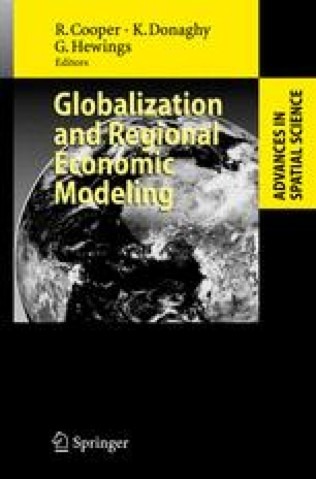
Globalization and Regional Economic Modeling
Globalization is affecting regional economies in a broad spectrum of aspects, from labor market conditions and development policies to climate change. To understand better how this works, we need both conceptual and methodological contributions. We need new schemes to organize our thinking, direct our attention, and frame thought experiments on the basis of which guidance may be offered. And we need methodological innovations that enable us to carry out studies and thought experiments at levels of spatial and temporal resolution and formal complexity adequate to capture and account for the phenomena that characterize globalization. The chapters of this volume, written by an international cast of eminent regional scientists, represent contributions of both types, in many cases introducing and demonstrating the use of new tools for analyzing and understanding enormous changes underway in regional economies around the world.

Global Specification and Validation of Embedded Systems : Integrating Heterogeneous Components
Global modelling and validation is required to master the design of systems made of heterogeneous components. These systems are now omnipresent in our life, and they may be found in several domains such as communications (ex. mobile terminals, optical switches), health (e.g. cardiac stimulators, cochlear implants), transportation (ex. automotive and aeronautical), etc. The main difficulties for their design are modelling and validation of the interactions between different components (hardware, software, analogue, RF, optical and micro-mechanical).
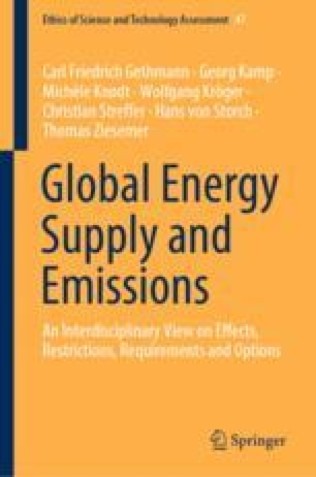
Global energy supply and emissions : An interdisciplinary view on effects, restrictions, requirements and options
offers an authoritative analysis of the state-of-the art in energy and climate research and policy. It starts by describing the current status of technologies that are expected to have an influence on the energy systems of the future. For an adequate evaluation, it presents the latest findings on the effects of energy supply and consumption as well as of the emissions on both the environment and people’s health. This is followed by an extensive discussion of the economic and social problems related to climate change, the need for energy transitions, and other issues that may require public investment and international agreements. reviews the problem of energy policy from a global perspective, providing readers with the technical, political, economic and ethical background needed to understand the current situation and work at better solutions for a sustainable, just and prospering world.

Global Change and Mountain Regions : An Overview of Current Knowledge
Mountain regions occupy about a quarter of the global terrestrial land surface and provide goods and services to more than half the humanity. Global environmental change threatens the integrity of these systems and their ability to provide the goods and services upon which humanity has come to depend. This book gives an overview of the state of research in fields pertaining to the detection, understanding and prediction of global change impacts in mountain regions. More than 60 contributions from paleoclimatology, cryospheric research, hydrology, ecology, and development studies are compiled in this volume, each with an outlook on future research directions.
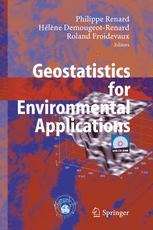
Geostatistics for environmental applications ; Proceedings of the Fifth European Conference on geostatistics for environmental applications
Once applied only to problems of mining-reserves assessment or petroleum-reservoir characterization, geostatistics is now being used in an increasingly large number of disciplines in environmental sciences. On the one hand, it enables the analysis and handling, in a rigorous probabilistic framework of the issues of spatial and temporal interpolation of continuous or categorical environmental variables. On the other hand, the methodology is also used to design and optimize sampling campaigns. "Geostatistics for Environmental Applications" contains forty selected contributions covering the latest progress in a broad spectrum of fields including air quality, climatology, ecology, groundwater hydrology, surface hydrology, oceanography, soil contamination, epidemiology and health, natural hazards, and remote sensing.

Genetic Engineering : Principles and Methods
Genetic Engineering: Principles and Methods presents state-of-the-art discussions in modern genetics and genetic engineering. Recent volumes have covered gene therapy research, genetic mapping, plant science and technology, transport protein biochemistry, and viral vectors in gene therapy, among many other topics.

Genetic Engineering
Genetic Engineering: Principles and Methods presents state-of-the-art discussions in modern genetics and genetic engineering. Recent volumes have covered gene therapy research, genetic mapping, plant science and technology, transport protein biochemistry, and viral vectors in gene therapy, among many other topics.
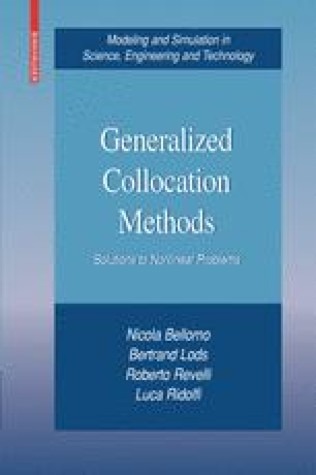
Generalized collocations methods : Solutions to nonlinear problems
This book examines various mathematical tools—based on generalized collocation methods—to solve nonlinear problems related to partial differential and integro-differential equations. Covered are specific problems and models related to vehicular traffic flow, population dynamics, wave phenomena, heat convection and diffusion, transport phenomena, and pollution. Based on a unified approach combining modeling, mathematical methods, and scientific computation, each chapter begins with several examples and problems solved by computational methods; full details of the solution techniques used are given. The last section of each chapter provides problems and exercises giving readers the opportunity to practice using the mathematical tools already presented.
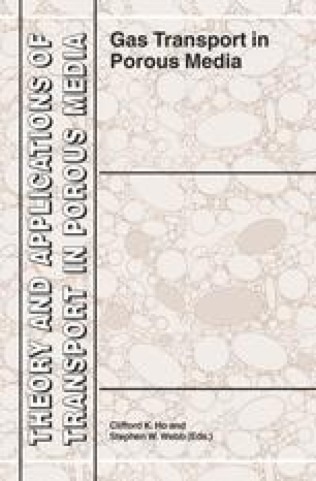
Gas Transport in Porous Media
This book presents a compilation of state-of-the art studies on gas and vapor transport processes in porous and fractured media. A broad set of models and processes is presented, including advection/diffusion, the Dusty Gas Model, enhanced vapor diffusion, phase change, coupled processes, solid/vapor sorption, and vapor-pressure lowering. Numerous applications are also presented that illustrate these processes and models in current problems facing the scientific community.

Games Without Frontiers? : Socio-historical Perspectives at the Gaming/Gambling Intersection
This book focuses on how and why digital games and gambling are increasingly intertwined and asks “does this matter?” Looking at how “loot boxes” became the poster child for the convergence of gambling and gaming, Wardle traces how we got here. She argues that the intersection between gambling and gaming cultures has a long lineage, one that can be traced back throughout the 20th century but also incorporates more recent trends like the poker boom of the 1990s, the development of social media gambling products and the development of skin betting markets.

Future space-transport-system components under high thermal and mechanical loads : results from the DFG Collaborative Research Center TRR40
This book presents the findings of Collaborative Research Center Transregio 40 (TRR40), initiated in July 2008 and funded by the German Research Foundation (DFG). Gathering innovative design concepts for thrust chambers and nozzles, as well as cutting-edge methods of aft-body flow control and propulsion-component cooling, it brings together fundamental research undertaken at universities, testing carried out at the German Aerospace Center (DLR) and industrial developments from the ArianeGroup

Fundamentals of Sustainability in Civil Engineering
Provides a foundation to understand the development of sustainability in civil engineering, and tools to address the three pillars of sustainability: economics, environment, and society. It includes case studies in the five major areas of civil engineering: environmental, structural, geotechnical, transportation, and construction management.

Fundamentals of Semiconductors : Physics and Materials Properties
This third updated edition of Fundamentals of Semiconductors attempts to fill the gap between a general solid-state physics textbook and research articles by providing detailed explanations of the electronic, vibrational, transport, and optical properties of semiconductors. The approach is physical and intuitive rather than formal and pedantic. Theories are presented to explain experimental results. This textbook has been written with both students and researchers in mind. Its emphasis is on understanding the physical properties of Si and similar tetrahedrally coordinated semiconductors. The explanations are based on physical insights. Each chapter is enriched by an extensive collection of tables of material parameters, figures, and problems. Many of these problems "lead the student by the hand" to arrive at the results.

Fundamentals of biomechanics
The book presents a comprehensive review of the major concepts of biomechanics and summarizes them in nine principles of biomechanics. Throughout the text are numerous examples of applying these principles to the work of kinesiology professionals. Specific case studies are presented in four application chapters: physical education, coaching, strength and conditioning, and sports medicine.
Functional Properties of Nanostructured Materials
Nanostructured materials are becoming of major significance, and their investigations require a comprehensive approach. The fundamental properties of these materials are remarkably altered as the size of their constituent grains or phases decreases to the nanometer scale. These novel materials made of nanosized building blocks offer unique and entirely different electrical, optical, mechanical, and magnetic properties compared to conventional micro- or millimetre-size materials owing to their distinctive size, shape, topology, surface properties, etc.

Fuel Cells II
The concept to utilize an ion-conducting polymer membrane as a solid po- mer electrolyte offers several advantages regarding the design and operation of an electrochemical cell, as outlined in Volume 215, Chapter 1 (L. Gubler, G.G. Scherer). Essentially, the solvent and/or transport medium, e.g., H O, 2 + for the mobile ionic species, e.g., H for a cation exchange membrane, is taken up by and con?ned into the nano-dimensional morphology of the i- containingdomainsofthepolymer.Asaconsequence, aphaseseparationinto a hydrophilic ion-containing solvent phase and a hydrophobic polymer ba- bone phase establishes. Because of the narrow solid electrolyte gap in these cells, low ohmic losses reducing the overall cell voltage can be achieved, even at highcurrent densities.

Fuel Cells I
The concept to utilize an ion-conducting polymer membrane as a solid po- mer electrolyte offers several advantages regarding the design and operation of an electrochemical cell, as outlined in Volume 215, Chapter 1 (L. Gubler, G.G. Scherer). Essentially, the solvent and/or transport medium, e.g., H O, 2 + for the mobile ionic species, e.g., H for a cation exchange membrane, is taken up by and con?ned into the nano-dimensional morphology of the i- containingdomainsofthepolymer.Asaconsequence, aphaseseparationinto a hydrophilic ion-containing solvent phase and a hydrophobic polymer ba- bone phase establishes. Because of the narrow solid electrolyte gap in these cells, low ohmic losses reducing the overall cell voltage can be achieved, even at highcurrent densities.
