



الصفحة 7
الصفحة 7
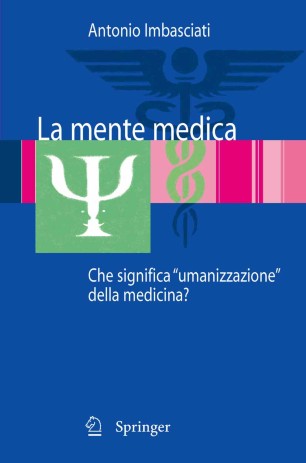
La mente medica : Che significa "umanizzazione" della medicina? = The Medical Mind : What does "humanization" of medicine mean?
Il presente testo intende chiarire misconoscimenti e riduzionismi che paralizzano il pur auspicato mutamento della medicina e le sue articolazioni in differenti professionalità. La Psicologia Clinica si pone come chiave per leggere la mentalità collettiva che sottende l’attuale cultura sanitaria medicalizzante, che si scontra con le esigenze della persona umana, negando, oltretutto, quanto la psicosomatica oggi ci dice circa la costante modulazione psichica di tutti i processi organici, nella salute così come in tutte le malattie. L’umanizzazione della medicina non è un surplus eticamente giusto per il malato: è un indispensabile agente terapeutico. La sua mancanza è iatrogena.
Common Chinese materia medica ; Vol.7
Describes 247 species of 9 families of medicinal plants, which are commonly used in Chinese medicine. The most important species are Adina rubella, Gardenia jasminoides, Hedyotis diffusa, Morinda officinalis, Rubia cordifolia, Uncaria hirsuta, Uncaria macrophylla, Uncaria rhynchophylla, Uncaria sessilifructus, Uncaria sinensis of Rubiaceae; Lonicera confusa, Lonicera hypoglauca, Lonicera macranthoides, Lonicera japonica of Caprifoliaceae; Patrinia scabiosaefolia, Patrinia villosa, Nardostachys jatamansi of Valerianaceae; Dipsacus asperoides of Dipsacaceae; Arctium lappa, Artemisia annua, Artemisia argyi, Artemisia capillaris, Artemisia scoparia, Atractylodes lancea, Atractylodes macrocephala, Dendranthema indicum, Dendranthema morifolium, Eupatorium chinense, Eupatorium fortunei, Inula helenium, Saussurea costus, Saussurea involucrata, Senecio scandens, Serratula chinensis, Siegesbeckia orientalis, Solidago decurrens, Taraxacum mongolicum, Tussilago farfara、Xanthium sibiricum of Compositae; Gentiana crassicaulis, Gentiana manshurica, Gentiana rigescens, Gentiana scabra, Swertia pseudochinensis of Valerianaceae; Lysimachia christinae of Primulaceae and Plantago asiatica of Plantaginaceae.
Common Chinese materia medica ; Vol.6
Describes 226 species of 32 families of medicinal plants, which are commonly used in Chinese medicine. The most important species are Aquilaria sinensis and Daphne genkwa of Thymelaeaceae; Benincasa hispida, Siraitia grosvenorii, Trichosanthes kirilowii and Trichosanthes rosthornii of Cucurbitaceae; Camellia sinensis of Theaceae; Cleistocalyx operculatus, Eugenia caryophyllata and Rhodomyrtus tomentosa of Myrtaceae; Osbeckia chinensis of Melastomataceae; Quisqualis indica and Terminalia chebula of Combretaceae; Hypericum japonicum of Hypericaceae; Microcos paniculata of Tiliaceae; Hibiscus mutabilis of Malvaceae; Croton crassifolius, C. lachnocarpus, C. tiglium, Euphorbia humifusa, E. lathyris, E. pekinensis, Phyllanthus emblica and Sauropus spatulifolius of Euphorbiaceae. In each specie, it introduces the scientific names, medicinal names, morphologies, habitats, distributions, acquisition and processing methods of these medicinal plants, the content of medicinal properties, therapeutic effects, usage and dosage of these medicinal plants, and attaches unedited color pictures and pictures of part herbal medicines of each species.
Common Chinese Materia Medica ; Vol.4
Describes 256 species of medicinal plants from 5 families, which are commonly used in Chinese medicine. The most important species are Agrimonia pilosa, Amygdalus persica, Armeniaca mume, Armeniaca vulgaris, Armeniaca sibirica, Chaenomeles sinensis, Eriobotrya japonica of Rosaceae; Chimonanthus praecox of Calycanthaceae;Albizia julibrissin, Archidendron clypearia, Entada phaseoloides, Bauhinia championii of Mimosoideae; Caesalpinia sappan, Cassia tora, Gleditsia sinensis of Caesalpiniaceae; Abrus cantoniensis, Astragalus membranaceus, Astragalus membranaceus, Dalbergia odorifera, Desmodium caudatum, Desmodium styracifolium, Erythrina variegata, Euchresta japonica, Flemingia prostrata, Glycyrrhiza uralensis, Glycyrrhiza inflata, Glycyrrhiza glabra, Lablab purpureus, Sophora japonica and Spatholobus suberectus of Butterflyaceae. In each specie, it introduces the scientific names, medicinal names, morphologies, habitats, distributions, acquisition and processing methods of these medicinal plants, the content of medicinal properties, therapeutic effects, usage and dosage of these medicinal plants, and attaches unedited color pictures and pictures of part herbal medicines of each species. This book series has 10 volumes in total, which covers over 2000 kinds of Chinese medicines that are commonly used. These volumes not only introduce the efficacy function and some prescriptions of the medicines, but also introduce the biological characteristics of them in detail with clear photos of the habitats, so that readers can identify them in the field. Apart from the growing environment, the books expound the distribution areas and other information to facilitate researches and other applications. The volumes are targeted at readers of general interests and it is also of high referential value for scientific researcher and teachers. It can be used as a guide to researchers, clinical doctors, and students in the department of pharmaceutics and traditional Chinese medicine.
Common Chinese materia medica ; Vol.2
Contains 231 species of 40 families of medicinal plants. The most important family of which are Magnoliaceae, such as Magnolia officinalis and Magnolia officinalis subsp. biloba; Schisandra chinensis of Schisandraceae; Cinnamomum aromaticum of Lauraceae, Coptis chinensis Franch., Coptis omeiensis and Coptis teeta of Berberidaceae; Isatis indigotica, Lepidium apetalum and Raphanus sativus of Cruciferae; Rheum palmatum, Rheum officinale and Rheum taguticum of Polygonaceae, etc. In each specie, it introduces the scientific names, herbal medicine names, characteristics, habitats, distributions, Acquisition and processing methods, medicinal traits, tastes, functions, use and dosages, and other information of medicinal plants, and attaches unedited color pictures and pictures of part herbal medicines for each species. This book series has totally 10 volumes, which covers 2000 kinds of Chinese medicines that are commonly seen or used. These volumes not only introduce the efficacy, function and some prescriptions of the medicines, but also introduce the biological characteristics of them in detail with clear photos of the habitats, so that readers can identify them in the field. Apart from the growing environment, the books expound the distribution areas and other information to facilitate researches and other applications. The volumes are targeted at readers of general interests and it is also of high referential value for scientific researcher and teachers. It can be used as a guide to researchers, clinical doctors, and students in the department of pharmaceutics and traditional Chinese medicine.
Common Chinese materia medica ; Vol.10
Records 5 species of resin, 74 species of animals, 41 species of minerals and fossils. There are resins such as Liquidambar orientalis, Commiphore myrrha, Boswellia carterii, Garcinia hanburyi; animals such as Solenognathus hardwickii, , Cervus nippon, Scolopendra subspinipes, Cryptotympana pustulata, Agkistrodon acutus, Bombyx mori, Collocalia esculenta, Moschus moschiferus, Hippocampus kelloggi, Gekko gekko; minerals and fossils such as mercury, gypsum, alum, mirabilite, cinnabar, actinolite, calomel, keel, dens draconis, lithodes, fossilia spiriferis.
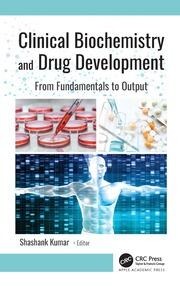
Clinical biochemistry and drug development : From fundamentals to output
Focuses on clinical biochemistry fundamentals, cell culture techniques, and drug discovery and development concepts. It deals with three different fields of clinical research: cell culture, clinical biochemistry, and drug discovery and development.
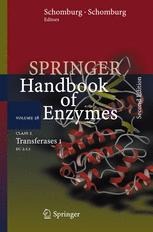
Class 2 Transferases I : EC 2.1.1
This new, second edition reflects considerable progress in enzymology: many enzymes are newly classified or reclassified. Each entry is correlated with references and one or more source organisms. New datafields are created: application and engineering (for the properties of enzymes where the sequence has been changed). The total amount of material contained in the Handbook has more than doubled so that the complete second edition consists of 39 volumes as well as a Synonym Index. In addition, starting in 2009, all newly classified enzymes are treated in Supplement Volumes. Springer Handbook of Enzymes is an ideal source of information for researchers in biochemistry, biotechnology, organic and analytical chemistry, and food sciences, as well as for medicinal applications
Class 1 Oxidoreductases XI : EC 1.14.11 - 1.14.14
This new, second edition reflects considerable progress in enzymology: many enzymes are newly classified or reclassified. Each entry is correlated with references and one or more source organisms. New datafields are created: application and engineering (for the properties of enzymes where the sequence has been changed). The total amount of material contained in the Handbook has more than doubled so that the complete second edition consists of 39 volumes as well as a Synonym Index. In addition, starting in 2009, all newly classified enzymes are treated in Supplement Volumes. Springer Handbook of Enzymes is an ideal source of information for researchers in biochemistry, biotechnology, organic and analytical chemistry, and food sciences, as well as for medicinal applications.
Class 1 Oxidoreductases X : EC 1.9 - 1.13
This new, second edition reflects considerable progress in enzymology: many enzymes are newly classified or reclassified. Each entry is correlated with references and one or more source organisms. New datafields are created: application and engineering (for the properties of enzymes where the sequence has been changed). The total amount of material contained in the Handbook has more than doubled so that the complete second edition consists of 39 volumes as well as a Synonym Index. In addition, starting in 2009, all newly classified enzymes are treated in Supplement Volumes. Springer Handbook of Enzymes is an ideal source of information for researchers in biochemistry, biotechnology, organic and analytical chemistry, and food sciences, as well as for medicinal applications.
Class 1 Oxidoreductases VIII : EC 1.5
Springer Handbook of Enzymes provides data on enzymes sufficiently well characterized. It offers concise and complete descriptions of some 5,000 enzymes and their application areas. Data sheets are arranged in their EC-Number sequence and the volumes themselves are arranged according to enzyme classes. This new, second edition reflects considerable progress in enzymology: many enzymes are newly classified or reclassified. Each entry is correlated with references and one or more source organisms. New datafields are created: application and engineering (for the properties of enzymes where the sequence has been changed). Springer Handbook of Enzymes is an ideal source of information for researchers in biochemistry, biotechnology, organic and analytical chemistry, and food sciences, as well as for medicinal applications.
Class 1 Oxidoreductases VII : EC 1.4
Springer Handbook of Enzymes provides data on enzymes sufficiently well characterized. It offers concise and complete descriptions of some 5,000 enzymes and their application areas. Data sheets are arranged in their EC-Number sequence and the volumes themselves are arranged according to enzyme classes. This new, second edition reflects considerable progress in enzymology: many enzymes are newly classified or reclassified. Each entry is correlated with references and one or more source organisms. New datafields are created: application and engineering (for the properties of enzymes where the sequence has been changed). Springer Handbook of Enzymes is an ideal source of information for researchers in biochemistry, biotechnology, organic and analytical chemistry, and food sciences, as well as for medicinal applications.
Class 1 Oxidoreductases IX : EC 1.6 - 1.8
Springer Handbook of Enzymes provides data on enzymes sufficiently well characterized. It offers concise and complete descriptions of some 5,000 enzymes and their application areas. Data sheets are arranged in their EC-Number sequence and the volumes themselves are arranged according to enzyme classes. This new, second edition reflects considerable progress in enzymology: many enzymes are newly classified or reclassified. Each entry is correlated with references and one or more source organisms. New datafields are created: application and engineering (for the properties of enzymes where the sequence has been changed). Springer Handbook of Enzymes is an ideal source of information for researchers in biochemistry, biotechnology, organic and analytical chemistry, and food sciences, as well as for medicinal applications.

Chromatography for Sustainable Polymeric Materials : Renewable, Degradable and Recyclable
This volume is a valuable contribution to sustainability research. … This interesting, well-written book provides the reader with an excellent resource on how to effectively use simple chromatographic techniques to aid in determining processing conditions, additive formulations, quality control, service life, degradation pathways, and more.

Chiral Diazaligands for Asymmetric Synthesis
The use of phosphine derivatives has historically induced the tremendous development of catalysis (both non-asymmetric and asymmetric). Although the chemistry of amines is more documented, the use of nitrogen-containing ligands only appeared recently. Nevertheless, during the last ten years, the results describing chiral diamine preparations and their uses in asymmetric catalysis and synthesis are increasing faster than their phosphorus counterparts. The reader will find in this volume the most recent methods for the synthesis of chiral diamines as well as their applications in asymmetric catalysis of CC bond formation. Particular attention will be given to spartein and derivatives of such diamines. Recently, the particular properties and the chemistry of amines allowed to obtain catalysts easy to separate and recycle and new types of ligands such as diaminocarbenes, ureas and thioureas. Finally, the complexing properties of some diamines allowed the formation of complexes with chirality "at the metal " which is of major theoretical interest and presents numerous potential applications.

Chemoinformatics : Theory, Practice, & Products
Chemoinformatics: Theory, Practice & Products covers theory, commercially available packages and applications of Chemoinformatics. Chemoinformatics is broadly defined as the use of information technology to assist in the acquisition, analysis and management of data and information relating to chemical compounds and their properties.The book also provides a summary of currently available, state-of-the-art, commercial Chemoinformatics products, with a specific focus on databases, toolkits, and modelling technologies designed for drug discovery.

Chemistry of selected natural products and heterocyclic compounds
Covers the fundamental classification, nomenclature, occurrence, isolation, extraction, occurrence, detection, biosynthesis, medicinal/industrial significance, conversion and inter-conversions, etc.
Chemistry of natural products : phytochemistry and pharmacognosy of medicinal plants
Plants produce secondary metabolites that humans harness for their own benefit. About half of drugs currently in clinical use are based on these chemicals found in nature. Chemistry of Natural Products covers secondary metabolites present in medicinal plants and their biosynthesis, biological activities, and isolation and separation techniques.
Chemistry of Biologically Potent Natural Products and Synthetic Compounds
Several novel natural product derivatives, heterocyclic and other synthetic compounds, have been reported to have shown interesting biological activities including anticancer, antimicrobial, anti-inflammatory, anti-glycemic, anti-allergy and antiviral etc. Provides up-to-date information on new developments and most recent medicinal applications of the natural products and derivatives, as well as the chemistry and synthesis of heterocyclic and other related compounds.

Chemistry for pharmacy students : General, organic and natural product chemistry ; 2nd ed.
Opens with an overview of the general aspects of chemistry and their importance to modern life, with emphasis on medicinal applications. The text then moves on to discuss the concepts of atomic structure and bonding and the fundamentals of stereochemistry and their significance to pharmacy in relation to drug action and toxicity. Various aspects of organic functional groups, organic reactions, heterocyclic chemistry, nucleic acids and their pharmaceutical importance are then covered in subsequent chapters, with the final chapter dealing with drug discovery and development, and natural product chemistry. Provides a student-friendly introduction to the main areas of chemistry required by pharmacy degree courses. Written at a level suitable for non-chemistry students in pharmacy, but also relevant to those in life sciences, food science, and the health sciences Includes learning objectives at the beginning of each chapter Focuses on the physical properties and actions of drug molecules
