



الصفحة 7
الصفحة 7

Quality of information and communications technology ; 13th International Conference, QUATIC 2020, Faro, Portugal, September 9–11, 2020, Proceedings
This book constitutes the refereed proceedings of the 13th International Conference on the Quality of Information and Communications Technology, QUATIC 2020, held in Faro, Portugal*, in September 2020. The 27 full papers and 12 short papers were carefully reviewed and selected from 81 submissions. The papers are organized in topical sections: quality aspects in machine learning, AI and data analytics; evidence-based software quality engineering; human and artificial intelligences for software evolution; process modeling, improvement and assessment; software quality education and training; quality aspects in quantum computing; safety, security and privacy; ICT verification and validation; RE, MDD and agile.

Qualità dei Dati : Concetti, Metodi e Tecniche = Data quality: Concepts, Methods and Techniques
Poor data quality can hinder or seriously damage the efficiency and effectiveness of organizations and businesses. The growing awareness of these repercussions has led to important public initiatives such as the promulgation of the "Data Quality Act" in the United States and the Directive 2003/98 of the European Parliament. The authors present a complete and systematic introduction to the wide range of problems related to data quality. The book starts with a detailed description of different dimensions of data quality, such as accuracy, completeness and consistency, and discusses its importance in relation to both different types of data, such as federated data, data present on the web and data with temporal dependencies, which to the different categories in which the data can be classified. The comprehensive description of techniques and methodologies from not only research in the area of data quality but also related areas, such as data mining, probability theory, statistical data analysis and machine learning, provides an excellent introduction to the state of the art. current art. The presentation is complemented by a short description and a critical comparison of practical tools and methodologies, which will help the reader to solve their quality problems.

Provable and Practical Security ; 14th International Conference, ProvSec 2020, Singapore, November 29 – December 1, 2020, Proceedings
This book constitutes the refereed proceedings of the 14th International Conference on Provable Security, ProvSec 2020, held in Singapore, in November 2020. The 20 full papers presented were carefully reviewed and selected from 59 submissions. The papers focus on provable security as an essential tool for analyzing security of modern cryptographic primitives. They are divided in the following topical sections: signature schemes, encryption schemes and NIZKS, secure machine learning and multiparty computation, secret sharing schemes, and security analyses.

Proteases and cancer : Methods and protocols
Details bioinformatics analysis, biochemical assays, recombinant protein expression and purification, methods to investigate protease activity in cell-based, organoids and in vivo systems, proteomics, transcriptomics, machine learning and novel approaches to target dysregulated protease activity in cancer. Written in the highly successful Methods in Molecular Biology series format, chapters include introductions to their respective topics, lists of the necessary materials and reagents, step-by-step, readily reproducible laboratory protocols, and tips on troubleshooting and avoiding known pitfalls.

Projection-Based Clustering through Self-Organization and Swarm Intelligence : Combining Cluster Analysis with the Visualization of High-Dimensional Data
It covers aspects of unsupervised machine learning used for knowledge discovery in data science and introduces a data-driven approach to cluster analysis, the Databionic swarm(DBS). DBS consists of the 3D landscape visualization and clustering of data. The 3D landscape enables 3D printing of high-dimensional data structures.The clustering and number of clusters or an absence of cluster structure are verified by the 3D landscape at a glance. DBS is the first swarm-based technique that shows emergent properties while exploiting concepts of swarm intelligence, self-organization and the Nash equilibrium concept from game theory. It results in the elimination of a global objective function and the setting of parameters. By downloading the R package DBS can be applied to data drawn from diverse research fields and used even by non-professionals in the field of data mining.

Progress in artificial intelligence ; 20th EPIA Conference on Artificial Intelligence, EPIA 2021, Virtual Event, September 7–9, 2021, Proceedings
This book constitutes the refereed proceedings of the 20th EPIA Conference on Artificial Intelligence, EPIA 2021, held virtually in September 2021. The 62 full papers and 6 short papers presented were carefully reviewed and selected from a total of 108 submissions. The papers are organized in the following topical sections: artificial intelligence and IoT in agriculture; artificial intelligence and law; artificial intelligence in medicine; artificial intelligence in power and energy systems; artificial intelligence in transportation systems; artificial life and evolutionary algorithms; ambient intelligence and affective environments; general AI; intelligent robotics; knowledge discovery and business intelligence; multi-agent systems: theory and applications; and text mining and applications.

Process Mining Workshops ; ICPM 2021 International Workshops, Eindhoven, The Netherlands, October 31 – November 4, 2021, Revised Selected Papers
This open access book constitutes revised selected papers from the International Workshops held at the Third International Conference on Process Mining, ICPM 2021, which took place in Eindhoven, The Netherlands, during October 31–November 4, 2021. The conference focuses on the area of process mining research and practice, including theory, algorithmic challenges, and applications. The co-located workshops provided a forum for novel research ideas.

Problems on algorithms : A comprehensive exercise book for students in software engineering
Provides a comprehensive collection of practical problems on the design, analysis and verification of algorithms / Includes approximately 1500 designed problems / Presents algorithms which are supported by figures, hints, solutions, and comments / Provides a collection of practical problems on the basic and advanced data structures, design, and analysis of algorithms. To make this book suitable for self-instruction, about one-third of the algorithms are supported by solutions, and some others are supported by hints and comments.

Probability in electrical engineering and computer science : An application-driven course
This revised textbook motivates and illustrates the techniques of applied probability by applications in electrical engineering and computer science (EECS). The author presents information processing and communication systems that use algorithms based on probabilistic models and techniques, including web searches, digital links, speech recognition, GPS, route planning, recommendation systems, classification, and estimation. He then explains how these applications work and, along the way, provides the readers with the understanding of the key concepts and methods of applied probability. Python labs enable the readers to experiment and consolidate their understanding. The book includes homework, solutions, and Jupyter notebooks. This edition includes new topics such as Boosting, Multi-armed bandits, statistical tests, social networks, queuing networks, and neural networks. The companion website now has many examples of Python demos and also Python labs used in Berkeley.

Probabilistic Modeling in Bioinformatics and Medical Informatics
Probabilistic Modelling in Bioinformatics and Medical Informatics has been written for researchers and students in statistics, machine learning, and the biological sciences. The first part of this book provides a self-contained introduction to the methodology of Bayesian networks. The following parts demonstrate how these methods are applied in bioinformatics and medical informatics. All three fields - the methodology of probabilistic modeling, bioinformatics, and medical informatics - are evolving very quickly. The text should therefore be seen as an introduction, offering both elementary tutorials as well as more advanced applications and case studies.

Probabilistic Machine Learning for Civil Engineers
An introduction to key concepts and techniques in probabilistic machine learning for civil engineering students and professionals; with many step-by-step examples, illustrations, and exercises

Probabilistic Inductive Logic Programming : Theory and Applications
One of the key open questions within arti?cial intelligence is how to combine probability and logic with learning. This question is getting an increased tentioninseveral disciplines suchas knowledg erepresentation, reasoningabout uncertainty, data mining, and machine learning simulateously,This book providesan introduction to this ?eld with an emphasison those methods based on logic programming principles. The book is also the main result of the successful European ISTFET projectno.FP6-508861on Applition of ProbabilisticInductive Logic Programming (APRILII,2004-2007).It was concerned with theory, implementation sand applications of probabilisticinductivelogic programming.

Pro iPhone Development with SwiftUI : Design and Manage Top Quality Apps
This isn't your first time building a workable app for iOS platforms. Now, it's time to build a magical app for iOS platforms! Move beyond what you mastered in the best-selling Beginning iPhone Development with SwiftUI. Debug Swift code, use multi-threaded programming with Grand Central Dispatch, pass data between view controllers, and design apps functional in multiple languages. Not only will your apps run like magic under the hood but, with the new standard of SwiftUI, you'll add animations, scaling, multiscreen support, and so much more to your interfaces. You’ll also see how to integrate audio and video files in your apps, access the camera and send pictures to and from the Photos library, use location services to pinpoint your user's position on a map, and display web pages in-app. Don't just stop at flawless code and stickily engaging interfaces. Give your apps a mind with Apple’s advanced frameworks for machine learning, facial and text recognition, and augmented reality.

Principles in microbiome engineering
Covering a range of key topics, this up-to-date volume discusses current research in areas such as microbiome-based therapeutics for human diseases, crop plant breeding, animal husbandry, soil engineering, food and beverage applications, and more. Divided into three sections, the text first describes the critical roles of systems biology, synthetic biology, computer modelling, and machine learning in microbiome engineering.
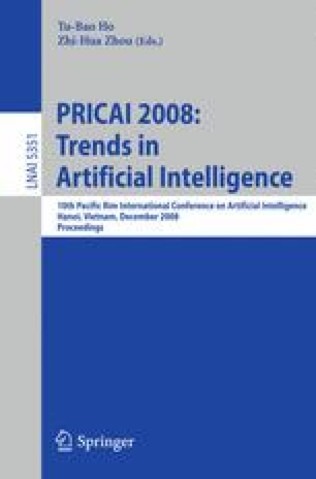
PRICAI 2008 : Trends in Artificial Intelligence ; 10th Pacific Rim International Conference on Artificial Intelligence, Hanoi, Vietnam, December 15-19, 2008. Proceedings
Constitutes the refereed proceedings of the 10th Pacific Rim International Conference on Artificial Intelligence, PRICAI 2008, held in Hanoi, Vietnam, in December 2008.The 49 revised long papers, 33 revised regular papers, and 32 poster papers presented together with 1 keynote talk and 3 invited lectures were carefully reviewed and selected from 234 submissions. The papers address all current issues of modern AI research with topics such as AI foundations, knowledge representation, knowledge acquisition and ontologies, evolutionary computation, etc. as well as various exciting and innovative applications of AI to many different areas. Particular importance is attached to the areas of machine learning and data mining.

PRICAI 2006 : Trends in Artificial Intelligence ; 9th Pacific Rim International Conference on Artificial Intelligence, Guilin, China, August 7-11, 2006, Proceedings
Constitutes the refereed proceedings of the 9th Pacific Rim International Conference on Artificial Intelligence, PRICAI 2006, held in Guilin, China in August 2006. The book presents 81 revised full papers and 87 revised short papers together with 3 keynote talks.

Practical Machine Learning for Streaming Data with Python : Design, Develop, and Validate Online Learning Models
A quick start guide for data scientists and machine learning engineers looking to implement machine learning models for streaming data with Python to generate real-time insights. You'll start with an introduction to streaming data, the various challenges associated with it, some of its real-world business applications, and various windowing techniques. You'll then examine incremental and online learning algorithms, and the concept of model evaluation with streaming data and get introduced to the Scikit-Multiflow framework in Python. This is followed by a review of the various change detection/concept drift detection algorithms and the implementation of various datasets using Scikit-Multiflow. Introduction to the various supervised and unsupervised algorithms for streaming data, and their implementation on various datasets using Python are also covered. You will: Understand machine learning with streaming data concepts / Review incremental and online learning / Develop models for detecting concept drift / Explore techniques for classification, regression, and ensemble learning in streaming data contexts / Apply best practices for debugging and validating machine learning models in streaming data context / Get introduced to other open-source frameworks for handling streaming data.

Practical Hydroinformatics : Computational Intelligence and Technological Developments in Water Applications
Hydroinformatics is an emerging subject that is expected to gather speed, momentum and critical mass throughout the forthcoming decades of the 21st century. This book provides a broad account of numerous advances in that field - a rapidly developing discipline covering the application of information and communication technologies, modelling and computational intelligence in aquatic environments.

Practical explainable AI using Python : Artificial intelligence model explanations using Python-based libraries, extensions, and frameworks
Learn the ins and outs of decisions, biases, and reliability of AI algorithms and how to make sense of these predictions. This book explores the so-called black-box models to boost the adaptability, interpretability, and explainability of the decisions made by AI algorithms using frameworks such as Python XAI libraries, TensorFlow 2.0+, Keras, and custom frameworks using Python wrappers. You will: Review the different ways of making an AI model interpretable and explainable/ Examine the biasness and good ethical practices of AI models / Quantify, visualize, and estimate reliability of AI models / Design frameworks to unbox the black-box models / Assess the fairness of AI models / Understand the building blocks of trust in AI models / Increase the level of AI adoption

Practical bioinformatics for beginners : From raw sequence analysis to machine learning applications
Next-Generation Sequencing (NGS) is increasingly common and has applications in various fields such as clinical diagnosis, animal and plant breeding, and conservation of species. This incredible tool has become cost-effective. However, it generates a deluge of sequence data that requires efficient analysis. The highly sought-after skills in computational and statistical analyses include machine learning and, are essential for successful research within a wide range of specializations, such as identifying causes of cancer, vaccine design, new antibiotics, drug development, personalized medicine, and increased crop yields in agriculture.This invaluable book provides step-by-step guides to complex topics that make it easy for readers to perform specific analyses, from raw sequenced data to answer important biological questions using machine learning methods. It is an excellent hands-on material for lecturers who conduct courses in bioinformatics and as reference material for professionals. The chapters are standalone recipes making them suitable for readers who wish to self-learn selected topics. Readers gain the essential skills necessary to work on sequenced data from NGS platforms / hence, making themselves more attractive to employers who need skilled bioinformaticians
