



الصفحة 69
الصفحة 69

Aging and Senescence
Aging is characterized by a progressive loss of physiological integrity, leading to impaired function and increased vulnerability to death. This deterioration is the primary risk factor for major human pathologies, including cancer, diabetes, cardiovascular disorders, and neurodegenerative diseases. Aging research has experienced an unprecedented advance over recent years, particularly with the discovery that the rate of aging is controlled, at least to some extent, by genetic pathways and biochemical processes conserved in evolution. Although recent developments in molecular biology are far from understanding the biological basis of aging, research suggests that targeting the aging process itself could ameliorate many age-related pathologies.

Agility by ARIS business process management : Yearbook business process excellence 2006/2007
Business Process Management has recently become a real "hype" topic. Too often, however, the technical aspects are being focused upon. The book offers valuable ideas to companies on how to optimize their own business processes and thus become more competitive.
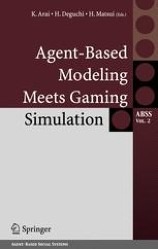
Agent-Based Modeling Meets Gaming Simulation
Provides a good example of the diverse scope and standard of research achieved in simulation and gaming today. The theme of the special session at ISAGA2003 was Agent-Based Modeling Meets Gaming Simulation. Nowadays, agent-based simulation is becoming very popular for modeling and solving complex social phenomena. It is also used to arrive at practical solutions to social problems. At the same time, however, the validity of simulation does not exist in the magni?cence of the model. R. Axelrod stresses the simplicity of the agent-based simulation model through the “Keep it simple, stupid” (KISS) principle: As an ideal, simple modeling is essential.

After Bourdieu : Influence, Critique, Elaboration
Intellectual origins & orientations We begin by providing an overview of Bourdieu’s life as a scholar and a public intellectual. The numerous obituaries and memorial tributes that have appeared following Bourdieu’s untimely death have revealed something of his life and career, but few have stressed the intersection of his social origins, career trajectory, and public intellectual life with the changing political and social context of France. This is precisely what David Swartz’s “In memoriam” attempts to accomplish. In it he emphasizes the coincidence of Bourdieu’s young and later adulthood with the period of decolonization, the May 1968 French university crisis, the opening up of France to privatization of many domains previously entrusted to the state (l’état providence), and, most threatening to post-World War II reforms, the emergence of globalization as the hegemonic structure of the 21st century.

Africa-Europe Research and Innovation Cooperation : Global Challenges, Bi-regional Responses
Concerned with the evolution and achievements of cooperation in research and innovation between Africa and Europe, and points to the need for more diversified funding and finance mechanisms, and for novel models of collaboration to attract new actors and innovative ideas. It reflects on the political, economic, diplomatic and scientific rationale for cooperation, while also examining practical developments, illustrated with examples, in the fields of food security, health, and climate change. The need to mobilise scientific knowledge and to ensure equality and fairness in the cooperation are recurrent themes. Africa-Europe Cooperation in Research and Innovation is essential reading for policy makers and researchers in international relations and science diplomacy.

Advertising management : Concepts, theories, research and trends
Explores the concept of advertising and the different ways advertising is understood and evaluated. It dives deep into planning, designing, and executing advertising campaigns on different mediums. It discusses the theoretical and research parts of advertising by critically examining how over the years various hierarchical models and theories are developed by advertising experts. It examines various models and theories that explain why and how advertising is successful in persuading customers target audiences to buy a product or accept an idea for behavioural change.
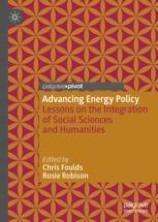
Advancing Energy Policy : Lessons on the integration of Social Sciences and Humanities
Advocates for the Social Sciences and Humanities to be more involved in energy policymaking. It forms part of the European platform for energy-related Social Sciences and Humanities’ activities, and works on the premise that crossing disciplines is essential. All of its contributions are highly interdisciplinary, with each chapter grounded in at least three different Social Sciences and Humanities disciplines. These varying perspectives come together to cover an array of issues relevant to the energy transition, including: energy poverty, justice, political ecology, governance, behaviours, imaginaries, systems approaches, modelling, as well as the particular challenges faced by interdisciplinary work. As a whole, the book presents new ideas for future energy policy, particularly at the European level. It is a valuable resource for energy researchers interested in interdisciplinary and society-relevant perspectives. Those working outside the Social Sciences and Humanities will find this book an accessible way of learning more about how these subjects can constructively contribute to energy policy.

Advances of novel formulations in drug delivery
This is an endeavor to bring all the nanotechnology-based drug carriers under the umbrella of a single text. The drug carriers made up using natural as well as synthetic polymers are described in detail. The drug carriers include (though not limited to) particulates, vesicular, dendrimers, quantum dots, carbon nano tubes, nanocrystals, nanoemulsions, nanofibers
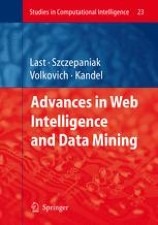
Advances in Web Intelligence and Data Mining
The new Web-related research directions include intelligent methods usually associated with the fields of computational intelligence, soft computing, and data mining. This book presents state-of-the-art developments in the area of computationally intelligent methods applied to various aspects and ways of Web exploration and Web mining. Some novel data mining algorithms that can lead to more effective and intelligent Web-based systems are also described. Scientists, engineers, and research students are expected to find many inspiring ideas in this volume.
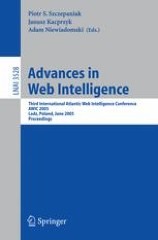
Advances in web intelligence ; 1st International symposium, ISVC 2005, Lake Tahoe, NV, USA, December 5-7, 2005, proceedings
In recent years the Internet has become a source of data and information of indisputable importance and has immensely gained in acceptance and popularity. The World Wide Web (WWW or Web, for short), frequently named “the nervous system of the infor- tion society,” offers numerous valuable services leaving no doubt about the signi?cance of the Web in our daily activities at work and at home. Consequently, we have a clear aspiration to meet the obvious need for effective use of its potential by making - provements in both the methods and the technology applied. Among the new research directions observable in Web-related applications, intelligent methods from within the broadly perceived topic of soft computing occupy an important place. AWIC, the “Atlantic Web Intelligence Conferences” are intended to be a forum for exchange of new ideas and novel practical solutions in this new and exciting ?eld.
Advances in visual computing ; Vol. 4292 ; 2nd International symposium, ISVC 2006, Lake Tahoe, NV, USA, November 6-8, 2006, Proceedings, Part II
This year, the program consisted of 13 oral sessions, one poster session, ten special tracks, and six keynote presentations. The response to the call for - pers was very strong. We received more than twice the papers received last year. Specifcally, we received over 280 submissions for the main symposium from which we accepted 65 papers for oral presentation (23% acceptance) and 56 papers for poster presentation (20% acceptance). Special track papers were solicited separately through the Organizing and Program Committees of each track. A total of 57 papers were accepted for presentation in the special tracks. All papers were reviewed with an emphasis on potential to contribute to the state of the art in the ?eld. Selection criteria included accuracy and originality of ideas, clarity and signi?cance of results, and presentation quality. The review process was quite rigorous, involving two to three independent blind reviews followed by several days of discussion.

Advances in Visual Computing ; Vol. 4291 ; 2nd International Symposium, ISVC 2006, Lake Tahoe, NV, USA, November 6-8, 2006, Proceedings, Part I
This year, the program consisted of 13 oral sessions, one poster session, ten special tracks, and six keynote presentations. The response to the call for - pers was very strong. We received more than twice the papers received last year. Specifcally, we received over 280 submissions for the main symposium from which we accepted 65 papers for oral presentation (23% acceptance) and 56 papers for poster presentation (20% acceptance). Special track papers were solicited separately through the Organizing and Program Committees of each track. A total of 57 papers were accepted for presentation in the special tracks. All papers were reviewed with an emphasis on potential to contribute to the state of the art in the ?eld. Selection criteria included accuracy and originality of ideas, clarity and signi?cance of results, and presentation quality. The review process was quite rigorous, involving two to three independent blind reviews followed by several days of discussion. During the discussion period we tried to correct anomalies and errors that might have existed in the initial reviews.
Advances in Visual Computing ; 3rd International Symposium, ISVC 2007, Lake Tahoe, NV, USA, November 26-28, 2007, Proceedings, Part II
It main of visual computing including vision,graphics,visualization,andvirtualreality.Its goal is to provide a forum for researchers, scientists, engineers and practitioners throughout the world to present their latest research findings, ideas, devel- ments, and applications in the broader area of visual computing.
Advances in Visual Computing ; 3rd International Symposium, ISVC 2007, Lake Tahoe, NV, USA, November 26-28, 2007, Proceedings, Part I
It main of visual computing including vision,graphics,visualization,andvirtualreality.Its goal is to provide a forum for researchers, scientists, engineers and practitioners throughout the world to present their latest research findings, ideas, devel- ments, and applications in the broader area of visual computing.

Advances in UAV detection, classification and tracking
Explores the latest techniques and advancements in unmanned aerial vehicle (UAV) detection, classification, and tracking. As UAV technology continues to evolve and become more accessible, there is a growing need for effective methods to detect, identify, and track these devices in various scenarios. This reprint provides a thorough overview of the state-of-the-art approaches for UAV detection, classification, and tracking, covering both theoretical and practical aspects.The reprint begins by introducing the basics of UAVs and their various applications, followed by a detailed overview of the challenges associated with UAV detection, classification, and tracking. The authors then present the latest techniques and algorithms used in the field, including machine-learning-based approaches, computer vision techniques, and sensor fusion techniques. The reprint also covers the challenges of real-world applications, such as dealing with occlusions, sensor noise, and environmental factors.
Advances in spatial and temporal databases ; 7th International symposium, SSTD 2001, Redondo Beach, CA, USA, July 12-15, 2001 Proceedings
The Seventh International Symposium on Spatial and Temporal Databases (SSTD 2001), held in Redondo Beach, CA, USA, July 12{15, 2001, brought together leading researchers and developers in the area of spatial, temporal, and spatio-temporal databases to discuss the state of the art in spatial and temporal data management and applications, and to understand the challenges and - search directions in the advancing area of data management for moving objects. The symposium served as a forum for disseminating research in spatial and temporal data management, and for maximizing the interchange of knowledge among researchers from the established spatial and temporal database com- nities. The exchange of research ideas and results not only contributes to the academic arena, but also bene ts the user and commercial communities.

Advances in solid state physics ; Vol. 47
The present volume 47 of the Advances in Solid State Physics contains the written version of a large number of the invited talks of the 2007 Spring Meeting of the Arbeitskreis Festkörperphysik which was held in Regensburg, Germany, from March 26 to 30, 2007 in conjunction with the 71st Annual Meeting of the Deutsche Physikalische Gesellschaft.It gives an overview of the present status of solid state physics where low-dimensional systems such as quantum dots and quantum wires are dominating. The importance of magnetic materials is reflected by the large number of contributions in the part dealing with ferromagnetic films and particles. One of the most exciting achievements of the last couple of years is the successful application of electrical contacts to and the investigation of single layers of graphene.
Advances in Salivary Diagnostics
Reviews the progress made in salivary diagnostics during the past two decades and identifies the likely direction of future endeavors. After an introductory section describing the histological and anatomical features of the salivary glands and salivary function, salivary collection devices and diagnostic platforms are reviewed.
Advances in pharmacokinetics and pharmacodynamics
Provides a concise overview of recent advances in Pharmacokinetics (PK) and Pharmacodynamics (PD). The pharmacokinetics section covers the state of the art in Physiologically Based Pharmacokinetic (PBPK) modeling (Chapter 1) as well as the assessment of food effect on drug absorption using PBPK modeling (Chapter 2). Chapters 3 and 4 describe the recent development of Physiologically Based Finite Time Pharmacokinetic (PBFTPK) models and their applications to pharmacokinetic data. The pharmacodynamics section focuses on PK/PD modeling. Chapter 5 provides an overview of PK/PD modeling and simulation in clinical practice and studies. Chapter 6 deals with the subject/physiology variability issue encountered in PK/PD studies, while Chapter 7 reviews the influence of clinical pharmacology in the modernization of drug development and regulation. This book is an essential reference for pharmaceutical scientists.

Advances in Natural Computation ; Vol. 4222 ; 2nd International Conference, ICNC 2006, Xi'an, China, September 24-28, 2006, Proceedings, Part II
constitutethe proceedings of the 2nd International Conference on Natural Computation (ICNC 2006), jointly held with the 3rd International Conference on Fuzzy Systems and Knowledge Discovery, ICNC-FSKD 2006 featured the most up-to-date research results in com- tational algorithms inspired from nature, including biological, ecological, and physical systems. It is an exciting and emerging interdisciplinary area in which a wide rangeof techniques and methods arebeing studied for dealing with large, complex, and dynamic problems. The joint conferences also promoted cro- fertilization over these exciting and yet closely-related areas, which had a s- nifcant impact on the advancement of these important technologies. Specifc areas included neural computation, quantum computation, evolutionarycom- tation, DNA computation, fuzzy computation, granular computation, artifcial life, etc., with innovative applications to knowledge discovery, fnance, ope- tions research, and more. In addition to the large number of submitted papers, we were blessed with the presence of six renowned keynote speakers.
