



الصفحة 68
الصفحة 68

Ambient intelligence for scientific discovery : Foundations, theories, and systems
Many difficult scientific discovery tasks can only be solved in interactive ways, by combining intelligent computing techniques with intuitive and adaptive user interfaces. It is inevitable to use human intelligence in scientific discovery systems: human eyes can capture complex patterns and relationships, along with detecting the exceptional cases in a data set; the human brain can easily manipulate perceptions to make decisions. Ambient intelligence is about this kind of ubiquitous and autonomous human interaction with information. Scientific discovery is a process of creative perception and communication, dealing with questions like: how do we significantly reduce information while maintaining meaning, or how do we extract patterns from massive data and growing data resources. Originating from the SIGCHI Workshop on Ambient Intelligence for Scientific Discovery, this state-of-the-art survey is organized in three parts: new paradigms in scientific discovery, ambient cognition, and ambient intelligence systems. Many chapters share common features such as interaction, vision, language, and biomedicine.

Alzheimers disease : Cellular and molecular aspects of Amyloid beta
This book contains a survey of present-day research into the biomedical fundamentals of Alzheimer’s disease (AD). It contains 20 chapters dealing with widely ranging topics, all of which have a bearing upon the understanding and treatment of AD. Starting with a broad survey of the contribution that the various microscopical techniques (light microscopy, electron microscopy, atomic force microscopy)

Alzheimers Disease
Alzheimer’s disease (AD) is a neurodegenerative disease that robs the minds of our elderly population. Approximately one in every eight adults over the age of 65 and nearly half of those over 85 are afflicted with this disease. The aging population in developed societies will impose an ever increasing socioeconomic threat in the future. Current medicines for AD patients are mainly symptomatic treatments and a huge unmet medical need exists to slow the progression of this disease. A great deal of research has been dedicated to understanding the pathogenesis of AD from which comes many ideas for intervening with its progression. Some of these ideas have been fast-tracked to clinical trials due to the availability of medicines with proven clinical efficacies for other diseases (e.g. atorvastatin, simvastatin, rosiglitazone and clioquinol) while others represent novel chemical entities (e.g. glycogen synthase kinase-3 inhibitors).

Algorithms in Real Algebraic Geometry
The algorithmic problems of real algebraic geometry such as real root counting, deciding the existence of solutions of systems of polynomial equations and inequalities, finding global maxima or deciding whether two points belong in the same connected component of a semi-algebraic set appear frequently in many areas of science and engineering. In this first-ever graduate textbook on the algorithmic aspects of real algebraic geometry, the main ideas and techniques presented form a coherent and rich body of knowledge, linked to many areas of mathematics and computing.

Algorithms in Bioinformatics ; Vol.4175 : 6th International Workshop, WABI 2006, Zurich, Switzerland, September 11-13, 2006, Proceedings
This book constitutes the refereed proceedings of the 6th International Workshop on Algorithms in Bioinformatics, WABI 2006, held in Zurich, Switzerland in September 2006 in the course of the ALGO 2006 conference meetings. The 36 revised full papers presented were carefully reviewed and selected from 100 submissions. All current issues of algorithms in bioinformatics are addressed, ranging from mathematical tools to experimental studies of approximation algorithms and reports on significant computational analyses. Numerous biological problems are dealt with, including genetic mapping, sequence alignment and sequence analysis, phylogeny, comparative genomics, and protein structure. For the first time also machine-learning approaches along with combinatorial optimization are covered.

Algorithms in Bioinformatics ; 7th International Workshop, WABI 2007, Philadelphia, PA, USA, September 8-9, 2007, Proceedings
All current issues of algorithms in bioinformatics are addressed, ranging from mathematical tools to experimental studies of approximation algorithms and reports on significant computational analyses. Numerous biological problems are dealt with, including genetic mapping, sequence alignment and sequence analysis, phylogeny, comparative genomics, and protein structure. Furthermore the papers feature high-performance computing approaches to computationally hard learning and optimization problems in bioinformatics and cover methods, software and dataset repositories for development and testing of such algorithms and their underlying models.
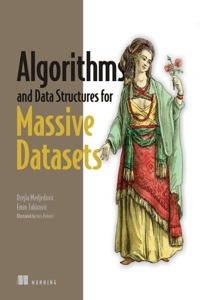
Algorithms and data structures for massive datasets
Learn: Probabilistic sketching data structures for practical problems Choosing the right database engine for your application Evaluating and designing efficient on-disk data structures and algorithms Understanding the algorithmic trade-offs involved in massive-scale systems Deriving basic statistics from streaming data Correctly sampling streaming data Computing percentiles with limited space resources Algorithms and Data Structures for Massive Datasets reveals a toolbox of new methods that are perfect for handling modern big data applications. You'll explore the novel data structures and algorithms that underpin Google, Facebook, and other enterprise applications that work with truly massive amounts of data. These effective techniques can be applied to any discipline, from finance to text analysis. Graphics, illustrations, and hands-on industry examples make complex ideas practical to implement in your projects--and there's no mathematical proofs to puzzle over. Work through this one-of-a-kind guide, and you'll find the sweet spot of saving space without sacrificing your data's accuracy. About the Technology Standard algorithms and data structures may become slow--or fail altogether--when applied to large distributed datasets. Choosing algorithms designed for big data saves time, increases accuracy, and reduces processing cost.

Algorithms and architectures for parallel processing ; 7th International Conference, ICA3PP 2007, Hangzhou, China, June 11-14, 2007, Proceedings
The improvements in computation and communication capabilities have enabled the creation of demanding applications in critical domains such as the environment, health, aerospace, and other areas of science and technology. Similarly, new classes of applications are enabled by the availability of heterogeneous large-scale distributed systems which are becoming available nowadays (based on technologies such as grid and peer-to-peer systems).Parallel computing systems exploit a large diversity of computer architectures, from supercomputers, shared-memory or distributed-memory multi processors, to local networks and clusters of p- sonal computers. With the recent emergence of multi core architectures, parallel computing is now set to achieve “mainstream” status. Approaches that have been advocated by parallel computing researchers in the past are now being utilized in a number of software libraries and hardware systems that are available for everyday use. Parallel computing ideas have also come to dominate areas such as multi user gaming (especially in the development of gaming engines based on “cell” arc- tectures).
Algorithmic information theory : Mathematics of digital information processing
This book treats the Mathematics of many important areas in digital information processing.It covers, in a unified presentation, five topics: Data Compression, Cryptography, Sampling (Signal Theory), Error Control Codes, Data Reduction. The thematic choices are practice-oriented. So, the important final part of the book deals with the Discrete Cosine Transform and the Discrete Wavelet Transform, acting in image compression. The presentation is dense, the examples and numerous exercises are concrete. The pedagogic architecture follows increasing mathematical complexity.

Algorithmic Aspects in Information and Management ; 14th International Conference, AAIM 2020, Jinhua, China, August 10–12, 2020, Proceedings
This volume constitutes the proceedings of the 14th International Conference on Algorithmic Aspects in Information and Management, AAIM 2020, held in Jinhua, China in August 2020. The 39 full papers and 17 short papers presented were carefully reviewed and selected from 76 submissions. The papers deal with emerging important algorithmic problems with a focus on the fundamental background, theoretical technology development, and real-world applications associated with information and management analysis, modeling and data mining. Special considerations are given to algorithmic research that was motivated by real-world applications.

Algèbre, Chapitre 4 à 7 = Algebra, Chapter 4 to 7
The Mathematics Elements of Nicolas BOURBAKI aim to provide a rigorous, systematic presentation without prerequisites of mathematics from their foundations. Deals in particular with extensions of fields and Galois theory. It includes the chaptires: 4. Polynomials and rational fractions; 5. Commutative bodies 6. Orderly groups and bodies; 7. Modules on the main rings

Algèbre commutative : Chapitres 1à 4 = = Commutative algebra : Chapters 1 to 4
Nicolas BOURBAKI's Elements of Mathematics aim to provide a rigorous, systematic presentation without prerequisites of mathematics from their foundations. This first volume of the Book of Commutative Algebra, the seventh Book of the treatise, is devoted to the fundamental concepts of commutative algebra. It includes the chapters, Flat modules, Localization, Graduations, filtrations and topologies, First associated ideals and primary decomposition, It also contains historical notes. This volume is a reprint of the 1969 edition.
Algebraic Combinatorics : Lectures at a Summer School in Nordfjordeid, Norway, June 2003
This book is based on two series of lectures given at a summer school on algebraic combinatorics at the Sophus Lie Centre in Nordfjordeid, Norway, in June 2003, one by Peter Orlik on hyperplane arrangements, and the other one by Volkmar Welker on free resolutions.

Algebraic Analysis of Differential Equations : from Microlocal Analysis to Exponential Asymptotics Festschrift in Honor of Takahiro Kawai Editors
This volume contains 23 articles on algebraic analysis of differential equations and related topics, most of which were presented as papers at the international conference "Algebraic Analysis of Differential Equations – from Microlocal Analysis to Exponential Asymptotics" at Kyoto University in 2005. Microlocal analysis and exponential asymptotics are intimately connected and provide powerful tools that have been applied to linear and non-linear differential equations as well as many related fields such as real and complex analysis, integral transforms, spectral theory, inverse problems, integrable systems, and mathematical physics. The articles contained here present many new results and ideas, providing interested researchers and students with valuable suggestions and instructive guidance for their work.

Algebra 3 : Homological Algebra and Its Applications
Includes algebra, deals with important topics in homological algebra, including abstract theory of derived functors, sheaf co-homology, and an introduction to etale and l-adic co-homology. It contains four chapters which discuss homology theory in an abelian category together with some important and fundamental applications in geometry, topology, algebraic geometry (including basics in abstract algebraic geometry), and group theory.

AIU asset management system (Assettracker)
Assets can be defined as something of value that can be converted into cash, as all institutions and companies own assets and the larger the size of the organization, the greater the need to manage its owned assets. Some companies have resorted to manually tracking their assets by making paper data, but later, with the continuation of this approach, it has been noted that these data are largely lacking in organization and create difficulties in searching and tracking the life cycle of each asset separately. Here comes the role of our project, which is a software project based on automating assets and converting them from traditional methods to digital methods with the aim of obtaining the maximum benefit from assets in the organization by avoiding wasting assets, and issuing detailed reports indicating the decision-making process, in addition to the ability to deal with operations Effectively maintain assets.
AiREAS : Sustainocracy for a healthy city : Phase 3 : Civilian participation – Including the global health deal proposition
This volume describes phase 3 of the AiREAS multidisciplinary cocreation effort to produce a Healthy City. Phase 1 referred to making visible the invisible from an air quality and human exposure perspective. Phase 2 studies air quality related to health and Phase 3 looks at air quality, health and lifestyle from the perspective of persuasion to innovative change. The three books together describe the coming about and first results of the AiREAS "healthy city" cooperative in the city of Eindhoven and Province of North Brabant in the Netherlands. AiREAS is an initiative focused on the multidisciplinary co-creation of healthy cities using the core human value of human health and air quality as guiding principle for profound regional innovation.
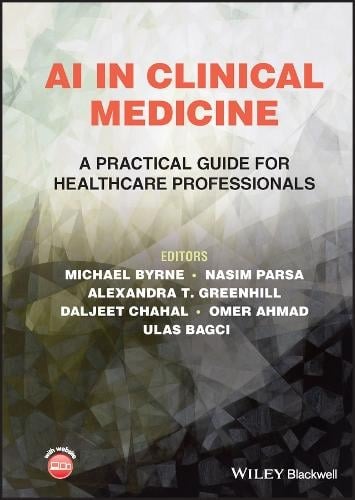
AI in clinical medicine : A practical guide for healthcare professionals
A Practical Guide for Healthcare Professionals is the definitive reference book for the emerging and exciting use of AI throughout clinical medicine. AI in Clinical Medicine: A Practical Guide for Healthcare Professionals is divided into four sections. Section 1 provides readers with the basic vocabulary that they require, a framework for AI, and highlights the importance of robust AI training for physicians. Section 2 reviews foundational ideas and concepts, including the history of AI. Section 3 explores how AI is applied to specific disciplines. Section 4 describes emerging trends, and applications of AI in medicine in the future.

AI 2004 : Advances in artificial intelligence ; 17th Australian Joint conference on artificial intelligence, Cairns, Australia, December 4-6, 2004, proceedings
AI 2004 was the seventeenth in the series of annual Australian artificial intelli-gence conferences. This conference is the major forum for artificial intelligenceresearch in Australia. It has consistently attracted strong international partic-ipation. This year more than two thirds of the submissions were from outsideAustralia.The current volume is based on the proceedings of AI 2004. AI 2004 was collo-cated with Complex 2004, the 7th Asia-Pacific Conference on Complex Systems,with the aim of promoting cross-fertilization and collaboration in areas of com-plex and intelligent systems

Agriculture for Economic Development in Africa : Evidence from Ethiopia
This book explores the role of agriculture in long-term economic growth. With a particular focus on Ethiopia, the role of the state in igniting agricultural growth and in sustaining economic growth is highlighted as essential for low-income countries. Taking ideas from both economic history and development economics, the ability of Ethiopia and the rest of Africa to sustain recent rapid growth into something that can tackle the development agenda is discussed, alongside policy suggestions.
