



الصفحة 63
الصفحة 63

Drug Selectivity : An Evolving Concept in Medicinal Chemistry
Provides a current overview and comprehensive compilation for medicinal chemists that discusses the effects of aiming for multiple targets on the entire drug development process. The result is a broad survey of current and future strategies for drug selectivity in medicinal chemistry with theoretical but also practical aspects. Different strategies are presented and evaluated, such as various design approaches, merged multiple ligands, discovery technologies and a broad range of successful examples of unselective drugs taken from all major disease areas. With its wide-ranging view of an emerging new paradigm in drug development, this handbook is of prime importance for every medicinal and pharmaceutical chemist.

Drug safety evaluation
Presents an all-inclusive practical guide for those who are responsible for developing new drugs and ensuring the safety of an ever-expanding spectrum of therapeutics. This book helps readers understand how the safety of these products are evaluated for use. Extensively revised to reflect up-to-date information, this edition includes changes to the scope of products (vaccines, small synthetic, large protein moieties, cells and tissues), harmonized global and national regulatory requirements, the therapeutic development process, and available technologies to identify and evaluate the relevance of potential patient risks

Drug Metabolism, Pharmacokinetics and Bioanalysis
Drug metabolism/pharmacokinetics and drug interaction studies have been extensively carried out in order to secure the druggability and safety of new chemical entities throughout the development of new drugs. Recently, drug metabolism and transport by phase II drug metabolizing enzymes and drug transporters, respectively, as well as phase I drug metabolizing enzymes, have been studied. A combination of biochemical advances in the function and regulation of drug metabolizing enzymes and automated analytical technologies are revolutionizing drug metabolism research. There are also potential drug-drug interactions with co-administered drugs due to inhibition and/or induction of drug metabolic enzymes and drug transporters.

Drug disposition and pharmacokinetics : Principles and applications for medicine, toxicology and biotechnology
Delivers an authoritative and comprehensive discussion of the fate of drug molecules in the body, as well as its implications for pharmacological and clinical effects. The text offers a unique and balanced approach that combines discussion of the specific physical and biological factors affecting the absorption, distribution, metabolism, and excretion of drugs, with mathematical assessments of plasma and body fluid concentrations. The book assumes little prior knowledge and is an ideal reference for practicing professionals in industry as well as researchers and academics.

Drug discovery and development
Presents up-to-date scientific information for maximizing the ability of a multidisciplinary research team to discover and bring new drugs to the marketplace. It explores many scientific advances in new drug discovery and development for areas such as screening technologies, biotechnology approaches, and evaluation of efficacy and safety of drug candidates through preclinical testing. This book also greatly expands the focus on the clinical pharmacology, regulatory, and business aspects of bringing new drugs to the market and offers coverage of essential topics for companies involved in drug development. Historical perspectives and predicted trends are also provided.

Drug design : A conceptual overview
The newer research areas in pharmaceutical sciences, particularly molecular modeling and simulations, prompted a more efficient drug discovery process. Informatics integrated with pharmaceutical sciences (cheminformatics and bioinformatics) became an essential component of drug research. Drug informatics such as genomics and proteomics assists in the Rational Drug Design (RDD). This emerging discipline is known as “Computer-Aided Drug Design" (CADD), which has profound application in RDD. The advanced and adequate practice in drug design informatics is essential for pharmacy graduates. Hence, a companion for acquiring knowledge on these concepts is vital. The students of B. Pharmacy, M. Pharmacy (Pharmaceutical Chemistry, Pharmacology, and Pharmaceutics), biotechnology, biomedical engineering and other interdisciplinary fields may find this book as a reference guide.

Drug delivery via nasal route
Over the past 10 years, the interest in intranasal drug delivery has increased. The objective of this research is to summarize recent developments on intranasal administration for local and systemic delivery, as well as for CNS indications. Nasal delivery offers many advantages over standard systemic delivery systems, nevertheless, there are still formulation limitations and side effects to be optimized. Intranasal drug delivery in the field of drug development is an interesting delivery route for the treatment of neurological disorders. Systemic approaches often fail to efficiently supply the CNS with drugs. This research describes the anatomical, histological and physiological basis and summarizes currently approved drugs for administration via intranasal delivery. Further, the research focuses on advantages and disadvantages of intranasal applied compounds and discusses formulation aspects that need to be considered for drug development.

Drug delivery technology : Herbal bioenhancers in pharmaceuticals
Bioenhancers have been used in Ayurveda historically and are now being investigated for their pharmacological effi cacy. Herbal bioenhancers work on the gastrointestinal tract to improve absorption and drug bioavailability by acting on the drug metabolic process. Many herbal drugs show low activity due to their poor lipid solubility or improper molecular size. Piperine, gingerol, naringin, quercetin, niaziridin, glycyrrhizin, allicin, curcumin, genistein and others are able to enhance the bioavailability of active pharmaceuticals. This book details various facets of herbal bio-enhancers in a single comprehensive text.

Drug delivery systems using quantum computing
Drug delivery systems (DDS) are defined as methods by which drugs are delivered to desired tissues, organs, cells, and subcellular organs for drug release and absorption through a variety of drug carriers. By controlling the precise level and/or location of a given drug in the body, side effects are reduced, doses are lowered, and new therapies are possible. Nevertheless, there are still significant obstacles to delivering certain medications to particular cells. Drug delivery methods change pharmacokinetic, pharmacodynamic, and drug release patterns to enhance product efficacy and safety, as well as patient convenience and compliance.

Drug Delivery Systems
Expands on the previous editions with a discussion of new and updated methods used to study drug delivery. Chapters cover topics such as drug delivery in cancer and intrathecal delivery of analgesics in humans. The increasing role of nanobiotechnology is reflected in eight of the sixteen chapters that include synthesis of gold nanoparticles; targeted siRNA delivery; and lipid nanocarriers. Written in the highly successful Methods in Molecular Biology series format, chapters include introductions to their respective topics, lists of the necessary materials and reagents, step-by-step, readily reproducible laboratory protocols, and tips on troubleshooting and avoiding known pitfalls.

Drug delivery approaches and nanosystems ; Vol.1 : Novel drug carriers
Presents a full picture of the state-of-the-art research and development in drug delivery systems using nanotechnology and its applications. It addresses the ever-expanding application of nanotechnology or nano-sized materials in the medical field and the real-world challenges and complexities of current drug delivery methodologies and techniques.

Drug and Biological Development : From Molecule to Product and Beyond
Drug and Biological Development: From Molecule to Product and Beyond offers a complete discussion of product development in the pharmaceutical and biotechnology industries from discovery to product launch, continuing through life cycle management. The book is organized for optimal usefulness in the education and training of health care professionals. The text's narrative descriptions are enhanced by real-life examples, illustrations, controversies in industry, and references. Dr. Ronald Evens and his contributors are industry and research experts in a variety of disciplines.

Drug Absorption Studies : In Situ, In Vitro and In Silico Models
In the last 15 years, a great number of cell- or tissue-based in vitro models have been introduced into the biopharmaceutics arena. These models mimic the different biological barriers that a drug has to overcome to finally reach its target organ/cell/receptor. These in vitro models have been found very useful in not only characterising the permeability behaviour of drugs molecules in epithelial and endothelial tissues, but also studying drug delivery systems for improved delivery and enhanced absorption. Compared to the complex in vivo situation, in vitro models offer a fast, convenient approach with cost advantages most of times. Most importantly, they can be standardised and automatised to be applicable to the high-throughput screening. Starting at the molecular level of studies, continuing with cell monolayer models (both primary and cell lines) and in situ techniques as a final testing format, the book provides a practical approach to contemporary in vitro techniques for drug absorption studies. In addition, chapters on high-throughput assays, in vitro-in vivo correlation, bioinformatics and regulatory issues are covered, giving a comprehensive overview of available models and techniques. Moreover, an appendix comprised with a number of practical protocols is available online, updated as needed, should prove very helpful to apply the techniques directly to the benchside.

Drones and the Creative Industry : Innovative Strategies for European SMEs
Presents innovative strategies in the use of civil drones in the cultural and creative industry. Specially aimed at small and medium-sized enterprises (SMEs), the book offers valuable insights from the fields of marketing, engineering, arts and management. With contributions from experts representing varied interests throughout the creative industry, including academic researchers, software developers and engineers, it analyzes the needs of the creative industry when using civil drones both outdoors and indoors. The book also provides timely recommendations to the industry, as well as guidance for academics and policymakers.

Driving smart medical diagnosis through AI-powered technologies and applications
Driving Smart Medical Diagnosis Through AI-Powered Technologies and Applications serves as a solution in this era of transformative healthcare and addresses these challenges head-on. It unravels the complexities surrounding the implementation of AI in healthcare, offering in-depth discussions on the latest breakthroughs. From unraveling the mysteries of AI-driven cataract detection to exploring the implications of decentralized mammography classification, the book is a valuable resource that equips scholars with the knowledge to navigate this innovative landscape.

Driving digital transformation through data and AI : A practical guide to delivering data science and machine learning products
Explains how to build the organizational capability to deliver Data and AI products and drive immediate business results as new digital technologies significantly disrupt business Provides best practices, tools and templates for managing the organizational and technological change process to become an AI-driven enterprise Includes a variety of international case studies across several industries such as insurance, fashion, consumer goods, finance, technology and automotive Outlines how to develop a product strategy, build teams and design the platform and architecture Provides key principles for sharing knowledge, educating staff on data and AI, and effectively engaging top executives
Drawn to Design : Analyzing Architecture Through Freehand Drawing
A guide for students and teachers to understand the need for, the role of and the methods and techniques of freehand analytical sketching in architecture. The presentation focuses on drawing as an approach to and phase of architectural design. The conceptual goal of this approach is to use drawing not as illustration or depiction, but as exploration. The first part of the book discusses underlying concepts of freehand sketching in design education and practice as a complement to digital technologies. The main component is a series of chapters that constitute a typology of fundamental issues in architecture and urban design; for instance, issues of "façade" are illustrated with sketch diagrams that show how façades can be explored and sketched through a series of specific questions and step-by-step procedures.
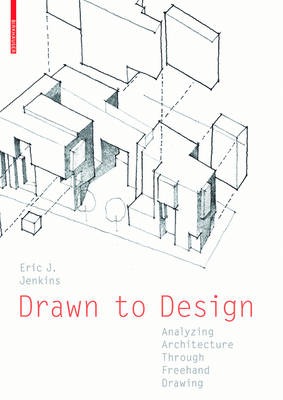
Drawn to Design : Analyzing Architecture Through Freehand Drawing
A guide for students and teachers to understand the need for, the role of and the methods and techniques of freehand analytical sketching in architecture. The presentation focuses on drawing as an approach to and phase of architectural design. The conceptual goal of this approach is to use drawing not as illustration or depiction, but exploration. The first part of the book discusses underlying concepts of freehand sketching in design education and practice as a compliment to digital technologies. The main component is a series of chapters that constitute a typology of fundamental issues in architecture and urban design; for instance, issues of "facade" are illustrated with sketch diagrams that show how facades can be explored and sketched through a series of specific questions and step-by-step procedures.

Drawing with a tablet : Easy techniques for mastering digital drawing on location
learn step by step how to create amazing drawings while on the go. Shows sketchers how to take their digital drawing to the next level. Whether you are new to sketching or wish to try the latest technology, this useful guide shares expert tips and techniques for drawing on a tablet. With a focus on using the ProCreate tool, but with information that is relevant to other digital platforms, you will start with the basics, such as opening your file, choosing your resolution, determining your palette, and how to simplify your tools by creating a preferred set of brushes.Covers using layers and groups of layers, and shows you how to create a sketch from start to finish.

Domain Decomposition Methods in Science and Engineering XVII
This volume contains a selection of papers presented at the 17th International Conference on Domain Decomposition Methods in Science and Engineering held at St. Wolfgang / Strobl, Austria, July 3 - 7, 2006. Domain decomposition is an active, interdisciplinary research area concerned with the development, analysis, and implementation of coupling and decoupling strategies in mathematical and computational models. Domain decomposition techniques provide efficient tools for treating problems in all Computational Sciences. The reader will become familiar with the newest domain decomposition technologies and their use for modeling and simulating of complex problems from different fields of applications.
