



الصفحة 6
الصفحة 6
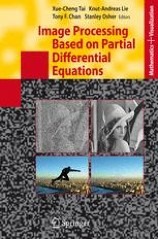
Image processing based on partial differential equations ; Proceedings of the International Conference on PDE-Based Image Processing and Related Inverse Problems, CMA, Oslo, August 8-12, 2005
The book contains twenty-two original scienti?c research articles that address the state-of-the-art in using partial di?erential equations for image and signal processing. The articles arose from presentations given at the inter- tional conference on PDE-Based Image Processing and Related Inverse Pr- lems, held at the Centre of Mathematics for Applications, University of Oslo, Norway, August 8-12, 2005.

Image and video retrieval ; Vol. 4071 ; 5th Internatinoal Conference, CIVR 2006, Tempe, AZ, USA, July 13-15, 2006, Proceedings
This volume contains the proceeding of the 5th International Conference on - age and Video Retrieval (CIVR), July 13–15, 2006, Arizona State University, Tempe, AZ, USA: http://www. civr2006. org. Image and video retrieval cont- ues to be one of the most exciting and fast-growing research areas in the ?eld of multimedia technology. However, opportunities for exchanging ideas between researchers and users of image and video retrieval systems are still limited.

Image and video encryption : From digital rights management to secured personal communication
Image and Video Encryption provides a unified overview of techniques for encryption of images and video data. This ranges from commercial applications like DVD or DVB to more research oriented topics and recently published material. This volume introduces different techniques from unified viewpoint, then evaluates these techniques with respect to their respective properties (e.g., security, speed.....). Encryption of visual data is an important topic in the area of mutimedia security, applications range from digital rights management (DVD, DVB) ) to secure personal communications. Within this topic area, we face several aims which contradict each other. What we thrive on is good compression, fast compression, high security, fast encryption, bitstream compliance, little power consumption and little memory requirements. The authors experimentally compare different approaches proposed in the literature and include an extensive bibliography of corresponding published material. Image and Video Encryption is designed for a professional audience composed of researchers and practitioners in industry. The book is also suitable for graduate-level students in computer science and electrical engineering.

Illustrated C# 2008
The unique, visual format of Illustrated C# 2008 has been specially created by author and teacher of development methods, Daniel Solis. The concise text, use of tables to clarify language features, frequent figures and diagrams, as well as focused code samples all combine to create a unique approach that will help you understand and get to work with C# fast. It was while teaching numerous seminars on various programming languages that the author realized the immense power that diagrams have in explaining programming language concepts. Most people learn quicker and retain information better when the material is presented in a clean, simple, visual format. To achieve this result in his book, Solis uses concise text and bulleted lists, tables to clarify and summarize language features, as well as his renowned and ubiquitous figures and diagrams.

Illustrated C# 2005
Illustrated C# 2005 presents the C# programming language in a unique visual manner. The book uses three techniques to achieve this: concise text, tables that clarify and summarize language features, and frequent figures and diagrams. Each feature is also illustrated with concise, focused code samples.

IFRS for Small and Medium-Sized Enterprises : Structuring the Transition Process
In the process of converting to IFRS, a number of practical questions arise concerning the structures of the accounting area department of medium-sized enterprises as well as the issue of effectively updating financial statements once converted, which have thus far not been addressed in the debate. Richard Wittsiepe analyses the relevant IFRS statements with a view to possibly integrating them into existing workflows in an annual audit. He weighs the key issues of conversion by comparing them with the 4th EU Directive for accounting within the EU. The aim is to visualise the workflows as the basis for creating support software which can make a key contribution to cost-effective conversion.

Ice, Rock, and Beauty : A Visual Tour of the New Solar System
Ice, Rock, and Beauty is a book for anybody who lives in the solar neighborhood, and takes an interest in its significance to us as residents.The book gathers images from a rich pool, many from national and international organizations such as NASA and ESA, some directly from academic astronomers, and a few from private individuals. Together they tell a story of the Solar System, and of its beauty, that has not been told before.

Hybrid Artificial Intelligent Systems ; 15th International Conference, HAIS 2020, Gijón, Spain, November 11-13, 2020, Proceedings
This book constitutes the refereed proceedings of the 15th International Conference on Hybrid Artificial Intelligent Systems, HAIS 2020, held in Gijón, Spain, in November 2020. The 65 regular papers presented in this book were carefully reviewed and selected from 106 submissions. The papers are grouped into these topics: advanced data processing and visualization techniques; bio-inspired models and optimization; learning algorithms; data mining, knowledge discovery and big data; and hybrid artificial intelligence applications.
Humans-with-media and the reorganization of mathematical thinking : Information and communication technologies, modeling, visualization and experimentation
Offers a new conceptual framework for reflecting on the role of information and communication technology in mathematics education. Borba and Villarreal provide examples from research conducted at the level of basic and university-level education, developed by their research group based in Brazil, and discuss their findings in the light of the relevant literature. Arguing that different media reorganize mathematical thinking in different ways, they discuss how computers, writing and oral discourse transform education at an epistemological as well as a political level. Modeling and experimentation are seen as pedagogical approaches which are in harmony with changes brought about by the presence of information and communication technology in educational settings. Examples of research about on-line mathematics education courses, and Internet used in regular mathematics courses, are presented and discussed at a theoretical level. In this book, mathematical knowledge is seen as developed by collectives of humans-with-media.
Human–computer interaction ; International Workshop, HCI 2007 Rio de Janeiro, Brazil, October 20, 2007 Proceedings
Constitutes the refereed proceedings of the International Workshop on Human Computer Interaction, HCI 2007, held in Rio de Janeiro, Brazil, October 20, 2007. This book covers such topics as: Affective detection and recognition, Smart interfaces, Human motion tracking, Gesture recognition, and Multimedia data modeling and visualization.

Human-computer interaction : Interaction platforms and techniques ; 12th International Conference, HCI International 2007, Beijing, China, July 22-27, 2007, Proceedings, Part II
The 12th International Conference on Human-Computer Interaction, HCI Inter- tional 2007, was held in Beijing, P.R. This volume, edited by Julie A. Jacko, contains papers in the thematic area of Human-Computer Interaction, addressing the following major topics: • Graphical User Interfaces and Visualization • Mobile Devices and Mobile Interaction • Virtual Environments and 3D Interaction • Ubiquitous Interaction • Emerging Interactive Technologies.
Human-computer interaction – INTERACT 2007 ; 11th IFIP TC 13 International Conference, Rio de Janeiro, Brazil, September 10-14, 2007, Proceedings, Part II
This book is part of a two-volume work that constitutes the refereed proceedings of the 11th IFIP TC13 International Conference on Human-Computer Interaction, INTERACT 2007, held in Rio de Janeiro, Brazil in September 2007. It covers tangible user interfaces and interaction; as well as software engineering and HCI.
Human-computer interaction – INTERACT 2007 ; 11th IFIP TC 13 International Conference, Rio de Janeiro, Brazil, September 10-14, 2007, Proceedings, Part I
The two volume set LNCS 4662 and LNCS 4663 constitutes the refereed proceedings of the 11th IFIP TC13 International Conference on Human-Computer Interaction, INTERACT 2007, held in Rio de Janeiro, Brazil, in September 2007.
Human-computer interaction – INTERACT 2005 ; IFIP TC 13 International Conference, Rome, Italy, September 12-16, 2005, Proceedings
We will be, sooner or later, not only handling personal computers but also mul- purpose cellular phones, complex personal digital assistants, devices that will be context-aware, and even wearable computers stitched to our clothes…we would like these personal systems to become transparent to the tasks they will be performing. In fact the best interface is an invisible one, one giving the user natural and fast access to the application he (or she) intends to be executed. The working group that organized this conference (the last of a long row!) tried to combine a powerful scientific program (with drastic refereeing) with an entertaining cultural program, so as to make your stay in Rome the most pleasant one all round: I do hope that this expectation becomes true. July 2005 Stefano Levialdi, IEEE Life Fellow INTERACT 2005 General Chairman [1] Peter J. Denning, ACM Communications, April 2005, vol. 48, N° 4, pp. 27-31. Editors’ Preface INTERACT is one of the most important conferences in the area of Human-Computer Interaction at the world-wide level. We believe that this edition, which for the first time takes place in a Southern European country, will strengthen this role, and that Rome, with its history and beautiful setting provides a very congenial atmosphere for this conference. The theme of INTERACT 2005 is Communicating Naturally with Computers.

Human-centered visualization environments : GI-Dagstuhl Research Seminar, Dagstuhl Castle, Germany, March 5-8, 2006, Revised Papers
This tutorial book features an augmented selection of the material presented at the GI-Dagstuhl Research Seminar on Human-Centered Visualization Environments, HCVE 2006, held in Dagstuhl Castle, Germany in March 2006. It presents eight tutorial lectures that are the thoroughly cross-reviewed and revised versions of the summaries and findings presented and discussed at the seminar.

Human work interaction design : Designing for human work ; The 1st IFIP TC 13.6 WG Conference: Designing for Human Work, February 13-15, 2006, Madeira, Portugal
International Federation for Information Processing The IFIP series publishes state-of-the-art results in the sciences and technologies of information and communication. The scope of the series includes: foundations of computer science; software theory and practice; education; computer applications in technology; communication systems; systems modeling and optimization; information systems; computers and society; computer systems technology; security and protection in information processing systems; artificial intelligence; and human-computer interaction. Proceedings and post-proceedings of referred international conferences in computer science and interdisciplinary fields are featured. These results often precede journal publication and represent the most current research. The principal aim of the IFIP series is to encourage education and the dissemination and exchange of information about all aspects of computing.
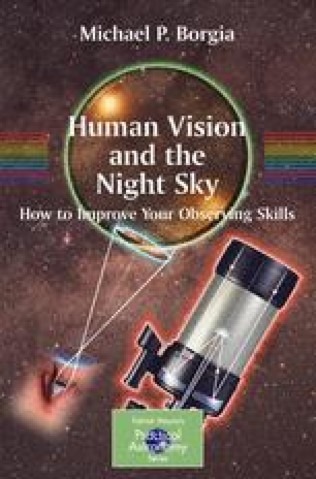
Human vision and the night sky : How to improve your observing skills
This book is not for beginners. Nor is it for experts – instead it addresses the needs of practical amateur astronomers who want to make the jump to the new challenges of serious visual observing. Second Steps in Observational Astronomy begins by teaching you, as an amateur astronomer, to use the most important tool you have: your eyes. Visual observing is very definitely a skill that can be learned. Of course it is important to have your other optical equipment – telescope and accessories – set up and operating as perfectly as possible. This book describes how. After these vital preliminaries, subsequent chapters include a series of observing challenges that will entertain you and push your observing skills to continually higher levels of excellence for years to come. Take a tour of the solar-system as you never viewed it before, then beyond into the realm of deep space – using just your own eyes to reveal more detail than you ever thought possible.

Human interface and the management of information : Methods, techniques and tools in information design ; Symposium on human interface 2007, Held as Part of HCI International 2007, Beijing, China, July 22-27, 2007, Proceedings, Part I
The 12th International Conference on Human-Computer Interaction, HCI Inter- tional 2007, was held in Beijing, P.R. This volume, edited by Michael J. Smith and Gavriel Salvendy, contains papers in the thematic area of Human Interface and the Management of Information, addressing the following major topics: • Design and Evaluation Methods and Techniques • Visualizing Information • Retrieval, Searching, Browsing and Navigation • Development Methods and Techniques • Advanced Interaction Technologies and Techniques.

Human histology : A text and atlas for physicians and scientists
Presents full-page high-definition photomicrographs for organs and tissues, followed by a compact and simple-to-read description of the structures identified on the micrographs, offering a clear, visual understanding of this complex subject.
Human Ear Recognition by Computer
Human Ear Recognition by Computer is the first book on the automatic recognition of human ears. It presents an entire range of computational algorithms for recognition of humans by their ears. These algorithms have been tested and validated on the largest databases that are available today,This state-of-the-art research reference explores all aspects of 3D ear recognition, including representation, detection, recognition, indexing and performance prediction. It has been written for a professional audience of both researchers and practitioners within industry, and is also ideal as an informative text for graduate students in computer science and engineering.
