



الصفحة 6
الصفحة 6

Model-based Fault Diagnosis Techniques : Design Schemes, Algorithms, and Tools
The objective of this book is to introduce basic model-based FDI schemes, advanced analysis and design algorithms and the needed mathematical and control theory tools at a level for graduate students and researchers as well as for engineers.

Model Based Inference in the Life Sciences : A Primer on Evidence
The abstract concept of "information" can be quantified and this has led to many important advances in the analysis of data in the empirical sciences. This text focuses on a science philosophy based on "multiple working hypotheses" and statistical models to represent them. The fundamental science question relates to the empirical evidence for hypotheses in this set—a formal strength of evidence. Kullback-Leibler information is the information lost when a model is used to approximate full reality. Hirotugu Akaike found a link between K-L information (a cornerstone of information theory) and the maximized log-likelihood (a cornerstone of mathematical statistics). This combination has become the basis for a new paradigm in model based inference. The text advocates formal inference from all the hypotheses/models in the a priori set—multimodel inference.

Model and Mathematics : From the 19th to the 21st Century
This book collects the historical and medial perspectives of a systematic and epistemological analysis of the complicated, multifaceted relationship between model and mathematics, ranging from, for example, the physical mathematical models of the 19th century to the simulation and digital modelling of the 21st century. The aim of this anthology is to showcase the status of the mathematical model between abstraction and realization, presentation and representation, what is modeled and what models.

mODa 8 - Advances in Model-Oriented Design and Analysis ; Proceedings of the 8th International Workshop in Model-Oriented Design and Analysis held in Almagro, Spain, June 4–8, 2007
The volume contains the proceedings of the 8th Workshop on Model-Oriented Design and Analysis. This book offers leading and pioneering work on optimal experimental designs, both from a mathematical/statistical point of view and with regard to real applications. Scientists from all over the world, from Eastern and Western Europe, the USA, Latin-America, Asia and Africa, have contributed to this volume. Primary topics are designs for nonlinear models and applications to experimental medicine.

Mixture Formation in Internal Combustion Engines
This book covers the various approaches to modelling and optimising the spray and mixture formation processes in modern internal combustion engines. Due to their complexity and importance in predicting the temporal and spatial distribution of liquid and gaseous fuel inside the cylinder, special emphasis is put on the detailed description of multi-dimensional CFD-models. The book describes and discusses the most widely used mathematical models for in-cylinder spray and mixture formation processes.

Mixed Hodge Structures
The text of this book has its origins more than twenty- ve years ago. In the seminar of the Dutch Singularity Theory project in 1982 and 1983, the second-named author gave a series of lectures on Mixed Hodge Structures and Singularities, accompanied by a set of hand-written notes. The publication of these notes was prevented by a revolution in the subject due to Morihiko Saito: the introduction of the theory of Mixed Hodge Modules around 1985. Understanding this theory was at the same time of great importance and very hard, due to the fact that it uni es many di erent theories which are quite complicated themselves: algebraic D-modules and perverse sheaves. The present book intends to provide a comprehensive text about Mixed Hodge Theory with a view towards Mixed Hodge Modules.

Mixed Finite Elements, Compatibility Conditions, and Applications : Lectures given at the C.I.M.E. Summer School held in Cetraro, Italy June 26–July 1, 2006
Since the early 70's, mixed finite elements have been the object of a wide and deep study by the mathematical and engineering communities. The fundamental role of this method for many application fields has been worldwide recognized and its use has been introduced in several commercial codes. An important feature of mixed finite elements is the interplay between theory and application. Discretization spaces for mixed schemes require suitable compatibilities, so that simple minded approximations generally do not work and the design of appropriate stabilizations gives rise to challenging mathematical problems.

Mining Sequential Patterns from Large Data Sets
To meet the different needs of various applications, several models of sequential patterns have been proposed. This volume not only studies the mathematical definitions and application domains of these models, but also the algorithms on how to effectively and efficiently find these patterns. Mining Sequential Patterns from Large Data Sets provides a set of tools for analyzing and understanding the nature of various sequences by identifying the specific model(s) of sequential patterns that are most suitable. This book provides an efficient algorithm for mining these patterns.

Microwave Engineering : Concepts and Fundamentals
Covers everything from wave propagation to reflection and refraction, guided waves, and transmission lines, providing a comprehensive understanding of the underlying principles at the core of microwave engineering. This encyclopedic text not only encompasses nearly all facets of microwave engineering, but also gives all topics—including microwave generation, measurement, and processing—equal emphasis. Packed with illustrations to aid in comprehension. Describes the mathematical theory of waveguides and ferrite devices, devoting an entire chapter to the Smith chart and its applications Discusses different types of microwave components, antennas, tubes, transistors, diodes, and parametric devices Examines various attributes of cavity resonators, semiconductor and RF/microwave devices, and microwave integrated circuits

MICAI 2008 : Advances in Artificial Intelligence ;7th Mexican International Conference on Artificial Intelligence, Atizapán de Zaragoza, Mexico, October 27-31, 2008 Proceedings
The 96 revised full papers presented together with 2 invited lectures were carefully reviewed and selected from 363 submissions. The papers are organized in topical sections on logic and reasoning, knowledge-based systems, knowledge representation and acquisition, ontologies, natural language processing, machine learning, pattern recognition, data mining, neural networks, genetic algorithms, hybrid intelligent systems, computer vision and image processing, robotics, planning and scheduling, uncertainty and probabilistic reasoning, fuzzy logic, intelligent tutoring systems, multi-agent systems and distributed ai, intelligent organizations, bioinformatics and medical applications, as well as applications.

Metodi Matematici della Fisica = Mathematical Methods of Physics
This text draws its origin from my old notes, prepared for the course of Mathematical Methods of Physics and gradually arranged, refined and updated over the course of many years of teaching. The aim has always been to provide as simple and direct a presentation as possible of the mathematical methods relevant to Physics: Fourier series, Hilbert spaces, linear operators, functions of complex variables, Fourier and Laplace transforms, distributions. In addition to these basic topics, a brief introduction to the first notions of group theory, Lie algebras and symmetries in view of their applications to Physics is presented in the Appendix.
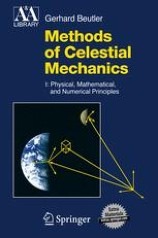
Methods of Celestial Mechanics: Vol. I: Physical, Mathematical, and Numerical Principles
G. Beutler's Methods of Celestial Mechanics is a coherent textbook for students in physics, mathematics and engineering as well as an excellent reference for practitioners. This Volume I gives a thorough treatment of celestial mechanics and presents all the necessary mathematical details that a professional would need. After a brief review of the history of celestial mechanics, the equations of motion (Newtonian and relativistic versions) are developed for planetary systems (N-body-problem), for artificial Earth satellites, and for extended bodies (which includes the problem of Earth and lunar rotation). Perturbation theory is outlined in an elementary way from generally known mathematical principles without making use of the advanced tools of analytical mechanics. The variational equations associated with orbital motion - of fundamental importance for parameter estimation (e.g., orbit determination), numerical error propagation, and stability considerations - are introduced and their properties discussed in considerable detail. Numerical methods, especially for orbit determination and orbit improvement, are discussed in considerable depth. The algorithms may be easily applied to objects of the planetary system and to Earth satellites and space debris.

Methods of Celestial Mechanics ; Vol. II : Application to Planetary System, Geodynamics and Satellite Geodesy
G. Beutler's Methods of Celestial Mechanics is a coherent textbook for students as well as an excellent reference for practitioners. Volume II is devoted to the applications and to the presentation of the program system CelestialMechanics. Three major areas of applications are covered: (1) Orbital and rotational motion of extended celestial bodies. The properties of the Earth-Moon system are developed from the simplest case (rigid bodies) to more general cases, including the rotation of an elastic Earth, the rotation of an Earth partly covered by oceans and surrounded by an atmosphere, and the rotation of an Earth composed of a liquid core and a rigid shell (Poincaré model). (2) Artificial Earth Satellites. The oblateness perturbation acting on a satellite and the exploitation of its properties in practice is discussed using simulation methods (CelestialMechanics) and (simplified) first order perturbation methods. The perturbations due to the higher-order terms of the Earth's gravitational potential and resonant perturbations are considered thereafter. Special attention is paid to satellites of the Global Navigation Satellite Systems and to geostationary satellites. The characteristics of and models for the two most important non-gravitational forces, atmospheric drag and radiation pressure, are presented as well as the most relevant forces acting on high- and low-orbiting satellites. (3) Evolution of the Planetary System. The outer planetary system consisting of the planets Jupiter to Pluto is studied over long time intervals using simulation methods and spectral analysis (CelestialMechanics). The properties of the inner systems, in particular of the Earth's orbit, are made visible by integrating the entire system over long time intervals relevant for climate change. The distribution of minor planets and their orbital properties, regular orbits, and chaotic orbits are easily generated and analyzed using CelestialMechanics. The volume concludes with the discussion of important mathematical tools of the program system and of the principles of spectral analysis.
Methods in Nonlinear Analysis
Nonlinear analysis has developed rapidly in the last three decades. Theories, techniques and results in many different branches of mathematics have been combined in solving nonlinear problems. This book collects and reorganizes up-to-date materials scattered throughout the literature from the methodology point of view, and presents them in a systematic way. It contains the basic theories and methods with many interesting problems in partial and ordinary differential equations, differential geometry and mathematical physics as applications.There are five chapters that cover linearization, fixed-point theorems based on compactness and convexity, topological degree theory, minimization and topological variational methods. Each chapter combines abstract, classical and applied analysis. Particular topics included are bifurcation, perturbation, gluing technique, transversality, Nash–Moser technique, Ky Fan's inequality and Nash equilibrium in game theory, setvalued mappings and differential equations with discontinuous nonlinear terms, multiple solutions in partial differential equations, direct method, quasiconvexity and relaxation, Young measure, compensation compactness method and Hardy space, concentration compactness and best constants, Ekeland variational principle, infinite-dimensional Morse theory, minimax method, index theory with group action, and Conley index theory.
Methods for Constructing Exact Solutions of Partial Differential Equations: Mathematical and Analytical Techniques with Applications to Engineering
The book is primarily designed to present both fundamental theoretical and algorithmic aspects of these methods. The description of algorithms contains illustrative examples which are typically taken from continuum mechanics. Some sections of the book introduce new applications and extensions of these methods.
Méthodes mathématiques en chimie quantique : Une introduction = Mathematical methods in quantum chemistry : An introduction
This book presents the mathematical foundations of several models of quantum chemistry. It is intended for graduate students in mathematics (and possibly also for scientists from physics or chemistry interested in understanding the formal underpinnings of their models), and introduces techniques and methods from several mathematical fields, in particular variational techniques, nonlinear analysis, spectral theory and partial differential equations theory.

Metamorphoses of Hamiltonian Systems with Symmetries
Modern notions and important tools of classical mechanics are used in the study of concrete examples that model physically significant molecular and atomic systems. The parametric nature of these examples leads naturally to the study of the major qualitative changes of such systems (metamorphoses) as the parameters are varied. The symmetries of these systems, discrete or continuous, exact or approximate, are used to simplify the problem through a number of mathematical tools and techniques like normalization and reduction. The book moves gradually from finding relative equilibria using symmetry, to the Hamiltonian Hopf bifurcation and its relation to monodromy and, finally, to generalizations of monodromy.

Metakaolin and Fly Ash as Mineral Admixtures for Concrete
Deals with modern theoretical concepts related to the impact of fly ash and metakaolin admixtures on structure formation processes of concrete. Results of the effect of fly ash, metakaolin and their composition on properties of self-compacting and self-leveling concrete are presented. Based on mathematical models, obtained using mathematical experiments planning methodology, the impact of the main factors and their combination on workability, strength and other properties that determine efficiency and durability of concrete are analyzed. Using calculated dependencies, a methodology for designing optimal compositions of concrete containing active mineral admixtures and superplasticizers is proposed. Features of industrial production of concrete for the proposed compositions are discussed. The book is intended for specialists working in the production of concrete and reinforced concrete products and elements. It can also be used by construction engineers to design compositions of cost-effective self-compacting and self-leveling concrete as well as to determine the rational direction of using technogenic raw materials like ash and metakaolin.

Meshless Methods in Solid Mechanics
The main objective of this book is to provide a textbook for graduate courses on the computational analysis of continuum and solid mechanics based on meshless (also known as mesh free) methods. It can also be used as a reference book for engineers and scientists who are exploring the physical world through computer simulations. Emphasis of this book is given to the understanding of the physical and mathematical characteristics of the procedures of computational solid mechanics. It naturally brings the essence, advantages and challenging problems of meshless methods into the picture. The subjects in this book cover the fundamentals of continuum mechanics, the integral formulation methods of continuum problems, the basic concepts of finite element methods, and the methodologies, formulations, procedures, and applications of various meshless methods. It also provides general and detailed procedures of meshless analysis on elastostatics, elastodynamics, non-local continuum mechanics and plasticity with a large number of numerical examples. Some basic and important mathematical methods are included in the Appendixes. For the readers who want to gain knowledge through hands-on experience, the meshless programs for elastostatics and elastodynamics are also introduced in the book and included in the disc.
Meshfree Methods for Partial Differential Equations III
Meshfree methods for the numerical solution of partial differential equations are becoming more and more mainstream in many areas of applications. Their flexiblity and wide applicability are attracting engineers, scientists, and mathematicians to this very dynamic research area. This volume represents the state of the art in meshfree methods. It consists of articles which address the different meshfree techniques, their mathematical properties and their application in applied mathematics, physics and engineering.
