



الصفحة 5
الصفحة 5

Neurochemical Aspects of Excitotoxicity
Leading researchers offer cutting-edge information on glutamate metabolism in the brain, examining the role of glutamate transporters and the involvement of glutamate receptors in the pathogenesis of acute neural trauma and neurodegenerative diseases.

Neuroanatomy for the Neuroscientist
Neurology, more than any other system of medicine, is rooted in the firm knowledge of basic science material (i.e., the anatomy, physiology, and pathology of the nervous system). This material enables students to readily arrive at diagnoses and to apply their knowledge at solving problems in clinical situations. Neuroanatomy for the Neuroscientist gives neuroscientists the tools to teach this material at levels appropriate for students at several levels of study, including undergraduate, graduate, dental, and medical school. The text also provides an updated approach to lesion localization in neurology, utilizing the techniques of computerized axial tomography (CT scanning), magnetic resonance imaging (MRI), and magnetic resonance angiography (MRA). Multiple illustrations demonstrating the value of these techniques in clinical neurology and neuroanatomical localization has been provided.
Neuroanatomical Tract-Tracing : Molecules, Neurons, and Systems
"The content of the book also serves to emphasize that neuroanatomy is, perhaps more than ever, a thriving and important part of the neurosciences...Most contributions have in common the combination of modern tract-tracing methods with other means of characterizing neural tissue, and thus the book also serves to highlight the gradual disappearance of borders between traditional neuroanatomy and other approaches to the study of the nervous system...this book should continue to be a useful source of information, and deserves to be available in all laboratories applying or considering to apply neuroanatomical methods."
Neuroactive Steroids in Brain Function, Behavior and Neuropsychiatric Disorders : Novel Strategies for Research and Treatment
Over the past few decades the involvement of neurosteroids in brain function and mental health has attracted much interest, not only from a neuroscience perspective, but also from clinical and therapeutic aspects. In recent years, much of the research has focused on the multifunctional position of neurosteroids in the nervous system. The areas that have been explored, in particular, are the cellular and molecular mechanisms involved in the activity of neurosteroids in the brain, the role of neurosteroids in brain development, neurodegeneration and neuroplasticity, and their pharmacological properties. The large increase in the number of publications highlights this amplified interest in neurosteroids. Over the last 7 years at least 400 papers have been published describing the putative role of neurosteroids in the modulation of basic brain function and in the etiology and treatment of psychiatric and neurological disorders.

Neural Crest Induction and Differentiation
Neural Crest Induction and Differentiation, written by an international panel of recognized leaders in the field, discusses all aspects of modern neural crest biology from its evolutionary significance, to its specification, migration, plasticity and contribution to multiple lineages of the vertebrate body, to the pathologies associated with abnormal neural crest development and function. Each chapter provides an invaluable resource for information on the most current advances in the field, with discussion of controversial issues and areas of emerging importance.

Neural and Neuroendocrine Mechanisms in Host Defense and Autoimmunity
This comprehensive volume, written by experts in the integrative fields of neuroscience, endocrinology and immunology, provides insight into the mechanisms by which neural and neuroendocrine factors influence susceptibility to infection and autoimmunity. The book focuses on multiple sclerosis as the prototypic autoimmune disease and discusses infectious diseases including anthrax, influenza virus, herpes virus and human immunodeficiency virus. The effects of stress on experimental models of multiple sclerosis and also clinical observations of stress in multiple sclerosis patients are discussed. Neural and Neuroendocrine Mechanisms in Host Defense and Autoimmunity is an ideal book for researches and professionals in the fields of immunology, neuroscience, infectious disease, psychology, microbiology, virology, public health and pharmaceutical sciences.

N-Acetylaspartate : A Unique Neuronal Molecule in the Central Nervous System
N-acetylaspartate (NAA), the acetylated form of the amino acid aspartate, is one of the most highly concentrated chemicals in the brains of humans, yet its function remains elusive. This book reviews research from around the world in the study of NAA, and the roles it plays in neuronal development and functioning.

Musculoskeletal Ultrasound : Anatomy and Technique
Musculoskeletal Ultrasound: Anatomy and Technique tackles the fundamentals of ultrasound, from physics, artifact recognition and essential anatomy to current issues, such as the growing interest in ultrasound of the peripheral nervous system.

Multiple Sclerosis: Autoimmunity and Management
Multiple sclerosis (MS) is an immune-mediated inflammatory disease that attacks myelinated axons in the central nervous system, destroying the myelin and the axon in variable degrees and producing significant physical disability within 20–25 years in more than 30% of patients. The hallmark of MS is symptomatic episodes that occur months or years apart and affect different anatomic locations. Also, see the Autoimmune Disorders: Making Sense of Nonspecific Symptoms slideshow to help identify several diseases that can cause a variety of nonspecific symptoms. MS is diagnosed on the basis of clinical findings and supporting evidence from ancillary tests. Treatment consists of immunomodulatory therapy for the underlying immune disorder and management of symptoms, as well as nonpharmacologic treatments, such as physical and occupational therapy. Disease-modifying therapies have shown beneficial effects in patients with relapsing MS, including reduced frequency and severity of clinical attacks. These agents appear to slow the progression of disability and the reduce accumulation of lesions within the brain and spinal cord.
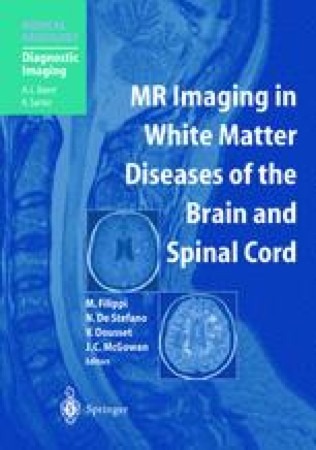
MR Imaging in White Matter Diseases of the Brain and Spinal Cord
Comprises a series of comprehensive and up-to-date reviews on the use of MR imaging in these major neurological conditions. The diverse available MR techniques, such as magnetization transfer MRI, diffusion-weighted MRI, MR spectroscopy, functional MRI, cell-specific MRI, perfusion MRI, and microscopic imaging with ultra-high field MRI, offer an extraordinarily powerful means of gaining fundamental in vivo insights into disease processes. The strengths and weaknesses of all these techniques in the study of multiple sclerosis and other relevant diseases are extensively considered. After an introductory section on neuroimaging technology, subsequent sections address disorders of myelination, demyelinating diseases, immune-mediated disorders, and white matter disorders related to aging and other conditions. This book provides a valuable summary of the state of the art in the field, and defines important areas for future research.

Morphology, Molecules, Evolution and Phylogeny in Polychaeta and Related Taxa; Proceedings of two ISSI Workshops, 18–22 October 1999 and 15–19 May 2000, Bern, Switzerland
Recently, evidence has been accumulated which shows that some of the groups formerly regarded as independent "phyla" such as Pogonophora (now recognized as Siboglinidae), Echiura, Myzostomida and perhaps Sipuncula, are most probably nothing else than greatly modified Annelida. The extreme morphological diversity found especially in Polychaeta displays the plasticity of a simple segmented organisation that basically is nothing else but a serial repetition of identical units. Thus, annelids are highly important to our understanding of fundamental questions about morphological and adaptive diversity, as well as clarifying evolutionary changes and phylogenetic relationships. The book aims to summarize our knowledge on Polychaetes polychaetes and their allies and gives an overview of recent advances gained by studies that employed conventional and modern methods plus, increasingly and importantly, the use of molecular markers and computer-assisted kinship analyses. It also reflects the state of art in polychaete sciences and presents new questions and controversies. As such it will significantly influence the direction of research on Polychaeta and their related taxa.

Molecular Neurosurgery with Targeted Toxins
Focuses on the highly successful use of the immunotoxins, 192 IgG-saporin and ME20.4-saporin, to lesion the cholinergic basal forebrain in order to model the behavior, anatomy, physiology, and pharmacology of Alzheimer's disease in animals. Also discussed are the uses of anti-DBH-saporin immunotoxin to make remarkably selective lesions of catecholaminergic neurons, hypocretin-saporin that can produce narcoleptic animals, and other saporin conjugates, such as neuropeptide-saporin conjugates for pain research and cholera toxin B chain-saporin to produce a model of central nervous system demyelination. Overview perspectives and, in some cases, more practical details are provided that allow the reader to appreciate exactly what is involved in using these agents. Both practical and theoretical, Molecular Neurosurgery With Targeted Toxins provides readers with not only the background to understand these techniques, but also numerous real-life examples that can be readily adapted to new purposes and an ever-increasing number of new targeted toxins.

Molecular Mechanisms of Neurotransmitter Release
Within the complex neuronal network of the nervous system, neuron-to-neuron communication occurs mainly through chemical synapses, where the presynaptic nerve terminal releases neurotransmitters that control the function of postsynaptic neurons by acting on postsynaptic receptors. Recent decades have brought groundbreaking new developments and a wealth of knowledge to this field. In Molecular Mechanisms of Neurotransmitter Release, leading experts provide concise, up-to-date information on all major molecular mechanisms involved, with complete background information and figures and diagrams to further elucidate key concepts or experiments.Comprehensive and cutting-edge, Molecular Mechanisms of Neurotransmitter Release is sure to provide a learning tool for neuroscience students, a solid reference for neuroscientists, and a source of knowledge for all those who have a general interest in the ever-evolving field of neuroscience.

Molecular and Cellular Signaling
A small number of signaling pathways, no more than a dozen or so, form a control layer that is responsible for all signaling in and between cells of the human body. The signaling proteins belonging to the control layer determine what kinds of cells are made during development and how they function during adult life. Malfunctions in the proteins belonging to the control layer are responsible for a host of human diseases ranging from neurological disorders to cancers. Most drugs target components in the control layer, and difficulties in drug design are intimately related to the architecture of the control layer. Molecular and Cellular Signaling provides an introduction to molecular and cellular signaling in biological systems with an emphasis on the underlying physical principles. The text is aimed at upper-level undergraduates, graduate students and individuals in medicine and pharmacology interested in broadening their understanding of how cells regulate and coordinate their core activities and how diseases arise when these regulatory systems malfunction, as well as those in chemistry, physics and computer science interested in pursuing careers in biological and medical physics, bioinformatics and systems biology. To that end, the book includes background information and review sections, and chapters on signaling in the immune, endocrine (hormonal) and nervous systems. It has chapters on cancer, apoptosis and gene regulation, and contains chapters on bacteria and viruses. In those chapters not specifically devoted to pathogens, connections between diseases, drugs and signaling are made. Each chapter also features a problem set to facilitate further discussion and understanding.

Migraine
Migraine is a chronic paroxysmal neurological disorder characterised by multiphase attacks of head pain and a myriad of neurological symptoms. The underlying genetic and biological underpinnings and neural networks involved are coming sharply into focus. This progress in the fundamental understanding of migraine has led to novel, mechanism-based and disease-specific therapeutics. In this Seminar, the clinical features and neurobiology of migraine are reviewed, evidence to support available treatment options is provided, and emerging drug, device, and biological therapies are discussed.

Migraine
Migraine is one of the most common diseases of the present era, it ranked sixth in the world for neurological diseases, it’s severity varies from person to person and may interfere with daily activities in our article ,we will discuss the mechanisms of migraine occurrence, it’s traditional treatments and the modern treatment used internationally it is also possible that the migraine is a symptom or a predictor of serious diseases which we will learn about in this research.

Mechanisms of Sepsis-Induced Organ Dysfunction and Recovery
There have been tremendous advances in understanding the cellular mechanisms involved in sepsis and contributing to the development of multiple organ dysfunction and mortality in this setting. The chapters in this book provide up-to-date insights into important pathways that are initiated by sepsis.

Introduction to basics of pharmacology and toxicology ; Vol.2 : Essentials of systemic pharmacology : From principles to practice
Describes the pharmacology of drugs acting on different systems in the human body Analyses various human diseases and the pharmacological agents governing them Provides a valuable reference resource for academicians, researchers, and clinical practitioners Offers a comprehensive overview of the pharmacology concerning the autonomic, central, and peripheral nervous systems. Presenting up-to-date information on chemical mediators and their significance, it highlights the therapeutic aspects of several diseases affecting the cardiovascular, renal, respiratory, gastrointestinal, endocrinal, and hematopoietic systems. The book also includes drug therapy for microbial and neoplastic diseases. It also comprises sections on immunopharmacology, dermatological, and ocular pharmacology providing valuable insights into these emerging and recent topics.

Intraoperative Neurophysiological Monitoring
Intraoperative neurophysiological monitoring (IOM) has proven itself a versatile technique that reduces the risks of acquiring intraoperative neurological deficits, shortens operating time, and lowers the costs of medical care and rehabilitation. It can also reduce the risks of medical malpractice suits and serve as a research tool to better understand nervous system disorders and promote improved treatments.

Interactions Between Neurons and Glia in Aging and Disease
The subject material covered by the book is a crucial competitive area with critical implications for human health and will be of key interest to the scientific community. This unique volume will be invaluable not only to those interested in neuroscience, but also cell biology, molecular biology, biochemistry, and pharmaceutical sciences.
