



الصفحة 5
الصفحة 5

Euro-Par 2019 : Parallel Processing Workshops ; Euro-Par 2019 International Workshops, Göttingen, Germany, August 26–30, 2019, Revised Selected Papers
Euro-Par is an annual, international conference in Europe, covering all aspects of parallel and distributed processing. These range from theory to practice, from small to the largest parallel and distributed systems and infrastructures, from fundamental computational problems to full-edged applications, from architecture, compiler, language and interface design and implementation to tools, support infrastructures, and application performance aspects.

Euro-Par 2008 - Parallel Processing ; 14th International Euro-Par Conference, Las Palmas de Gran Canaria, Spain, August 26-29, 2008. Proceedings
This book constitutes the refereed proceedings of the 14th International Conference on Parallel Computing, Euro-Par 2008, held in Las Palmas de Gran Canaria, Spain, in August 2008.The 86 revised papers presented were carefully reviewed and selected from 264 submissions. The papers are organized in topical sections on support tools and environments; performance prediction and evaluation; scheduling and load balancing; high performance architectures and compilers; parallel and distributed databases; grid and cluster computing; peer-to-peer computing; distributed systems and algorithms; parallel and distributed programming.

Euro-Par 2007 Parallel Processing ; 13th International Euro-Par Conference, Rennes, France, August 28-31, 2007, Proceedings
This book covering support tools and environments; performance prediction and evaluation; scheduling and load balancing; compilers for high performance; parallel and distributed databases; grid and cluster computing; peer-to-peer computing; distributed systems and algorithms; parallel and distributed programming; parallel numerical algorithms; distributed and high-performance multimedia; theory and algorithms for parallel computation; high performance networks; mobile and ubiquitous computing.

Euro-Par 2006 Parallel Processing ; 12th International Euro-Par Conference, Dresden, Germany, August 28-September 1, 2006, Proceedings
This book constitutes the refereed proceedings of the 12th International Conference on Parallel Computing, Euro-Par 2006. parallel and distributed databases, data mining and knowledge discovery; grid and cluster computing: models, middleware and architectures; parallel computer architecure and instruction-level parallelism.

Euro-Par 2005 Parallel Processing ; 11th International Euro-Par Conference, Lisbon, Portugal, August 30 - September 2, 2005, Proceedings
This book constitutes the refereed proceedings of the 11th International Conference on Parallel Computing, Euro-Par 2005, held in Lisbon, Portugal, in August/September 2005. The 120 revised papers presented together with 4 invited papers were carefully reviewed and selected from 388 submissions. The papers are organized in topical sections on support tools and environments, performance prediction and evaluation, scheduling and load balancing, compilers for high performance, parallel and distributed databases, data mining and knowledge discovery, grid and cluster computing: models, middleware and architectures, parallel computer architecture and instruction distributed systems and algorithms, parallel programming: models, methods, and languages, parallel numerical algorithms.

Enterprise Collaboration : On-Demand Information Exchange for Extended Enterprises
Global supply chain is a fact of life in today's world. From the perspective of the First World, this practice reigns in outsourcing of jobs that, in the view of many, threatens a way of life. This argument actually implies that outsourcing represents a fair chance for the Third World to catch up and reverse-leverage through market economy.

Engineering Societies in the Agents World VIII ; 8th International Workshop, ESAW 2007, Athens, Greece, October 22-24, 2007, Revised Selected Papers
This book constitutes the thoroughly refereed post-conference proceedings of the 7th International Workshop on Engineering Societies in the Agents World, ESAW 2007, held in Athens, Greece, in October 2007. The 19 revised full papers were carefully reviewed and selected for inclusion in this book. The papers are organized in topical sections on electronic institutions, models of complex distributed systems with agents and societies; interaction in agent societies; engineering social intelligence in multi-agent systems; trust and reputation in agent societies; analysis, design and development of agent societies.

Engineering self-organising systems Vol. 3910 ; 3rd International Workshop, ESOA 2005, Utrecht, The Netherlands, July 25, 2005, Revised Selected Papers
This book contains recent work from a broad range of areas with the common theme of utilising self-organisation productively. As distributed information infrastructures continue to spread (such as the Internet, wireless and mobile systems), new challenges have arisen demanding robust and scalable solutions. In these new challenging environments the - signers and engineers of global applications and services can seldom rely on centralised control or management, high reliability of devices, or secure en- ronments. At the other end of the scale, ad-hoc sensor networks and ubiquitous computing devices are making it possible to embed millions of smart computing agents into the local environment.

Engineering self-organising systems ; 4th International Workshop, ESOA 2006, Hakodate, Japan, May 9, 2006, Revised and Invited Papers
This book discusses a broad variety of topics in an effort to allow room for new ideas and discussion, and eventually a better understanding of the important directions and techniques of Engineering Self-Organizing.This book raises the important question of whether there are underlying statistical mechanics-like principles that apply to emergent multi-agent systems. Answering this question will in the long run provide an important part of the underlying theory of emergent distributed systems.

Embedded systems design : The ARTIST roadmap for research and development
Embedded systems now include a very large proportion of the advanced products designed in the world, spanning transport (avionics, space, automotive, trains), electrical and electronic appliances (cameras, toys, televisions, home appliances, audio systems, and cellular phones), process control (energy production and distribution, factory automation and optimization), telecommunications (satellites, mobile phones and telecom networks), and security (e-commerce, smart cards), etc. The extensive and increasing use of embedded systems and their integration in everyday products marks a significant evolution in information science and technology. We expect that within a short timeframe embedded systems will be a part of nearly all equipment designed or manufactured in Europe, the USA, and Asia. There is now a strategic shift in emphasis for embedded systems designers: from simply achieving feasibility, to achieving optimality. Optimal design of embedded systems means targeting a given market segment at the lowest cost and delivery time possible. Optimality implies seamless integration with the physical and electronic environment while respecting real-world constraints such as hard deadlines, reliability, availability, robustness, power consumption, and cost. In our view, optimality can only be achieved through the emergence of embedded systems as a discipline in its own right.

Embedded Software and Systems Vol. 3605 ; 1st International Conference, ICESS 2004, Hangzhou, China, December 9-10, 2004, Revised Selected Papers
Welcome to the post proceedings of the First International Conference on Embedded Software and Systems (ICESS 2004), which was held in Hangzhou, P. R. China, 9–10 December 2004. Embedded Software and Systems technology is of increasing importance for a wide range of industrial areas, such as aerospace, automotive, telecommunication, and manufacturing automation. Embedded technology is playing an increasingly dominant role in modern society. This is a natural outcome of amazingly fast developments in the embedded field. The ICESS 2004 conference brought together researchers and developers from academia, industry, and government to advance the science, engineering, and technology in embedded software and systems development, and provided them with a forum to present and exchange their ideas, results, work in progress, and experience in all areas of embedded systems research and development. The ICESS 2004 conference attracted much more interest than expected.

Embedded Software and Systems ; Vol. 3820 ; 2nd International Conference, ICESS 2005, Xi'an, China, December 16-18, 2005, Proceedings
Welcome to the proceedings of the 2005 International Conference on Emb- ded Software and Systems (ICESS 2005) held in Xian, China, December 16-18, 2005. With the advent of VLSI system level integration and system-on-chip, the center of gravity of the computer industry is now moving from personal c- puting into embedded computing. Embedded software and systems are incre- ingly becoming a key technological component of all kinds of complex technical systems, ranging from vehicles, telephones, aircraft, toys, security systems, to medical diagnostics, weapons, pacemakers, climate control systems, etc. The ICESS 2005 conference provided a premier international forum for - searchers, developers and providers from academia and industry to address all resulting profound challenges; to present and discuss their new ideas, - search results, applications and experience; to improve international com- nication and cooperation; and to promote embedded software and system - dustrialization and wide applications on all aspects of embedded software and systems.

Embedded Software and Systems ; 3rd International Conference, ICESS 2007, Daegu, Korea, May 14-16, 2007, Proceedings
This book introduces sections on embedded architecture, embedded hardware, embedded software, HW-SW co-design and SoC, multimedia and HCI, pervasive/ubiquitous computing and sensor network, power-aware computing, real-time systems, security and dependability, and wireless communication.

ECOOP 2006 - Object-Oriented Programming ; 20th European Conference, Nantes, France, July 3-7, 2006, Proceedings
This book constitutes the refereed proceedings of the 20th European Conference on Object-Oriented Programming, ECOOP 2006, held in Nantes, France in July 2006.20 revised full papers, together with 3 keynote papers were carefully reviewed and selected.

ECOOP 2002 - Object-Oriented Programming ; 16th European Conference Malaga, Spain, June 10-14, 2002 Proceedings
Constitutes the proceedings of the 16th European Conference on Object-Oriented Programming held in Spain in 2002. The 25 papers cover aspect-oriented software development, Java virtual machines, distributed systems, patterns and architectures, languages, optimization and more.

E-business and telecommunication networks ; 1st International conference, ICETE 2004, Setúbal, Portugal,
This book contains the best papers of the First International Conference on e-Business and Telecommunication Networks (ICETE 2004), held in Setúbal (Portugal). The conference was organized by INSTICC (Institute for Systems and Technologies of Information, Communication and Control) in collaboration with the School of Business of the Polytechnic Institute of Setúbal, who hosted the event. This conference represented a major initiative to increase the technical exchanges among professionals, who work in the e-Business and Telecommunication Networks fields, and who are implementing new services and technologies affecting the lives of ordinary consumers.

Early Aspects: Current Challenges and Future Directions ; 10th International Workshop, Vancouver, Canada, March 13, 2007, Revised Selected Papers
Traditionally, aspect-oriented software development (AOSD) has focused on the implementation phase of the software lifecycle: aspects are identified and captured mainly in code. Therefore, most current AOSD approaches place the burden for aspect identification and management on the programmer working at low levels of abstraction. However, aspects are often present well before the implementation phase, such as in domain models, requirements and software architecture. Identification and capture of these early aspects ensure that aspects related to the problem domain (as opposed to merely the implementation) will be appropriately captured, reasoned about and available. This offers improved opportunities for early recognition and negotiation of trade-offs and allows forward and backward aspect traceability. This makes requirements, architecture, and implementation more seamless, and allows a more systematic application of aspects.

Do-All Computing in Distributed Systems : Cooperation in the Presence of Adversity
Do-All Computing in Distributed Systems: Cooperation in the Presence of Adversity is the first book that presents an in depth study of cooperation problems, abstracted in terms of the Do-All problem, where a collection of processors cooperatively perform a collection of independent tasks in the presence of adversity.

Distributed systems and mobile computing
About Distributed Systems and Mobile Computing. This is a branch of Computer Science devoted to the study of systems whose components are in different physical locations and have limited communication capabilities. Such components may be static, often organized in a network, or may be able to move in a discrete or continuous environment. The theoretical study of such systems has applications ranging from swarms of mobile robots (e.g., drones) to sensor networks, autonomous intelligent vehicles, the Internet of Things, and crawlers on the Web. The book includes five articles. Two of them are about networks: the first one studies the formation of networks by agents that interact randomly and have the ability to form connections; the second one is a study of clustering models and algorithms. The three remaining articles are concerned with autonomous mobile robots operating in continuous space.
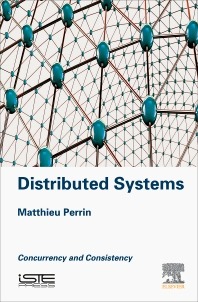
Distributed systems : Concurrency and consistency
Explores the gray area of distributed systems and draws a map of weak consistency criteria, identifying several families and demonstrating how these may be implemented into a programming language. Unlike their sequential counterparts, distributed systems are much more difficult to design, and are therefore prone to problems. On a large scale, usability reminiscent of sequential consistency, which would provide the same global view to all users, is very expensive or impossible to achieve.
