



الصفحة 49
الصفحة 49
Food allergies processing technologies for allergenicity reduction
Provides an authoritative source of information on the relationship between food processing technologies and food allergens with a greater variety of studied allergens including peanuts, tree nuts, cow’s milk, eggs, sesame, lupine, soy, wheat, mustard, mushroom, fish and shellfish, as well as the importance of processing these when producing hypoallergenic foods.
Fluid Transport in Nanoporous Materials : Proceedings of the NATO Advanced Study Institute, held in La Colle sur Loup, France, 16-28 June 2003
The most promising include molecular sieves which are being developed as inorganic or polymeric systems with 0. 3-30nm in pore dimensions. These nanoporous solids have a broad spectrum of applications in chemical and biochemical processes. The unique applications of molecular sieves are based on their sorption and transport selectivity. Yet, the transport processes in nanoporous systems are not understood well. At the same time, the theoretical capabilities have increased exponentially catalyzed by increases in computational capabilities. The interactions between a diffusing species and the host solid are being studied with increasing details and realism. Further, in situ experimental techniques have been developed which give an understanding of the interactions between diffusing species and nanoporous solids that was not available even a few years ago. The time was ripe to bring together these areas of common interest and study to understand what is known and what has yet to be determined concerning transport in nanoporous solids. Molecular sieves are playing an increasing role in a broad range of industrial petrochemical and biological processes. These include shape-selective separations and catalysis as well as sensors and drug delivery. Molecular sieves are made from inorganic as well as organic solids, e. g. , polymers. They can be employed in packed beds, as membranes and as barrier materials. Initially, the applications of molecular sieves were dominated by the use of zeolites.
Fluid Mechanics of Flow Metering
This book addresses two major fluid mechanical problems in flow metering: the analysis of signal generation in turbulent pipe flow, which explains the function of the meter beyond a simple calibration, and the possible use of a meter in non-developed flows. These problems are investigated with reference to, and examples from, a variety of meters, e.g. ultrasound cross-correlation meters, vortex meters, and turbine meters. Studying these problems requires consideration of specific phenomena in turbulent non-developed pipe flow, as caused by installations, and finding special solutions with signal processing, both of which are included in the book.
Fluctuation Theory for Lévy Processes : Ecole d'Eté de Probabilités de Saint-Flour XXXV - 2005
Lévy processes, i.e. processes in continuous time with stationary and independent increments, are named after Paul Lévy, who made the connection with infinitely divisible distributions and described their structure. They form a flexible class of models, which have been applied to the study of storage processes, insurance risk, queues, turbulence, laser cooling, ... and of course finance, where the feature that they include examples having "heavy tails" is particularly important. Their sample path behaviour poses a variety of difficult and fascinating problems

Flow Shop Lot Streaming Problems
Lot streaming is a process of breaking a batch of jobs into smaller lots, and then processing these in an overlapping fashion on the machines. This important concept can significantly improve the overall performance of a production process, and thereby make the operation of a manufacturing system lean. Flow Shop Lot Streaming introduces the reader to this significant production process, presents various analysis techniques, and allows the reader to quickly become conversant with the state-of-the-art techniques necessary to embark on new research directions. This text begins with an introduction to and a brief historical perspective of the lot streaming problem, and continues with generic mathematical models for this problem. Flow Shop Lot Streaming presents systematic analysis, algorithms, key ideas and illustrative examples using 2-machine, 3-machine, and the general m-machine flow shop lot streaming problems.

Flow and transport processes with complex obstructions : Applications to cities, vegetative canopies and industry
The NATO Advanced Study Institute “Flow and Transport Processes in Complex - structed Geometries: from cities and vegetative canopies to engineering problems” was held in Kyiv, Ukraine in the period of May 4 - 15, 2004. This book based on the papers presented there provides an overview of this new area in ?uid mechanics and its app- cations that have developed over the past three decades. The subject, whose origins lie both in theory and in practice, is now rapidly developing in many directions. The focus of applied ?uid mechanics research has steadily been shifting from - gineering to environmental applications.
Flow and transport in fractured porous media
This book addresses the characterization of flow and transport in porous fractured media from experimental and modeling perspectives. The volume explores porous media problems, from the origin of the present natural porous structures, to their characterization, and various flow and transport phenomena that exist within the porous media. Examples are miscible displacements in porous media and fractured rock and the physical and chemical interactions within porous fractured aquifers. The book is a comprehensive presentation of investigations performed and analysed on different scales, supporting the understanding and application of experimental studies and numerical simulations.
Flood Warning, Forecasting and Emergency Response
This book provides a comprehensive account of flood warning, forecasting and emergency response processes, including techniques for predicting the development of flood events and for issuing appropriate warnings. Topics such as telemetry and information systems, flood warning economics, and river and coastal monitoring are also discussed. This book brings together many aspects of this interesting multidisciplinary topic and will serve as a valuable reference for researchers, policy makers and engineers.
Flood Risk Management : Hazards, Vulnerability and Mitigation Measures
Floods are of increasing public concern world-wide due to increasing damages and unacceptably high numbers of injuries. Previous approaches of flood protection led to limited success especially during recent extreme events. Therefore, an integrated flood risk management is required which takes into consideration both the hydrometeorogical and the societal processes. Moreover, real effects of risk mitigation measures have to be critically assessed. The book draws a comprehensive picture of all these aspects and their interrelations. It furthermore provides a lot of detail on earth observation, flood hazard modelling, climate change, flood forecasting, modelling vulnerability, mitigation measures and the various dimensions of management strategies. In addition to local and regional results of science, engineering and social science investigations on modelling and management, transboundary co-operation of large river catchments are of interest.
Flexible Databases Supporting Imprecision and Uncertainty
This volume collects selected contributions on the application of heterogeneous methods for managing uncertainty and imprecision in databases. It contains both survey chapters on classic topics such as "flexible querying in databases", and up to date ontributions on "database models to represent imperfect data". Further, it includes specific contributions on uncertainty management in database integration, and in representing and querying semistructured and spatial data. These topics are of particular relevance nowadays with the diffusion of the internet since, most of the time, applications require information spread across several information sources and their integration may result in inconsistent information.
Flexible and Efficient Information Handling ; 23rd British National Conference on Databases, BNCOD 23, Belfast, Northern Ireland, UK, July 18-20, 2006, Proceedings
This book constitutes the refereed proceedings of the 23rd British National Conference on Databases, BNCOD 23, held in Belfast, Northern Ireland, July 2006. The volume presents 12 revised full papers and 6 revised short papers, together with 2 invited lectures and 13 poster papers. Topical sections include data modelling and architectures and transaction management, data integration and interoperability and information retrieval, query processing and optimisation, data mining, data warehousing and more.

Flavours and Fragrances : Chemistry, Bioprocessing and Sustainability
This book is an introduction to the fascinating world of aroma chemicals, essential oils, fragrances and flavour compositions for the food, cosmetics and pharmaceutical industry. The present state-of-the-art technology, the future use of resources and biotechnological approaches for the production of the respective chemical compounds are described. A large section is devoted to the description of the renewable resources of flavours: spice plants, fruits from moderate to tropical climates, vegetables, fermented and heated plants. Analytical methods, such as gas chromatography coupled to human or electronic noses or to a mass spectrometer, are outlined and consumer trends, legal and safety aspects are described. Novel renewable resources come from biotechnology.

Fire Safety for Very Tall Buildings : Engineering Guide
Provides information on special topics that affect the fire safety performance of very tall buildings, their occupants and first responders during a fire. This Guide addresses these topics as part of the overall building design process using performance-based fire protection engineering concepts as described in the SFPE Engineering Guide to Performance Based Fire Protection. This Guide is not intended to be a recommended practice or a document that is suitable for adoption as a code. The Guide pertains to “super tall,” “very tall” and “tall” buildings. Throughout this Guide, all such buildings are called “very tall buildings.” These buildings are characterized by heights that impose fire protection challenges; they require special attention beyond the protection features typically provided by traditional fire protection methods. This Guide does not establish a definition of buildings that fall within the scope of this document.
Finite-state methods and natural language processing ; 5th International Workshop, FSMNLP 2005, Helsinki, Finland, September 1-2, 2005, Revised Papers
This book constitutes the thoroughly refereed post-proceedings of the 5th International Workshop on Finite-State Methods in Natural Language Processing, FSMNLP 2005, held in Helsinki, Finland, September 2005. The book presents 24 revised full papers and seven revised poster papers together with two invited contributions and abstracts of six software demos. Topics include morphology, optimality theory, some special FSM families, weighted FSM algorithms, FSM representations, exploration, ordered structures, and surface parsing.
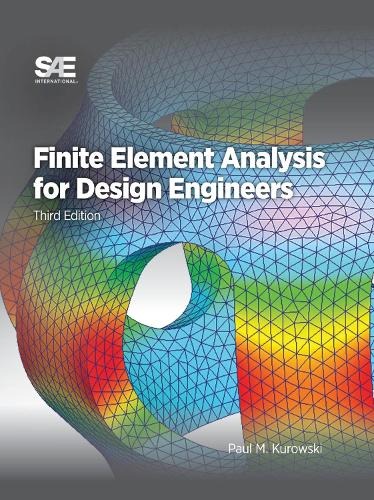
Finite element analysis for design engineers
Finite Element Analysis (FEA) has been widely implemented by the automotive industry as a productivity tool for design engineers to reduce both development time and cost. This essential work serves as a guide for FEA as a design tool and addresses the specific needs of design engineers to improve productivity.
Finite Difference Computing with Exponential Decay Models
This text provides a very simple, initial introduction to the complete scientific computing pipeline: models, discretization, algorithms, programming, verification, and visualization. The pedagogical strategy is to use one case study – an ordinary differential equation describing exponential decay processes – to illustrate fundamental concepts in mathematics and computer science. The book is easy to read and only requires a command of one-variable calculus and some very basic knowledge about computer programming. Contrary to similar texts on numerical methods and programming, this text has a much stronger focus on implementation and teaches testing and software engineering in particular.
Fine-Tuning of RNA Functions by Modification and Editing
This book provides advance information on RNA modification, including the associated editing machinery, while offering the reader some perspective on the significance of such modifications in fine-tuning the structure and functions of mature RNA molecules and hence the ability to influence the efficiency and accuracy of genetic expression.
Financial Modeling Under Non-Gaussian Distributions
Practitioners and researchers who have handled financial market data know that asset returns do not behave according to the bell-shaped curve, associated with the Gaussian or normal distribution. Indeed, the use of Gaussian models when the asset return distributions are not normal could lead to a wrong choice of portfolio, the underestimation of extreme losses or mispriced derivative products. Consequently, non-Gaussian models and models based on processes with jumps are gaining popularity among financial market practitioners.
Financial Markets in Continuous Time
In modern financial practice, asset prices are modelled by means of stochastic processes, and continuous-time stochastic calculus thus plays a central role in financial modelling. This approach has its roots in the foundational work of the Nobel laureates Black, Scholes and Merton. Asset prices are further assumed to be rationalizable, that is, determined by equality of demand and supply on some market. This approach has its roots in the foundational work on General Equilibrium of the Nobel laureates Arrow and Debreu and in the work of McKenzie. This book has four parts.
Financial market imperfections and corporate decisions : Lessons from the transition process in Hungary
The book presents the results of an empirical investigation of the behaviour of Hungarian firms during the transition process focusing in particular on the role of financial market imperfections for corporate capital structure and investment decisions. The results suggest that financial market reforms have succeeded, albeit partially, in hardening firms's budget constraints and improving the efficiency of the credit allocation process. In particular, following the introduction of the banking sector reform and of the new bankruptcy law, budget constraints became more binding for small private firms, while informational costs became less relevant for foreign-owned firms.
