



الصفحة 48
الصفحة 48
Foundations of Intelligent Systems ; Vol. 4203 ; 16th International Symposium, ISMIS 2006, Bari, Italy, September 27-29, 2006, Proceedings
This book constitutes the refereed proceedings of the 16th International Symposium on Methodologies for Intelligent Systems, ISMIS 2006. The book presents 81 revised papers together with 3 invited papers. Topical sections include active media human-computer interaction, computational intelligence, intelligent agent technology, intelligent information retrieval, intelligent information systems, knowledge representation and integration, knowledge discovery and data mining, logic for AI and logic programming, machine learning, text mining, and Web intelligence.
Foundations of Intelligent Systems ; Vol. 3488 ; 15th International Symposium ISMIS 2005, Saratoga Springs, NY, USA, May 25-28, 2005, Proceedings
This volume contains the papers selected for presentation at the 15th International S- posiumonMethodologiesforIntelligentSystems, ISMIS2005, heldinSaratogaSprings, NewYork,25-28May,2005. ThesymposiumwasorganizedbySUNYatAlbany. Itwas sponsored by the Army Research Of?ce and by several units of the University at Albany including its Division for Research, College of Arts and Sciences, Department of C- puter Science, and Institute for Informatics, Logics, and Security Studies (formerly the Institute for Programming and Logics). The Program Committee selected the following major areas for ISMIS 2005: intelligent information systems, knowledge discovery and data mining, knowledge - formation and integration, knowledge representation, logic for arti?cial intelligence, soft computing, Web intelligence, Web services, and papers dealing with applications of intelligent systems in complex/novel domains. The contributed papers were selected from almost 200 full draft papers by the Program Committee members.

Foundations of GTK+ Development
GTK+ is one of the most influential graphical toolkits for the Linux operating system. It is the technology upon which the GNOME and XFCE desktop environments are based, and its crucial to have clear understanding of its complexities to build even a simple Linux desktop application. Foundations of GTK+ Development guides you through these complexities, laying the foundation that will allow you to cross from novice to professional.

Foundations of Atlas : Rapid Ajax Development with ASP.NET 2.0
This book introduces a fast-track path to understanding Atlas, and how this technology can increase the power and functionality of your code while conserving time and effort. The book begins with a bare-bones introduction that explains how Atlas relates to Ajax. Microsoft Atlas is a web-client framework that makes building Ajax-style applications easier. It provides a prewritten framework that gives you a structured environment in which to work. Atlas also provides you with an object model and standardized debugging to make development faster and simpler. Ajax is a way of combining a number of Web technologies including JavaScript, dynamic HTML, and a feature known as XMLHttp (which reduces the need for client browsers to constantly reconnect to the server every time new information is downloaded). But at the moment, people developing with Ajax have to write their code from the ground up, which is complex and time consuming.
Foundations of ASP.NET AJAX
Foundations of ASP.NET AJAX gives you a detailed grounding in how ASP.NET AJAX works. It takes you swiftly through the basic principles of Ajax, then deep into the heart of the technology, where every namespace is discussed and every function considered. By the end of the book, you'll know all the essentials to confidently produce cutting-edge ASP.NET AJAX applications swiftly and professionally.
Foundations of Ajax
Ajax burst onto the Web development scene by offering highly interactive, desktop-like Web applications that can be deployed through any modern Web browser without the need for special plug-ins. Ajax is built on existing Web technologies such as JavaScript, HTML, and CSS, and it is used in conjunction with your favorite server-side language. Foundations of Ajax explains how to combine these technologies effectively to implement Ajax into your new or existing Web applications. Like you, we are developers who are in the trenches, tasked with building Web-enabled applications that provide real value to our customers. As the Web continues to grow, the demand for more expressive and engaging interfaces will continue to increase.
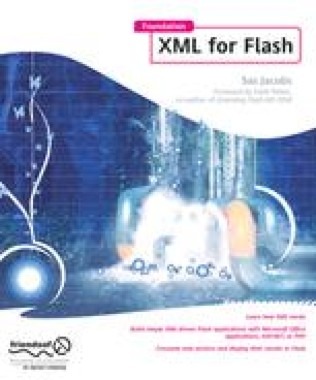
Foundation XML for Flash
XML is a completely platform-agnostic data medium. Flash is able to make use of XML data, which is very useful when creating rich Internet applications. It allows you to populate Flash web interfaces with data from almost any source that supports XML as a data medium, be it databases, raw XML files, or more excitingly, .NET applications, Web Services, and even Microsoft Office applications like Excel and Word! In this book, Sas Jacobs first introduces XML itself—what it is, its syntax, its associated technologies (such as CSS and XSLT,) and how to get XML out of your applications in a format Flash can use. Then, she shows how to use the XML object to stream XML data into Flash, and how to use the XMLConnector component and XML Sockets to build advanced Flash/XML applications.
Foundation PHP5 for Flash
This latest, completely rewritten, edition again brings together three of the web's hottest technologies—Flash, the server-side language PHP, and the MySQL database system. We've brought things back up to date, using ActionScript 2.0, PHP 5.0, and MySQL 4.1, the book has been designed to be version-neutral. In other words, you can be confident that you're working with the latest standards, but that your applications won't break if deployed on an older server. The book also provides a brief introduction to an alternative database system, SQLite, which is now automatically bundled with PHP 5 and requires no installation.
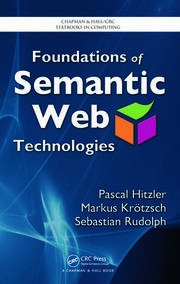
Foundation of semantic web technologies
Concentrates on Semantic Web technologies standardized by the World Wide Web Consortium: RDF and SPARQL enable data exchange and querying, RDFS and OWL provide expressive ontology modeling, and RIF supports rule-based modeling. The text also describes methods for specifying, querying, and reasoning with ontological information. In addition, it explores topics that are clearly beyond foundations, such as tools, applications, and engineering aspects.
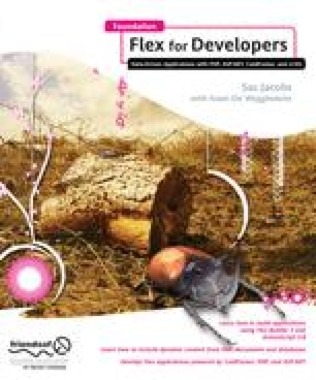
Foundation Flex for Developers : Data-Driven Applications with PHP, ASP.NET, ColdFusion, and LCDS
Flex is a very powerful and versatile technology for creating web application front-ends. But what every good web application needs is a robust data source, be it XML, or a database. Flex is very adaptable in terms of connecting to data sources, and that is the main focus of this book. In Foundation Flex for Developers, author Sas Jacobs assumes that you've got the basics of Flex down already, and explores in detail how to create professional data-centric Flex 2 and Flex 3 applications. In the first half of the book, she starts off with a brief exploration of Flex and ActionScript 3.0, before looking at application essentials in detail—creating custom components, user and web browser interactions, binding, formatting, and validating data, debugging, and more. In the second half of the book, the focus is on connecting Flex to data sources, and covers XML, LiveCycle Data Services, PHP, ASP.NET, and ColdFusion in detail, via a series of step-by-step case studies.
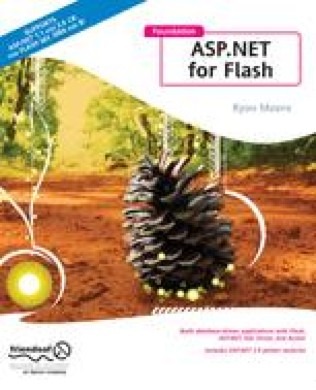
Foundation ASP.NET for Flash
If you're a reasonably experienced Flash user who has mastered the basics but wants to empower your SWFs, taking them further toward rich Internet applications, then you've come to the right place! Foundation ASP.NET for Flash will teach you everything you need to know to integrate two of the most exciting technologies used on the Web today. Using Flash and ASP.NET, it's possible to utilize the amazing user interface capabilities of Flash along with the extensive power of ASP.NET to create dynamic, data-driven web applications. In this book, advanced topics are made easy by providing intuitive step-by-step examples. This book covers Flash MX 2004 and Flash 8, ASP.NET 2.0, Visual Studio 2005, and Access and SQL Server 2005. It is an essential part of any Flash or ASP.NET web developer's arsenal.

Fostering innovation : How to build an amazing IT team
In Fostering Innovation: How to Build an Amazing IT Team, accomplished technology strategist, executive, and leader Andrew Laudato delivers an eye-opening exploration of how to design, build, staff, and run a high-performing IT department. The book is filled with universally applicable strategies and techniques that can transform any IT team into an all-star cast perfectly aligned with your organization’s objectives.
Fortschritte der Chemie organischer Naturstoffe 89 = Progress in the chemistry of organic natural products
The volumes of this classic series, now referred to simply as "Zechmeister" after its founder, L. Zechmeister, have appeared under the Springer Imprint ever since the series' inauguration in 1938. The volumes contain contributions on various topics related to the origin, distribution, chemistry, synthesis, biochemistry, function or use of various classes of naturally occurring substances ranging from small molecules to biopolymers. Each contribution is written by a recognized authority in his field and provides a comprehensive and up-to-date review of the topic in question. Addressed to biologists, technologists, and chemists alike, the series can be used by the expert as a source of information and literature citations and by the non-expert as a means of orientation in a rapidly developing discipline.

Fortschritte der Chemie organischer Naturstoffe = Progress in the chemistry of organic natural products 88
The volumes of this classic series, now referred to simply as "Zechmeister" after its founder, L. Zechmeister, have appeared under the Springer Imprint ever since the series' inauguration in 1938. The volumes contain contributions on various topics related to the origin, distribution, chemistry, synthesis, biochemistry, function or use of various classes of naturally occurring substances ranging from small molecules to biopolymers. Each contribution is written by a recognized authority in his field and provides a comprehensive and up-to-date review of the topic in question. Addressed to biologists, technologists, and chemists alike, the series can be used by the expert as a source of information and literature citations and by the non-expert as a means of orientation in a rapidly developing discipline.
Formulating poorly water soluble drugs
A pharmaceutical scientist’s approach toward solubility enhancement of a poorly water-soluble molecule typically includes detailed characterization of the compound’s physiochemical properties, solid-state modifications, advanced formulation design, non-conventional process technologies, advanced analytical characterization, and specialized product performance analysis techniques. The scientist must also be aware of the unique regulatory considerations pertaining to the non-conventional approaches often utilized for poorly water-soluble drugs. One faced with the challenge of developing a drug product from a poorly soluble compound must possess at a minimum a working knowledge of each of the above mentioned facets and detailed knowledge of most. In light of the magnitude of the growing solubility problem to drug development, this is a significant burden especially when considering that knowledge in most of these areas is relatively new and continues to develop.

Formulas, ingredients and production of cosmetics technology of skin- and hair-care products in Japan
Provides the comprehensive knowledge and instruction necessary for researchers to design and create cosmetics products. The book’s chapters cover a comprehensive list of topics, which include, among others, the basics of cosmetics, such as the raw materials of cosmetics and their application; practical techniques and technologies for designing and manufacturing cosmetics, as well as theoretical knowledge; emulsification; sensory evaluations of cosmetic ingredients; and how to create products such as soap-based cleansers, shampoos, conditioners, creams, and others. The potential for innovation is great in Japan’s cosmetics industry. This book expresses the hope that the high level of dedicated research continues and proliferates, especially among those who are innovators at heart.
Formal techniques for computer systems and business processes ; European performance engineering workshop, EPEW 2005 and International workshop on web services and formal methods, WS-FM 2005, Versailles, France, September 1-3, 2005, Proceedings
This book constitutes the refereed proceedings of two colocated international workshops EPEW 2005 (European Performance Engineering Workshop) and WS-FM 2005 (Web Services and Formal Methods) held in Versailles, France in September 2005. The 20 revised full papers presented were carefully reviewed and selected from 59 submissions. For EPEW 2005 only 10 papers - of the 32 submitted - were accepted for presentation; they deal with queueing theory, bounding techniques, stochastic model checking, communication schemes analysis for high-speed LAN, QOS analysis in wireless ad-hoc networks and optical networks analysis. The main topics of the 10 papers accepted for WS-FM 2005 - from 27 submissions - include: protocols and standards for WS (SOAP, WSDL, UDDI, etc.); languages and description methodologies for Choreography/Orchestration/Workflow (BPML, XLANG and BizTalk, WSFL, WS-BPEL, etc.); coordination techniques for WS (transactions, agreement, coordination services, etc.); semantics-based dynamic WS discovery services (based on Semantic Web/Ontology Techniques or other semantic theories); security, performance evaluation and quality of service of WS; semi-structured data and XML related technologies; comparisons with different related technologies/approaches.
Formal Methods for Open Object-Based Distributed Systems ; Vol. 3535 ; 7th IFIP WG 6.1 International Conference, FMOODS 2005, Athens, Greece, June 15-17, 2005, Proceedings
This volume contains the proceedings of FMOODS2005, the 7th IFIPWG6. 1 International Conference on Formal Methods for Open Object-Based Distributed Systems. The conference was held in Athens, Greece on June 15-17, 2005. The eventwasthe seventh meeting ofthis conference series, whichis held roughly every year and a half, with the earlier events held respectively in Paris, Canterbury, Florence, Stanford, Twente, and Paris. The goal of the FMOOD Sseries of conferences is to bring together researchers whose work encompasses three important and related fields: - formal methods; - distributed systems; - object-based technology. Sucha convergenceis representative of recent advances in the field of distributed systems, and provides links between several scientific and technological communities, as represented by the conferences FORTE, CONCUR, and ECOOP. The objective of FMOODS is to provide an integrated forum for the pres- tation of research in the above-mentioned fields, and the exchange of ideas and experiences in the topics concerned with the formal methods support for open object-based distributed systems.

Formal Methods for Components and Objects ; Vol. 3657 ; 3rd International Symposium, FMCO 2004, Leiden, The Netherlands, November 2-5, 2004, Revised Lectures
This book presents revised tutorial lectures given by invited speakers at the Third International Symposium on Formal Methods for Components and Objects, FMCO 2004, held in Leiden, The Netherlands, in November 2004. The 14 revised lectures by leading researchers present a comprehensive account of the potential of formal methods applied to large and complex software systems such as component-based systems and object systems. The book provides an unique combination of ideas on software engineering and formal methods that reflect the expanding body of knowledge on modern software systems.

Formal Methods for Components and Objects ; 6th International Symposium, FMCO 2007, Amsterdam, The Netherlands, October 24-26, 2007, Revised Lectures
Formal methods have been applied successfully to the verification of medium-sized programs in protocol and hardware design.This book presents 12 revised papers submitted after the symposium by the speakers of each of the following European IST projects: the IST-FP6 project Mobius, developing the technology for establishing trust and security for the next generation of global computers; the IST-FP6 project SelfMan on self management for large-scale distributed systems based on structured overlay networks and components
