



الصفحة 452
الصفحة 452
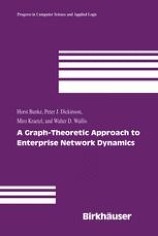
A Graph-Theoretic Approach to Enterprise Network Dynamics
This monograph treats the application of numerous graph-theoretic algorithms to a comprehensive analysis of dynamic enterprise networks. Network dynamics analysis yields valuable information about network performance, efficiency, fault prediction, cost optimization, indicators and warnings.
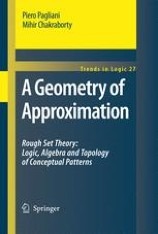
A Geometry of Approximation : Rough Set Theory: Logic, Algebra and Topology of Conceptual Patterns
A Geometry of Approximation' addresses Rough Set Theory, a field of interdisciplinary research first proposed by Zdzislaw Pawlak in 1982, and focuses mainly on its logic-algebraic interpretation. The theory is embedded in a broader perspective that includes logical and mathematical methodologies pertaining to the theory, as well as related epistemological issues. Any mathematical technique that is introduced in the book is preceded by logical and epistemological explanations. Intuitive justifications are also provided, insofar as possible, so that the general perspective is not lost.

A Geometric Approach to Differential Forms
The modern subject of differential forms subsumes classical vector calculus. This text presents differential forms from a geometric perspective accessible at the undergraduate level. The book begins with basic concepts such as partial differentiation and multiple integration and gently develops the entire machinery of differential forms. Each new concept is presented with a natural picture that students can easily grasp. Algebraic properties then follow. This facilitates the development of differential forms without assuming a background in linear algebra. Throughout the text, emphasis is placed on applications in 3 dimensions, but all definitions are given so as to be easily generalized to higher dimensions. A centerpiece of the text is the generalized Stokes' theorem. Although this theorem implies all of the classical integral theorems of vector calculus, it is far easier for students to both comprehend and remember.
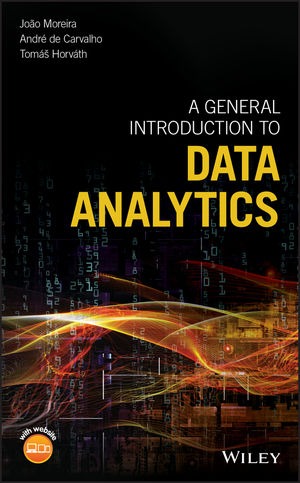
A General introduction to data analytics
A guide to the principles and methods of data analysis that does not require knowledge of statistics or programming. A guide to the reasoning behind data mining techniques. A unique illustrative example that extends throughout all the chapters. Exercises at the end of each chapter and larger projects at the end of each of the text’s two main parts
A First Course in Statistical Inference
Offers a modern and accessible introduction to Statistical Inference, the science of inferring key information from data. Aimed at beginning undergraduate students in mathematics, it presents the concepts underpinning frequentist statistical theory. Written in a conversational and informal style, this concise text concentrates on ideas and concepts, with key theorems stated and proved. Detailed worked examples are included and each chapter ends with a set of exercises, with full solutions given at the back of the book. Examples using R are provided throughout the book, with a brief guide to the software included. Topics covered in the book include: sampling distributions, properties of estimators, confidence intervals, hypothesis testing, ANOVA, and fitting a straight line to paired data.
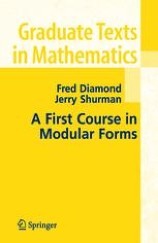
A First Course in Modular Forms
This book introduces the theory of modular forms with an eye toward the Modularity Theorem: All rational elliptic curves arise from modular forms. The topics covered include: • elliptic curves as complex tori and as algebraic curves, • modular curves as Riemann surfaces and as algebraic curves, • Hecke operators and Atkin–Lehner theory, • Hecke eigenforms and their arithmetic properties, • the Jacobians of modular curves and the Abelian varieties associated to Hecke eigenforms, • elliptic and modular curves modulo p and the Eichler–Shimura Relation, • the Galois representations associated to elliptic curves and to Hecke eigenforms. As it presents these ideas, the book states the Modularity Theorem in various forms, relating them to each other and touching on their applications to number theory.

A First Course in Harmonic Analysis
This book is a primer in harmonic analysis using an elementary approach. Its first aim is to provide an introduction to Fourier analysis, leading up to the Poisson Summation Formula. Secondly, it makes the reader aware of the fact that both, the Fourier series and the Fourier transform, are special cases of a more general theory arising in the context of locally compact abelian groups. The third goal of this book is to introduce the reader to the techniques used in harmonic analysis of noncommutative groups. There are two new chapters in this new edition. One on distributions will complete the set of real variable methods introduced in the first part. The other on the Heisenberg Group provides an example of a group that is neither compact nor abelian, yet is simple enough to easily deduce the Plancherel Theorem.

A Field Guide to Algebra
Focuses on the structure of fields and is intended for a second course in abstract algebra. Besides providing proofs of the transcendance of pi and e, the book includes material on differential Galois groups and a proof of Hilbert's irreducibility theorem. The reader will hear about equations, both polynomial and differential, and about the algebraic structure of their solutions. In explaining these concepts, the author also provides comments on their historical development and leads the reader along many interesting paths. In addition, there are theorems from analysis: as stated before, the transcendence of the numbers pi and e, the fact that the complex numbers form an algebraically closed field, and also Puiseux's theorem that shows how one can parametrize the roots of polynomial equations, the coefficients of which are allowed to vary. There are exercises at the end of each chapter, varying in degree from easy to difficult. To make the book more lively, the author has incorporated pictures from the history of mathematics, including scans of mathematical stamps and pictures of mathematicians.

A Dictionary of World History
This wide-ranging dictionary contains a wealth of information on all aspects of history, from prehistory right up to the present day. Accessible, clear, and concise entries include biographies of key figures in world history (living and dead), separate entries for every country in the world (summarising key historical events), and in-depth entries on religious and political movements, international organizations, and major conflicts and events and their after-effects.

A Demographic Perspective on Gender, Family and Health in Europe
Examines the triangle between family, gender, and health in Europe from a demographic perspective. It helps to understand patterns and trends in each of the three components separately, as well as their interdependencies. It overcomes the widely observable specialization in demographic research, which usually involves researchers studying either family or fertility processes or focusing on health and mortality.
A Course on Mathematical Logic
This is a short, distinctive, modern, and motivated introduction to mathematical logic for senior undergraduate and beginning graduate students in mathematics and computer science. Any mathematician who is interested in knowing what logic is concerned with and who would like to learn Gödel’s incompleteness theorems should find this book particularly convenient. The treatment is thoroughly mathematical, and the entire subject has been approached like a branch of mathematics. Serious efforts have been made to make the book suitable for the classroom as well as for self-reading. The book does not strive to be a comprehensive encyclopedia of logic. Still, it gives essentially all the basic concepts and results in mathematical logic. The book prepares students to branch out in several areas of mathematics related to foundations and computability such as logic, axiomatic set theory, model theory, recursion theory, and computability.

A Course in Enumeration
Leads the reader in a leisurely way from the basic notions to a variety of topics, ranging from algebra to statistical physics. Its aim is to introduce the student to a fascinating field, and to be a source of information for the professional mathematician who wants to learn more about the subject.

A Course in Derivative Securities : Introduction to Theory and Computation
Aims at a middle ground between the introductory books on derivative securities and those that provide advanced mathematical treatments. It is written for mathematically capable students who have not necessarily had prior exposure to probability theory, stochastic calculus, or computer programming. It provides derivations of pricing and hedging formulas (using the probabilistic change of numeraire technique) for standard options, exchange options, options on forwards and futures, quanto options, exotic options, caps, floors and swaptions, as well as VBA code implementing the formulas. It also contains an introduction to Monte Carlo, binomial models, and finite-difference methods.
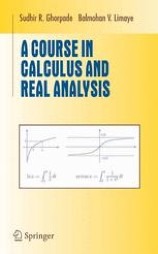
A Course in Calculus and Real Analysis
Provides a self-contained and rigorous introduction to calculus of functions of one variable. The presentation and sequencing of topics emphasizes the structural development of calculus. At the same time, due importance is given to computational techniques and applications. The authors have strived to make a distinction between the intrinsic definition of a geometric notion and its analytic characterization. It highlight the fact that calculus provides a firm foundation to several concepts and results that are generally encountered in high school and accepted on faith. For example, one can find here a proof of the classical result that the ratio of the circumference of a circle to its diameter is the same for all circles. Also, this book helps get a clear understanding of the concept of an angle and the definitions of the logarithmic, exponential and trigonometric functions together with a proof of the fact that these are not algebraic functions. A number of topics that may have been inadequately covered in calculus courses and glossed over in real analysis courses are treated here in considerable detail. As such, this book provides a unified exposition of calculus and real analysis.

A Contingency-Based View of Chief Executive Officers' Early Warning Behaviour : An Empirical Analysis of German Medium-Sized Companies
Organizations need to identify risks and chances of environmental changes in order to adapt to or possibly even to influence them. Early warning which comprises scanning and interpretation plays an important role in this process. Whereas the traditional contingency approach considers early warning as a part of the organizational structure, the extended contingency theory assumes the additional influence of an individual’s personality on early warning. Andreas Kirschkamp empirically analyses the early warning behavior of Chief Executive Officers in German medium-sized companies. First, he presents the design variables of early warning, then the influencing contingency variables. On the basis of the scholarly research on psychological and contingency theory, the author deduces hypotheses and tests them. The results show that early warning behavior is not only influenced by traditional contingency variables but also by personal attitudes.

A concise introduction to traffic engineering : theoretical fundamentals and case studies
Covers a selection of fundamental topics of traffic engineering useful for highways facilities design and control. The treatment is concise but it does not neglect to examine the most recent and crucial theoretical aspects which are at the root of numerous highway engineering applications, like, for instance, the essential aspects of highways traffic stream reliability calculation and automated highway systems control.
A Concise Introduction to Software Engineering
This text focuses on the essential elements, providing readers with the basic skills and introductory knowledge required to execute a software project successfully.
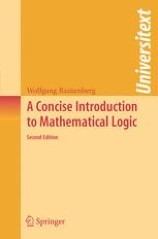
A Concise Introduction to Mathematical Logic
This book is unique in that it is more concise than most others; the material is treated in a streamlined fashion. This allows the lecturer to select the material for a one-semester course on a topic more easily. These initial chapters cover just the material for an introductory course on mathematical logic combined with the necessary material from set theory. Chapter 3 is partly of a descriptive nature, providing a view towards decision problems, automated theorem proving, non-standard models and related subjects. The other chapters contain material on logic programming for computer scientists, model theory, recursion theory, Gödel's Incompleteness Theorems, and applications of mathematical logic. Philosophical and foundational problems of mathematics are discussed where appropriate.
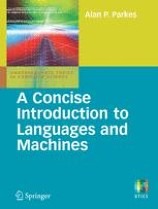
A Concise Introduction to Languages and Machines
This easy-to-follow text provides an accessible introduction to the key topics of formal languages and abstract machines within Computer Science.
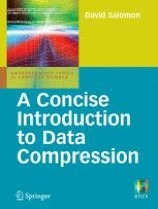
A Concise Introduction to Data Compression
Compressing data is an option naturally selected when faced with problems of high costs or restricted space. Written by a renowned expert in the field, this book offers readers a succinct, reader-friendly foundation to the chief approaches, methods and techniques currently employed in the field of data compression.
