



الصفحة 43
الصفحة 43
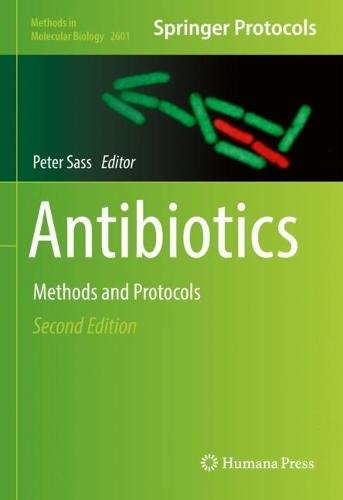
Antibiotics : Methods and protocols
Provides state-of-the-art and novel methods on antibiotic isolation and purification, identification of antimicrobial killing mechanisms, as well as methods for the analysis and detection of microbial responses and adaptation strategies. Antibiotics: Methods and Protocols, Second Edition, guides readers through updated and entirely new chapters on production and design, mode of action, and response and resistance. Written in the highly successful Methods in Molecular Biology series format, chapters include introductions to their respective topics, lists of the necessary materials and reagents, step-by-step, readily reproducible laboratory protocols, and tips on troubleshooting and avoiding known pitfalls.
Anthracycline Chemistry and Biology II : Mode of Action, Clinical Aspects and New Drugs
This series presents critical reviews of the present position and future trends in modern chemical research. It contains short and concise reports on chemistry, each written by the world renowned experts. The series is still valid and useful after five or ten years. More information as well as the electronic version of the whole content is available at: springerlink.com.
Anthracycline Chemistry and Biology I : Biological Occurence and Biosynthesis, Synthesis and Chemistry
"This book … covers many different aspects of the origin, chemistry, and biosynthesis of one of the oldest but most important classes of anticancer agents. … In summary, the book is nicely produced, very well edited, and should serve as a valuable source of information … . This book will serve as an inspiration for scientists and students in the areas of chemistry, drug discovery, and biological evaluation. It should be an essential addition to institutional library collections … ."
Animals and the shaping of modern medicine : One health and its histories
This book breaks new ground by situating animals and their diseases at the very heart of modern medicine. In demonstrating their historical significance as subjects and shapers of medicine, it offers important insights into past animal lives, and reveals that what we think of as ‘human’ medicine was in fact deeply zoological.Each chapter analyses an important episode in which animals changed and were changed by medicine. Ranging across the animal inhabitants of Britain’s zoos, sick sheep on Scottish farms, unproductive livestock in developing countries, and the tapeworms of California and Beirut, they illuminate the multi-species dimensions of modern medicine and its rich historical connections with biology, zoology, agriculture and veterinary medicine. The modern movement for One Health – whose history is also analyzed – is therefore revealed as just the latest attempt to improve health by working across species and disciplines.
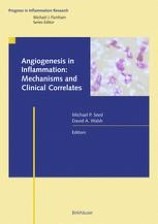
Angiogenesis in Inflammation : Mechanisms and Clinical Correlates
This volume relates the lessons learned from tumour biology applied to inflammation. This issue of Angiogenesis in Inflammation: Mechanisms and Clinical Correlates develops current knowledge on the mechanisms at the molecular and cellular levels as they relate to inflammation, including acute and chronic inflammation, neurogenic initiation, and the role of the multiple cellular components that comprise inflammation: granulocytes, macrophages, fibroblasts, dendritic cells and lymphocytes. This is related to inflammatory disease: not only the familiar angiogenesis dependent diseases of rheumatoid arthritis and psoriasis, but also loci such as the lung, gastric ulcers, the eye with uveitis, wound healing and periodontal disease and their therapy, how this knowledge may be used in the discovery of novel therapeutics. The volume brings together experts in each of these fields to link the molecular and cellular processes in angiogenesis to those of inflammation and disease, culminating in a discourse on areas for future therapies.
Angiogenesis : An integrative approach from science to medicine
It is an up-to-date and authoritative reference for the angiogenesis field as it relates to oncology. This book represents the first collection in a volume of which Folkman is co-editor.
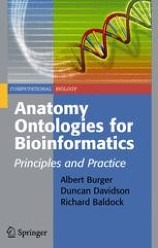
Anatomy ontologies for bioinformatics : Principles and practice
This book provides a timely and first-of-its-kind collection of contributed chapters on anatomy ontologies. It is interdisciplinary in its approach, bringing together relevant expertise from computing and biomedical studies, and covering both theoretical and applied aspects, with an emphasis on newer work relevant to the emerging Semantic Web.
Analytics of Protein-DNA Interactions
This book covers trends in modern biotechnology. All aspects of this interdisciplinary technology, where knowledge, methods and expertise are required from chemistry, biochemistry, microbiology, genetics, chemical engineering and computer science, are treated. More information as well as the electronic version is available at springer.com.
Analysis of variance for random models, Vol. 2 : Unbalanced data : Theory, methods, applications, and data analysis
Analysis of variance (ANOVA) models have become widely used tools and play a fundamental role in much of the application of statistics today. In particular, ANOVA models involving random effects have found widespread application to experimental design in a variety of fields requiring measurements of variance, including agriculture, biology, animal breeding, applied genetics, econometrics, quality control, medicine, engineering, and social sciences. This two-volume work is a comprehensive presentation of different methods and techniques for point estimation, interval estimation, and tests of hypotheses for linear models involving random effects. Both Bayesian and repeated sampling procedures are considered. Volume I examines models with balanced data (orthogonal models); Volume II studies models with unbalanced data (nonorthogonal models).

Analysis of phylogenetics and evolution with R
This book integrates a wide variety of data analysis methods into a single and flexible interface: the R language. This open source language is available for a wide range of computer systems and has been adopted as a computational environment by many authors of statistical software. Adopting R as a main tool for phylogenetic analyses will ease the workflow in biologists' data analyses, ensure greater scientific repeatability, and enhance the exchange of ideas and methodological developments.
Analysing Ecological Data
This book provides a practical introduction to analysing ecological data using real data sets collected as part of postgraduate ecological studies or research projects. The first part of the book gives a largely non-mathematical introduction to data exploration, univariate methods (including GAM and mixed modelling techniques), multivariate analysis, time series analysis (e.g. common trends) and spatial statistics. The second part provides 17 case studies, mainly written together with biologists who attended courses given by the first authors. The case studies include topics ranging from terrestrial ecology to marine biology.
An Introduction to continuous-time stochastic processes : Theory, models, and applications to finance, biology, and medicine
This book is introduction to the theory of continuous-time stochastic processes. A balance of theory and applications, the work features concrete examples of modeling real-world problems from biology, medicine, industrial applications, finance, and insurance using stochastic methods. No previous knowledge of stochastic processes is required. Key topics covered include: * Interacting particles and agent-based models: from polymers to ants * Population dynamics: from birth and death processes to epidemics * Financial market models: the non-arbitrage principle * Contingent claim valuation models: the risk-neutral valuation theory * Risk analysis in insurance
An introduction to bioanalysis of biopharmaceuticals
Provides a comprehensive review of the fundamental and practical aspects of bioanalytical support and the integral role it plays in the development of safe and efficacious biopharmaceutical drugs with speed and cost-effectiveness. Focuses on a broad range of conventional and emerging biopharmaceutical modalities including monoclonal antibody-based therapeutics, gene therapy, cell therapy, peptides and oligonucleotides.
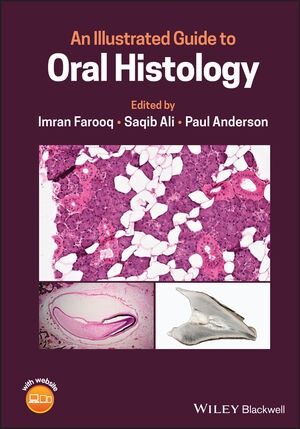
An illustrated guide to oral histology
Delivers a collection of high-definition histological and pathological images, presenting both diseased and normal oral tissues. also includes core topics such as: An introduction to tooth development, including the bud, cap, early bell, and late bell stages A thorough exploration of enamel, dentin, cementum and dental pulp A discussion of the periodontal ligament, including alveolar crest fibers, horizontal, oblique, apical, and inter-radicular fibers, transseptal fibers, and gingival fibers A guide to alveolar bone, oral mucosa, and salivary glands Perfect for postgraduate dental students, An Illustrated Guide to Oral Histology will also be useful to undergraduate dental students, and those looking to improve their understanding of the microscopic structure of dental tissues and their pathologies.

Amino acids and the asymmetry of life : Caught in the act of formation
This book describes how the basic building blocks of life, the amino acids, formed. After a comprehensible introduction into stereochemistry, the author addresses the inherent property of amino acids in living organisms, namely the preference for left-handedness. What was the cause for violation of parity of amino acids in the emergence of life on Earth? All the fascinating models proposed by physicists, chemists and biologist are vividly presented including the scientific conflicts.
Amino acid biosynthesis : Pathways, regulation and metabolic engineering
Amino Acids Biosynthesis presents the current knowledge of fundamental as well as applied microbiology of amino acids. Topics discussed are the amino acid biosynthetic pathways, their genetic and biochemical regulation, transport of amino acids and genomics of producing microorganisms. The characterization of the control mechanisms of amino acid biosynthesis has revealed insights into principles of genetic and biochemical regulation, such as transcriptional regulators and a new class of regulatory elements, the riboswitch. The volume further deals with the metabolic engineering of microorganisms for the biotechnological production of amino acids for use as pharmaceuticals and, particularly, as food and feed additives.
Amazing numbers in biology
With hundreds of tables and over 10,000 entries anyone who works or studies in the life sciences or those with a curious mind will find exact answers to many questions requiring comparative data. This book is a clearly laid out presentation of the plain facts of life from all areas of biology. None of those figures or superlatives that might seem exotic to the layman is left out. Biology comes alive by this comprehensive references work.
Alzheimers Disease : Advances in genetics, molecular and cellular biology
Alzheimer’s Disease: Advances in Genetics, Cellular and Molecular Biology provides exciting, comprehensive and up-to-date summaries of the most important recent advances in the genetic, molecular, biochemical, and cell biological studies of AD. The studies and advances described in this volume will help to accelerate the process of rational drug discovery and soon serve to extend and enhance the mental health and lifespan of our burgeoning elderly population.
Altering nature ; Vol.2 : Religion, Biotechnology, and Public Policy
The two volumes of Altering Nature consider the complex ways that concepts of 'nature' and 'the natural' are understood and the relevance of those understandings to discussions of biotechnology.Volume Two, Religion, Biotechnology, and Public Policy, reviews recent religious and ethical analyses of four specific areas of biotechnology: assisted reproduction, genetic therapy and enhancement, human-machine incorporation, and biodiversity. It identifies and explores the richer normative themes that inform particular debates and suggests ways that policy choices in biotechnology may be illuminated by devoting greater attention to religious perspectives.
Altering nature ; Vol.1 : Concepts of ‘Nature’ and ‘The Natural’ in Biotechnology Debates
Volume One, Concepts of 'Nature' and 'The Natural' in Biotechnology Debates, offers nuanced accounts of the ways that nature is invoked and interpreted, both descriptively and prescriptively, by different disciplines, including perspectives from spirituality and religion, philosophy, science and medicine, law and economics, and aesthetics. In the context of that broad discussion.
