



الصفحة 42
الصفحة 42

Fuzzy Logic : A Spectrum of Theoretical & Practical Issues
This book exclusively surveys the active on-going research of the current maturity of fuzzy logic over the last four decades. Many world leaders of fuzzy logic have enthusiastically contributed their best research results into five theoretical, philosophical and fundamental sub areas and nine distinctive applications, including two PhD dissertations from two world class universities dealing with cutting-edge research areas of bioinformatics and geological science. Beyond the scope of survey and collection of the book, one important spin off is the emerging and recognition of a major scientific paradigm shift from the conventional mathematics to the mathematics of uncertainty, which arguably holds the key to solving very difficult and complex problems in biological and social sciences alike. The book, loaded with historical perspective, creative thinking, critical reviewing, and uniquely constructed strategy for future growth of this dynamic research area, is an invaluable resource for active researchers at all levels, university administrators, foundation directors, funding agency program chiefs, research & development planners and technological assessors.

Fuzzy and Rough Techniques in Medical Diagnosis and Medication
This volume provides readers with selected fuzzy and rough tools used to medical tasks, especially diagnosing and medication. To build a link between theoretical, mathematical excerpts and practical medical applications, the contents is formed as a sequence of occurrences in which a patient appears to be diagnosed and cured. The fuzzy and rough elements are inserted in the book in the order required by the presentation of medical substance to maintain the logical unity of the book’s essence. In conformity with this pattern the essay presents in turn some necessary elements of fuzzy set theory, the classical fuzzy diagnostic model with extensions, the fuzzy diagnostic model with clinical examinations extended throughout time based on distance theory, methods of drug effectiveness measurements and algorithms selecting the optimal medicine. As the complement, the solution of an approximation problem is suggested to find a curve that surrounds two-dimensional clock-like point sets with the little approximation error.

Future approaches for safe and effective pain management
Pain is defined as an unpleasant sensory and emotional experience that is associated with actual or potential tissue damage or described in terms of such damage. It is subjective and considered an important physiological mechanism by which humans prevent themselves from developing tissue injury. However, pain patients do not respond to treatment in the same way, which makes it challenging to issue a consistent treatment for all pain conditions. Excessive pain can markedly increase psychological health problems and decrease health‐related quality of life; therefore, pain should be managed appropriately by analgesics. Analgesics act in various ways on the peripheral and central pain pathways and are regarded as one of the most valuable but equally dangerous groups of medications. Individual variability in pain perception and differences in the efficacy of analgesic drugs are complex phenomena and are partly genetically predetermined. Pain severities as well as responses to analgesics, can also be very variable among sufferer.

Fundamentals of information systems security ; 3rd ed.
Provides a comprehensive overview of the essential concepts readers must know as they pursue careers in information systems security. The text opens with a discussion of the new risks, threats, and vulnerabilities associated with the transition to a digital world. Part 2 presents a high level overview of the Security+ Exam and provides students with information as they move toward this certification. The book closes with information on information security standards, education, professional certifications, and compliance laws. With its practical, conversational writing style and step-by-step examples, this text is a must-have resource for those entering the world of information systems security.

Fundamentals of information systems security ; 4th ed.
Provides a comprehensive overview of the concepts readers must know as they pursue careers in information systems security. The text opens with a discussion of emerging technologies and the risks, threats, and vulnerabilities associated with our digital world. Part II takes a deeper dive into the foundational knowledge areas and functions associated with a career in information security. The book closes with a survey of information security standards, professional certifications, and compliance laws. With its practical, conversational writing style and step-by-step examples, this text is a must-have resource for those entering the world of information systems security.

Fundamentals of Implant Dentistry : Vol.2: Surgical Principles
Significant improvements have been achieved in patient evaluation, methods used to enhance the bone and soft tissues of potential implant sites, and surgical techniques to prepare the osteotomy sites and place the implants. In particular, CBCT scans and associated software planning programs now enable the implant team to analyze the bone sites in three dimensions in relation to the proposed contours of the implant-retained prosthesis; select implants of suitable diameter, length, and configuration; position them virtually in ideal locations; and fabricate surgical templates that enable surgeons to prepare the osteotomy sites and place the implants with great precision.

Fundamentals of electrical drives
This brings us to the purpose of this book namely to help students and engineers appreciate and understand the fundamental concepts of modern electrical drives. An interactive learning approach is taken in this text: theory and calculations are augmented by generic models which are transposed to a simulation platform. The 'build and play' method used in this text visualizes the dynamic operation of a comprehensive set of modules ranging from an inductance to a novel 'ideal rotating transformer' (IRTF). This module is at the center of the generic models used in this text to explore the dynamic and steady state operation of grid and converter fed induction, synchronous and DC machines. The section on modulation and control emphasizes the role of power electronics and digital signal processors in drives. Downloadable files that accompany this text have an extensive set of 'build and play' tutorials, in Simulink R° and Caspoc. The latter is a simulation platform which allows direct access to the 'build and play' modules, without further licensing needs. All figures in this text are included in the downloadable files in order to help with the preparation of customized Power Point type lecture material.

Fundamentals of airplane flight mechanics
Airplane flight mechanics is the application of Newton's laws to the study of airplane trajectories (performance), stability, and aerodynamic control. This text is limited to flight in a vertical plane and is divided into two parts. The first part, trajectory analysis, is concerned primarily with the derivation of analytical solutions of trajectory problems associated with the sizing of commercial jets, that is, take-off, climb, cruise, descent, and landing, including trajectory optimization. The second part, stability and control, is further classified as static or dynamic. On each iteration of airplane sizing, the center of gravity is placed so that the airplane is statically stable. Dynamic stability and control is included to study the response of an airplane to control and gust inputs, which is needed for the design of automatic flight control systems. Algorithms are presented for estimating lift, drag, pitching moment, and stability derivatives.

Fundamental approaches to software engineering ; 21st International Conference, FASE 2018, Held as Part of the European Joint Conferences on Theory and Practice of Software, ETAPS 2018, Thessaloniki, Greece, April 14-20, 2018, Proceedings
This book contains the proceedings of FASE 2018, the 21th International Conference on Fundamental Approaches to Software Engineering, held in Thessaloniki, Greece, in April 2018, the volume contains regular research papers that cover a wide range of topics, such as program and system analysis, model transformations, configuration and synthesis, graph modeling and transformation,software product lines, test selection, as well as learning and inference.
Functional Verification of Programmable Embedded Architectures : A Top-Down Approach
This book presents a top-down validation methodology that complements the existing bottom-up approaches. It leverages the system architect’s knowledge about the behavior of the design through architecture specification using an Architecture Description Language (ADL). The authors also address two fundamental challenges in functional verification: lack of a golden reference model, and lack of a comprehensive functional coverage metric.
Functional MRI : Basic principles and clinical applications
This practical and timely volume presents an overview of the principles of fMRI and explains key concepts, including scanning methodologies, experimental research design, and data analysis. Informative discussions cover the technical and clinical challenges associated with fMRI. A neuroanatomical atlas adds to the sensible approach and serves as a useful reference by clearly illustrating normal functioning for important areas of the brain.

Functional Identities
The theory of functional identities (FIs) is a relatively new one - the first results were published at the beginning of the 1990s, and this is the first book on this subject. An FI can be informally described as an identical relation involving arbitrary elements in an associative ring together with arbitrary (unknown) functions. The goal of the general FI theory is to describe these functions, or, when this is not possible, to describe the structure of the ring admitting the FI in question. This abstract theory has turned out to be a powerful tool for solving a variety of problems in ring theory, Lie algebras, Jordan algebras, linear algebra, and operator theory.

Functional Foods
Functional Foods Presenting cutting-edge information on new and emerging food engineering processes, Functional Foods, the second volume in the groundbreaking new series, “Bioprocessing in Food Science,” is an essential reference on the modeling, quality, safety, and technologies associated with food processing operations today.
Fully-Depleted SOI CMOS Circuits and Technology for Ultralow-Power Applications
Fully-depleted SOI CMOS Circuits and Technology for Ultralow-Power Applications addresses the problem of reducing the supply voltage of conventional circuits for ultralow-power operation and explains power-efficient MTCMOS circuit design for FD-SOI devices at a supply voltage of 0.5 V. The topics include the minimum required knowledge of the fabrication of SOI substrates; FD-SOI devices and the latest developments in device and process technologies; and ultralow-voltage circuits, such as digital circuits, analog/RF circuits, and DC-DC converters. Each ultra-low-power technique related to devices and circuits is fully explained using figures to help understanding.

Fuel Cell Technology : Reaching Towards Commercialization
The Engineering Materials and Processes series focuses on all forms of materials and the processes used to synthesise and formulate them as they relate to the various engineering disciplines.The series deals with a diverse range of materials: ceramics, metals (ferrous and non-ferrous), semiconductors, composites, polymers biomimetics, etc. Each monograph in the series is written by a specialist and demonstrates how enhancements in materials and the processes associated with them can improve performance in the field of engineering in which they are used.
FSTTCS 2005 : Foundations of software technology and theoretical computer science ; 25th International conference, Hyderabad, India, December 15-18, 2005, Proceedings
This year marks a milestone in the history of FST&TCS, which ?rst took place in 1981. We would like to take this opportunity to express our appreciation of the foresight and commitment to excellence shown by the early organizersof the conference. The conference is now organized by IARCS (Indian Association for Researchin Computing Science), and the conference has been the foundation on which the IARCS community has been built. To commemorate the Silver Jubilee of FST&TCS.

Frontiers of real estate science in Japan
This book presents recent research and hot topics in the field of real estate science in Japan. It features carefully selected English translations of peer-reviewed papers and excellent articles published in the Japanese Journal of Real Estate Sciences, as well as papers presented at the Japan Association of Real Estate Sciences (JARES) annual conference.
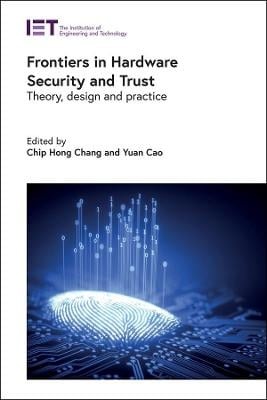
Frontiers in Hardware Security and Trust : Theory, design and practice
The footprint and power constraints imposed on internet-of-things end-points, smart sensors, mobile and ad hoc network devices make traditional and software based cryptographic solutions that require a general-purpose processor increasingly unfeasible. The fact that security is not the primary functionality of these devices means that only a small portion of their limited processing power and storage is available for security, driving the need for alternative security solutions. Hardware security - including hardware obfuscation, hardware security primitives, side-channel attacks and so on - is therefore becoming an increasingly active research area in both academia and industry.

From War to Peace in the Balkans, the Middle East and Ukraine
This book focuses on the origins, consequences and aftermath of Western military interventions that led to the end of the most recent Balkan wars. . This study highlights lessons that can be applied to the Middle East and Ukraine, where similar conflicts are likewise challenging sovereignty and territorial integrity. It is an accessible treatment of what makes war and how to make peace ideal for all readers interested in how violent international conflicts can be managed, informed by the experience of a practitioner.

From Vectors to Tensors
It is true that there exist many books dedicated to linear algebra and some what fewer to multilinear algebra, written in several languages, and perhaps one can think that no more books are needed. However, it is also true that in algebra many new results are continuously appearing, different points of view can be used to see the mathematical objects and their associated structures, and different orientations can be selected to present the material, and all of them deserve publication. he book assumes a certain knowledge of linear algebra, and is intended as a textbook for graduate and postgraduate students and also as a consultation book. It is addressed to mathematicians, physicists, engineers, and applied scientists with a practical orientation who are looking for powerful tensor tools to solve their problems.
