



الصفحة 41
الصفحة 41

Geology and Ecosystems
This book includes an analysis of the relationship between the different geological, hydrochemical, hydrogeological and engineering-geological processes and the processes within surface ecosystems. The analysis of specific interactions between the lithosphere and biosphere provides an integrated concept of the role of the geological environment in the evolution of the biosphere. The practical significance of the book is reflected by the analysis of modern engineering activity associated with the mining of minerals, excessive groundwater withdrawal, disposal of industrial and domestic wastes (including radioactive wastes) and their impacts on all components of the environment. Geology and Ecosystems includes a scientific approach to the complex monitoring of the environment under different natural and anthropogenic conditions, including the monitoring of permafrost regions. An important part of the book is the analysis of the "water factor" impact on ecosystems and sustainable development. Influences of intensive groundwater extraction on river flow, vegetation and land subsidence are also considered.

Geographies of the University
Raises awareness of the histories, geographies, and practices of universities and analyzes their role as key actors in today’s global knowledge economy. Universities are centers of research, teaching, and expertise with significant economic, social, and cultural impacts at different geographical scales. Scholars from a variety of disciplines and countries offer original analyses and discussions along five main themes: historical perspectives on the university as a site of knowledge production, cultural encounter, and political interest; institutional perspectives on university governance and the creation of innovative environments; relationships between universities and the city; the impact of universities on national and regional economies and cultures; and the processes of internationalization through student mobility, the creation of education hubs, and global regionalism in higher education.

Geographies of Schooling
This book explores the complex relationship between schooling as a set of practices embedded in educational institutions and their specific spatial dimensions from different disciplinary perspectives.The book covers a broad range of topics, all examined from a spatial perspective: the governance of schooling, the transition processes of and within national school systems, the question of small schools in peripheral areas as well as the embeddedness of schooling in broader processes of social change. Transcending disciplinary boundaries, the book offers deep insights into current theoretical debates and empirical case studies within the broad research field encompassing the complex relationship between education and space.

Geographies of Asylum in Europe and the Role of European Localities
This book describes how the numerous arrivals of asylum seekers since 2015 shaped reception and integration processes in Europe. It addresses the structuration of asylum and reception systems, and spaces and places of reception on European, national, regional and local level.
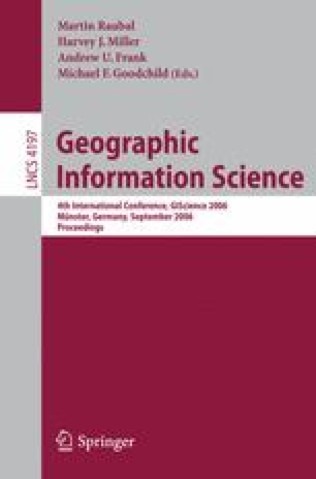
Geographic Information Science ; 4th International Conference, GIScience 2006, Münster, Germany, September 20-23, 2006, Proceedings
The GIScience conference series (www. giscience. org) was created as a forum for all researchers who are interested in advancing research in the fundam- tal aspects of geographic information science.The conferences focus on emerging topics and basic research ?ndings across all s- tors of geographic information science. After three highly successful conferences in the United States, this year’s GIScience conference was held in Europe for the ?rst time. The GIScience conferences have been a meeting point for researchers coming from various disciplines, including cognitive science, computer science, engine- ing, geography,information science, mathematics, philosophy, psychology,social science, and statistics. The advancement of geographic information science - quiressuchinterdisciplinarybreadth,andthisisalsowhatmakestheconferences so exciting. In order to account for the di?erent needs of the involved scienti?c disciplines with regard to publishing their research results.

Genome editing in drug discovery
In Genome Editing in Drug Discovery, a team of distinguished biologists delivers a comprehensive exploration of genome editing in the drug discovery process, with coverage of the technology’s history, current issues and techniques, and future perspectives and research directions. The book discusses techniques for disease modeling, target identification with CRISPR, safety studies, therapeutic editing, and intellectual property issues.

Génetique statistique = Statistical genetics
Presents the main statistical tools useful in genetics: significance tests, analysis methods based on the likelihood function, EM algorithm, modeling, analysis of variance, hierarchical classifications, multiple comparisons, etc. All of them shed light on a number of biological phenomena such as carcinogenesis, population genetics, Hardy-Weinberg equilibrium, natural selection, mutations, heredity, coalescence processes, and even evolution. This book is intended for mathematicians and biologists alike. Written with a great concern for clarity, it is also accessible to non-specialists who will be able, thanks to it, to strengthen their theoretical base and above all to develop their know-how through very concrete applications.
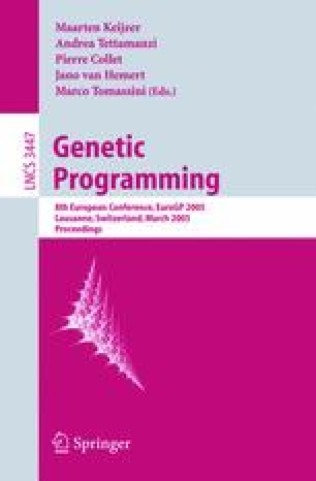
Genetic rogramming ; Vol. 3447 : 8th European conference, EuroGP 2005, Lausanne, Switzerland, March 30-April 1, 2005, Proceedings
In this volume we present the contributions for the 18th European Conference on Genetic Programming (EuroGP 2005). The conference took place from 30 March to 1 April in Lausanne, Switzerland. EuroGP is a well-established conf- ence and the only one exclusively devoted to genetic programming. All previous proceedings were published by Springer in the LNCS series. From the outset, EuroGP has been co-located with the EvoWorkshops focusing on applications of evolutionary computation. Since 2004, EvoCOP, the conference on evolutionary combinatorial optimization, has also been co-located with EuroGP, making this year’s combined events one of the largest dedicated to evolutionary computation in Europe. Genetic programming (GP) is evolutionary computation that solves complex problems or tasks by evolving and adapting a population of computer programs, using Darwinian evolution and Mendelian genetics as its sources of inspiration. Some of the 34 papers included in these proceedings address foundational and theoretical issues and there is also a wide variety of papers dealing with di?erent application areas, such as computer science, engineering, language processing, biology and computational design, demonstrating that GP is a powerful and practical problem-solving paradigm.

Genetic Programming ; 11th European Conference, EuroGP 2008, Naples, Italy, March 26-28, 2008. Proceedings
The 11th European Conference on Genetic Programming, EuroGP 2008, took place in Naples, Italy from 26 to 28 March in the University of Naples Congress Centre with spectacular views over the Gulf of Naples. This volume contains the papers for the 21 oral presentations and 10 posters that were presented during this time. A diverse array of topics were covered refecting the current state of research in the ?eld of Genetic Programming, including the latest work on representations, theory, operators and analysis, evolvable hardware, agents and numerous applications. A rigorous, double-blind peer review process was employed, with each s- mission reviewed by at least three members of the international Program C- mittee.

Genetic control of neuronal migrations in human cortical development
Introduction Cortical development is a complex, tightly regulated process that eventually leads to the six-layered adult human neocortex, the substrate of the unique cognitive, emotional, and social abilities of our species. The basic mechanisms of early cortical development are believed to be very similar among mammals, which has led to a tendency of extrapolating experimental data from rodents on humans.

Generative programming and component engineering ; 4th International conference, GPCE 2005, Tallinn, Estonia, September 29 - October 1, 2005, Proceedings
Generative Programming and Component Engineering (GPCE) is a leading - searchconferenceonautomaticprogrammingandcomponentengineering.These approaches to software engineering have the potential to revolutionize software development as automation and components revolutionized manufacturing. The conference brings together researchers and practitioners interested in adva- ing automation for software development. It is also a premier forum for cro- fertilization between the programming language and software engineering - search communities. GPCEaroseasajointconference, mergingthepriorconferenceonGenerative and Component-Based Software Engineering (GCSE) and the Workshop on - mantics, Applications, andImplementationofProgramGeneration(SAIG). The proceedingsofthepreviousGPCEconferenceswerepublishedintheLNCSseries of Springer as volumes2487,2830, and 3286.In 2005 GPCE wasco-locatedwith the International Conference on Functional Programming (ICFP) and the s- posium on Trends in Functional Programming (TFP), re?ecting the vigorous interaction between the functional programming and generative programming research communities. GPCE and ICFP are both sponsored by the Association for Computing Machinery. The quality and breadth of the papers submitted to GPCE 2005 was impr- sive. All 86 papers, including 5 papers for tool demonstrations, were rigorously reviewed by 17 highly quali?ed Program Committee members. The members of the Program Committee ?rst provided in-depth individual reviews of the s- mitted papers, and then debated the merits of the papers through an extended electronicProgramCommitteemeeting.After much(friendly) argument,25r- ular papers and 2 tool demonstration papers were selected for publication. The ProgramCommittee provided extensive technical feedback to the authors of the submittedpapers.Theconferenceprogramwascomplementedwiththreeinvited talks, three extended tutorials, and three all-day workshops.

Generative and transformational techniques in software engineering II : International Summer School, GTTSE 2007, Braga, Portugal, July 2-7, 2007. Revised Papers
This tutorial book presents an augmented selection of the material presented at the International Summer School on Generative and Transformational Techniques in Software Engineering, GTTSE 2007, held in Braga, Portugal, in July 2007.The 7 tutorial lectures presented together with 5 short tutorials and 4 contributions to the participants workshop were carefully selected during multiple rounds of reviewing and improvement. The tutorials given by renowned representatives of complementary approaches and problem domains combine foundations, methods, examples, and tool support.

Generalized Bounds for Convex Multistage Stochastic Programs
The auther was involved in several industry projects in the field of power management, on the occasion of which I was repeatedly c- fronted with complex decision problems under uncertainty. Although usually hard to solve, I quickly learned to appreciate the benefit of stochastic progr- ming models and developed a strong interest in their theoretical properties. Motivated both by practical questions and theoretical concerns, I became p- ticularly interested in the art of finding tight bounds on the optimal value of a given model. The present work attempts to make a contribution to this important branch of stochastic optimization theory. In particular, it aims at extending some classical bounding methods to broader problem classes of practical relevance.

General Relativity
this book is a short and concise exposition of the central ideas of general relativity. Although the original audience was made up of mathematics students, the focus is on the chain of reasoning that leads to the relativistic theory from the analysis of distance and time measurements in the presence of gravity, rather than on the underlying mathematical structure. The geometric ideas - which are central to the understanding of the nature of gravity - are introduced in parallel with the development of the theory, the emphasis being on laying bare how one is led to pseudo-Riemannian geometry through a natural process of reconciliation of special relativity with the equivalence principle.
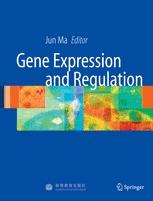
Gene Expression and Regulation
This book offers a comprehensive look into the science of gene expression and regulation. Focusing on topics such as actions of nuclear receptors, RNA processing, and DNA methylation and imprinting, Gene Expression and Regulation is edited by a leading biologist and includes contributions by experts in the field. Presented in the following five sections, this book covers a full spectrum of topics: The History; The Machinery; The Regulators; The Genome; and Special Topics. The Machinery section covers the transcriptional apparatus and general transcription factors. The Regulators section examines selected gene-specific transcription factors important to regulating gene expression. The Genome section covers issues relevant to the behavior of the genome in relation to gene regulation. The Special Topics section discusses several selected topics ranging from bacterial and plant gene expression to DNA topology and interference RNA. The book’s focus is on scientific concepts and issues, rather than specific organisms or experimental approaches.

Gender Innovation and Migration in Switzerland
This book analyses migration and its relation to socio-political transformation in Switzerland. It addresses how migration has made new forms of life possible and shows how this process generated gender innovation in different fields: the changing division of work, the establishment of a nursery infrastructure, access to higher education for women, and the struggle for female suffrage. Seeing society through the lens of migration alters the perspective from which our past and thus our present is told—and our future imagined.

Gastrointestinal malignancies
Details the advances in drug discovery and delivery and the present need for emerging technologies. Throughout the text new micro and nanofabrication techniques are described, including methods such as electrohydrodynamic processes, additive manufacturing, and microfluidics, which have the potential to produce drug delivery systems that were not possible a few years ago. This book is of great use to both entry-level and experienced researchers in the field of emerging technologies for the manufacturing of drug delivery devices.
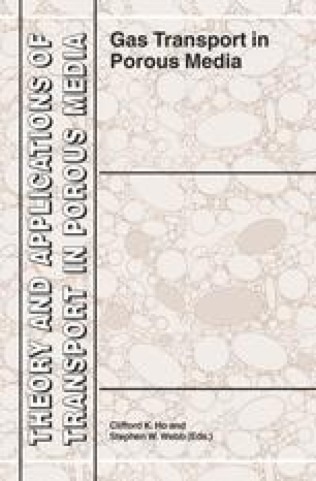
Gas Transport in Porous Media
This book presents a compilation of state-of-the art studies on gas and vapor transport processes in porous and fractured media. A broad set of models and processes is presented, including advection/diffusion, the Dusty Gas Model, enhanced vapor diffusion, phase change, coupled processes, solid/vapor sorption, and vapor-pressure lowering. Numerous applications are also presented that illustrate these processes and models in current problems facing the scientific community.

Gas Cyclones and Swirl Tubes : Principles, Design, and Operation
These are cyclones used as gas-solid separators for dedusting and as gas-liquid separators for demisting, and as such they are widely used in industry. The optimization of cyclone performance for any given task is an often-sought goal but is seldom achieved in practice. Understanding cyclone performance as a function of a cyclone's size, geometry, feed properties, feed flow rates and the system of which it is a part, is essential if one wishes to successfully design, operate, troubleshoot or predict cyclone performance.

Gas Adsorption Equilibria : Experimental Methods and Adsorptive Isotherms
This book is intended to present for the first time experimental methods to measure equilibria states of pure and mixed gases being adsorbed on the surface of solid materials. It has been written for engineers and scientists from industry and academia who are interested in adsorption-based gas separation processes and/or in using gas adsorption for characterization of the porosity of solid materials.Special emphasis is given to uncertainties of data and pros and cons of all measurement methods are offered.
