



الصفحة 41
الصفحة 41
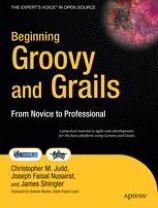
Beginning Groovy and Grails : From novice to professional
Web frameworks are playing a major role in the creation of today's most compelling web applications, because they automate many of the tedious tasks, allowing developers to instead focus on providing users with creative and powerful features. Java developers have been particularly fortunate in this area, having been able to take advantage of Grails, an open source framework that supercharges productivity when building Java–driven web sites. Grails is based on Groovy, which is a very popular and growing dynamic scripting language for Java developers and was inspired by Python, Ruby, and Smalltalk.
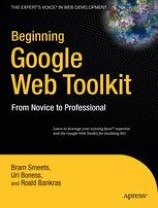
Beginning Google Web Toolkit : From novice to professional
The open source, lightweight Google Web Toolkit (GWT) is a framework that allows Java developers to build rich Internet applications (RIAs), more recently called Ajax applications, in Java. Typically, writing these applications requires a lot of JavaScript development. However, Java and JavaScript are very distinctively different languages (although the name suggests otherwise), therefore requiring a different development process. In Beginning Google Web Toolkit: From Novice to Professional, you'll learn to build rich, user–friendly web applications using a popular Java–based Ajax web framework, the Google Web Toolkit.
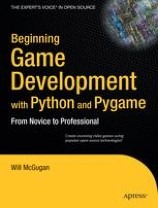
Beginning Game Development with Python and Pygame : From novice to professional
Beginning Game Development with Python and Pygame is written with the budding game developer in mind, introducing games development through the Python programming language and the popular Pygame games development library. You'll be privy to insights that will not only help you to exploit Pygame to its maximum potential, but also make you a more creative and knowledgeable games developer all round.
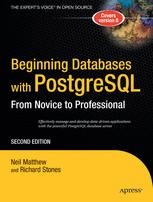
Beginning Databases with PostgreSQL : From novice to professional
The book continues with a complete tutorial on PostgreSQL features and functions and include information on database construction and administration. Key features such as transactions, stored procedures and triggers are covered, along with many of the capabilities new to version 8. To help you get started quickly, step-by-step instructions on installing PostgreSQL on Windows and Linux/UNIX systems are included. In the remainder of the book, we show you how to make the most of PostgreSQL features in your own applications using a wide range of programming languages, including C, Perl, PHP, Java and C#. Many example programs are presented in the book, and all are available for download from the Apress web site. By the end of the book you will be able to install, use, and effectively manage a PostgreSQL server, design and implement a database, and create and deploy your own database applications.
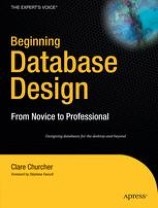
Beginning Database Design : From novice to professional
Beginning Database Design: From Novice to Professional provides short, easy-to-read explanations of how to get database design right the first time. Through the help of use cases and class diagrams modeled in the UML, youll learn how to discover and represent the details and scope of the problem in question.
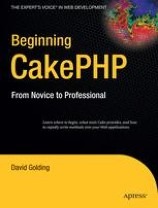
Beginning CakePHP : From novice to professional
CakePHP is a leading PHP–based web app development framework. When asking a question on forums or chat rooms, many CakePHP beginners get little help from the experts. Simple questions can get a response like, “Well, just read the online manual and API.” Unfortunately, the online manual is depreciated, and who wants to absorb a programming language or framework from an API? Beginning CakePHP will do the following: Lead you from a basic setup of CakePHP to building a couple applications that will highlight CakePHP’s functionality and capabilities without delving too deeply into the PHP language, but rather what the CakePHP framework can offer the developer. Teach you to use CakePHP by incorporating advanced features into your web development projects.
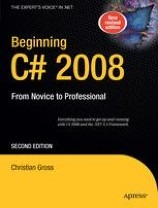
Beginning C# 2008 : From novice to professional
This book is for anyone who wants to write good C# code—even if you have never programmed before. Writing good code can be a challenge—there are so many options, especially in a .NET language like C#. If you want to really get the best from a programming language, you need to know which features work best in which situations, and understand their strengths and weaknesses. It is this understanding that makes the difference between coding and coding well. Beginning C# 2008: From Novice to Professional, Second Edition has been written to teach you how to use the C# programming language to solve problems. From the earliest chapters and the first introductory concepts, you'll be looking at real–world programming challenges and learning how C# can be used to overcome them.
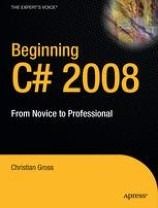
Beginning C# 2008 : From novice to professional
This book is for anyone who wants to write good C# 2008 code—even if you have never programmed before. Beginning C# 2008 has been written to teach you how to use the C# programming language to solve problems. Christian Gross is dedicated to helping his readers understand every detail of Beginning C# 2008.
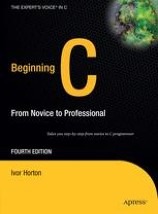
Beginning C : From novice to professional
With Beginning C: From Novice to Professional, Fourth Edition, you'll come to understand the fundamentals of the C language and learn how to program. All you need is this book and any one of the widely available free or commercial C or C++ compilers, and you'll soon be writing real C programs. You'll learn C from the first principles.
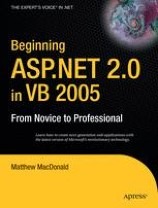
Beginning ASP.NET 2.0 in VB 2005 : From novice to professional
This book includes best practices and comprehensive discussions about key database and XML principles, which are essential for you to become effective with ASP.NET. The book also emphasizes the invaluable coding techniques of object orientation and code behind, which will enable you to build real-world websites immediately rather than just scraping by with simplified coding practices. By the time you've finished this book, you will have mastered the core techniques and possess the necessary knowledge to begin work as a professional ASP.NET developer.
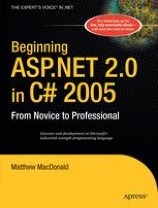
Beginning ASP.NET 2.0 in C# 2005 : From novice to professional
This book provides thorough coverage of ASP.NET, guiding you from beginning to advanced techniques, such as querying databases from within a web page and performance-tuning your site. You'll find tips for best practices and comprehensive discussions of key database and XML principles. The book also emphasizes the invaluable coding techniques of object orientation and code-behind, which will enable you to build real-world websites instead of just scraping by with simplified coding practices. By the time you finish this book, you will have mastered the core techniques essential to professional ASP.NET developers.
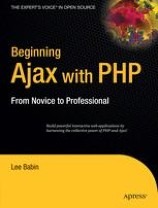
Beginning Ajax with PHP : From novice to professional
Beginning Ajax with PHP: From Novice to Professional is the first book to introduce how these two popular technologies can work together to create next-generation applications. Author Lee Babin covers what you commonly encounter in daily web application development tasks.
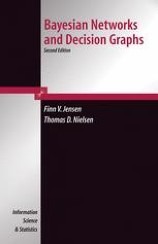
Bayesian Networks and Decision Graphs
Probabilistic graphical models and decision graphs are powerful modeling tools for reasoning and decision making under uncertainty. As modeling languages they allow a natural specification of problem domains with inherent uncertainty, and from a computational perspective they support efficient algorithms for automatic construction and query answering. This includes belief updating, finding the most probable explanation for the observed evidence, detecting conflicts in the evidence entered into the network, determining optimal strategies, analyzing for relevance, and performing sensitivity analysis. The book introduces probabilistic graphical models and decision graphs, including Bayesian networks and influence diagrams.It contians two parts. The first part focuses on probabilistic graphical models. Compared with the previous book, the new edition also includes a thorough description of recent extensions to the Bayesian network modeling language, advances in exact and approximate belief updating algorithms, and methods for learning both the structure and the parameters of a Bayesian network. The second part deals with decision graphs, and in addition to the frameworks described in the previous edition, it also introduces Markov decision processes and partially ordered decision problems.
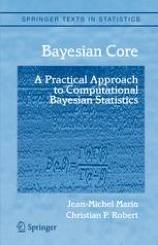
Bayesian core : A practical approach to computational Bayesian statistics
This Bayesian modeling book provides an operational methodology for conducting Bayesian inference, rather than focusing on its theoretical justifications. Special attention is paid to the derivation of prior distributions in each case and specific reference solutions are given for each of the models.
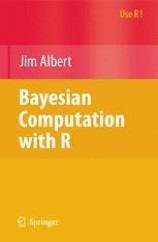
Bayesian computation with R : Introduces Bayesian modeling by use of computation using the R language
R's open source nature, free availability, and large number of contributor packages have made R the software of choice for many statisticians in education and industry. Bayesian Computation with R introduces Bayesian modeling by the use of computation using the R language.
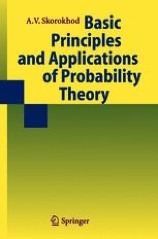
Basic principles and applications of probability theory
This introductory chapter discusses such notions as determinism, chaos and randomness, p- dictibility and unpredictibility, some initial approaches to formalizing r- domness and it surveys certain problems that can be solved by probability theory. This will perhaps give one an idea to what extent the theory can - swer questions arising in speci?c random occurrences and the character of the answers provided by the theory. 1. 1 The Nature of Randomness The phrase “by chance” has no single meaning in ordinary language. For instance, it may mean unpremeditated, nonobligatory, unexpected, and so on. Its opposite sense is simpler: “not by chance” signi?es obliged to or bound to (happen). In philosophy, necessity counteracts randomness. Necessity signi?es conforming to law – it can be expressed by an exact law. The basic laws of mechanics, physics and astronomy can be formulated in terms of precise quantitativerelationswhichmustholdwithironcladnecessity.
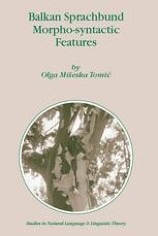
Balkan Sprachbund Morpho-Syntactic Features
This book discusses the morpho-syntactic Balkan Sprachbund features in nine languages in which they are most numerous. It contains a wealth of Balkan linguistic material, collected from both the existing literature sources and from the author’s own field work.

Balancing Agility and Formalism in Software Engineering ; 2nd IFIP TC 2 Central and East European Conference on Software Engineering Techniques, CEE-SET 2007, Poznan, Poland, October 10-12, 2007, Revised Selected Papers
This book constitutes the thoroughly refereed post-conference proceedings of the Second IFIP TC 2 Central and East Conference on Software Engineering Techniques, CEE-SET 2007, held in Poznan, Poland, in October 2007.
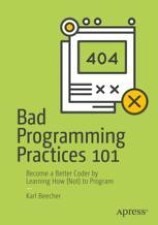
Bad programming practices 101 : Become a better coder by learning how (Not) to program
Takes a humorous slant on the programming practice manual by reversing the usual approach: under the pretence of teaching you how to become the world’s worst programmer who generally causes chaos, the book teaches you how to avoid the kind of bad habits that introduce bugs or cause code contributions to be rejected.
B 2007 : Formal Specification and Development in B ; 7th International Conference of B Users, Besancon, France, January 7-19, 2007, Proceedings
These proceedingsrecordthe papers presented at the Seventh InternationalC- ference of B Users (B 2007), held in the city of Besan¸ con in the east of France. All the submitted papers in these proceedings were peer reviewed by at least three reviewers drawn from the B committee, depending on the subject matter of the paper. The authorsof the papersforB 2007werefrom Australia,Canada, Finland, Germany, France, Switzerland, and the UK. The conference featured a rangeof contributions by distinguished invited speakers drawn from both ind- try and academia.
