


تحسين النتائح
ترتيب حسب
من
الى

Introduces various machine learning methods for cyber security analytics. With an overwhelming amount of data being generated and transferred over various networks, monitoring everything that is exchanged and identifying potential cyber threats and attacks poses a serious challenge for cyber experts. Further, as cyber attacks become more frequent and sophisticated, there is a requirement for machines to predict, detect, and identify them more rapidly. Machine learning offers various tools and techniques to automate and quickly predict, detect, and identify cyber attacks.
Showcase novel use-cases and applications, present empirical research results from user-centered qualitative and quantitative experiments of these new applications, and facilitate a discussion forum to explore the latest trends in big data and machine learning by providing algorithms which can be trained to perform interdisciplinary techniques such as statistics, linear algebra, and optimization and also create automated systems that can sift through large volumes of data at high speed to make predictions or decisions without human intervention
Key to our culture is that we can disseminate information, and then maintain and access it over time. While we are rapidly advancing from vulnerable physical solutions to superior, digital media, preserving and using data over the long term involves complicated research challenges and organization efforts. Uwe Borghoff and his coauthors address the problem of storing, reading, and using digital data for periods longer than 50 years. They briefly describe several markup and document description languages like TIFF, PDF, HTML, and XML, explain the most important techniques such as migration and emulation, and present the OAIS (Open Archival Information System) Reference Model. To complement this background information on the technology issues the authors present the most relevant international preservation projects, such as the Dublin Core Metadata Initiative, and experiences from sample projects run by the Cornell University Library and the National Library of the Netherlands. A rated survey list of available systems and tools completes the book.
Shows the use of statistical tools for forecasting and analyzing implications of land-use decisions. The idea is that la- use on a map is necessarily a consequence of individual, and often conflicting, siting decisions over time.
The authors see mapping software as a set of visual tools for reading and writing in a networked age. In an information ocean, the primary challenge is to find meaningful patterns around which we can weave plausible narratives. Maps of concepts, discussions and arguments make the connections between ideas tangible and disputable.With 17 chapters from the leading researchers and practitioners, the reader will find the current state–of-the-art in the field. Part 1 focuses on educational applications in schools and universities, before Part 2 turns to applications in professional communities.
Explores knowledge and skill chains in engineering and manufacturing in the age of global communications. Information infrastructure involves a range of activities from product planning, engineering, and manufacturing trough transportation, marketing, and repair/upgrade to returns and recycling/disposal. Distinct from the traditional engineering database, life-cycle support information has its own characteristic requirements, -- flexible extensibility, distributed architecture, multiple viewpoints, long-time archiving, and product usage information. Several authors address the architecture of the information infrastructure, its services and its requirements. Other papers focus on the knowledge and skill chains that develop in a variety of situations: the supply chain, the factory floor, the man-system interaction, etc. For each of these, state-of-the-art and state-of-research scenarios for various industrial sectors address both engineering and operations requirements in the current socio-economic environment.
Web semantics and semi-structured data , Semantic caching , Data warehousing and semantic data mining , Spatial, temporal, multimedia and multimodal semantics , Semantics in data visualization , Semantic services for mobile users , Supporting tools , Applications of semantic-driven approaches These topics are to be understood as specifically related to semantic issues. Contributions submitted to the journal and dealing with semantics of data will be considered even if they are not from the topics in the list. While the physical appearance of the journal issues is like the books from the we- known Springer LNCS series, the mode of operation is that of a journal. Contributions can be freely submitted by authors and are reviewed by the Editorial Board.
Data warehousing and semantic data mining • Spatial, temporal, multimedia and multimodal semantics • Semantics in data visualization • Semantic services for mobile users • Supporting tools • Applications of semantic-driven approaches These topics are to be understood as speci?cally related to semantic issues. Contributions submitted to the journal and dealing with semantics of data will be considered even if they are not within the topics in the list. While the physical appearanceof the journal issues looks like the books from the well-known Springer LNCS series, the mode of operation is that of a jo- nal. Contributions can be freely submitted by authors and are reviewed by the Editorial Board. Contributions may also be invited, and nevertheless carefully reviewed, as in the case for issues that contain extended versions of best papers from major conferences addressing data semantics issues. Special issues, foc- ing on a speci?c topic, are coordinated by guest editors once the proposal for a special issue is accepted by the Editorial Board.
• Semantics in data visualization • Semantic services for mobile users • Supporting tools • Applications of semantic-driven approaches These topics are to be understood as specifically related to semantic issues. Contributions submitted to the journal and dealing with semantics of data will be considered even if they are not within the topics in the list. While the physical appearance of the journal issues is like the books from the we- known Springer LNCS series, the mode of operation is that of a journal. Contributions can be freely submitted by authors and are reviewed by the Editorial Board. Contributions may also be invited, and nevertheless carefully reviewed, as in the case for issues that contain extended versions of the best papers from major conferences addressing data semantics issues. Special issues, focusing on a specific topic, are coordinated by guest editors once the proposal for a special issue is accepted by the Editorial Board. Finally, it is also possible that a journal issue be devoted to a single text.
– semantic caching – data warehousing and semantic data mining – spatial, temporal, multimedia and multimodal semantics – semantics in data visualization – semantic services for mobile users – supporting tools – applications of semantic-driven approaches These topics are to be understood as speci?cally related to semantic issues. Contributions submitted to the journal and dealing with semantics of data will be considered even if they are not within the topics in the list. While the physical appearance of the journal issues looks like the books from the well-known Springer LNCS series, the mode of operation is that of a journal. Contributions can be freely submitted by authors and are reviewed by the Editorial Board. Contributions may also be invited, and nevertheless carefully reviewed, as in the case for issues that contain extended versions of best papers from major conferences addressing data semantics issues. Special issues, focusing on a speci?c topic, are coordinated by guest editors once the proposal for a special issue is accepted by the Editorial Board. Finally, it is also possible that a journal issue be devoted to a single text.

This book is structured around the main theories and models used by practitioners to engineer finance and investment tools. The methods developed and implemented in the text are organized as chapters which cover the core areas.

Iterating Infusion presents comprehensive tools for you to best manage and work with object orientation. These include simplified fundamental concepts, popular language comparisons, advanced designing strategies, a broad usage progression, thorough design notations (interaction algebra), and data-oriented (fundamentally-OO) languages. The title, Iterating Infusion, alludes to the fact that any system has multiple, coexisting functional levels and that new levels—both lower and higher—are continually added to the same functional area. The practical effect is to bring processes into focus, always clarifying the vague. The extreme form of this is when separate but compatible technologies are brought together to create advancements; these can be baby-steps or great leaps, with varying amounts of effort. In more general terms, the same thing in a different context can take on much more power. And actually, this phenomenon is at the heart of object-oriented software.
The purpose of this book is to present current status of this technology by looking at its application in different domains, such as electronic markets, e-tourism, ambience intelligence, and complex system analysis.It starts by discussing software engineering issues for the development of multi-agent systems, how much it costs to build a multi-agent system, and which methods and tools are currently available. Next chapters present some of the most relevant aspects that are considered for the development of multi-agent systems.
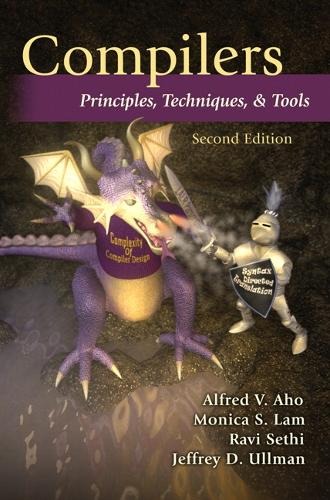
This introduction to compilers is the direct descendant of the well-known book by Aho and Ullman, Principles of Compiler Design. The authors present updated coverage of compilers based on research and techniques that have been developed in the field over the past few years. The book provides a thorough introduction to compiler design and covers topics such as context-free grammars, fine state machines, and syntax-directed translation.
This book is written for members of the scholarly research community, and for persons involved in research evaluation and research policy. More specifically, it is directed towards the following four main groups of readers: – All scientists and scholars who have been or will be subjected to a quantitative assessment of research performance using citation analysis. – Research policy makers and managers who wish to become conversant with the basic features of citation analysis, and about its potentialities and limitations. – Members of peer review committees and other evaluators, who consider the use of citation analysis as a tool in their assessments. – Practitioners and students in the field of quantitative science and technology studies, informetrics, and library and information science. Citation analysis involves the construction and application of a series of indicators of the ‘impact’, ‘influence’ or ‘quality’ of scholarly work, derived from citation data, i.e. data on references cited in footnotes or bibliographies of scholarly research publications. Such indicators are applied both in the study of scholarly communication and in the assessment of research performance. The term ‘scholarly’ comprises all domains of science and scholarship, including not only those fields that are normally denoted as science – the natural and life sciences, mathematical and technical sciences – but also social sciences and humanities.
This book provides a gentle, software engineering oriented introduction to category theory. Assuming only a minimum of mathematical preparation, this book explores the use of categorical constructions from the point of view of the methods and techniques that have been proposed for the engineering of complex software systems: object-oriented development, software architectures, logical and algebraic specification techniques, models of concurrency, inter alia. After two parts in which basic and more advanced categorical concepts and techniques are introduced, the book illustrates their application to the semantics of CommUnity – a language for the architectural design of interactive systems. "For computer scientists, this unique book presents Category Theory in a manner tailored to their interests and with examples to which they can relate." Ira Forman, IBM "This book applies little-known yet quite powerful formal tools from category theory to software structures: designs, architectures, patterns, and styles. Rather than focus on issues at the level of computational models and semantics, it instead applies these tools to some of the problems facing the sophisticated software architect.

This book covers a variety of well known topics of interest to practitioners in industry and research scientists. The range of topics includes languages, tools and methodologies for the semantic Web, semantic Web-based ontology management and engineering, semantic Web services, practical applications of the semantic Web techniques, artificial intelligence methods and tools for the semantic Web, software agents on the semantic Web, visualization and modeling of the semantic Web. The goal of this book is to provide a state-of-the-art review of the research as well as to introduce topics of interest to experts.
This book covers the first steps of using Spring while discussing the relevant technologies that Spring can be integrated with, what to be aware of, and how working with Spring makes them easier to use. Focuses on the most useful features of Spring, including persistence and transaction management as well as the complete Spring web tools portfolio. Introduces three-tier application design and how to test these designs.
This book clearly describes how to establish an architecture practice that delivers value for an organization. The authors demonstrate a wealth of experience and a deep understanding of the multifaceted nature of this challenging task and they provide sound advice on how to avoid the many pitfalls that may be encountered along the way. Building an Enterprise Architecture Practice provides practical advice on how to develop your enterprise architecture practice.

The book reports the proceedings of the 15th Italian workshop on neural networks issued by the Italian Society on Neural Networks SIREN. The longevity recipe of this conference stands in three main points that normally renders the reading of these proceedings so interesting as appealing. 1. The topics of the neural networks is considered an attraction pole for a set of researches centered on the inherent paradigm of the neural networks, rather than on a specific tool exclusively. Thus, the subsymbolic management of the data information content constitutes the key feature of papers in various fields such as Pattern Recognition, Stochastic Optimization, Learning, Granular Computing, and so on, with a special bias toward bioinformatics operational applications. An excerpt of all these matters may be found in the book. 2. Though managed at domestic level, the conference attracts contributions from foreign researchers as well, so that in the book the reader may capture the flavor of the state of the art in the international community. 3. The conference is a meeting of friends as well. Thus the papers generally reflect a relaxed atmosphere where researchers meet to generously exchange their thought and explain their actual results in view of a common cultural growing of the community.

سوريا - اتستراد درعا - غباغب
+963-15 2050 - 15 860 380 /1/2/3 - 11 662 3900