


تحسين النتائح
ترتيب حسب
من
الى

In this seminal manuscript the - thor described a new imaging technique which moved the single dimension of NMR spectroscopy to the dual dimension of spatial orientation, thereby resulting in the foundation of modern magnetic re- nance (MR) imaging. Over the ensuing years, MR imaging has assumed an increasingly important role in clinical imaging. It distinguishes itself from other imaging modalities, such as ultrasound (US) or computed tomography (CT), by the unique ability to visualize specific tissue components in a non-- vasive manner. In the earlier days, diagnostic MR imaging was limited to cerebral and musculoskeletal diseases. - aging of other areas which are more prone to movement through breathing (abdominal) or pulsation motions (cardiac) became available more recently, with the introduction of faster sequences and the - velopment of more dedicated MR imaging coils.
parasitic and viral infections of the liver, autoimmune liver disease, alcoholic and nonalcoholic fatty liver diseases, and transplantation in an easy-to-read and thorough format. Authors also address the key issues that have arisen in this field in recent years, including physiological roles of hepatocytes, sinusoidal lining cells, activated macrophages (Kupffer cells), cholangiocytes and stellate cells, and their modulation of T cells, natural killer (NK) cells and NKT cells.
Discusses the latest advancements in modern methodologies used to study liver carcinogenesis. The first half of this book describes pertinent preclinical models of hepatocellular carcinoma (HCC) and cholangiocarcinoma (CCA), established either through orthotopic induction of ectopic implantation. The second half of this book covers a diverse array of techniques applied to characterize the biochemical and cellular composition of hepatic malignancies that operate at the single-cell and histological levels. Written in the highly successful Methods in Molecular Biology series format, chapters include introductions to their respective topics, lists of the necessary materials and reagents, step-by-step, readily reproducible laboratory protocols, and tips on troubleshooting and avoiding known pitfalls.
New therapeutical approaches, advances in oncology and in diagnostic imaging, which reduce the need for invasive techniques and reach an improvement in survival and quality of life in cancer, are considered in this book. Modern literature has been reviewed with special reference to articles of general interest. In the clinical management of patients with liver, bile duct and pancreas diseases, it is important to assess the degree of disturbance and to diagnose the causative insult, and therefore clinical and laboratory methods of assessing each of these pathologies are of high interest. This version is an up-to-date account of diseases of the liver, biliary tract and pancreas, including transplantation, which we trust will be of value for surgeons, physicians and pathologists and also a reference book for medical students.
The book also covers cutting-edge research and technological advances that will shape the surgery of tomorrow. There is little doubt that technological advances in preoperative imaging, such as 3-D reconstruction, preoperative preparation with portal vein embolisation and operative techniques using bloodless RF resection methods, are already changing the nature of liver surgery.
This comprehensive volume, written by experts in the field, includes concise and timely reviews of Listeria monocytogenes, one of the most intensively studied bacterial pathogens. Listeria monocytogenes is the cause of listeriosis, a potentially fatal disease that arises from the consumption of contaminated food. During the past two decades, studies of this organism have uncovered a wealth of information on its virulence factors, its genome organization, and its interactions with host cells and the immune system.
High-efficiency micropropagation, with relatively low labour costs, has been demonstrated in this unique book detailing liquid media systems for plant tissue culture. World authorities contribute seminal papers together with papers from researchers across Europe This book is essential reading for all those in commercial micropropagation labs, as well as researchers worldwide who are keen to improve propagation techniques and lower economic costs of production.
Liposuction began as a contouring procedure but has evolved into the treatment of obese patients, gynecomastia, ptosis, macromastia, and even patients who have complications from heart disease or diabetes. Other disorders such as axillary sweat hypersecretion, lipomas, and angiomas are also potential disorders that may be treated with liposuction.
Lipids are functionally versatile molecules. They have evolved from relatively simple hydrocarbons that serve as depot storages of metabolites and barriers to the permeation of solutes into complex compounds that perform a variety of signalling functions in higher organisms. This volume is devoted to the polar lipids and their constituents. We have omitted the neutral lipids like fats and oils because their function is generally to act as deposits of metabolizable substrates. The sterols are also outside the scope of the present volume and the reader is referred to volume 28 of this series which is the subject of cholesterol. The polar lipids are comprised of fatty acids attached to either glycerol or sphingosine. The fatty acids themselves constitute an important reservoir of substrates for conversion into families of signalling and modulating molecules including the eicosanoids amongst which are the prostaglandins, thromboxanes and leucotrienes. The way fatty acid metabolism is regulated in the liver and how fatty acids are desaturated are subjects considered in the first part of this volume. This section also deals with the modulation of protein function and inflammation by unsaturated fatty acids and their derivatives. New insights into the role of fatty acid synthesis and eicosenoid function in tumour progression and metastasis are presented.
Acute heart failure is one of the oldest described medical conditions. However, although its clinical symptomatology is fairly obvious and known to everyone: dyspnea, liver pain, crackles on auscultation, the epidemiology has only been explored for very recent years. In all of the cardiology and resuscitation books of the past 40 years, acute heart failure has been considered a catch-all ranging from acute simple lung edema in hypertensive crisis to cardiogenic shock following heart attack. myocardium. It was all called "acute heart failure." This book is based on the recent Recommendations of the European Society of Cardiology and the European Society of Intensive Care Medicine which advocate the designation "Acute heart failure syndrome" in which the decompensation of heart failure chronic, hypertensive surge, cardiogenic shock, right heart failure, and high output heart failure are separate entities.

Recognizes the critical roles of disturbance ecology, landscape ecology, ecological assembly, invasion biology, ecosystem health, and historical ecology in habitat restoration and argues that restoration within a successional context will best utilize the lessons from each of these disciplines.

Presents overviews of and the latest findings in many of the interconnected aspects of plant photomorphogenesis, including photoreceptors (phytochromes, cryptochromes, and phototropins), signal transduction, photoperiodism, and circadian rhythms, in 42 chapters. Also included, is a prologue by Prof. Masaki Furuya that gives an overview of the historical background.
Provides physicians with an evidence-based introduction to nutrition science with a practical emphasis on how to apply this information to improve the health of their patients and enhance their own lives. From nutrition and atherosclerosis to erectile dysfunction and chronic kidney disease to osteoporosis, this comprehensive guide covers a wide range of conditions influenced by diet. It delves into specialized areas, such as nutrition for physically active people to the elderly, ensuring relevance for diverse patient populations. The reader will find detailed analysis of the Dietary Guidelines for Americans 2020–2025 and their applications and strategies for adopting healthy plant-based diets, such as Mediterranean, DASH, and vegan.
Investigating life processes under extreme conditions can also bring clues for understanding and predicting ecosystems' responses to global changes. Furthermore, this area of research has a wide application potential in the fields of (bio)technoloty, chemical industry, pharmaceutics, biomedicine or cosmetics.
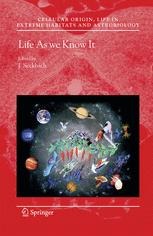
Life As we Know It ["LAKI"] covers several aspects of Life, ranging from the prebiotic level, origin of life, evolution of prokaryotes to eukaryotes and finally to various affairs of human beings. Although it is hard to define Life, one can, however, characterize it and describe its features. Topics treated are categories of bacteria, algae and fungi, conscience, philosophy, theology, aesthetics, appearance of sport and life destiny, life after clinical death, and thoughts of the world to come ("Olam Haba"). The various chapters have been written so that they are accessible to all - from the avid lay reader to the specialist – and make available multidisciplinary sources of information about Life. This volume will interest open minded scholars, students at all levels of general sciences, natural and Life science, researchers of philosophy, theology, history of Life, astrobiology, and those who wish to widen their knowledge about "who are we in the universe".
The only book devoted exclusively to this specialty, Lessons Learned details the risk management issues involved in genetic counseling practice, and offers solid strategies for minimizing the risk of costly, career-damaging malpractice suits. Schmerler clearly identifies areas of practitioner liability and demonstrates how they may be averted, so counselors can better manage their practice while lowering the risk of legal action. Examples drawn from relevant court cases illustrate typical issues in malpractice, negligence, and breach of contract suits. With this in-depth knowledge, readers can refine their goals toward increased self-protection as well as client care.
We are at the start of the development of new therapeutic classes, directed against new molecular targets (EGFR, VEGF, IGFR, Rank, etc.) Several diseases such as kidney, colon or breast cancer, GIST, have a natural history now modified thanks to these therapies. This practical book takes stock of the current use of these molecules.
The hemodynamic monitoring of intensive care patients is undergoing major changes. Technological advances such as computerization and miniaturization have made it possible to considerably expand the range of assessment tools available at the bedside. Thus, the approach to cardiovascular monitoring - which was once readily "invasive" and global - is gradually becoming non-invasive and locoregional or even tissue. At the same time, the combined evolution of technology and physiological and pathophysiological concepts now provides the clinician with access to a variety of "functional hemodynamic monitoring". The aim of this book is to provide a better understanding of the interest and the limits of the hemodynamic parameters accessible by current hemodynamic monitoring techniques. It thus aims to ensure that the use of these techniques is perfectly mastered by resuscitators and anesthetists-resuscitators so that patient care is ultimately optimal.
This book thus proposes, reconnecting with the most clinical and frankly psychodynamic vein, to bear witness to the encounter with the reality of cancerous disease and with all the imagination that it arouses. It is also a tribute to the sick - but just as much to their loved ones and their caregivers - who then engage in these territories of the crash, the unpredictable, where everything leads to think and do.

It seems difficult and presumptuous to want to write a book on total knee replacement. There are many quality works dealing with this subject. The knee prosthesis has, from its origin, particularly in the United States, given rise to considerable studies in all directions: biomechanical, physiological, biological and industrial. Our goal is to offer the youngest a book of simple knowledge without pretension of completeness or prejudice as to long debated subjects (conservation or not of the posterior cruciate ligament, cement or without cement, resurfacing or not of the patella, fixed plate or mobile platform, etc.), and to give practical advice based on our experience. Why limit yourself to first-line tricompartmentals? Because it is the most common solution to the usual degenerative knee problems. In addition, unicompartment and revision prostheses will be the subject of further literature. Everyone knows that to put a knee prosthesis model, and therefore to a system. However, it is important to be able to keep your freedom of analysis in order to maintain your freedom of choice. You have to know how to put on a knee prosthesis without compromise or fanaticism. Convictions are more dangerous enemies of truth than lies. Nietzsche

سوريا - اتستراد درعا - غباغب
+963-15 2050 - 15 860 380 /1/2/3 - 11 662 3900