



الصفحة 4
الصفحة 4

Modelling, Monitoring and Diagnostic Techniques for Fluid Power Systems
Modelling, Monitoring and Diagnostic Techniques for Fluid Power Systems covers the background theory of fluid power and indicates the range of concepts necessary for a modern approach to condition monitoring and fault diagnosis in a readable and understandable fashion. The theory is constantly leavened by 15 years' worth of practical measurements by the author, working in association with major fluid power companies, and real industrial case studies – hot-strip-mill monitoring in conjunction with Corus p.l.c. being just one example. Comprising four parts, it provides: • an introduction to component behaviour. • a guide to the modelling methods employed for circuit analysis. • methods for doing condition monitoring. • common faults and breakdowns.

Modelling Regional Scenarios for the Enlarged Europe : European Competitiveness and Global Strategies
The aim of this book is to tackle the question of what the European territory will look like over the next fifteen years by providing quali-quantitative territorial scenarios for the enlarged Europe, under different assumptions on future globalisation strategies of BRIC (Brazil, Russia, India and China) and East and West European countries. The approach is as neutral as possible vis-à-vis the results, leaving to a new forecasting model, the MASST model, built by the authors, to produce the tendencies and behavioural paths of regional GDP and population growth in each individual European region under alternative assumptions on the competitiveness strategies of different blocks of countries. The results are accompanied by strong policy messages intended to encourage long-term strategic thinking among a wide range of actors, scientists and policy makers in response to the risks and opportunities that the European territory will face.
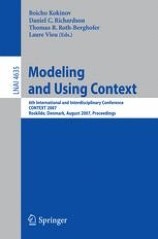
Modeling and using context ; 6th International and interdisciplinary Conference, CONTEXT 2007, Roskilde, Denmark, August 20-24, 2007, Proceedings
This volume contains the papers presented at CONTEXT 2007, the Sixth International and Interdisciplinary Conference on Modeling and Using Context. We believe that the papers of this volume represent a snapshot of current work and contribute to both theoretical and applied aspects of research.

Modèles aléatoires : Applications aux sciences de l'ingénieur et du vivant = Random models : Applications to engineering and life sciences
The aim is to show how random models are used to analyse and solve a great variety of engineering issues. It is written in language accessible to practitioners and students in engineering, the physical sciences, the life sciences or management.

Model-Driven Architecture - Foundations and Applications ; 2nd European Conference, ECMDA-FA 2006, Bilbao, Spain, July 10-13, 2006, Proceedings
The goal of the European Conference on Model-Driven Architecture — Foundations and Applications (ECMDA-FA) is to bring together industry and academia to tackle the problems in model-driven development. This volume includes 18 foundation papers and 12 application papers, which is a fine balance between both worlds. ECMDA-FA 2006 also hosted six workshops on both theoretical and practical aspects of MDA. Furthermore, the keynote speakers, David Frankel and Bran Selic, from some of the world’s largest IT companies proved that industry is very much involved in MDA. This second ECMDA-FA conference is the result of the work of the authors who submitted a total of 78 papers, the Program Committee members who took the effort to review the papers, the people organizing the workshops, and of course the Steering Committee. All in all, several hundreds of people have worked hard to make this conference a success.

Model Driven Engineering Languages and Systems ; Vol. 4199 ; 9th International Conference, MoDELS 2006, Genova, Italy, October 1-6, 2006, Proceedings
This book constitutes the refereed proceedings of the 9th International Conference on Model Driven Engineering Languages and Systems (formerly the UML series of conferences), MoDELS 2006, held in Genova, Italy, in October 2006. The 51 revised full papers and 2 invited papers presented were carefully reviewed and selected from 178 initial submissions. The papers are organized in topical sections on evaluating UML, MDA in software development, concrete syntax, applying UML to interaction and coordination, aspects, model integration, formal semantics of UML, security, model transformation tools and implementation, analyzing dynamic models, specifying transformations, MOF, bridging models, risk, trust and dependability, tool environments, OCL, roundtrip engineering, real time and embedded systems, as well as workshops, tutorials and panels.

Modalities and Multimodalities
In the last two decades modal logic has undergone an explosive growth, to thepointthatacompletebibliographyofthisbranchoflogic,supposingthat someone were capable to compile it, would ?ll itself a ponderous volume. What is impressive in the growth of modal logic has not been so much the quick accumulation of results but the richness of its thematic dev- opments. In the 1960s, when Kripke semantics gave new credibility to the logic of modalities? which was already known and appreciated in the Ancient and Medieval times? no one could have foreseen that in a short time modal logic would become a lively source of ideas and methods for analytical philosophers,historians of philosophy,linguists, epistemologists and computer scientists.

Mobile Service Innovation and Business Models
Modern economies depend on innovation in services for their future growth. Service innovation increasingly depends on information technology and digitization of information processes. Designing new services is a complex matter, since collaboration with other companies and organizations is necessary. Service innovation is directly related to business models that support these services, i.e. services can only be successful in the long run with a viable business model that creates value for its customers and providers. This book presents a theoretically grounded yet practical approach to designing viable business models for electronic services, including mobile ones, i.e. the STOF model and – based on it – the STOF method. The STOF model provides a ‘holistic’ view on business models with four interrelated perspectives, i.e., Service, Technology, Organization and Finance. It elaborates on critical design issues that ultimately shape the business model and drive its viability.

Mobile Information Systems II ; IFIP Working Conference on Mobile Information Systems, MOBIS 2005, Leeds, UK, December 6-7, 2005
Contains the proceedings of the second IFIP TC8 Working Conference on Mobile Information Systems which was held in December 2005 in Leeds, UK and sponsored by the International Federation of Information Processing (IFIP). Mobile Information Systems II aims to: · Clarify differences and similarities between the development of mobile and more traditional information systems. · Investigate the organizational impact of mobile information systems. · Investigate the 'e to m shift' , for example in m-Commerce relative to e-Commerce. · Investigate mobile commerce applications combined with the advantages of mobile communications technologies, the drivers of which have been identified as ubiquity, accessibility, security, convenience, localization, instant connectivity, and personalization. · Evaluate existing and newly developed approaches for the analysis, design, implementation, and evolution of mobile information systems. · Investigate technical issues and the constraints they impose on mobile information systems functionalities and design.

Mobile Information Systems ; Vol. 158 : IFIP TC 8 Working Conference on Mobile Information Systems (MOBIS) 15-17 September 2004, Oslo, Norway
This book contains the proceedings of the IFIP TC8 Working Conference on Mobile Information Systems, which was held in September 2004 in Oslo, Norway and sponsored by the International Federation for Information Processing (IFIP). Mobile Information Systems aims to: Clarify differences and similarities between the development of mobile vs. more traditional information system. Investigate the organizational impact of mobile information systems Investigate mCommerce relative to eCommerce Investigate mobile commerce applications combined with the advantages of mobile communications technologies, the drivers of which have been identified as ubiquity, reachability, security, convenience, localization, instant connectivity and personalization. Evaluate existing and newly developed approaches for analysis, design, implementation, and evolution of mobile information systems. Investigate technical issues and the constraints they pose on mobile information systems functionalities and design

MKTG13 : Principles of marketing
Learn Marketing YOUR Way with MKTG and MindTap! MKTG s easy-reference, paperback textbook presents course content through visually engaging chapters. Read or listen to your textbook, complete assignments, and study, all in one place. Track your scores and stay motivated toward your goals. Whether you have more work to do or are ahead of the curve, you ll know where you need to focus your efforts.

Mixed Hodge Structures
The text of this book has its origins more than twenty- ve years ago. In the seminar of the Dutch Singularity Theory project in 1982 and 1983, the second-named author gave a series of lectures on Mixed Hodge Structures and Singularities, accompanied by a set of hand-written notes. The publication of these notes was prevented by a revolution in the subject due to Morihiko Saito: the introduction of the theory of Mixed Hodge Modules around 1985. Understanding this theory was at the same time of great importance and very hard, due to the fact that it uni es many di erent theories which are quite complicated themselves: algebraic D-modules and perverse sheaves. The present book intends to provide a comprehensive text about Mixed Hodge Theory with a view towards Mixed Hodge Modules.

Mixed Finite Elements, Compatibility Conditions, and Applications : Lectures given at the C.I.M.E. Summer School held in Cetraro, Italy June 26–July 1, 2006
Since the early 70's, mixed finite elements have been the object of a wide and deep study by the mathematical and engineering communities. The fundamental role of this method for many application fields has been worldwide recognized and its use has been introduced in several commercial codes. An important feature of mixed finite elements is the interplay between theory and application. Discretization spaces for mixed schemes require suitable compatibilities, so that simple minded approximations generally do not work and the design of appropriate stabilizations gives rise to challenging mathematical problems.

Misleading marketing communication : Assessing the impact of potentially deceptive food labelling on consumer behaviour
Presenting four complementary experimental studies targeting recurrent grey-zone scenarios on the Danish food market, the book illustrates the potential of the so-called ShopTrip test paradigm which simulates and registers real-life e-shopping behaviour as it unfolds while yielding new types of data against which opposing assessments of potential misleadingness can be matched. The results are discussed in the light of possible paths of theoretical explanation and implications for future regulative practices, including companies’ self-regulation.

Mining Complex Data ; ECML/PKDD 2007 Third International Workshop, MCD 2007, Warsaw, Poland, September 17-21, 2007, Revised Selected Papers
This book constitutes the refereed proceedings of the Third International Workshop on Mining Complex Data, MCD 2007, held in Warsaw, Poland, in September 2007, co-located with ECML and PKDD 2007.The 20 revised full papers presented were carefully reviewed and selected; they present original results on knowledge discovery from complex data. In contrast to the typical tabular data, complex data can consist of heterogenous data types, can come from different sources, or live in high dimensional spaces. All these specificities call for new data mining strategies.

Minimally invasive glaucoma surgery
This book covers all aspects of minimally invasive glaucoma surgery (MIGS) and provides detailed information on each MIGS device, including its mechanism of action; patient selection; implantation techniques; post-operative management; and a review of the existing literature. Step-by-step descriptions are provided for the surgical technique used in implanting each MIGS device, accompanied by clear photographs of each surgical stage. Other areas covered include intra-operative gonioscopy (with tips on optimising the view of the anterior chamber angle) and the management of the intra-operative and post-operative complications. Essential information on the anatomy and physiology of the different aqueous outflow pathways is also included.

Minimally invasive dental implant surgery
Presents a new clinical text and atlas focused on cutting edge and rapidly developing, minimally invasive treatment modalities and their applications to implant dentistry. Centered on progress in imaging, instrumentation, biomaterials and techniques, this book discusses both the “how to” as well as the “why” behind the concept of minimally invasive applications in implant surgery.

Migration and Social Protection in Europe and Beyond ; Vol.3 : A Focus on Non-EU Sending States
This third and last volume in the series takes the perspective of non-EU countries on immigrant social protection. By focusing on 12 of the largest sending countries to the EU, the book tackles the issue of the multiple areas of sending state intervention towards migrant populations.

Migration and Social Protection in Europe and Beyond ; Vol.2 : Comparing Consular Services and Diaspora Policies
This second book in a series of three volumes examines the repertoire of policies and programmes led by EU Member States to engage with their nationals residing abroad.

Migration and Social Protection in Europe and Beyond ; Vol.1 : Comparing Access to Welfare Entitlements
This book in a series of three volumes provides an in-depth analysis of social protection policies that EU Member States make accessible to resident nationals, non-resident nationals and non-national residents. In doing so, it discusses different scenarios in which the interplay between nationality and residence could lead to inequalities of access to welfare
