



الصفحة 4
الصفحة 4

New Corporate Governance: Successful Board Management Tools
it presents an innovative and integrated approach to the theory and practice of corporate governance. Central to this approach is a set of instruments - developed and tested by the author - that can be used by boards to offer effective strategic direction and control to their organizations. The board instruments can be readily applied to the targeted selection, review, remuneration and development of board members, and for conducting board self-evaluations. This new approach to corporate governance is based on four guiding principles: keep it situational, keep it strategic, keep it integrated, and keep it controlled. Together, these principles form the basis of an integrated approach that addresses all key aspects of corporate governance. The main arguments in each section are supported by conceptual models, practical board tools or case studies, making the book ideally suited to board members, senior managers and post-graduate students.

New Corporate Governance : Successful Board Management Tools
Martin Hilb presents an innovative and integrated approach to the theory and practice of corporate governance. Central to this approach is a set of instruments - developed and tested by the author - that can be used by boards to offer effective strategic direction and control to their organizations. The board instruments can be readily applied to the targeted selection, review, remuneration and development of board members, and for conducting board self-evaluations. This new approach to corporate governance is based on four guiding principles: keep it situational, keep it strategic, keep it integrated, and keep it controlled. Together, these principles form the basis of an integrated approach that addresses all key aspects of corporate governance. The main arguments in each section are supported by conceptual models, practical board tools or case studies, making the book ideally suited to board members, senior managers and post-graduate students.

New Computational Paradigms : Changing Conceptions of What is Computable
This book examines new developments in the theory and practice of computation from a mathematical perspective, with topics ranging from classical computability to complexity, from biocomputing to quantum computing. The book opens with an introduction by Andrew Hodges, the Turing biographer, who analyzes the pioneering work that anticipated recent developments concerning computation’s allegedly new paradigms. The remaining material covers traditional topics in computability theory such as relative computability, theory of numberings, and domain theory, in addition to topics on the relationships between proof theory, computability, and complexity theory.

New Challenges in Applied Intelligence Technologies
This book includes 37 chapters which discuss examples of applications of intelligence technologies to five fields, reflecting main streams of practical and scientific interest of computer related community: agent and multi-agent systems; personal assistants and recom mender systems; knowledge modeling and processing; optimization and combinatorial problems; computer and telecommunication systems.

New and Old Routes of Portuguese Emigration : Uncertain Futures at the Periphery of Europe
This book offers a comparative overview on Portuguese emigration in Europe and outside the EU in times of recession. In addition to the dynamics of movement, the book provides an in-depth analysis of the heterogeneity of this emigration. It deepens the multifaceted identities concerning social and professional pathways among highly skilled and less skilled emigrants. The labour market continues to be the main regulatory force of Portuguese emigration, which helps to explain the outflow and the processes of settlement and return. Nonetheless, this book demonstrates that non-economic factors have likewise been of great importance in the decision to emigrate.

New advances in audio signal processing
In the era of digitalization, audio signal processing is gaining peculiar relevance as an automation and remote analysis means, also considering its enhancement by novel artificial intelligence (AI) techniques. This Reprint aims to offer an overview of the current developments in all fields that revolve around audio processing: from advancements in the acoustic domain to deep learning architectures for the audio-based analysis of real-world problems such as pitch detection or pathology identification.

Neuroendocrine cells and peptidergic innervation in human and rat prostrate
Introduction The prostate causes a signi?cant number of medical problems in the adult male, and the lower urinary tract symptoms are accepted as an unavoidable consequence of male aging. Most of these symptoms are mainly due to clinical benign prostatic hyperplasia (BPH), which is the most frequent benign tumor in the male, in- pendent of race or culture. On the other hand, cancer of the prostate shows an increasing incidence, being the second leading cause of death in men, after lung cancer.

Neurobiology of Exceptionality
Nurture or nature? Biology or environment? Why are some people intelligent, or personable, or creative and others obtuse, or shy, or unimaginative? Although each human being is a unique mixture of positive and negative traits and behaviors, the question remains: What is the neurobiological basis for each individual’s makeup? For example, why does one person suffer from a disorder (e.g., ADHD, autism, mental retardation) and another lives free of maladies?

Neural Networks : Computational Models and Applications
Neural Networks: Computational Models and Applications covers a wealth of important theoretical and practical issues in neural networks, including the learning algorithms of feed-forward neural networks, various dynamical properties of recurrent neural networks, winner-take-all networks and their applications in broad manifolds of computational intelligence: pattern recognition, uniform approximation, constrained optimization, NP-hard problems, and image segmentation. By presenting various computational models, this book is developed to provide readers with a quick but insightful understanding of the broad and rapidly growing areas in the neural networks domain. Besides laying down fundamentals on artificial neural networks, this book also studies biologically inspired neural networks. Some typical computational models are discussed, and subsequently applied to objection recognition, scene analysis and associative memory. The studies of bio-inspired models have important implications in computer vision and robotic navigation, as well as new efficient algorithms for image analysis.

Networked Embedded Sensing and Control ; Workshop NESC'05 : University of Notre Dame, USA, October 2005 Proceedings
Recent technological developments in sensing, communications, control and computation have created an emerging class of complex systems hereon called networked embedded systems. These systems can be roughly described as collections of spatially distributed sensors, actuators and controllers whose behaviour is coordinated through wired or wireless communication links. This integration between different technologies and scientific domains presents new and challenging fundamental problems underlying the theoretical foundations for this class of systems. This workshop aims at bringing together researchers working of different aspects of networked embedded systems in order to exchange research experiences and to identify the main scientific challenges in this exciting new area.
Network-Centric Service-Oriented Enterprise
Network-Centric Service-Oriented Enterprise (NSCOE) is seen as heralding the next generation of mainstream Enterprise-business information collaboration solution that can enforce information and decision superiority in the decentralized, loosely-coupled, and highly interoperable service environments. Network-Centric Service Oriented Enterprise establishes a system-of-systems (SoS) view of information technologies, offering a synergistic combination of data and information-processing capacity upon an innovative networked-management framework.

Network Classification For Traffic Management : Anomaly detection, feature selection, clustering and classification
Investigates network traffic classification solutions by proposing transport-layer methods to achieve better run and operated enterprise-scale networks. With the massive increase of data and traffic on the Internet within the 5G, IoT and smart cities frameworks, current network classification and analysis techniques are falling short. Novel approaches using machine learning algorithms are needed to cope with and manage real-world network traffic, including supervised, semi-supervised, and unsupervised classification techniques. Accurate and effective classification of network traffic will lead to better quality of service and more secure and manageable networks. Investigates network traffic classification solutions by proposing transport-layer methods to achieve better run and operated enterprise-scale networks. The authors explore novel methods for enhancing network statistics at the transport layer, helping to identify optimal feature selection through a global optimization approach and providing automatic labelling for raw traffic through a SemTra framework to maintain provable privacy on information disclosure properties.
Network and Parallel Computing ; IFIP International Conference, NPC 2007, Dalian, China, September 18-21, 2007, Proceedings
The goal of NPC is to establish an international forum for researchers and practitioners to present their - cellent ideas and experiences in all system fields of network and parallel computing. The main focus of NPC 2007 was on the most critical areas of network and parallel computing: network applications, network technologies, network and parallel arc- tectures, and parallel and distributed software.

Neo-Liberalism, State Power and Global Governance
Part One explores the pattern of national differences in the exercise of state power in a variety of industrialized and developing economies, despite the pressure to converge towards the dominant neo-liberal paradigm. Part Two analyses a variety of trans-national policy prescriptions for neo-liberalism and state power. Part Three explores whether the governance of labour markets is a special case in the global economy. Part Four sets out the need for institutional reform of the neo-liberal order in trade and finance. The volume concludes that there is the prospect of a more plural approach to state power and global governance, and one that recognizes the importance of the public domain of citizenship for delivering the global public goods of security, prosperity and environmental sustainability in the twenty-first century.

Nearest Neighbor Search : A Database Perspective
Modern applications are both data and computationally intensive and require the storage and manipulation of voluminous traditional (alphanumeric) and nontraditional data sets (images, text, geometric objects, time-series). Examples of such emerging application domains are: Geographical Information Systems (GIS), Multimedia Information Systems, CAD/CAM, Time-Series Analysis, Medical Information Sstems, On-Line Analytical Processing (OLAP), and Data Mining. These applications pose diverse requirements with respect to the information and the operations that need to be supported. From the database perspective, new techniques and tools therefore need to be developed towards increased processing efficiency. This monograph explores the way spatial database management systems aim at supporting queries that involve the space characteristics of the underlying data, and discusses query processing techniques for nearest neighbor queries. It provides both basic concepts and state-of-the-art results in spatial databases and parallel processing research, and studies numerous applications of nearest neighbor queries.

Nb3Sn Accelerator Magnets : Designs, Technologies and Performance
This book is written by world-recognized experts in the fields of applied superconductivity and superconducting accelerator magnet technologies. It provides a contemporary review and assessment of the experience in research and development of high-field accelerator dipole magnets based on Nb3Sn superconductor over the past five decades. The reader attains clear insight into the development and the main properties of Nb3Sn composite superconducting wires and Rutherford cables, and details of accelerator dipole designs, technologies and performance. Special attention is given to innovative features of the developed Nb3Sn magnets. The book concludes with a discussion of accelerator magnet needs for future circular colliders.

Natural Products : Drug Discovery and Therapeutic Medicine
Although the natural product drug discovery programs of the large drug companies are now equaled by programs for the high throughput screening of synthetic compounds generated through combinatorial chemistry, natural compounds still hold great promise to overcome such problems as antibiotic resistance, the emergence of new diseases, the failure to conquer old diseases, and the toxicity of some contemporary medical products. In Natural Products: Drug Discovery and Therapeutic Medicine, a panel of recognized experts and leaders in the field discuss the past successes of natural products as medicines and review future possibilities arising from both conventional and new technologies. High-performance liquid chromatography profiling, combinatorial synthesis, genomics, proteomics, DNA shuffling, bioinformatics, and genetic manipulation all now make it possible to rapidly evaluate the activities of extracts as well as purified components derived from microbes, plants, and marine organisms. The authors apply these methods to new natural product drug discovery, to accessing microbial diversity, to investigating specific groups of products (Chinese herbal drugs, antitumor drugs from microbes and plants, terpenoids, and arsenic compounds), and to exploiting specific sources (the sea, rainforest, and endophytes). These new opportunities show how research and development trends in the pharmaceutical industry can advance to include both synthetic compounds and natural products, and how this paradigm shift can be more productive and efficacious.

Natural language and information systems ; 13th International Conference on Applications of Natural Language to Information Systems, NLDB 2008 London, UK, June 24-27, 2008 Proceedings
This volume contains the papers presented at NLDB 2008, the 13th Inter- tional Conference on Natural Language and Information Systems, held June 25-27,2008.It also containssome of the best researchproposalsas submitted to the NLDB2008 doctoral symposium heldonJune24,2008.Theprogrammealso includes three invited talks covering the main perspectives of the application of naturallanguageto informationsystems: the wayhumansprocess, communicate and understand natural language, what are the implications and challenges - wardssemanticsearchfor the new Webgeneration, how naturallanguageapplies to the well-established database way of querying as a means to unlock data and information for end users.
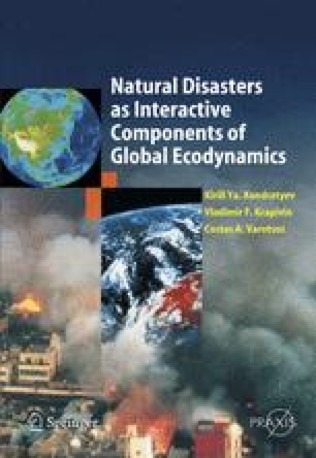
Natural Disasters as Interactive Components of Global-Ecodynamics
This book opens a new approach to the study of global environmental changes having unfavourable character for mankind and other living systems. The main advantage of the book consists in the accumulation of knowledge from different sciences to parametrize the global ecodynamic process. Natural catastrophes are considered as an interactive element of global natural dynamics which are described by means of simulation models of global nature/society. The realization of this approach allows the integration within a complex structure of all international and national means of environmental monitoring and provides a tool for objective evaluation of the environmental quality. The main purpose of this book is to develop a universal information technology to estimate the state of environmental subsystems functioning under various climatic and anthropogenic conditions.

National Tax Policy in Europe : To Be or Not to Be?
The book is dedicated to the question of how much room for national tax policy Member States of the European Union will find necessary and possible to maintain in the future. It focuses on the possibilities Member States have and the constraints they face, such as the need to enhance competitiveness and attractiveness to inward foreign direct investment, to finance social programmes and the limitations imposed by European and International Law. The research question is looked at from economic as well as from legal points of view. This comprehensive approach and the answers given will be of interest to scholars and policy makers alike and may guide the path for future tax developments in Europe.
