



الصفحة 4
الصفحة 4

Combinatorics, Algorithms, Probabilistic and Experimental Methodologies ; 1st International Symposium, ESCAPE 2007, Hangzhou, China, April 7-9, 2007, Revised Selected Papers
This book address practical large data processing problems with different, and eventually converging, methodologies from major important disciplines such as computer science, combinatorics, and statistics. The symposium provides an interdisciplinary forum for researchers across their discipline boundaries to exchange their approaches, to search for ideas, methodologies, and tool boxes, to find better, faster and more accurate solutions thus fostering innovative ideas as well as to develop research agenda of common interest.

Combinatorics and Graph Theory
This book covers a wide variety of topics in combinatorics and graph theory. It includes results and problems that cross subdisciplines, emphasizing relationships between different areas of mathematics. In addition, recent results appear in the text, illustrating the fact that mathematics is a living discipline.

Combinatorial optimization and applications ; 14th International Conference, COCOA 2020, Dallas, TX, USA, December 11–13, 2020, Proceedings
This volume constitutes the proceedings of the 14th International Conference on Combinatorial Optimization and Applications, COCOA 2020, held in Dallas, TX, USA, in December 2020. The 55 full papers presented in this volume were carefully reviewed and selected from 104 submissions. The papers are grouped into the following topics: Approximation Algorithms; Scheduling; Network Optimization; Complexity and Logic; Search, Facility and Graphs; Geometric Problem; Sensors, Vehicles and Graphs; and Graph Problems.

Combinatorial geometry and graph theory ; Indonesia-Japan Joint Conference, IJCCGGT 2003, Bandung, Indonesia, September 13-16, 2003, Revised Selected Papers
This volume consists of the refereed papers presented at the Indonesia-JapanJoint Conference on Combinatorial Geometry and Graph Theory (IJCCGGT2003), held on Indonesia. This confer-ence can also be considered as a series of the Japan Conference on Discrete andComputational Geometry (JCDCG), 2002.

Combinatorial and algorithmic aspects of networking ; Vol.3405 ; 1st Workshop on combinatorial and algorithmic aspects of networking, CAAN 2004, Banff, Alberta, Canada, August 5-7, 2004, Revised Selected Papers
The Internet is a massive global network of over 700 million users and it is addingusers at the rate of 300,000 per day. This large, distributed, and everchangingnetwork poses a challenge to researchers: How does one study, model, or under-stand such a decentralized, constantly evolving entity? The workshop Combi-natorial and Algorithmic Aspects of Networking and the Internet (CAAN 2004)provided a forum for the exchange of ideas on these topics. and among thepapers were some new and surprising results as well as some introductions tothe foundations of the field.The workshop program featured 12 peer-reviewed papers bracketed by Topics covered by the talks ranged from the Web graph to game theoryto string matching, all in the context of large-scale networks. This volume collectstogether the talks delivered at the workshop along with a number of survey articlesto round out the presentation and give a comprehensive introduction to the topic.

LATIN 2006 : Theoretical Informatics ; 7th Latin American Symposium, Valdivia, Chile, March 20-24, 2006, Proceedings
This book constitutes the refereed proceedings of the 7th International Symposium, Latin American Theoretical Informatics, LATIN 2006, held in March 2006. The 66 revised full papers presented together with seven invited papers were carefully reviewed and selected from 224 submissions. The papers presented are devoted to a broad range of topics in theoretical computer science with a focus on algorithmics and computations related to discrete mathematics as well as on cryptography, data compression and Web applications.
Knowledge graphs and big data processing
This book is part of the LAMBDA Project (Learning, Applying, Multiplying Big Data Analytics), funded by the European Union, GA No. 809965. Data Analytics involves applying algorithmic processes to derive insights.
Knot Theory and Its Applications
The book contains most of the fundamental classical facts about the theory, such as knot diagrams, braid representations, Seifert surfaces, tangles, and Alexander polynomials; also included are key newer developments and special topics such as chord diagrams and covering spaces. The work introduces the fascinating study of knots and provides insight into applications to such studies as DNA research and graph theory. In addition, each chapter includes a supplement that consists of interesting historical as well as mathematical comments.
Complexity of Constraints : An Overview of Current Research Themes
This state-of-the-art survey contains the papers that were invited by the organizers after conclusion of an International Dagstuhl-Seminar on Complexity of Constraints, held in Dagstuhl Castle, Germany, in October 2006.

Bionanotechnology : Proteins to Nanodevices
Bionanotechnology is the key integrative technology of the 21st century and aims to use the knowledge, gathered from the natural construction of cellular systems, for the advancement of science and engineering. Investigating the topology and communication processes of cell parts can lead to invention of novel biological devices with exciting applications. Though microscale to nanoscale research offers an excellent space for the development of futuristic technologies, a number of challenges must be overcome. Due to paucity of a dedicated literature on the protein based nanodevices we bring you this monograph that combines collective research works of scientists probing into this fascinating universe of bionanotechnology. The monograph has been written with an aim of surveying engineering design principles of biomolecular nanodevices, prototype nanodevices based on redox proteins, bacteriorhodopsins and natural fibers, and touching upon the future developments in the field.
Beginning Java Data Structures and Algorithms : Sharpen your problem solving skills by learning core computer science concepts in a pain-free manner
Teaches you tools that you can use to build efficient applications. It starts with an introduction to algorithms and big O notation, later explains bubble, merge, quicksort, and other popular programming patterns. You’ll also learn about data structures such as binary trees, hash tables, and graphs. The book progresses to advanced concepts, such as algorithm design paradigms and graph theory. By the end of the book, you will know how to correctly implement common algorithms and data structures within your applications.

Axiom of Choice
AC, the axiom of choice, because of its non-constructive character, is the most controversial mathematical axiom, shunned by some, used indiscriminately by others. This treatise shows paradigmatically that:Disasters happen without AC: Many fundamental mathematical results fail (being equivalent in ZF to AC or to some weak form of AC).Disasters happen with AC: Many undesirable mathematical monsters are being created (e.g., non measurable sets and undeterminate games).Illuminating examples are drawn from diverse areas of mathematics, particularly from general topology, but also from algebra, order theory, elementary analysis, measure theory, game theory, and graph theory.

Artificial intelligence hardware design : Challenges and solutions
Learn foundational and advanced topics in Neural Processing Unit design with real-world examples from leading voices in the field. A thorough introduction to neural networks and neural network development history, as well as Convolutional Neural Network (CNN) models Explorations of various parallel architectures, including the Intel CPU, Nvidia GPU, Google TPU, and Microsoft NPU, emphasizing hardware and software integration for performance improvement Discussions of streaming graph for massive parallel computation with the Blaize GSP and Graphcore IPU An examination of how to optimize convolution with UCLA Deep Convolutional Neural Network accelerator filter decomposition

Approximation and Online Algorithms ; Vol.3879 : 3rd International Workshop, WAOA 2005, Palma de Mallorca, Spain, October 6-7, 2005, Revised Selected Papers
The third Workshop on Approximation and Online Algorithms (WAOA 2005) focused on the design and analysis of algorithms for online and computationally hard problems. Both kinds of problems have a large number of applications from a variety of ?elds. WAOA 2005 took place in Palma de Mallorca, Spain, on 6–7 October 2005. The workshop was part of the ALGO 2005 event that also hosted ESA, WABI, and ATMOS. The two previous WAOA workshops were held in Budapest (2003) and Rome (2004).
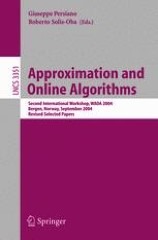
Approximation and online algorithms ; Vol.3351 ; 2nd international workshop, WAOA 2004, Bergen, Norway, September 14-16, 2004, Revised Selected Papers
The 2nd Workshop on Approximation and Online Algorithms (WAOA 2004) focused on the design and analysis of algorithms for online and computationally hard problems. Both kinds of problems have a large number of applications arising from a variety of fields. The workshop was part of the ALGO 2004 event which also hosted ESA, WABI, IWPEC, and ATMOS. Topics of interests for WAOA2004 were : applications to game theory, appr- imation classes, coloring and partitioning, competitive analysis, computational finance, cuts and connectivity, geometric problems, in approximability results, mechanism design, network design, routing, packing and covering, paradigms, randomization techniques, and scheduling problems. on the reviews, This volume contains the 21 selected papers
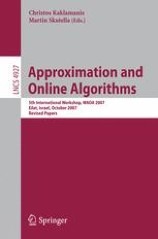
Approximation and Online Algorithms ; 5th International Workshop, WAOA 2007, Eilat, Israel, October 11-12, 2007. Revised Papers
The Fifth Workshop on Approximation and Online Algorithms (WAOA 2007) focused on the design and analysis of algorithms for online and computationally hard problems.

Approximation and Online Algorithms ; 4th International Workshop, WAOA 2006, Zurich, Switzerland, September 14-15, 2006, Revised Papers
It focuses on the design and analysis of algorithms for online and computationally hard problems. Both kinds of problems have a large number of applications
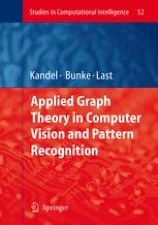
Applied Graph Theory in Computer Vision and Pattern Recognition
It presents the application of graph theory to low-level processing of digital images, presents graph-theoretic learning algorithms for high-level computer vision and pattern recognition applications, and provides detailed descriptions of several applications of graph-based methods to real-world pattern recognition tasks.

An Introduction to Sequential Dynamical Systems
This text is the first to provide a comprehensive introduction to SDS. Driven by numerous examples and thought-provoking problems, the presentation offers good foundational material on finite discrete dynamical systems which leads systematically to an introduction of SDS. Techniques from combinatorics, algebra and graph theory are used to study a broad range of topics, including reversibility, the structure of fixed points and periodic orbits, equivalence, morphisms and reduction. Unlike other books that concentrate on determining the structure of various networks, this book investigates the dynamics over these networks by focusing on how the underlying graph structure influences the properties of the associated dynamical system.
Algorithms on Trees and Graphs : With Python Code
Introduces graph algorithms on an intuitive basis followed by a detailed exposition using structured pseudocode, with correctness proofs as well as worst-case analyses. Centered around the fundamental issue of graph isomorphism, the content goes beyond classical graph problems of shortest paths, spanning trees, flows in networks, and matchings in bipartite graphs. Advanced algorithmic results and techniques of practical relevance are presented in a coherent and consolidated way. Numerous illustrations, examples, problems, exercises, and a comprehensive bibliography support students and professionals in using the book as a text and source of reference. Furthermore, Python code for all algorithms presented is given in an appendix. Topics and features: Algorithms are first presented on an intuitive basis, followed by a detailed exposition using structured pseudocode / Correctness proofs are given, together with a worst-case analysis of the algorithms / Full implementation of all the algorithms in Python / An extensive chapter is devoted to the algorithmic techniques used in the book / Solutions to all the problems
