



الصفحة 4
الصفحة 4

Drug delivery via nasal route
Over the past 10 years, the interest in intranasal drug delivery has increased. The objective of this research is to summarize recent developments on intranasal administration for local and systemic delivery, as well as for CNS indications. Nasal delivery offers many advantages over standard systemic delivery systems, nevertheless, there are still formulation limitations and side effects to be optimized. Intranasal drug delivery in the field of drug development is an interesting delivery route for the treatment of neurological disorders. Systemic approaches often fail to efficiently supply the CNS with drugs. This research describes the anatomical, histological and physiological basis and summarizes currently approved drugs for administration via intranasal delivery. Further, the research focuses on advantages and disadvantages of intranasal applied compounds and discusses formulation aspects that need to be considered for drug development.

Drug delivery trends ; Vol. 3 : Expectations and realities of multifunctional drug delivery systems
Examines a drift in the pharmaceutical field across the wide range of dosage forms, drug delivery systems (micro and nanoparticulate), at the regulatory front and on new types of therapies in the market. This book covers the challenges on drug delivery systems in terms of preclinical and current ways of determining quality and the options to solve the challenges associated with this. Most small-medium scale industries and academics struggle with initial regulatory challenges so a detailed discussion on regulatory trend covers the necessary basic understanding of regulatory procedures and provides the required guidance.

Drug delivery technology : Herbal bioenhancers in pharmaceuticals
Bioenhancers have been used in Ayurveda historically and are now being investigated for their pharmacological effi cacy. Herbal bioenhancers work on the gastrointestinal tract to improve absorption and drug bioavailability by acting on the drug metabolic process. Many herbal drugs show low activity due to their poor lipid solubility or improper molecular size. Piperine, gingerol, naringin, quercetin, niaziridin, glycyrrhizin, allicin, curcumin, genistein and others are able to enhance the bioavailability of active pharmaceuticals. This book details various facets of herbal bio-enhancers in a single comprehensive text.

Drug delivery systems using quantum computing
Drug delivery systems (DDS) are defined as methods by which drugs are delivered to desired tissues, organs, cells, and subcellular organs for drug release and absorption through a variety of drug carriers. By controlling the precise level and/or location of a given drug in the body, side effects are reduced, doses are lowered, and new therapies are possible. Nevertheless, there are still significant obstacles to delivering certain medications to particular cells. Drug delivery methods change pharmacokinetic, pharmacodynamic, and drug release patterns to enhance product efficacy and safety, as well as patient convenience and compliance.

Drug Delivery Systems for Metabolic Disorders
Covers recent developments in advanced drug delivery systems in various metabolic disorders, including disturbances in protein, lipid, carbohydrate and hormone metabolism and lysosomal and mitochondrial disorders. It provides a brief introduction to metabolic disorders, along with a focus on the current landscape and trends in understanding disease pathology using different in vitro and in vivo models required for clinical applications and developments of new therapeutics.

Drug Delivery Systems
Expands on the previous editions with a discussion of new and updated methods used to study drug delivery. Chapters cover topics such as drug delivery in cancer and intrathecal delivery of analgesics in humans. The increasing role of nanobiotechnology is reflected in eight of the sixteen chapters that include synthesis of gold nanoparticles; targeted siRNA delivery; and lipid nanocarriers. Written in the highly successful Methods in Molecular Biology series format, chapters include introductions to their respective topics, lists of the necessary materials and reagents, step-by-step, readily reproducible laboratory protocols, and tips on troubleshooting and avoiding known pitfalls.

Drug delivery aspects : Expectations and realities of multifunctional drug delivery systems ; Vol.4 : Expectations and realities of multifunctional drug delivery systems
Reviews additional features of drug delivery systems, along with the standard formulation development, like preclinical testing, conversion into solid dosage forms, roles of excipients and polymers used on stability and sterile processing. There is a focus on formulation engineering and related large scale (GMP) manufacturing, regulatory, and functional aspects of drug delivery systems. A detailed discussion on biologics and vaccines gives insights to readers on new developments in this direction.

Drug delivery approaches and nanosystems ; Vol.1 : Novel drug carriers
Presents a full picture of the state-of-the-art research and development in drug delivery systems using nanotechnology and its applications. It addresses the ever-expanding application of nanotechnology or nano-sized materials in the medical field and the real-world challenges and complexities of current drug delivery methodologies and techniques.

Drug Delivery Approaches : Perspectives from Pharmacokinetics and Pharmacodynamics
Delivers a thorough discussion of drug delivery options to achieve target profiles and approaches as defined by physical and pharmacokinetic models. The book offers an overview of drug absorption and physiological models, chapters on oral delivery routes with a focus on both PBPK and multiple dosage form options. It also provides an explanation of the pharmacokinetics of the formulation of drugs delivered by systemic transdermal routes.

Drug delivery : An integrated clinical and engineering approach
Offers a much needed comprehensive overview and patient-oriented approach for enhanced drug delivery optimization and advancement. Starting with an introduction to the subject and pharmacokinetics, it explores advances for such topics as oral, gastroretentive, intravitreal, and intrathecal drug delivery, as well as insulin delivery, gene delivery, and biomaterials-based delivery systems. It also describes drug delivery in cancer, cardiac, infectious diseases, airway diseases, and obstetrics and gynecology applications.

Drug Absorption Studies : In Situ, In Vitro and In Silico Models
In the last 15 years, a great number of cell- or tissue-based in vitro models have been introduced into the biopharmaceutics arena. These models mimic the different biological barriers that a drug has to overcome to finally reach its target organ/cell/receptor. These in vitro models have been found very useful in not only characterising the permeability behaviour of drugs molecules in epithelial and endothelial tissues, but also studying drug delivery systems for improved delivery and enhanced absorption. Compared to the complex in vivo situation, in vitro models offer a fast, convenient approach with cost advantages most of times. Most importantly, they can be standardised and automatised to be applicable to the high-throughput screening. Starting at the molecular level of studies, continuing with cell monolayer models (both primary and cell lines) and in situ techniques as a final testing format, the book provides a practical approach to contemporary in vitro techniques for drug absorption studies. In addition, chapters on high-throughput assays, in vitro-in vivo correlation, bioinformatics and regulatory issues are covered, giving a comprehensive overview of available models and techniques. Moreover, an appendix comprised with a number of practical protocols is available online, updated as needed, should prove very helpful to apply the techniques directly to the benchside.

DNA nanotechnology for cell research : from bioanalysis to biomedicine
Bringing together multidisciplinary aspects of chemical, material, and biological engineering, DNA Nanotechnology for Cell Research: From Bioanalysis to Biomedicine presents an overview of DNA nanotechnology with emphasis on a variety of different applications in cell research and engineering, covering a unique collection of DNA nanotechnology for fundamental research and engineering of living cells, mostly in cellulo and in vivo, for the first time. Broad coverage of this book ranges from pioneering concepts of DNA nanotechnology to cutting-edge reports regarding the use of DNA nanotechnology for fundamental cell science and related biomedical engineering applications in sensing, bioimaging, cell manipulation, gene therapy, and drug delivery.

DNA and RNA origami : methods and protocols
Detials diverse methodological approaches on the assembly and applications of DNA origami assemblies. Chapters guide readers through different synthetic and computational methods, isolation and structural characterization of 2D and 3D DNA origami nanoarchitectures, nanophotonics, drug delivery, biophysics, and synthetic biology.Written in the successful Methods in Molecular Biology series format, chapters include introductions to their respective topics, lists of the necessary materials and reagents, step-by-step, readily reproducible protocols, and notes on troubleshooting and avoiding known pitfalls.

Development and In-vitro Dissolution Test of Pilocarpine PVA : Hydrogel Lenses
Due to high water content of hydrogel (wetting) and due to extended drug release comparing to ophthalmic solution and higher transparency comparing to ophthalmic ointment, soft contact lenses were found to elongate contact time with the eye and use it for long time without causing hypoxia or needing multiple dosing per a day. The objective of the study was to design, fabricate, and investigate the effectiveness of PVA hydrogel with DMSO soft contact lens in releasing the model drug, pilocarpine.

Delivery of drugs ; Vol.2 : Expectations and realities of multifunctional drug delivery systems
Examines the formulation of micro-nanosized drug delivery systems and recaps opportunities for using physical methods to improve efficacy via mechano-, electroporation. The book highlights innovative delivery methods like PIPAC, including discussions on the regulatory aspects of complex injectables. Written by a diverse range of international researchers from industry and academia, the chapters examine specific aspects of characterization and manufacturing for pharmaceutical applications as well as regulatory and policy aspects.This book connects formulation scientists, regulatory experts, engineers, clinical experts and regulatory stakeholders.

Current Advances in Drug Delivery Through Fast Dissolving
Presents detailed information about FDDFs (Fast Dissolving/Disintegrating Dosage Forms) from their inception to recent developments. Readers will learn about the technical details of various FDDF manufacturing methods, formulation aspects, evaluation and methods to conduct clinical studies. The authors also give examples of marketed fast disintegrating/dissolving drug products in US, Europe, Japan, and India. This reference is ideal for pharmacology students at all levels seeking information about this specific form of drug delivery and formulation.

Concepts in pharmaceutical biotechnology and drug development
Provides comprehensive coverage of the development of new pharmaceuticals and the enhancement of existing ones. It offers a comprehensive understanding of pharmaceutical biotechnology, including its underlying principles and practical applications from an industrial standpoint. While introducing the roles and applications of biotechnology in drug design and development, the book describes how developments in other fields, like genomics, proteomics, and high-throughput screening, have facilitated the discovery of novel therapeutic targets and drug development methods. It included concepts that are essential to biotechnology and apply to protein therapies. And provides a thorough overview of the ways in which biotechnology influences drug development, production, and regulation, and is a valuable resource for those seeking to enhance their understanding in this area.

Computer Aided Pharmaceutics and Drug Delivery : An Application Guide for Students and Researchers of Pharmaceutical Sciences
Examines the role of computer-assisted techniques for discovering, designing, optimizing and manufacturing new, effective, and safe pharmaceutical formulations and drug delivery systems. The book discusses computational approaches, statistical modeling and molecular modeling for the development and safe delivery of drugs in humans. The application of concepts of QbD (Quality by Design), DoE (Design of Experiments), artificial intelligence and in silico pharmacokinetic assessment/simulation have been made a lot easier with the help of commercial software and expert systems. This title provides in-depth knowledge of such useful software with illustrations from the latest researches. The book also fills in the gap between pharmaceutics and molecular modeling at micro, meso and maro scale by covering topics such as advancements in computer-aided Drug Design (CADD), drug-polymer interactions in drug delivery systems, molecular modeling of nanoparticles and pharmaceutics/bioinformatics.

Materials for medical applications : Principles and practices
Discusses advanced knowledge about the synthesis and application of materials in the medical field for diagnostic and therapeutic conditions. These materials have been extensively used in various biological and medical applications, especially in drug delivery, tumor screening, bioimaging, diagnosis, and therapies. Materials for Medical Applications provides comprehensive but concise information about materials and their medical applications. The readers will get information about the trends in materials and their medical applications, as well as current material-based products that are used in the medical field. The book also discusses how materials are tested in research laboratories, preclinical (animal) trials, and clinical (human) trials, and how material-based products go through various regulatory and safety phases before reaching patients. It also discusses topics such as materials delivery, imaging, and treatments for various diseases. It includes a chapter dedicated to regulatory guidelines and policies in the application of nanomaterials and will include current clinical trial information on the materials. Finally, the book has topics such as health safety, toxicity, dosages, and long-term implications of materials.
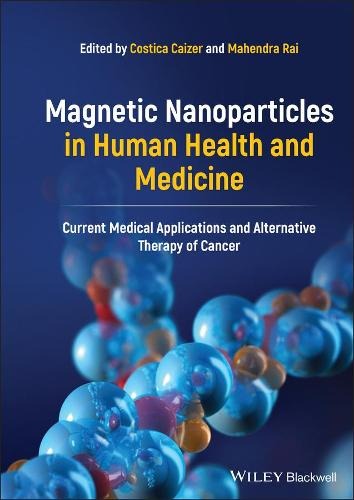
Magnetic nanoparticles in human health and medicine : Current medical applications and alternative therapy of cancer
Progress in improving diagnosis by magnetic resonance imaging (MRI) and using non-invasive and non-toxic magnetic nanoparticles for targeted drug delivery. Focusing on cancer diagnosis and therapy, the book covers both fundamental principles and advanced theoretical and experimental research on the magnetic properties, biocompatibilization, biofunctionalization, and application of magnetic nanoparticles in nanobiotechnology and nanomedicine.
