



الصفحة 4
الصفحة 4

Object-Oriented Data Structures Using Java ; 4th ed.
an essential resource for students learning data structures using the Java programming language. It presents both the traditional and modern data structure topics with an emphasis on problem-solving and object-oriented software design. Beginning early and continuing throughout the text, it introduces and expands upon the use of many Java features such as classes, objects, generics, polymorphism, packages, interfaces, library classes, inheritance, exceptions, and threads.

Object-Oriented ActionScript for Flash 8
Object-Oriented ActionScript For Flash 8 teaches the theory and practice of OOP with ActionScript. You do not need any extensive prior programming experience, you just need to want to go beyond the usual Flash interfaces. Authors and working Flash developers Peter Elst and Todd Yard take you through the complete development cycle of a series of related applications, using numerous step-by-step instructions. You'll be able to develop highly reusable applications and services that leverage the dynamic features in Flash. This book demonstrates professional OOP skills and techniques that are completely transferable to other programming languages and technologies, including Inheritance, Polymorphism, managing classes, component development, consuming web services, and much more. It also includes some cutting edge ActionScript programming techniques, and animation and effects classes.

Objective information theory
Objective Information Theory (OIT) is proposed to represent and compute the information in a large-scale complex information system with big data in this monograph. To formally analyze, design, develop, and evaluate the information, OIT interprets the information from essential nature, measures the information from mathematical properties, and models the information from concept, logic, and physic. As the exemplified applications, Air Traffic Control System (ATCS) and Smart Court SoSs (System of Systems) are introduced for practical OITs.

Object-Based Image Analysis and Treaty Verification : New Approaches in Remote Sensing – Applied to Nuclear Facilities in Iran
This book describes recent progress in object-based image interpretation, and also presents many new results in its application to verification of nuclear non-proliferation. A comprehensive workflow and newly developed algorithms for object-based high resolution image (pre-) processing, feature extraction, change detection, classification and interpretation are developed, applied and evaluated. The entire analysis chain is demonstrated with high resolution imagery acquired over Iranian nuclear facilities.

Object-Based Image Analysis : Spatial Concepts for Knowledge-Driven Remote Sensing Applications
This book discusses means, technologies and approaches related to the processing and analysis of multi-sensor, multi-resolution data with a focus on the generation, modelling and classification of objects. The applications also address the integration of Geographic Information and the concurrent developments of GIScience and vanquish limitations of pixelwise image processing by exploiting image information context-driven and "intelligently".
Object Recognition, Attention, and Action
This book provides an excellent introduction to the issues that are involved, with chapters that address the ways in which humans and machines attend to, recognize, and act toward objects in the visual environment.

Object detection with deep learning models : Principles and applications
Discusses recent advances in object detection and recognition using deep learning methods, which have achieved great success in the field of computer vision and image processing. It provides a systematic and methodical overview of the latest developments in deep learning theory and its applications to computer vision, illustrating them using key topics, including object detection, face analysis, 3D object recognition, and image retrieval / A structured overview of deep learning in object detection / A diversified collection of applications of object detection using deep neural networks / Emphasize agriculture and remote sensing domains / Exclusive discussion on moving object detection
Obesity and Cancer
This book highlights the concordance between signaling pathways that are involved in obesity and cancer cross-talks. It describes the role of cytokines, chemokines, growth factors, insulin, and adipokines in the development of obesity-associated cancers. The book reviews the role of inflammatory signaling pathways such as estrogen-mediated signaling, mTOR and AMP-activated protein kinase pathway and the involvement of adaptive and innate immunity, oxidative stress, gene polymorphism, dietary phytochemicals, and miRNAs in obesity and cancer. In addition, it covers the latest research on the drugs and natural therapeutic agents that target obesity-induced cancers and discusses various in vivo models for studying obesity and obesity-associated cancer. Lastly, it analyses the role of genetic polymorphisms in the obesity-related genes that influence cancer development.

Nuucleic acids in medicinal chemistry and chemical biology : Drug development and clinical applications
Delivers a comprehensive overview of the chemistry and biology of nucleic acids and their therapeutic applications. The book emphasizes the latest research in the field, including new technologies like CRISPR that create novel possibilities to edit mutated genes at the genomic DNA level and to treat inherited diseases and cancers. The authors explore the application of modified nucleosides and nucleotides in medicinal chemistry, a variety of current topics on nucleic acid chemistry and biology, nucleic acid drugs used to treat disease, and more. They also probe new domains of pharmaceutical research, offering the reader a wealth of new drug discovery opportunities emerging in this dynamic field

Nutritional psychiatry : A primer for clinicians
There is increasing evidence that mental health problems such as schizophrenia, depression and anxiety are linked with poor nutrition. At present, very few psychiatrists provide nutritional advice for their patients, despite such advice complimenting drug and psychological therapies. This edited volume is the first book to provide a comprehensive overview of the relationship between nutrition and mental health, for mental health professionals. Featuring contributions from leading authorities in the field, the book examines the link between diet and the microbiome-gut brain axis and how this correlates with a variety of psychiatric disorders. The book explores how enhancing the beneficial bacteria in the gut, through the use of psychobiotics, prebiotics or dietary change can improve mood and reduce anxiety.

Nutritional psychiatry
Provides a comprehensive overview of nutritional psychiatry, elucidating its theoretical foundations, the biological mechanisms linking diet to mental health (including inflammation, oxidative stress, disrupted energy metabolism the gut–brain axis and other implicated pathways), and the current evidence base for dietary impacts on major psychiatric disorders such as depression, anxiety, schizophrenia, bipolar disorder, and ADHD.

Nutritional Management of the Surgical Patient
Provides the first comprehensive evidence-based overview of the nutritional and dietary therapies for surgical patients. It takes clinicians through every stage of surgery, from pre-operative and immediate post-operative care, through to long term recovery and survivorship. This book describes the impact of surgical procedures and their complications and the effect these have on nutritional status as well as the nutritional strategies utilised to manage patients in these settings.

Nutrition of cancer patient
According to world statistics, nutrition is estimated to contribute to about one-third of preventable cancers, nearly the same amount as the contribution of smoking. It is defined as the processes by which living organisms' intake of food and drink is used by the body for fuel, growth, reproduction, and the overall maintenance of health. Thus, sufficient nutritional consumption is essential for well-being. Consequently, it is an important part of life, cancer treatment, recovery, and prevention; eating the necessary nutrients prior to, during, and after a cancer treatment would aid the patient in the recovery process. A healthy diet means a stable nourishment, and includes obtaining sufficient amounts of essential nutrients (vitamins, minerals, protein, carbohydrates, fat, and water) the body needs. Inadequate intake of essential vitamins and minerals might explain the epidemiological findings that people who eat only small amounts of fruits and vegetables have an increased risk of developing cancer.
Nutrition and Rheumatic Disease
It is difficult, if not impossible, for health care providers to remain at the forefront of knowledge for all aspects of nutrition and rheumatic diseases. In Nutrition and Rheumatic Disease, experts provide a comprehensive review of current knowledge regarding nutrition and dietary management for the complex set of rheumatic conditions. Within the disease-specific chapters, the authors present a historical perspective, a discussion of the major clinical features, current management and treatment, a review of the literature related to nutritional status and diet, and dietary recommendations, based on current scientific evidence. The field of rheumatic diseases includes a wide variety of pathologic processes. Adequate reviews of the scientific literature on each of the rheumatic diseases in Nutrition and Rheumatic Disease alleviate the inherent confusion surrounding the risks and benefits of various dietary therapies.

Nutrition and human oral health
Contains the Nutrients Special Issue "Nutrition and Human Oral Health" edited by Dr. Kirstin Vach and Prof. Dr. Johan Woelber. It includes 18 wonderful publications that provide an outline of current scientific work in the field of nutritional dentistry.

Nutrition and Health in Developing Countries
Nutrition and Health in Developing Countries, Second Edition was written with the underlying conviction that global health and nutrition problems can only be solved through a firm understanding of the different levels of causality and the interactions between the various determinants. This volume provides policy makers, nutritionists, students, scientists, and professionals with the most recent and up-to-date knowledge regarding major health and nutritional problems in developing countries.

Nutrition and Gastrointestinal Disease
Nutritional support of people with gastrointestinal impairment is critical to treatment and ultimately successful management. As such, gastroenterologists should be experts in nutrition and knowledgeable about the affects of nutrition on disease management. Nutritional and Gastrointestinal Disease fulfills that need, serving as a hands-on, practical reference in nutrition support for the clinical gastroenterologist and other clinicians with similar interests. The volume offers expert nutritional knowledge and management ideas as well as methodology for combating problems such as short bowel syndrome, inflammatory bowel disease, celiac disease and obesity. Renowned authorities also investigate nutrition’s influence on such issues as liver failure and acute pancreatitis. While gastroenterology training programs around the world remain deficient in their nutrition curriculum, Nutritional and Gastrointestinal Disease provides a comprehensive and groundbreaking support for clinical gastroenterologists.

Nutrition and diet in health: Principles and applications
Food provides us with essential nutrients involved in many physiological activities and biological processes in the body including growth and development, metabolism, immune function, and overall well-being. Nutrition and Diet in Health: Principles and Applications reviews and discusses the issues related to the roles of nutrition and diets in human health and diseases. The book contains two sections - one section features principles, the other, covers applications. Part One provides information on sustainable use of nutrition and diets in health and diseases; advanced biotechnological approaches to improve nutritional content of food; trace elements in nutrition; drug and nutrient interactions; functional foods and nutraceuticals in health maintenance; and Bio markers of functional foods and nutraceuticals in health maintenance. Part Two discusses the significance of nutrition in selected human diseases, including cardiovascular diseases, cancer, infection, neurodegenerative diseases, and metabolic co-morbidities. It also discusses optimal nutrition for wellness, fitness, pregnancy, mental health, aging, and longevity.

Nutrigenomics and nutraceuticals
Provides an authoritative and comprehensive overview of the field of nutraceuticals and genomics—also called nutrigenomics, a rapidly growing field. It discusses both nutrigenomic and nutrigenetic techniques to investigate the nutritional basis of several health disorders because scientists have found that diet can affect gene expression. The book covers the nutrigenomic tools for the prevention of disease conditions such as cancer, viral infection, microbial infection, COVID-19, HIV/AIDS, tuberculosis, hypertension, neurodegenerative disease, obesity, baldness, and anemia. Some nutrigenomic tools that can also be used for brain health, weight loss, human nutrition, skin care, and maintaining health during pregnancy are also explored.
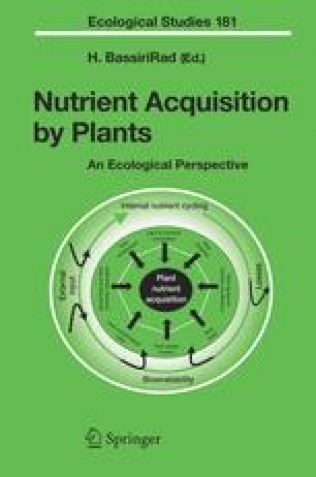
Nutrient Acquisition by Plants : An Ecological Perspective
Adaptation and evolution of terrestrial plants depend, to a large extent, on their ability to acquire nutrients. This is a modern and integrative treatment of the mechanisms controlling plant nutrient uptake and how plants respond to changes in the environment. The following key topics are covered: soil nutrient bioavailability; root responses to variations in nutrient supply; nitrogen fixation; regulation of nutrient uptake by internal plant demand; root characteristics; kinetics of nutrient uptake; root architecture; life span; mycorrhizae; responses to climate change. This integrated view helps us to understand the mechanisms that govern present-day plant communities and is indispensable in models designed to predict the response of plants to a changing climate.
