



الصفحة 39
الصفحة 39

Handbook of Biodegradable Materials
Discusses the recent advances in biodegradation technologies and highlights emerging sustainable materials, including environmentally friendly nano-based materials for replacing plastics. It is useful to scientists, engineers, biologists, medical doctors and provides alternative eco-friendly materials to replace the currently used ones with harmful impact on the environment and life. The chapters present different types of alternative materials in diverse areas, such as food packaging materials, materials for construction and agricultural materials. The principles and types of biodegration technologies are described in depth.

Handbook of Biochips : Integrated Circuits and Systems for Biology and Medicine
This book provides a broad survey of the field of biochips, including fundamentals of microelectronics and biomaterials interaction with various, living tissues, as well as numerous, diverse applications. Although a wide variety of biochips will be described, there will be a focus on those at the brain-machine interface. Analysis is included of the relationship between different categories of biochips and their interactions with the body and coverage includes wireless remote control of biochips and arrays of microelectrodes, based on new biomaterials.

Handbook of big data analytics ; Vol.2 : Applications in ICT, security and business analytics
Big Data analytics is the complex process of examining big data to uncover information such as correlations, hidden patterns, trends and user and customer preferences, to allow organizations and businesses to make more informed decisions. These methods and technologies have become ubiquitous in all fields of science, engineering, business and management due to the rise of data-driven models as well as data engineering developments using parallel and distributed computational analytics frameworks, data and algorithm parallelization, and GPGPU programming. However, there remain potential issues that need to be addressed to enable big data processing and analytics in real time.

Handbook of big data analytics ; Vol.1 : Methodologies
Big Data analytics is the complex process of examining big data to uncover information such as correlations, hidden patterns, trends and user and customer preferences, to allow organizations and businesses to make more informed decisions. These methods and technologies have become ubiquitous in all fields of science, engineering, business and management due to the rise of data-driven models as well as data engineering developments using parallel and distributed computational analytics frameworks, data and algorithm parallelization, and GPGPU programming. However, there remain potential issues that need to be addressed to enable big data processing and analytics in real time. This volume presents several methodologies to support Big Data analytics including database management, processing frameworks and architectures, data lakes, query optimization strategies, towards real-time data processing, data stream analytics, Fog and Edge computing, and Artificial Intelligence and Big Data.

Guidelines for thermography in architecture and civil engineering : theory, application area, practical implementation
These guidelines convey in condensed form the authors' many years of experience in detecting thermal engineering defects and structural damage such as thermal bridges, air leaks or moisture penetration damage with a non-destructive and easily applicable method of measurement and investigation. As well as providing an introduction to the physical fundamentals of thermography, the book offers an up-to-date overview of the technology, structure, standards and selection criteria of common thermographic systems.

Guidelines for the use of advanced numerical analysis
It is an authoritative guide that explains in detail the potential restrictions and pitfalls and so help engineers undertake advanced numerical analysis. It discusses the major approximations involved in nonlinear numerical analysis and describes some of the more popular constituitive models currently available and explores their strengths and weaknesses.

Guidelines for the supplementary load testing of bridges
As of January 1999, under European Union ruling, 40 tonne vehicles have been allowed on UK roads, leading to a challenging programme of bridge assessment. In order to determine the true load carrying capacity of bridges and to avert a vast programme of unnecessary bridge strengthening and replacement schemes, bridge owners are turning increasingly to load testing.

Guided Endodontics
This superbly illustrated book provides a comprehensive overview of guided endodontics, a technology-driven treatment approach that represents a paradigm shift in endodontic therapy and offers predictable solutions in cases of partial or complete root canal calcification and root end surgeries.

Guidebook to carbon neutrality in China : Macro and industry trends under new constraints
The book offers a comprehensive analysis of how the pursuit of carbon neutrality may influence the development of China's economy, and the country's biggest industries, while foreseeing the likely changes in people's lifestyles.

Guide to wireless network security
Guide to Wireless Network Security is an authoritative, clearly presented guide to key foundation topics and technology frameworks for designing and maintaining secure, reliable operations. From basic concepts to designing principles to deployment, all critical concepts and phases are clearly explained and presented. This guide includes coverage of wireless security testing techniques and prevention techniques for intrusion (attacks).

Guide to web development with Java : Understanding website creation
This comprehensive Guide to Web Development with Java introduces the readers to the three-tiered, Model-View-Controller architecture by using Spring JPA, JSPs, and Spring MVC controllers. These three technologies use Java, so that a student with a background in programming will be able to master them with ease, with the end result of being able to create web applications that use MVC, validate user input,and save data to a database.

Growth, Trade and Economic Institutions
Endogenous growth is examined from the viewpoint of economic history, institutions and international trade. The main results are the following. The variance in institutional quality can be explained by historical differences in biogeographical potential for early agriculture. The expansion of output can lead to dis-agglomeration. The patterns of growth are sensitive to the technology parameters of the capital-good industry. With capital intensive industries, the balanced growth path can exhibit local indeterminacy. Economies integrate, if the productivity of R&D does not vary too much for them. Other aspects examined are the equilibrium of a dynamic multi-sector economy, the political economy of employment protection and the relationship between technological change and the demand for skill-intensive activities.

Groundwater Management in Asian Cities : Technology and Policy for Sustainability
The number of city dwellers who do not have access to piped water and rely on groundwater is also increasing. In many Asian cities, groundwater is not only the source of domestic water but also an important resource for industrial development, making better management of groundwater resources essential for sustainable development. Because groundwater is easier to access and costs less than water from piped systems, groundwater abstraction cannot be easily regulated. Policies for groundwater management adopted in Japan and other Asian countries are compared, and technologies for efficient use of groundwater are elucidated. Groundwater contamination is also a serious problem that exacerbates water scarcity in Asian cities. Case studies illustrate the cause and consequences of naturally occurring contaminants such as arsenic and fluoride, and groundwater contamination due to anthropogenic contaminants is described. Also discussed are technologies for treating contaminated groundwater to reduce the health risks of drinking contaminated groundwater.
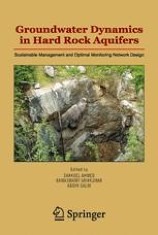
Groundwater Dynamics in Hard Rock Aquifers : Sustainable Management and Optimal Monitoring Network Design
Groundwater is of utmost importance in the arid and semi-arid environment. The areas in such regions are forced to face a variety of problems regarding groundwater as it is the main source of water no matter for any use viz., drinking, domestic, irrigation or industrial particularly for the rural population. The main challenges in hard rock areas in the semi-arid region are the water conservation, management and planning of the water resources. This is further complicated with several complexities of the geological formation. With the semi-arid environment, complex geological settings and over shooting stresses, the aquifer system becomes extremely fragile and sensitive. In spite of a good amount of research in this field, it is still needed to understand the behaviour of such complex system precisely and also apply the result in reasonably larger scales.

Ground bearing concrete slabs : Specification, design, construction and behaviour
Ground bearing concrete floors, industrial concrete hardstandings and concrete highway pavements have not, in the past, been perceived as a single type of structural element and their construction has taken place independently of each other. This is in spite of their obvious commonality in the areas of design, materials, geotechnical appreciation and construction.

Grid-based problem solving environments ; IFIP TC2/WG2.5 Working Conference on Grid-based problem solving environments : Implications for development and deployment of numerical software, July 17-21, 2006, Prescott, Arizona, USA
The IFIP series publishes state-of-the-art results in the sciences and technologies of information and communication. The principal aim of the IFIP series is to encourage education and the dissemination and exchange of information about all aspects of computing.

Grid Middleware and Services : Challenges and Solutions
This book aims to strengthen and advance scientific and technological excellence in the area of Grid Computing. The main focus in this volume is on Grid middleware and service level agreement.Grid middleware and Grid services are two pillars of grid computing systems and applications. This book includes high-level contributions by leading researchers in both areas and presents current solutions together with future challenges. This volume includes sections on knowledge and data management on grids, Grid resource management and scheduling, Grid information, resource and workflow monitoring services, and service level agreements.

Grid economics and business models ; 4th International workshop, GECON 2007, Rennes, France, August 28, 2007, Proceedings
In the third contribution, Altmann and colleagues formulate a taxonomical - proach to Grid business models. They survey the development and origin of Grid technologies and focus on the importance of business-directed values when trying to commercialize today’s Grids. Therein, they identify the reduction of costs, the - provement of efficiency, the creation of novel products and services as well as the quality and collaboration between companies as key factors for the differentiation of Grid business models.

Grid Computing Security
In this book Chakrabarti has structured the issues pertaining to grid computing security into three main categories: architecture-related, infrastructure-related, and management-related issues. He discusses all three categories in detail, presents existing solutions, standards, and products, and pinpoints their shortcomings and open questions.

Grid computing in life science ; 1st International Workshop on Life Science Grid, LSGRID 2004 Kanazawa, Japan, May 31-June 1, 2004, Revised Selected and Invited Papers
Researchers in the ?eld of life sciences rely increasingly on information te- nology to extract and manage relevant knowledge. The complex computational and data management needs of life science research make Grid technologies an attractive support solution. However, many important issues must be addressed before the Life Science Grid becomes commonplace. The 1st International Life Science Grid Workshop (LSGRID 2004) was held in Kanazawa Japan, May 31–June 1, 2004. This workshop focused on life s- ence applications of grid systems especially for bionetwork research and systems biology which require heterogeneous data integration from genome to phenome, mathematical modeling and simulation from molecular to population levels, and high-performance computing including parallel processing, special hardware and grid computing.
