



الصفحة 38
الصفحة 38
Grammatical Inference : Algorithms and Applications ; 8th International Colloquium, ICGI 2006, Tokyo, Japan, September 20-22, 2006, Proceedings
The topics discussed range from theoretical results of learning algorithms to innovative applications of grammatical inference and from learning several interesting classes of formal grammars to applications to natural language processing.

Goguen Categories : A Categorical Approach to L-fuzzy Relations
This book introduces several categorical formulations of an abstract theory of relations such as allegories, Dedekind categories and related structures. It is shown that neither theory is sufficiently rich to describe basic operations on fuzzy relations. The book then introduces Goguen categories and provides a comprehensive study of these structures including their representation theory, and the definability of norm-based operations.

Global optimization and constraint satisfaction ; 2nd International Workshop, COCOS 2003, Lausanne, Switzerland, Nevember 18-21, 2003, Revised Selected Papers
Theformulationofmanypracticalproblemsnaturallyinvolvesconstraintsonthe variables entering the mathematical model of a real-life situation to be analyzed. It is of great interest to ?nd the possible scenarios satisfying all constraints, and, iftherearemanyofthem,eitherto?ndthebestsolution,ortoobtainacompact, explicit representation of the whole feasible set. The 2nd Workshop on Global Constrained Optimization and Constraint S- isfaction, COCOS 2003, which took place during November 18–21, 2003 in L- sanne, Switzerland, was dedicated to theoretical, algorithmic, and application oriented advances in answering these questions. Here global optimization refers to ?nding the absolutely best feasible point, while constraint satisfaction refers to?ndingallpossiblefeasiblepoints.AsinCOCOS2002,the?rstsuchworkshop (see the proceeedings [1]), the emphasis was on complete solving techniques for problems involving continuous variables that provide all solutions with full rigor, and on applications which, however, were allowed to have relaxed standards of rigor.

Global E-Security ; 4th International Conference, ICGeS 2008, London, UK, June 23-25, 2008. Proceedings
This book constitutes the refereed proceedings of the 4th International Conference on Global E-Security, ICGeS 2008, held in London, UK, in June 2008.The 36 revised full papers presented were carefully reviewed and selected from numerous submissions. The papers are organized in topical sections on cybercrime and digital forensics investigation, voice and video over internet protocols security, computer security, security architecture and authorisations, and IT governance.

Global Computing ; IST/FET International Workshop, GC 2004, Rovereto, Italy, March 9-12, 2004, Revised Selected Papers
This book constitutes the thoroughly refereed post-proceedings of the IST/FET International Workshop on Global Computing, GC 2004, held in Rovereto, Italy in March 2004. The 18 revised full papers presented were carefully selected during two rounds of reviewing and improvement from numerous submissions. Among the topics covered are programming environments, dynamic reconfiguration, resource guarantees, peer-to-peer networks, analysis of systems and resources, resource sharing, and security, as well as foundational calculi for mobility.
Gesture in Human-Computer Interaction and Simulation ; 6th International Gesture Workshop, GW 2005, Berder Island, France, May 18-20, 2005, Revised Selected Papers
The international Gesture Workshops have become the leading interdisciplinary events for dissemination of the latest results on gesture-based communication. The goal of these workshops is to bring together researchers who want to meet and share ideas on advanced research on gesture related to multidisciplinary scienti?c ?elds. Depending on the ?elds, the objectives can be very di?erent. While physiology and biomechanics aim to extract fundamental knowledge of physical gesture, computer sciences try to capture di?erent aspects of gesture and extract features that help to identify, interpret or rebuild the underlying mechanisms of communication gestures. Other approaches and methodologies are followed by cognitive sciences and linguistics, bringing a complementary - derstanding of motor control and gesture meaning. The results can be enhanced by technological applications or demonstrations.

Geospatial Vision : New Dimensions in Cartography
This book reflects the diverse nature of interests of contributors in the field. The GeoCart conferences are held every two years and attract attendees from Australasia and globally. They offer a forum for reflecting on past practices, exploring future possibilities and reporting on the findings of - search undertakings. They make valuable contributions to the theory and praxis of Geoinformation and Cartography.

Geospatial Services and Applications for the Internet
This book covers a wide spectrum of techniques, algorithms and modeling methodologies that address the challenges in service-oriented architectural design for GIS, and intelligent processing for spatial queries. This book presents in-depth studies on performance improvement, data integration, service personalization and interoperation between geospatial services. These studies provide the reader with a wide spectrum of examples and case studies on the development of GIS for hydrological applications, electrical power supply applications, land usage and urban planning, and NASA’s Earth image datasets dissemination.

GeoSpatial semantics ; 2nd International Conference, GeoS 2007, Mexico City, Mexico, November 29-30, 2007
This paper reports a simple case study of extracting the two types of such hierarchies from formal texts of traffic code. Problems of concurrent use of both hierarchies for ontology reasoning are dis-cussed, particularly, in context of the different views on geospatial ontologies.

GeoSpatial semantics ; 1st International Conference, GeoS 2005, Mexico City, Mexico, November 29-30, 2005, Proceedings
Constitutes the refereed proceedings of the First International Conference on GeoSpatial Semantics, GeoS 2005, held in 2005. The papers are organized in topical sections on theories for the semantics of geospatial information, formal representations for geospatial data, similarity comparison of spatial data sets, and geospatial semantic Web.
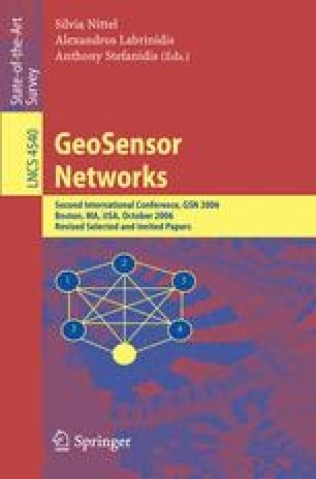
GeoSensor Networks : 2nd International Conference, GSN 2006, Boston, MA, USA, October 1-3, 2006, Revised Selected and Invited Papers
This book constitutes the thoroughly refereed proceedings of the Second GeoSensor Networks Conference, held in Boston, Massachusetts, USA, in October 2006. The conference addressed issues related to the collection, management, processing, analysis, and delivery of real-time geospatial data using distributed geosensor networks. This represents an evolution of the traditional static and centralized geocomputational paradigm.

Geometry for Computer Graphics : Formulae, Examples and Proofs
Geometry is the cornerstone of computer graphics and computer animation, and provides the framework and tools for solving problems in two and three dimensions. This may be in the form of describing simple shapes such as a circle, ellipse, or parabola, or complex problems such as rotating 3D objects about an arbitrary axis. Geometry for Computer Graphics draws together a wide variety of geometric information that will provide a sourcebook of facts, examples, and proofs for students, academics, researchers, and professional practitioners.
Geometric Properties for Incomplete Data
Computer vision and image analysis require interdisciplinary collaboration between mathematics and engineering. This book addresses the area of high-accuracy measurements of length, curvature, motion parameters and other geometrical quantities from acquired image data. It is a common problem that these measurements are incomplete or noisy, such that considerable efforts are necessary to regularise the data, to fill in missing information, and to judge the accuracy and reliability of these results. This monograph brings together contributions from researchers in computer vision, engineering and mathematics who are working in this area.
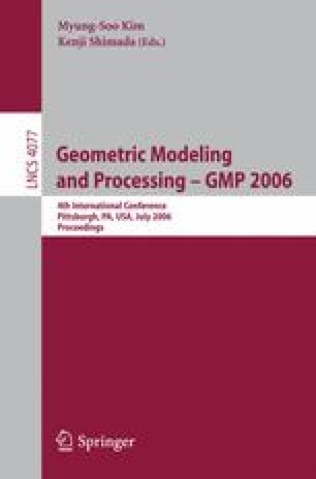
Geometric Modeling and Processing - GMP 2006 ; 4th International Conference, GMP 2006, Pittsburgh, PA, USA, July 26-28, 2006, Proceedings
This book constitutes the refereed proceedings of the 4th International Conference on Geometric Modeling and Processing, GMP 2006, held in Pittsburgh, PA, USA in July 2006. The 36 revised full papers and 21 revised short papers presented were carefully reviewed and selected from a total of 84 submissions. All current issues in the area of geometric modeling and processing are addressed and the impact in such areas as computer graphics, computer vision, machining, robotics, and scientific visualization is shown. The papers are organized in topical sections on shape reconstruction, curves and surfaces, geometric processing, shape deformation, shape description, shape recognition, geometric modeling, subdivision surfaces, and engineering applications.

Geometric Fundamentals of Robotics
Geometric Fundamentals of Robotics provides an elegant introduction to the geometric concepts that are important to applications in robotics. This second edition is still unique in providing a deep understanding of the subject: rather than focusing on computational results in kinematics and robotics, it includes significant state-of-the art material that reflects important advances in the field, connecting robotics back to mathematical fundamentals in group theory and geometry.
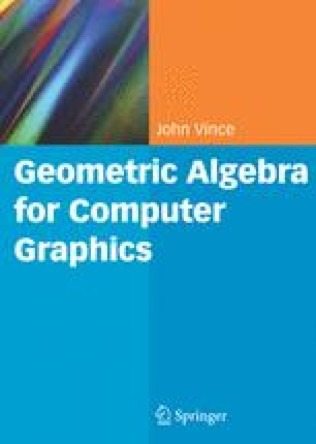
Geometric Algebra for Computer Graphics
The first five chapters review the algebras of real numbers, complex numbers, vectors, and quaternions and their associated axioms, together with the geometric conventions employed in analytical geometry. As well as putting geometric algebra into its historical context, John Vince provides chapters on Grassmann’s outer product and Clifford’s geometric product, followed by the application of geometric algebra to reflections, rotations, lines, planes and their intersection. The conformal model is also covered, where a 5D Minkowski space provides an unusual platform for unifying the transforms associated with 3D Euclidean space.
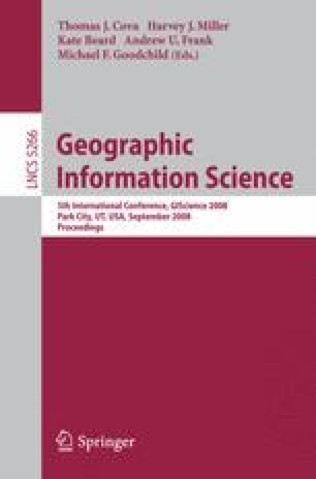
Geographic Information Science ; 5th International Conference, GIScience 2008, Park City, UT, USA, September 23-26, 2008. Proceedings
This book constitutes the refereed proceedings of the 5th International Conference on Geographic Information Secience, GIScience 2008, held in Park City, UT, USA, in September 2008.The 24 revised full papers presented were carefully reviewed and selected from 77 submissions. Among the traditional topics addressed are spatial relations, geographic dynamics, and spatial data types. A significant number of papers deal with navigation networks, location-based services, and spatial information query and retrieval. Geo-sensors, mobile computing, and Web mapping rank among the important new directions.

Geographic Information Science ; 4th International Conference, GIScience 2006, Münster, Germany, September 20-23, 2006, Proceedings
The GIScience conference series (www. giscience. org) was created as a forum for all researchers who are interested in advancing research in the fundam- tal aspects of geographic information science.The conferences focus on emerging topics and basic research ?ndings across all s- tors of geographic information science. After three highly successful conferences in the United States, this year’s GIScience conference was held in Europe for the ?rst time. The GIScience conferences have been a meeting point for researchers coming from various disciplines, including cognitive science, computer science, engine- ing, geography,information science, mathematics, philosophy, psychology,social science, and statistics. The advancement of geographic information science - quiressuchinterdisciplinarybreadth,andthisisalsowhatmakestheconferences so exciting. In order to account for the di?erent needs of the involved scienti?c disciplines with regard to publishing their research results.
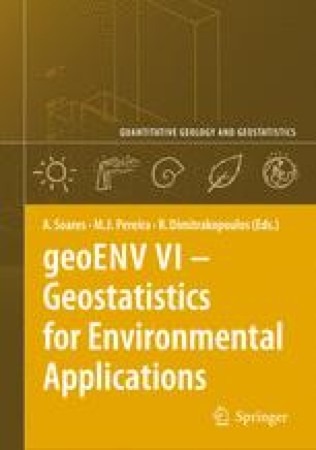
geoENV VI - Geostatistics for Environmental Applications : Proceedings of the Sixth European Conference on Geostatistics for Environmental Applications
This volume contains how geostatistics is applied within the environmental sciences. A few selected theoretical contributions are also included.

Genetic rogramming ; Vol. 3447 : 8th European conference, EuroGP 2005, Lausanne, Switzerland, March 30-April 1, 2005, Proceedings
In this volume we present the contributions for the 18th European Conference on Genetic Programming (EuroGP 2005). The conference took place from 30 March to 1 April in Lausanne, Switzerland. EuroGP is a well-established conf- ence and the only one exclusively devoted to genetic programming. All previous proceedings were published by Springer in the LNCS series. From the outset, EuroGP has been co-located with the EvoWorkshops focusing on applications of evolutionary computation. Since 2004, EvoCOP, the conference on evolutionary combinatorial optimization, has also been co-located with EuroGP, making this year’s combined events one of the largest dedicated to evolutionary computation in Europe. Genetic programming (GP) is evolutionary computation that solves complex problems or tasks by evolving and adapting a population of computer programs, using Darwinian evolution and Mendelian genetics as its sources of inspiration. Some of the 34 papers included in these proceedings address foundational and theoretical issues and there is also a wide variety of papers dealing with di?erent application areas, such as computer science, engineering, language processing, biology and computational design, demonstrating that GP is a powerful and practical problem-solving paradigm.
