



الصفحة 38
الصفحة 38

Fracture Mechanics : Inverse Problems and Solutions
This book presents, in a unified manner, a variety of topics in Continuum and Fracture Mechanics: energy methods, conservation laws, mathematical methods to solve two-dimensional and three-dimensional crack problems.
Fracture Classifications in Clinical Practice
This concise and practical handbook contains a wealth of illustrations and explanatory text organized into a concise repository of information on fractures according to the most widely used classification systems.
Fracture and Failure of Natural Building Stones : Applications in the Restoration of Ancient Monuments
The book consists of invited papers written by leading experts in the field. It contains original contributions concerning the latest developments in the fracture and failure of the natural building stones and their application in the restoration of ancient monuments. It covers a wide range of subjects - cluding purely mechanical aspects, physico-chemical approaches, appli- tions and case studies. The papers are arranged in two parts with a total of nine chapters. Part I is devoted to purely mechanical and structural aspects and applications, while Part II is devoted to the physico-chemical and environmental aspects including thermal effects.
Fractal Geometry, Complex Dimensions and Zeta Functions : Geometry and Spectra of Fractal Strings
Number theory, spectral geometry, and fractal geometry are interlinked in this in-depth study of the vibrations of fractal strings, that is, one-dimensional drums with fractal boundary. Key Features The Riemann hypothesis is given a natural geometric reformulation in the context of vibrating fractal strings Complex dimensions of a fractal string, defined as the poles of an associated zeta function, are studied in detail, then used to understand the oscillations intrinsic to the corresponding fractal geometries and frequency spectra Explicit formulas are extended to apply to the geometric, spectral, and dynamical zeta functions associated with a fractal Examples of such explicit formulas include a Prime Orbit Theorem with error term for self-similar flows, and a geometric tube formula The method of Diophantine approximation is used to study self-similar strings and flows Analytical and geometric methods are used to obtain new results about the vertical distribution of zeros of number-theoretic and other zeta functions Throughout new results are examined. The final chapter gives a new definition of fractality as the presence of nonreal complex dimensions with positive real parts, and discusses several open problems and extensions.
FPGA Implementations of Neural Networks
During the 1980s and early 1990s there was signi?cant work in the design and implementation of hardware neurocomputers. Nevertheless, most of these efforts may be judged to have been unsuccessful: at no time have have ha- ware neurocomputers been in wide use. This lack of success may be largely attributed to the fact that earlier work was almost entirely aimed at developing custom neurocomputers, based on ASIC technology, but for such niche - eas this technology was never suf?ciently developed or competitive enough to justify large-scale adoption. On the other hand, gate-arrays of the period m- tioned were never large enough nor fast enough for serious arti?cial-neur- network (ANN) applications.
Fourth IFIP International Conference on Theoretical Computer Science - TCS 2006 ; IFIP 19th World Computer Congress, TC-1, Foundations of Computer Science, August 23-24, 2006, Santiago, Chile
The IFIP series publishes state-of-the-art results in the sciences and technologies of information and communication. The scope of the series includes: foundations of computer science; software theory and practice; education; computer applications in technology; communication systems; systems modeling and optimization; information systems; computers and society; computer systems technology; security and protection in information processing systems; artificial intelligence; and human-computer interaction. Proceedings and post-proceedings of referred international conferences in computer science and interdisciplinary fields are featured. These results often precede journal publication and represent the most current research. The principal aim of the IFIP series is to encourage education and the dissemination and exchange of information about all aspects of computing.

Fourier Transformation for Pedestrians
Meant to serve an "entertaining textbook," this book belongs to a rare genre. It is written for all students and practitioners who deal with Fourier transformation. Fourier series as well as continuous and discrete Fourier transformation are covered, and particular emphasis is placed on window functions. Many illustrations and easy-to-solve exercises make the book especially accessible, and its humorous style will add to the pleasure of learning from it.
Foundations of Sport-Related Brain Injuries
A major take-home point from this book should be the assumption that symptom resolution does not necessarily mean injury resolution. As can be seen by research focusing on global metabolic cascades and neural activity of the brain, long-standing dysfunctional pathways continue to exist for extended periods of time even after a minor concussion. Until we completely understand the consequences of short-term perturbations and long-term residual brain dysfunctions, concussions must be treated with respect and given a higher priority for continued research activity.
Foundations of software science and computation structures ; Vol. 3921 ; 9th International conference, FOSSACS 2006, Held as part of the joint European conferences on theory and practice of software, ETAPS 2006, Vienna, Austria, March 25-31, 2006, proceedings
This book constitutes the refereed proceedings of the 9th International Conference on Foundations of Software Science and Computation Structures, FOSSACS 2006, held in Vienna, Austria in March 2006 as part of ETAPS. The 28 revised full papers presented together with 1 invited paper were carefully reviewed and selected from 107 submissions. The papers are organized in topical sections on mobile processes, software science, distributed computation, categorical models, real time and hybrid systems, process calculi, automata and logic, domains, lambda calculus, types, and security.
Foundations of Object-Oriented Programming Using .NET 2.0 Patterns
Foundations of Object-Oriented Programming Using .NET 2.0 Patterns solves the object-oriented and pattern-programming problem by mixing the two—the book teaches object-oriented concepts using patterns, or a solutions-based approach. The book's material is organized around tasks and patterns, and illustrated through development problems and solutions that include persistence, code efficiency, and good design. This book is of special interest to those who want to learn how to use .NET 2.0 Generics in conjunction with patterns. This unique book is based on the author's lectures, and the information unfolds in a practical manner.
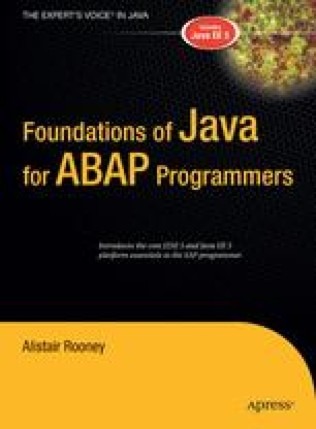
Foundations of Java for ABAP Programmers
The only beginning book of its kind, this book will teach you SAP/ABAP developers the skills you need for Java 5 programming. The book emphasizes the fundamentals of core Java SE 5 and Java EE 5, to get you up to speed with these technologies. You'll learn about the most important enterprise Java API found in the new Java EE 5 platform, which you can immediately use and integrate. Furthermore, the book elaborates on connecting to a database, SAP Java Connector, servlets, Java Server Pages, Enterprise JavaBeans, and Java Messaging.
Foundations of Intelligent Systems ; Vol. 4203 ; 16th International Symposium, ISMIS 2006, Bari, Italy, September 27-29, 2006, Proceedings
This book constitutes the refereed proceedings of the 16th International Symposium on Methodologies for Intelligent Systems, ISMIS 2006. The book presents 81 revised papers together with 3 invited papers. Topical sections include active media human-computer interaction, computational intelligence, intelligent agent technology, intelligent information retrieval, intelligent information systems, knowledge representation and integration, knowledge discovery and data mining, logic for AI and logic programming, machine learning, text mining, and Web intelligence.

Foundations of information and knowledge systems ; 4th International Symposium, FoIKS 2006, Budapest, Hungary, February 14-17, 2006, Proceedings
This book constitutes the refereed proceedings of the 4th International Symposium on Foundations of Information and Knowledge Systems, held in February 2006. The 14 revised full papers presented together with three revised short papers and one invited paper were carefully reviewed and selected from 54 submissions. Among the topics covered are the theoretical foundations of information and knowledge systems, as well as mathematical fields such as discrete mathematics, combinatorics, logics and finite model theory, and applications thereof for research on database and knowledge base theory.

Foundations of Hyperbolic Manifolds
The book is divided into three parts. The first part is concerned with hyperbolic geometry and discrete groups. The main results are the characterization of hyperbolic reflection groups and Euclidean crystallographic groups. The second part is devoted to the theory of hyperbolic manifolds. The main results are Mostow’s rigidity theorem and the determination of the global geometry of hyperbolic manifolds of finite volume. The third part integrates the first two parts in a development of the theory of hyperbolic orbifolds. The main result is Poincare«s fundamental polyhedron theorem.
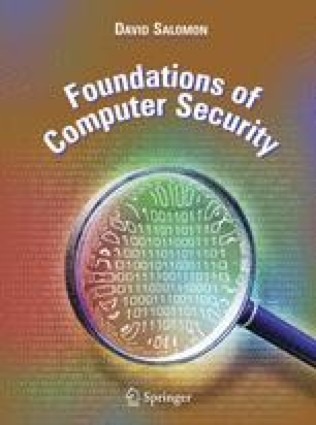
Foundations of Computer Security
Foundations of Computer Security provides a succinct, yet authoritative introduction to the underlying theory, history, vocabulary, and concepts that drive this pivotal area of computer science. With its user-friendly approach and clarity of style, the text conveys—in simple terms—the core principles and developments underlying computer security in its many ramifications in the rapidly evolving computing arena. Following its opening framework laid out in a broad preface and introductory chapter, the book features chapters dedicated to a wide array of security-related subtopics: physical security, viruses and worms, malware and spyware, privacy and trust, and cryptography.

Foundations of Atlas : Rapid Ajax Development with ASP.NET 2.0
This book introduces a fast-track path to understanding Atlas, and how this technology can increase the power and functionality of your code while conserving time and effort. The book begins with a bare-bones introduction that explains how Atlas relates to Ajax. Microsoft Atlas is a web-client framework that makes building Ajax-style applications easier. It provides a prewritten framework that gives you a structured environment in which to work. Atlas also provides you with an object model and standardized debugging to make development faster and simpler. Ajax is a way of combining a number of Web technologies including JavaScript, dynamic HTML, and a feature known as XMLHttp (which reduces the need for client browsers to constantly reconnect to the server every time new information is downloaded). But at the moment, people developing with Ajax have to write their code from the ground up, which is complex and time consuming.

Foundations of Ajax
Ajax burst onto the Web development scene by offering highly interactive, desktop-like Web applications that can be deployed through any modern Web browser without the need for special plug-ins. Ajax is built on existing Web technologies such as JavaScript, HTML, and CSS, and it is used in conjunction with your favorite server-side language. Foundations of Ajax explains how to combine these technologies effectively to implement Ajax into your new or existing Web applications. Like you, we are developers who are in the trenches, tasked with building Web-enabled applications that provide real value to our customers. As the Web continues to grow, the demand for more expressive and engaging interfaces will continue to increase.
Foundations and novel approaches in data mining
Data-mining has become a popular research topic in recent years for the treatment of the "data rich and information poor” syndrome. Currently, application oriented engineers are only concerned with their immediate problems, which results in an ad hoc method of problem solving. Researchers, on the other hand, lack an understanding of the practical issues of data-mining for realworld problems and often concentrate on issues that are of no significance to the practitioners. In this volume, we hope to remedy problems by (1) presenting a theoretical foundation of data-mining, and (2) providing important new directions for data-mining research. A set of well respected data mining theoreticians were invited to present their views on the fundamental science of data mining.
Foundations and applications of MIS : A model theory approach
Foundations and Applications of MIS presents a unique systems theory approach to management information system (MIS) development. The development is driven by the need to eliminate ambiguity in specification, design and construction of the application software. Further, the authors show that the considerable effort being expanded nowadays on validation, verification and testing, as required in current software engineering practices, will be reduced. The approach also reinforces the belief that MIS development is independent of software development. The work presents an approach that provides a theoretical foundation for MIS development from the systems theoretic viewpoint along with practical applications ranging from a transaction processing system to a solver system. Both formal systems theory and automatic system generation based on the authors' newly extended Prolog offer a significant increase in the efficiency of specification, design and production of the application software, as well as an increase in the functional reliability of the software produced. The book assumes a working knowledge of elementary set theory, logic, and familiarity with some systems concepts, such as the automaton model.
Foundation XML for Flash
XML is a completely platform-agnostic data medium. Flash is able to make use of XML data, which is very useful when creating rich Internet applications. It allows you to populate Flash web interfaces with data from almost any source that supports XML as a data medium, be it databases, raw XML files, or more excitingly, .NET applications, Web Services, and even Microsoft Office applications like Excel and Word! In this book, Sas Jacobs first introduces XML itself—what it is, its syntax, its associated technologies (such as CSS and XSLT,) and how to get XML out of your applications in a format Flash can use. Then, she shows how to use the XML object to stream XML data into Flash, and how to use the XMLConnector component and XML Sockets to build advanced Flash/XML applications.
