



الصفحة 35
الصفحة 35
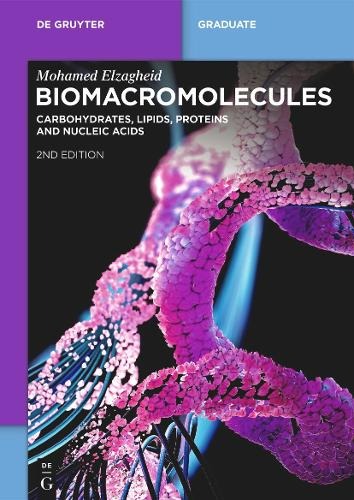
Biomacromolecules : Carbohydrates, lipids, proteins and nucleic acids
The first chapter looks at the structural formulas and cyclic forms of monosaccharides, as well as their synthesis and breakdown. Cyclization, enolization, isomerization, tautomerization, mutarotation, and epimerization are all briefly described. Examples of disaccharides and polysaccharides are also presented. The second chapter covers triglycerides, steroids, vitamins, and their constituents. The third chapter examines the primary structure of proteins, including amino acid properties, peptide bond formation, and peptide synthesis. It also addresses secondary, tertiary, and quaternary structures. The book concludes with a chapter on nucleic acids, which covers the chemistry of nucleosides and oligonucleotides as well as topics such as genetic code, DNA secret code, Polymerase Chain Reaction and DNA fingerprinting.
Biological and artificial intelligence environments
The book reports the proceedings of the 15th Italian workshop on neural networks issued by the Italian Society on Neural Networks SIREN. The longevity recipe of this conference stands in three main points that normally renders the reading of these proceedings so interesting as appealing. 1. The topics of the neural networks is considered an attraction pole for a set of researches centered on the inherent paradigm of the neural networks, rather than on a specific tool exclusively. Thus, the subsymbolic management of the data information content constitutes the key feature of papers in various fields such as Pattern Recognition, Stochastic Optimization, Learning, Granular Computing, and so on, with a special bias toward bioinformatics operational applications. An excerpt of all these matters may be found in the book. 2. Though managed at domestic level, the conference attracts contributions from foreign researchers as well, so that in the book the reader may capture the flavor of the state of the art in the international community. 3. The conference is a meeting of friends as well. Thus the papers generally reflect a relaxed atmosphere where researchers meet to generously exchange their thought and explain their actual results in view of a common cultural growing of the community.
Bio-inspired modeling of cognitive tasks ; 2nd International Work-conference on the interplay between natural and artificial computation, IWINAC 2007, La Manga del Mar Menor, Spain, June 18-21, 2007, Proceedings, Part I
This volume includes all the contributions mainly related with theoretical, conceptual and methodological aspects linking AI and knowledge engineering with neurophysiology, clinics and cognition.

Bio-inspired credit risk analysis : Computational intelligence with support vector machines
Credit risk analysis is one of the most important topics in the field of financial risk management. Due to recent financial crises and regulatory concern of Basel II, credit risk analysis has been the major focus of financial and banking industry. Especially for some credit-granting institutions such as commercial banks and credit companies, the ability to discriminate good customers from bad ones is crucial. The need for reliable quantitative models that predict defaults accurately is imperative so that the interested parties can take either preventive or corrective action. Hence credit risk analysis becomes very important for sustainability and profit of enterprises. In such backgrounds, this book tries to integrate recent emerging support vector machines and other computational intelligence techniques that replicate the principles of bio-inspired information processing to create some innovative methodologies for credit risk analysis and to provide decision support information for interested parties.
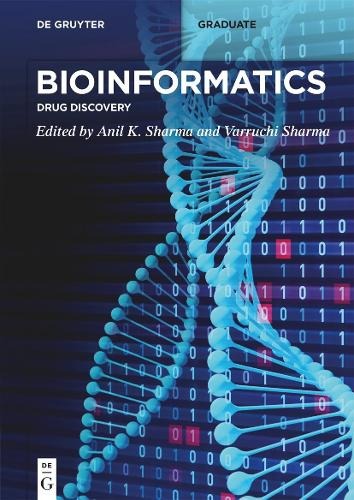
Bioinformatics drug discovery
Quantitative tools are becoming increasingly important in order to understand complex cascade of signal transduction events, pathways or biochemical reactions. The book showcases how computational techniques and algorithms are applied to biological data analysis, interpretation, and modelling. It covers applications in drug design and discovery, immune systems, phylogenetic analysis and protein structures.
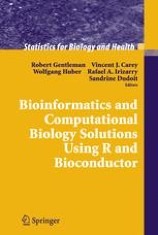
Bioinformatics and Computational Biology Solutions Using R and Bioconductor
Bioconductor is a widely used open source and open development software project for the analysis and comprehension of data arising from high-throughput experimentation in genomics and molecular biology. Bioconductor is rooted in the open source statistical computing environment R. This volume's coverage is broad and ranges across most of the key capabilities of the Bioconductor project, including: Importation and preprocessing of high-throughput data from microarray, proteomic, and flow cytometry platforms / Curation and delivery of biological metadata for use in statistical modeling and interpretation. / Statistical analysis of high-throughput data, including machine learning and visualization,modeling and visualization of graphs and networks. This book is a dynamic document. Code underlying all of the computations that are shown is made available on a companion website, and readers can reproduce every number, figure, and table on their own computers.
Bioethics in Cultural Contexts : Reflections on Methods and Finitude
This book discusses a range of methodological issues for an interdisciplinary bioethics. How can bioethics be an enterprise that does not only isolate issues and moral reasons but also (re)contextualises them? What are the strengths and weaknesses of different traditional and innovative modes of ethical work in terms of these tasks?
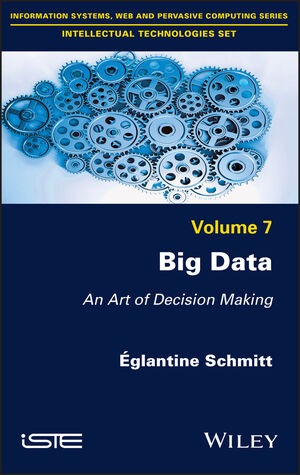
Big Data : An Art of Decision Making
Manipulating and processing masses of digital data is never a purely technical activity. It requires an interpretative and exploratory outlook - already well known in the social sciences and the humanities - to convey intelligible results from data analysis algorithms and create new knowledge. Big Data is based on an inquiry of several years within Proxem, a software publisher specializing in big data processing. The book examines how data scientists explore, interpret and visualize our digital traces to make sense of them, and to produce new knowledge. Grounded in epistemology and science and technology studies, Big Data offers a reflection on data in general, and on how they help us to better understand reality and decide on our daily actions.

Big Data – BigData 2020; 9th International Conference, Held as Part of the Services Conference Federation, SCF 2020, Honolulu, HI, USA, September 18-20, 2020, Proceedings
Constitutes the proceedings of the 9th International Conference on Big Data, BigData 2020, held as part of SCF 2020, during September 18-20, 2020. The conference was planned to take place in Honolulu, HI, USA and was changed to a virtual format due to the COVID-19 pandemic. The 16 full and 3 short papers presented were carefully reviewed and selected from 52 submissions. The topics covered are Big Data Architecture, Big Data Modeling, Big Data As A Service, Big Data for Vertical Industries (Government, Healthcare, etc.), Big Data Analytics, Big Data Toolkits, Big Data Open Platforms, Economic Analysis, Big Data for Enterprise Transformation, Big Data in Business Performance Management, Big Data for Business Model Innovations and Analytics, Big Data in Enterprise Management Models and Practices, Big Data in Government Management Models and Practices, and Big Data in Smart Planet Solutions.
Beyond the apparent Banality of the mathematics classroom
New research in mathematics education deals with the complexity of the mathematics’ classroom. The classroom teaching situation constitutes a pertinent unit of analysis for research into the ternary didactic relationship which binds teachers, students and mathematical knowledge. The classroom is considered as a complex didactic system, which offers the researcher an opportunity to gauge the boundaries of the freedom that is left with regard to choices about the knowledge to be taught and the ways of organizing the students’ learning, while giveing rise to the study of interrelations between three main elements of the teaching process the: mathematical content to be taught and learned, management of the various time dimensions, and activity of the teacher who prepares and manages the class, to the benefit of the students' knowledge and the teachers' own experience.
Between Necessity and Probability : Searching for the Definition and Origin of Life
This study investigates the major theories of the origins of life in light of modern research with the aim of distinguishing between the necessary and the optional and between deterministic and random influences in the emergence of what we call ‘life.’ Life is treated as a cosmic phenomenon whose emergence and driving force should be viewed independently from its Earth-bound natural history. The author synthesizes all the fundamental life-related developments in a comprehensive scenario, and makes the argument that understanding life in its broadest context requires a material-independent perspective that identifies its essential fingerprints.
Between dirt and discussion : Methods, methodology and interpretation in historical archaeology
The cases presented in this volume revisit old methods and previous scholarly approaches with new perspectives, along with incorporating the newest technologies available to understanding the past.
Bernoulli potential in superconductors : How the electrostatic field helps to understand superconductivity
The motion of electrons in superconductors seems to defy our imagination based on daily experience with Newtonian mechanics. This book shows that the classical concepts, such as the balance of forces acting on electrons, are useful for understanding superconductivity. The electrostatic field plays a natural part in this balance as it mediates forces between electrons at long distances. Due to its classical interpretation, the theory presented in this book is suitable for introductory courses.

Behavioural research for marketing : A practitioner's handbook
Provides market researchers and marketeers with the tools to better understand human behaviour by drawing upon social science theory from different schools of thought, including sociology, psychology and behavioural economics. It has practical examples throughout to help illustrate how to operationalise theory in market research and to underpin the way we understand how people think, behave, decide and make choices.
Beginning SQL Server 2005 Express database applications with Visual Basic Express and Visual Web Developer Express : From novice to professional
SQL Server 2005 Express is the database component of Microsoft's Express Suite of products. It is free of charge, inherits many (non-enterprise) features from SQL Server 2005, and comes complete with development and administration tools. As such, it is an ideal database for developers and administrators to use in prototype/evaluation projects. It is also a powerful development platform for database applications on nonprofit websites, e-commerce sites, and in small offices and departments.

Beginning PyQt : A hands-on approach to GUI programming with PyQt6
Learn GUI application development from the ground up by building simple projects that teach the fundamentals of using PyQt6. This 2nd edition includes updated code, programs, and new chapters to get you started using the newest version. Taking a practical approach, each chapter will gradually teach more advanced and diverse concepts to aid you in designing and customizing interesting and professional applications. Using this knowledge, you’ll be able to build a photo editor, games, a text editor, a working web browser, and an assortment of other GUIs. In the end, this book will guide you through the process of creating UIs to help you bring your own ideas to life. Find out what you need to begin making your own applications with PyQt! You will: Develop cross-platform UIs with PyQt and Python / Use PyQt’s many widgets and apply them by building real applications / Build larger applications through a step-by-step approach and break the code into smaller chunks for deeper understanding / Work with more complex applications in PyQt, covering SQL databases, multithreading, web browsers, and more / Create modern-looking UIs with Qt Quick and QtQml using the latest version of PyQt
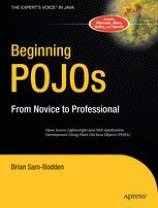
Beginning POJOs : Lightweight Java Web development using Plain Old Java Objects in Spring, Hibernate, and Tapestry
Beginning POJOs introduces you to open source lightweight web development using Plain Old Java Objects (POJOs) and the tools and frameworks that enable this. Tier by tier, this book guides you through the construction of complex but lightweight enterprise Java-based web applications. Such applications are centered around several major open source lightweight frameworks, including Spring, Hibernate, Tapestry, and JBoss (including the new lightweight JBoss Seam). This book is ideal if you're new to open source and lightweight Java. You'll learn how to build a complete enterprise Java-based web application from scratch, and how to integrate the different open source frameworks to achieve this goal.
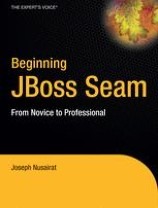
Beginning JBoss Seam : From novice to professional
Reacting to the popularity of Java 2.0 Enterprise Edition™ alternatives such as Ruby on Rails and the enterprise Spring Framework, Red Hat JBoss®, Inc. developed JBoss® Seam, a new open-source lightweight Java™ EE 5-based contextual application development framework. Beginning JBoss® Seam: From Novice to Professional gets you started as the first book on this popular framework.
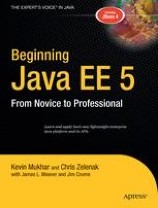
Beginning Java EE 5 : From novice to professional
Sun's new lightweight Java Enterprise Edition (EE) 5 is an extremely powerful platform for developing enterprise-level Java-based applications, primarily for the server. This book shows you how to harness that power, examining how the pieces of the new Java EE 5 platform fit together, including the redesigned annotations-driven EJB 3 spec as well as JavaServer Faces (JSF), integrated into the platform for the first time. Hands-on tutorials are also included, along with clear explanations and working code examples. You will grow to take the next step—from writing client-side desktop applications to writing enterprise applications. You will also learn how to use the individual APIs and tools in the Java EE 5 platform, and how to merge these to create your own enterprise applications.
Beginning IntelliJ IDEA : Integrated development environment for Java programming
Shows you how to leverage IntelliJ’s tools to develop clean, efficient Java applications. The last portion of the book focuses on application testing and deployment, and language- and framework- specific guidelines. After reading this book and working through its freely available source code, you'll be up to speed with this powerful IDE for today's Java development. You will: Use IntelliJ IDEA to build Java applications / Set up your IDE and project / Work with source code / Extend your Java application to data science and other kinds of applications / Test and deploy your application and much more
