



الصفحة 34
الصفحة 34

Drug and Biological Development : From Molecule to Product and Beyond
Drug and Biological Development: From Molecule to Product and Beyond offers a complete discussion of product development in the pharmaceutical and biotechnology industries from discovery to product launch, continuing through life cycle management. The book is organized for optimal usefulness in the education and training of health care professionals. The text's narrative descriptions are enhanced by real-life examples, illustrations, controversies in industry, and references. Dr. Ronald Evens and his contributors are industry and research experts in a variety of disciplines.

Drawing for Interior Designers
The perfect guide to producing successful hand drawings of interior designs. Sitting quietly at home, sketchbook in hand, is the ideal way to tackle drawing. In fact, your home is an absolute mine of subjects to draw. Perhaps you already have a plan in your head for a makeover or conversion? This book is filled with practical principles which will help you put your plans down on paper and better express your ideas, for no serious project gets made without a progressive plan. Teaches you some tricks of the trade and conventions which are part of an architect's know-how and which will help you with ideas. Packed with beautiful sketches, provides advice from drawing perspective, floor plans and furniture to rendering rooms and taking down a partition wall.

Drawing Climate : Visualising Invisible Elements of Architecture
Investigates the history, theory and applications of climatic design in the built environment examining architecture and landscapes from various time periods. Based on a collaboration between the University of Sydney and the National University of Singapore, the book brings together contributing authors from Australia, Singapore, and the United States.

Double Fertilization : Embryo and Endosperm Development in Flowering Plants
Double Fertilization" provides a comprehensive overview of all aspects of this central event in the reproduction and development of flowering plants. Written by Val Raghavan, The Ohio State University, an acknowledged expert in plant developmental biology, the book vividly describes the molecular and cellular steps of the unique and complex fertilization process that culminates in the formation of embryo and endosperm, focusing on the latest results from the model plant Arabidopsis. The text is complemented by excellent illustrations, including 16 color plates.
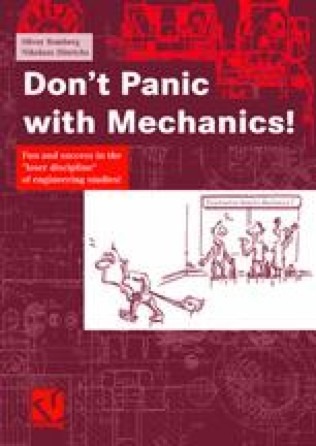
Don’t Panic with Mechanics! : Fun and success in the "loser discipline" of engineering studies!
The ultimate companion in the classical horror discipline of engineering science! Contents of the book are the basics of mechanics as treated in engineering and physical sciences: Statics, Elastostatics, Kinematics & Kinetics in unconventional, humorous presentation with many cartoons, funny explanations and a chapter containing several exercises with detailed solutions.

Do-All Computing in Distributed Systems : Cooperation in the Presence of Adversity
Do-All Computing in Distributed Systems: Cooperation in the Presence of Adversity is the first book that presents an in depth study of cooperation problems, abstracted in terms of the Do-All problem, where a collection of processors cooperatively perform a collection of independent tasks in the presence of adversity.

DNA Binders and Related Subjects
advances in technology and the application of new methods to outstanding problems have played a major part in the development of ideas about drug-nucleic acid recognition. The field has undergone an explosive diversification as wider and wider problems became accessible to study using the new ideas and techniques. This volume reflects that diversification by offering accounts of selected areas that illustrate recent advances in the study of ligand–nucleic acid binding over disparate areas of the subject. There are chapters dealing specifically with the invention and application of new methodology, and a particularly thoughtful essay on the interpretation of X-ray diffraction data which may not be as straightforward as is often imagined. Other chapters illustrate the diversity and complexity of drug-DNA binding from several perspectives, referring to particular groups of related compounds or the potential attractions of the less-preferred DNA major groove as a target for nucleotide sequence recognition by ligands.

Diversity Training for Classroom Teaching : A Manual for Students and Educators
This book encourages readers to generate their own construction of effective multicultural education and learn how to adapt it across various student populations and educational problems. At the same time, learning activities encourage readers to respect and seek to understand the experiences and worldviews of different people and how these diverse realities influence what is meant by multicultural education

Diversity and Inclusion in Global Higher Education : Lessons from Across Asia
This book offers pioneering insights and practical methods for promoting diversity and inclusion in higher education classrooms and curricula. It highlights the growing importance of international education programs in Asia and the value of understanding student diversity in a changing, evermore interconnected world

Diversity and Evolution of Butterfly Wing Patterns : An Integrative Approach
is book facilitates an integrative understanding of the development, genetics and evolution of butterfly wing patterns. To develop a deep and realistic understanding of the diversity and evolution of butterfly wing patterns, it is essential and necessary to approach the problem from various kinds of key research fields such as “evo-devo,” “eco-devo,” ”developmental genetics,” “ecology and adaptation,” “food plants,” and “theoretical modeling.”

Distributed Services with OpenAFS : For Enterprise and Education
This book shows in detail how to build enterprise-level secure, redundant, and highly scalable services from scratch on top of the open source Linux operating system, suitable for small companies as well as big universities. The core architecture presented is based on Kerberos, LDAP, AFS, and Samba. It is shown how to integrate web, message related, data base and other services with this backbone. This architecture provides a Single-Sign-On solution for different client platforms and can also be employed for clustering. Although it is implemented with Debian GNU/Linux, the content can be applied to other UNIX flavors.

Distributed Cooperative Laboratories : Networking, Instrumentation, and Measurements
This is a highly interdisciplinary topic, where various aspects converge: multimedia communications and networking, sensor networks, Grid technology, Quality of Service (QoS) provisioning and control, network management, measurement instrumentation and methodology, architecture of measurement systems. The material is organized into six parts: Technologies for Real-Time Interactive Multimedia Communications; Monitoring, Management and Configuration of Networks and Networking Devices; Data Acquisition and Aggregation in Sensor Networks; Grid Structures for Distributed Cooperative Laboratories; Architectures and Techniques for Tele-Measurements; Virtual Immersive Communications and Distance Learning. Each contribution presents a self-contained treatment, within a framework that provides the reader with an up-to-date picture of the most recent state-of-the-art developments.

Distributed computing and internet Technology ; Vol. 3816 ; 2nd International conference, ICDCIT 2005, Bhubaneswar, India, December 22-24, 2005, Proceedings
The opening ceremony and pre-conference tutorials on various related topics were held on December 21. The technical program started on December 22 and continued for three days. The program was arranged in single track so as to enable participants to attend sessions of di?erent tracks. Papers from the DM, IT, SE, and SS tracks were divided into two sessions, whereas DC track sessions were held on the ?rst two days of the conference. The program also included two plenary talks. The ?rst talk was delivered by S. S. Iyengar from Louisiana State University, USA. The second talk was delivered by He Jifeng from the International Institute for Software Technology (IIST) Macau. Prof. Iyenger’s talk on “The Distributed Sensor Networks — An Emerging Technology” was focused on new ideas about the use of distributed systems for emerging technology, while Prof. Jifeng’s talk on “Linking Theories of Concurrency by Retraction” dealt with semantics of concurrency.

Distributed computing -- IWDC 2004 ; 6th International Workshop, Kolkata, India, December 27-30, 2004, Proceedings
Last, but not least, thanks to all the participants and authors. We hope that they enjoyed the workshop as much as the wonderful and culturally vibrant city of Kolkata! Bhabani P. Sinha Indian Statistical Institute, Kolkata, India December 2004 Sajal K. Das University of Texas, Arlington, USA December 2004 Program Chairs’ Message On behalf of the Technical Program Committee of the 6th International Wo- shop on Distributed Computing, IWDC 2004, it was our great pleasure to w- come the attendees to Kolkata, India. Over the last few years, IWDC has emerged as an internationally renowned forum for interaction among researchers from academia and industries around the world.

Distributed applications and interoperable systems ; Vol. 3543 ; 5th IFIP WG 6.1 International conference, DAIS 2005, Athens, Greece, June 15-17, 2005, Proceedings
ThisvolumecontainstheproceedingsoftheIFIPWG6. 1InternationalWorking Conference on Distributed Applications and Interoperable Systems V held in Athens, Greece, on June 15–17, 2005. The conference program presented the state of the art in research concerning distributed and interoperable systems. The emergence of 4th-generation c- munication systems, the evolution of Internet technologies, the convergence of telecom and datacom, wireless and ?xed communication systems and appli- tions pave the path for ubiquitous service and application provision. Innovative solutions are required for the development, implementation and operation of distributed applications in complex IT environments full of diversity and h- erogeneity. Today, the emerging wide spectrum of distributed systems.

Discrete Mathematics Using a Computer
Discrete Mathematics Using a Computer offers a new, "hands-on" approach to teaching Discrete Mathematics. Using software that is freely available on Mac, PC and Unix platforms, the functional language Haskell allows students to experiment with mathematical notations and concepts -- a practical approach that provides students with instant feedback and allows lecturers to monitor progress easily.

Disciplines and Doctorates
Advice about how to achieve a PhD usually falls short of relevance because the ways of creating and reporting knowledge differ dramatically from one disciplinary field and specialisation to another. Yet supervisors and doctoral candidates alike know that there are certain protocols or parameters, often inexplicit in nature, that govern its achievement and that need to be mastered. This book sets out to explore the nature of these protocols and parameters, linking them to the cognate characteristics of fields of knowledge and to social conventions constraining how new knowledge is reported.

Directory of microbicides for the protection of materials : A handbook
This edition is divided into two parts. In Part One 23 contributions of worldwide selected experts present extensively diversified information about: -Microbicides with regard to the relationship between chemical structure and mode of action and activity, -Research and development in consideration of registration procedures,Legislative aspects,The use of microbicides in the major application areas (18) which are described in detail.The Microbicide Data is organized into 21 substance classes (e.g. alcohols, aldehydes, acids, amides, etc.) and collected in Part Two.

Direct and Large-Eddy Simulation VI ; Proceedings of the Sixth International ERCOFTAC Workshop on Direct and Large-Eddy Simulation, held at the University of Poitiers, September 12-14, 2005
this workshop addressed numerous theoretical and physical aspects of transitional and turbulent flows. At an applied level it contributed to the solution of problems related to energy production, transportation and the environment. Since the prediction and analysis of fluid turbulence and transition continues to challenge engineers, mathematicians and physicists, DLES-6 covered a large range of topics, from the more technical ones like numerical methods, initial and inflow conditions, the coupling of RANS and LES zones, subgrid and wall modelling to topics with a stronger focus on flow physics such as aero-acoustics, compressible and geophysical flows, flow control, multiphase flow and turbulent combustion, to quote only a few.

Dimensions of the Sustainable City
The CityForm consortium’s latest book, Dimensions of the Sustainable City, is the first book to report on an empirical multi-disciplinary study specifically designed to address urban sustainability. Drawing together the various dimensions of sustainability – economic, social, transport, energy and ecological – the book examines their relationships both to each other and to urban form. The book investigates the sustainability dimensions of cities through a series of projects based on a common list of elements of urban form, and which draw on the consortium’s latest research to review the sustainability issues of each dimension. The elements of urban form include density, land use, location, accessibility, transport infrastructure and characteristics of the built environment.
