



الصفحة 34
الصفحة 34
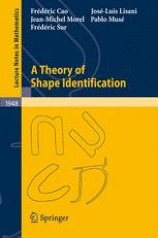
A Theory of Shape Identification
Recent years have seen dramatic progress in shape recognition algorithms applied to ever-growing image databases. They have been applied to image stitching, stereo vision, image mosaics, solid object recognition and video or web image retrieval. More fundamentally, the ability of humans and animals to detect and recognize shapes is one of the enigmas of perception. The book describes a complete method that starts from a query image and an image database and yields a list of the images in the database containing shapes present in the query image. A false alarm number is associated to each detection. Many experiments will show that familiar simple shapes or images can reliably be identified with false alarm numbers ranging from 10-5 to less than 10-300.
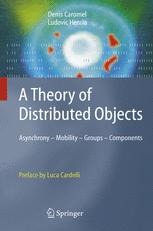
A Theory of Distributed Objects : Asynchrony - Mobility - Groups - Components
Distributed and communicating objects are becoming ubiquitous. In global, Grid and Peer-to-Peer computing environments, extensive use is made of objects interacting through method calls. So far, no general formalism has been proposed for the foundation of such systems. Caromel and Henrio are the first to define a calculus for distributed objects interacting using asynchronous method calls with generalized futures, i.e., wait-by-necessity -- a must in large-scale systems, providing both high structuring and low coupling, and thus scalability. The authors provide very generic results on expressiveness and determinism, and the potential of their approach is further demonstrated by its capacity to cope with advanced issues such as mobility, groups, and components.
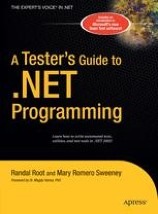
A Testers Guide to .NET Programming
A Tester's Guide to .NET Programming focuses solely on applied programming techniques for testers. You will learn how to write simple automated tests, enabling you to test tools and utilities. You will also learn about the important concepts driving modern programming today, like multitier applications and object-oriented programming. More businesses are adopting .NET technologies, and this book will equip you to assess software robustness and performance. Whether you're an experienced programmer who's unfamiliar with testing concepts, or you're an experienced tester versed in VB .NET and C#, the included real-world tips and example code will help you start your projects.

A short guide to clinical pharmacokinetics
Consists of seven chapters that cover various aspects of pharmacokinetics and its clinical applications. The chapters are structured to provide clear objectives and keywords are bolded throughout the text to facilitate understanding. The topics covered include the significance of pharmacokinetics in clinical practice, factors affecting pharmacokinetic parameters, pharmacokinetic drug interactions, therapeutic drug monitoring, dosage adjustment in different population groups, the influence of hepatic diseases on pharmacokinetics and the impact of pharmacogenomics on pharmacokinetics and pharmacodynamics.

A Remarkable Collection of Babylonian Mathematical Texts : Manuscripts in the Schøyen Collection: Cuneiform Texts I
This new text from Jöran Friberg, the leading expert on Babylonian mathematics, presents 130 previously unpublished mathematical clay tablets from the Norwegian Schøyen collection, and provides a synthesis of the author's most important work. Through a close study of these tablets, Friberg has made numerous amazing discoveries, including the first known examples of pre-Classical labyrinths and mazes, a new understanding of the famous table text Plimpton 322, and new evidence of Babylonian familiarity with sophisticated mathematical ideas and objects, such as the three-dimensional Pythagorean equation and the icosahedron.
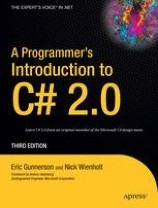
A Programmers Introduction to C#2.0
A Programmer's Introduction to C# 2.0, Third Edition is a critical update to the highly successful second edition. It is written by a member of the original C# language-design team and a C# program manager, so you can be certain this book contains the expertise you're looking for.
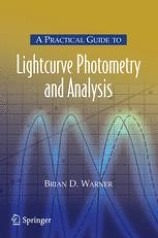
A Practical Guide to Lightcurve Photometry and Analysis
A Practical Guide to Lightcurve Photometry and Analysis provides, for those with access to even a modest telescope and CCD camera, all the information needed to take part in the scientific study of asteroids and variable stars.A Practical Guide to Lightcurve Photometry and Analysis contains all the material needed for readers to understand the theory, and avoid the practical pitfalls of lightcurve photometry. Detailed examples are given for obtaining data, and of course for the exciting and rewarding task of analyzing the data to determine the physical properties of the object.

A new deal for an effective European research policy : The design and impacts of the 7th Framework programme
It underlines an important truth: that science has always advanced most rapidly when it is a collective endeavour, with a strong circulation of knowledge.This book will show how the new Framework Programme was put together and explain why it took the shape it did. It will also set out its potential impacts and the conditions necessary for it to be a success.

A healthcare professionals training system
The Objective Structured Clinical Examination (OSCE) is a type of examination often used in health sciences. It is designed to test clinical skill performance and competence in a range of skills. It is a practical, real-world approach to learning and assessment. Comprises a circuit of short (5-10 minutes) stations, in which each candidate is examined on a one-to-one basis with one or two impartial examiner(s) and patients who are either real or simulated (actors or electronic patient simulators). Each station has a different examiner; in comparison, the traditional method of clinical examination is when a candidate is assigned to an examiner for the entire examination.

A compendium of principles and practice of laser biophotonics in oral medicine
The application of photonics technologies and principles to medicine and life sciences is known as biophotonics. Laser is one of the most important inventions of the twentieth century in biophotonic technology. This book a concise but comprehensive body of information, written in a simple tone, attempting to cruise the readers' vision through every perspective, to seek objective information on all aspects of the instrument and its uses, fostering a preliminary step towards efficient laser diagnosis and therapy.
3D Mesh processing and character animation : with examples using OpenGL, OpenMesh and Assimp
Focusses specifically on topics that are important in three-dimensional modelling, surface design and real-time character animation. It provides an in-depth coverage of data structures and popular methods used in geometry processing, keyframe and inverse kinematics animations and shader based processing of mesh objects. It also introduces two powerful and versatile libraries, OpenMesh and Assimp, and demonstrates their usefulness through implementations of a wide range of algorithms in mesh processing and character animation respectively. This Textbook is written for students at an advanced undergraduate or postgraduate level who are interested in the study and development of graphics algorithms for three-dimensional mesh modeling and analysis, and animations of rigged character models.

3D design reconstruction
This report will talk about a way to design and rebuild a cheap, true-to-the-truth 3D system using reverse engineering. The system provides the service of reconstructing objects into 3D models by placing the object in a predetermined place facing a set of sensors and cameras at a certain distance and at precise angles, using the angle of rotation for each image and combining the points of triangulation we can build a form of 3D modeling types. These models can be used in digital animation or printed with 3D printers for a wide variety of applications.
14th Nordic-Baltic conference on biomedical engineering and medical physics : NBC 2008 16–20 June 2008 Riga, Latvia
The topics covered by the Conference Proceedings include: Biomaterials and Tissue Engineering; Biomechanics, Artificial Organs, Implants and Rehabilitation; Biomedical Instrumentation and Measurements, Biosensors and Transducers; Biomedical Optics and Lasers; Healthcare Management, Education and Training; Information Technology to Health; Medical Imaging, Telemedicine and E-Health; Medical Physics; Micro and Nanoobjects, Nanostructured Systems, Biophysics
