



الصفحة 33
الصفحة 33

Forest and Rangeland Soils of the United States Under Changing Conditions : A Comprehensive Science Synthesis
This book synthesizes leading-edge science and management information about forest and rangeland soils of the United States. It offers ways to better understand changing conditions and their impacts on soils, and explores directions that positively affect the future of forest and rangeland soil health.

Forensic psychology: crime, justice, law, interventions
Provides an introduction for more detailed postgraduate courses. Introduces forensic psychology to students and professionals who want to better understand psychology's expanding influence on the study of law, crime and criminality Forensic psychology is a constantly growing discipline, both in terms of student interest and as a profession for graduates. This book highlights the often sizeable gap between media myths surrounding forensic practice and reality. Editors Graham Davies and Anthony Beech present an exciting and broad range of topics within the field, including detailed treatments of the causes of crime, investigative methods, the trial process.

Forensic Psychiatry : Influences of Evil
In Forensic Psychiatry: Influences of Evil, Tom Mason brings together an international panel of experts from diverse specialties to examine the idea of "evil" in a medical context, specifically a mental health setting, to consider how the concept can be usefully interpreted, and to elucidate its relationship to forensic psychiatry. The authors challenge the belief that the concept of "evil" plays no role in "scientific" psychiatry and is not helpful to our understanding of aberrant human thinking and behavior.

Forensic pathology reviews ; Vol. 3
Maintaining the high quality achieved in earlier volumes, leading national and international forensic pathologists provide in Forensic Pathology Reviews, Volume 3 evidence-based accounts of special topics of current interest from various fields of forensic pathology and death-scene investigation. The authors offer cutting-edge insights into the medicolegal investigation of bodies found in water, the forensic aspects of the human immunodeficiency virus (HIV)-1 infection of the central nervous system, deaths in a head-down position, and forensic bitemark analysis. Additional chapters address taphonomic changes in human bodies during the early postmortem interval, arrhythmogenic ventricular dysplasia that produces sudden death in young people, the postmortem diagnosis of death in anaphylaxis, and iatrogenic deaths. The forensic aspects of suicide, murder-suicide, and suicide trends in the United States are also discussed, along with the evaluation of fatal pulmonary thromboembolism and the use of radiology in medicolegal investigations. A comprehensive, up-to-date review of the international literature is given for each chapter. Evidence-based and state-of-the-art, Forensic Pathology Reviews, Volume 3 synthesizes the practical advances made in a variety of important subspecialties of forensic pathology, demonstrating how the latest medical and scientific advances are being applied to solve current problems of high interest to forensic pathologists today.
Forensic pathology of trauma
The practice of forensic pathology includes the collection and analysis of evidence in relation to a corpse in order to establish the cause of death. Knowledge of the cause of death contributes to the determination of the manner of death by medical examiners and coroners, who are occasionally assisted by law enforcement officers. In the process of establishing the cause and manner of death, representatives of various investigative bodies have several responsibilities, including explaining the death to family members, attempting to reduce the risk of similar deaths in the future, and, if applicable, apprehending the individuals who are responsible for the death. The most well-known and popular role of a forensic pathologist is in the inves- gation of cases of suspicious death; however, most medicolegal autopsies involve unexpected deaths that are above suspicion, many of which are caused by trauma (trauma being defined as any physical force or agent that causes bodily harm). The purpose of Forensic Pathology of Trauma: Common Problems for the Pathologist is to provide practical advice and information about the conduct of the forensic autopsy in cases of trauma, and to offer guidance about the analysis of the autopsy findings in these cases.

Football Traumatology : Current Concepts : From Prevention to Treatment
Lesions associated with football are on the increase and their typology has also changed over the years. Football, like many other sports, has undergone major changes: the increase in the intensity and speed of the game, the modern training methodologies, the technical and tactical innovations are all factors contributing to increased risks of traumatic injury. The footballers, the trainers, the sport's medical staff are asking for greater information and knowledge on the traumatic lesions associated with this sport. The primary role of those who are concerned with the health of footballers is to enforce preventive measures to reduce wherever possible the risks of trauma.
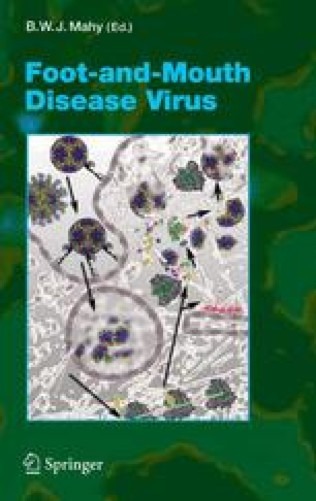
Foot-and-Mouth Disease Virus
The chapters in this volume provide an account of the present knowledge and understanding of Foot and Mouth disease virus pathogenesis and global epidemiology, the detailed structure of the virus itself and the properties of its RNA genome. Also considered are the immune response of the host and the state of the art in vaccine production, and the nature of virus evolution.

Food-Borne Parasitic Zoonoses : Fish and Plant-Borne Parasites
The focus of this book is on those zoonoses that are transmitted by fish, plant and invertebrate foods. While people, especially those living in developed countries, are commonly aware of meat-borne zoonoses such as trichinellosis and cysticercosis, fewer are acquainted with parasitic diseases caused by liver, lung and intestinal flukes, fish-borne tapeworms, and tissue roundworms. This book reviews not only the prevalence and distribution of these zoonoses, including available health and economic impact data, but also highlights gaps in our knowledge base that must be filled in order to gain insights on approaches to prevention. The topics on epidemiology, diagnosis, and clinical aspects emphasize knowledge gaps that limit a full understanding of these zoonoses, and target where greater research investments on these parasitic diseases should be focused.

Fondamenti di ingegneria clinica ; Vol.2 : Ecotomografia = Fundamentals of clinical engineering ; Vol.2 : Ultrasound
With the second volume of Clinical Engineering, the Author intends to provide an updated scientific-didactic overview of the physical principles of ultrasound, of the technology and of the implementation aspects of the ecotomograph.
Fluorescence of supermolecules, polymers, and nanosystems
The field of fluorescence continues to steadily grow, both in its fundamental aspects and in applications in highly interdisciplinary areas including analytical, physical and organic chemistry, molecular sciences, biology, biomedicine and medical research. The 4th volume in the Springer Series on Fluorescence focuses on the fluorescence of nanosystems, polymers and supermolecules, and the development and application of fluorescent probes. Special emphasis is placed on the fluorescence of artificial and biological nanosystems, single molecule fluorescence and the luminescence of polymers, micro- and nanoparticles and nanotubes. Fluorescence microscopy and fluorescence correlation spectroscopy are covered as well. Historical aspects of this growing field and an overview of fluorescence applications are also provided.

Fluconazole : Pharmacology, clinical uses and health effects
Fluconazole is a triazole antifungal drug used in the treatment and prevention of superficial and systemic fungal infections. In this book, the authors present current research in the study of the pharmacology, clinical uses and health effects of fluconazole. Topics discussed include the utilization of fluconazole in adult intensive care units; the use of fluconazole in veterinary species and a description of variances from the human experience as well as findings in veterinary species which may have applicability in human medicine; common clinical uses and in vitro activity features on fluconazole; and the discovery and development of medically-important antifungal agents, particularly the azole derivatives and the development of fluconazole and its clinical applications.

Flowering Plants. Eudicots: Asterales
This volume contains a complete systematic treatment of the flowering plant order Asterales, comprising 12 families with approx. 1,720 genera and about 26,300 species. The order includes Compositae as the largest family of flowering plants. Based on traditional studies, several of the constituent families have long been recognized as being closely interrelated. The inclusion in the order of Alseuosmiaceae, Argophyllaceae, Carpodetaceae, Phellinaceae and Rousseaceae is the result mainly of new advances in molecular systematics. Identification keys are provided for all genera, and likely phylogenetic relationships are discussed extensively. The wealth of information contained in this volume makes it an indispensable source for all working in the fields of pure and applied plant sciences.

Flowering Plants. Eudicots : Berberidopsidales, Buxales, Crossosomatales, Fabales p.p., Geraniales, Gunnerales, Myrtales p.p., Proteales, Saxifragales, Vitales, Zygophyllales, Clusiaceae Alliance, Passifloraceae Alliance, Dilleniaceae, Huaceae, Picramniaceae, Sabiaceae
In this volume, the ninth of the series, treatments are offered for 52 families containing 432 genera belonging to 13 eudicot orders, many of which have recently been newly designed; four families remain unassigned to order. Emphasis is on the early-diverging eudicots and basal core eudicots the phylogenetic relationships and diversification of which have recently been in focus and are critically discussed. Systematically relevant information includes descriptions of families and genera, keys to the genera, and references to recent revisions. Introductions to the families provide convenient, in-depth overviews of key aspects of systematics. The wealth and precision of information contained in this volume will make it an important source of reference for both the scholar and the practitioner in the fields of pure and applied plant sciences.

Flower Breeding and Genetics : Issues, Challenges and Opportunities for the 21st Century
This book provides a unique and valuable resource on the many issues and challenges facing flower breeders, as well as the industry at-large. In this volume, the first comprehensive assemblage of its kind, a team of 32 international authorities has contributed to make this book a ‘must-have’ reference to research and develop flower crops for the 21st century consumers. Part 1 of this book (flower breeding program issues) contains unique features of interest to horticultural professionals and students, include coverage of plant protection strategies, cultivar trialing methodology, germplasm collection/preservation, preventing invasiveness, and other timely topics. The collective body of knowledge for 24 flower crops (Part 2: Crop-specific Breeding and Genetics) represents the in-depth science and art of breeding technology available for bedding plants, flowering potted plants, cut flowers, and herbaceous perennials. Each author provides crop-specific history, evolution, biology, taxonomy, state-of-the-art breeding/genetics, classical/molecular technologies, species traits, interspecific hybridization, and directions for future development/enhancement.
Flow cytometry : Principles and applications
Flow cytometry forms an integral part of both basic biological research and clinical diagnosis in pathology. This straightforward new volume provides a clear, easy-to-read, and practical manual for both clinicians and non-clinicians at all levels of their careers. The chapter topics range from basic principles to more advanced subjects, such as apoptosis and cell sorting. Throughout Flow Cytometry: Principles and Applications, well-informed expert contributors present theoretical descriptions and practical protocols on this important and complex laboratory technique and its applications. Immunologists and Hematologists in the field of pathology, as well as biological researchers working with both human and animal models will appreciate the simple, clear-cut style in which principles and protocols in this volume are presented, and will refer to this book time and time again for clear and easy-to-follow protocols.
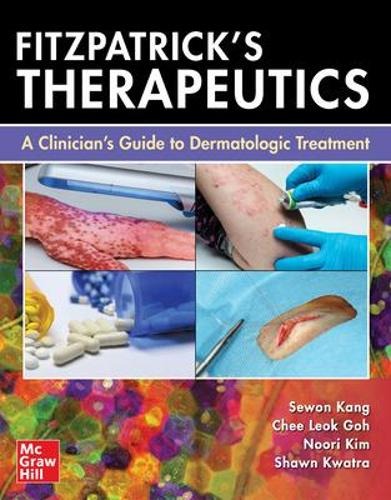
Fitzpatrick's therapeutics : A clinician's guide to dermatologic treatment
It is the gold-standard textbook in dermatology and is designed to be read by practicing clinicians, medical trainees, and skin scientists when they want a complete and extensive overview of any dermatologic topic. Although comprehensive, the patient management sections in Fitzpatrick’s Dermatology are not presented in a format that facilitates easy and quick access for busy practicing clinicians who want to review treatment options at the bedside. The idea for Fitzpatrick’s Therapeutics arose to fill this gap.
Fish Histology : Female Reproductive Systems
This volume describes the myriad ways in which fish have approached problems of reproduction — it is an amply illustrated comparative study of the microscopic structure of the female genital systems of fish. The timing of its appearance is auspicious in that it coincides with the decline of the golden age of descriptive morphology. It is a compilation of thousands of micrographs — mostly electron micrographs — from classic works in the field and should prove valuable to investigators studying fish in areas such as ecology, physiology, and reproductive biology who may view histology as essential in their work but have little background in this area. It includes chapters on the origin of genital systems, the structure of ovarian follicles, mechanisms of ovulation, the cortical reaction, oviducts, oviparity, and amazing examples of viviparity.
Fish Bioacoustics
The study of how fish make and respond to sound has important implications for communication, physiology, behavior, and commercial techniques. Fish Bioacoustics, a new definitive volume on fish auditory systems, will interest investigators in both basic research of fish bioacoustics as well as investigators in applied aspects of fisheries and resource management. Topics cover structure, physiology, localization, and acoustic behavior as well as more applied topics such as using sound to detect and locate fish.
Fish and Diadromy in Europe (ecology, management, conservation)
This book contains selected papers from an international symposium organised by the Diadfish network held in Bordeaux (France) in 2005. Readers will find up-to-date information on the ecology, ecotoxicology and physiology of several diadromous species (Atlantic salmon, shads, lampreys, eels) and this whole group in Europe. Main impacts are also documented and analysed in case studies, and solutions or remediation actions are presented.

Finite Mixture and Markov Switching Models
The prominence of finite mixture modelling is greater than ever. Many important statistical topics like clustering data, outlier treatment, or dealing with unobserved heterogeneity involve finite mixture models in some way or other. The area of potential applications goes beyond simple data analysis and extends to regression analysis and to non-linear time series analysis using Markov switching models.It is the first time that the Bayesian perspective of finite mixture modelling is systematically presented in book form. It is argued that the Bayesian approach provides much insight in this context and is easily implemented in practice. Although the main focus is on Bayesian inference, the author reviews several frequentist techniques, especially selecting the number of components of a finite mixture model, and discusses some of their shortcomings compared to the Bayesian approach. The aim of this book is to impart the finite mixture and Markov switching approach to statistical modelling to a wide-ranging community. This includes not only statisticians, but also biologists, economists, engineers, financial agents, market researcher, medical researchers or any other frequent user of statistical models. This book should help newcomers to the field to understand how finite mixture and Markov switching models are formulated, what structures they imply on the data, what they could be used for, and how they are estimated.
