



الصفحة 33
الصفحة 33

Monetary Policy and Macroeconomic Stabilization in Latin America
Latin America is a very important region of the globe, which has been buffeted by successive waves of economic instability within the last decades. These waves have caused several episodes of hyperinflation or near hyperinflation, and several currency and financial crises, which, in certain moments, have even spilled over and affected other emerging markets. This has resulted in huge costs in terms of lost potential growth, and, as is inevitable, the markets most affected by this have been the least capable of defending themselves. In a region plagued by still considerable rates of social exclusion, with some of the highest rates of income concentration in the whole globe, the human costs of these crises have been very substantial. Starting in the early 1990s, the slow implementation of reforms, plus the resumption of more sustained growth—to a substantial degree linked to the increase in commodity prices, especially since the early 2000s—seems to have resulted in a more stable situation. Initially, in early reformers like Chile, later in the larger economies of the region, like Brazil and Mexico, a consensus— embraced by both sides of the political spectrum—towards integration in global markets, both in their trade and financial components, floating exchange rates, independent monetary authorities, and sustainable fiscal policies has emerged.

Moment Analysis for Subsurface Hydrologic Applications
This book deals with the concept of moments, and how they find application in subsurface hydrologic problems-particularly those dealing with solute transport. This book will be very valuable to researchers who are beginning to learn about moment analysis, and will also be of interest to advanced researchers as well. Both temporal and spatial moments are dealt with in some detail for a wide variety of problems. Several examples using experimental data, both from laboratory columns and field experiments, are provided to give the readers a clear idea about the scope of this method. Apart from conventional uses of moments for solute transport problems, this book contains chapters dealing with use of moments in interval computing, vapour phase transport applications, transfer functions to subsurface tile drains, and construction of breakthrough curves from knowledge of moments.

Molluscs : From Chemo-ecological Study to Biotechnological Application
Marine molluscs are very promising candidates for a wide range of biotechnological applications. For example, they possess analgesic drugs more potent than morphine and very effective anticancer agents. The present book gives an up-to-date overview of the main classes of bioactive compounds from molluscs, moving from ecological observations, to chemical characterization, to biosynthesis, to large-scale synthesis, and to pharmacological applications. A truly outstanding international panel of experts from all continents provides complete coverage of the most stimulating topics related to molluscs. This knowledge of their history and current studies provides an open door to the future.

Molecular Techniques in the Microbial Ecology of Fermented Foods
Molecular Methods and Microbial Ecology of Fermented Foods presents the latest findings in microbial ecology as determined by the application of molecular methods, reports the most recent advances in the field, and offers details on primers and protocols most suitable for studying specific food ecosystems. It provides analytical details and suggestions useful in research, as well as evaluation of the criticism of using novel approaches in food fermentation microbiology. This book also discusses new insights drawn from the use of bio-molecular techniques in the microbial ecology of fermented foods.

Molecular Targeting in Oncology
In Molecular Targeting in Oncology, authors present an overview of the development of targeted therapies for the treatment of cancer with an emphasis on clinical application. The volume covers the complexity of the rapidly developing area of targeted therapies for the treatment of patients with cancer and is structured in a way so readers may begin with chapters that most interest them and work through the rest of the chapters in the order of their choice. The volume is divided into five sections that cover the most important elements of drug development. The first section focuses on approaches using targeted therapies to inhibit cell growth. The second section describes how clinicians are evaluating targeted therapies in specific organ systems. The third section illustrates how various classes of pharmacologic and immunologic agents are developed for individual molecular targets. The fourth section details new drugs that have novel mechanisms of action. The final section looks to the future of targeted therapeutics and includes chapters on appropriate patient selection, use of combination therapy, dealing with tumor cell resistance, and more. Comprehensive and cutting-edge, Molecular Targeting in Oncology is an essential reference for those working in the field.
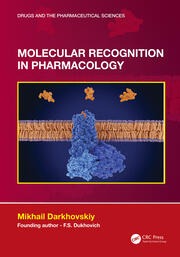
Molecular recognition in pharmacology
Traces the behavior of the drug substance, starting from the initial pre-contact stage, and ending with the formation of the complex. Molecular recognition lies in the foundation of every life form and includes many mysteries. Currently, studies on this topic in pharmacology are limited to determining the properties of complexes of medicinal substances (drugs) with specific (complementary) biomolecules: receptors, enzymes, ion channels etc. The results present the mechanisms preventing drugs from such non-specific binding. This direction is very fruitful, although the phenomenon of molecular recognition is far wider.

Molecular Processes in Plasmas : Collisions of Charged Particles with Molecules
Molecular Processes in Plasmas describes elementary collision processes in plasmas, particularly those involving molecules or molecular ions. Those collision processes (called molecular processes) maintain plasmas, produce reactive species and emissions, and play a key role in energy balance in plasmas or more specifically in determining the energy distribution of plasma particles.

Molecular Pathology of Gynecologic Cancer
This book focuses on putting successful molecular strategies into practice for the treatment of gynecologic cancer. The volume begins with an explication of the editors’ hypothesis that cancer is mainly a disease of the cell cycle, based on the deregulation of the physiological process of cell reproduction. The following eleven chapters focus on specific issues in gynecologic cancers, including: a proposed model of ovarian serous carcinogenesis, molecular markers for ovarian epithelial cancer, an overview of the pathology of endometrial cancer, molecular genetic aspects of endometrial carcinoma and cervical cancer, a natural history of Human Papilloma Virus (HPV) as it relates to cervical cancer, and hereditary issues in gynecologic cancers. The concluding chapter proposes and outlines a holistic approach to the treatment of female cancer patients.

Molecular Pathology in Clinical Practice
This book addresses all areas of molecular pathology clinical practice in a single text, including: molecular biology basics, genetics, infectious diseases, hematopathology, solid tumors, HLA typing, identity testing and laboratory management. This text will provide a comprehensive reference for molecular pathologists as well as the practicing molecular pathologist and trainees.

Molecular Parameters Indicating Adaptation to Mechanical Stress in Fibrous Connective Tissue
The present study pursues the hypothesis that local compressive force and the occurrence of cartilage-specific transformation processes within tendons and ligaments are directly correlated. In selected anatomical samples of human origin the distribution pattern of certain components of the extracellular matrix is assessed. Investigations are carried out at the extensor tendons of toes and fingers, at the transverse ligament of the atlas, at the transverse ligament of the acetabulum, and at the tendon of the superior oblique muscle and its trochlea. The molecular components of the extracellular matrix are detected with standardized immunohistochemical methods. The results show that certain molecules only occur due to compressive stress, others due to tensile stress. The molecular spectrum of the extracellular matrix allows qualifying conclusions to the mechanical situation of a given part of the tissue. The spatial expansion of the fibrocartilaginous adaptation zones in tendons and ligaments roughly corresponds with the zones subjected to compressive force; tensile stress alone does not result in a production of fibrocartilage.

Molecular Pain
This book focus on molecular and synaptic mechanisms for pain transmission, modulation and plasticity. Unlike traditional textbooks about pain, this book covers recent progress in neuroscience and relates these developments to the basic mechanisms of chronic pain. The book also discusses current pain medicine and alternative pain treatments such as acupuncture.

Molecular Organisation on Interfaces
This volume contains studies on the molecular organisation on interfaces and nanoparticles. The contributions were presented during the 40. General Meeting (Hauptversammlung) of the Kolloid-Gesellschaft in Potsdam in September 2001 and are related to the subject "Colloids and Life Science". Therefore, a diversity of papers were collected covering a large field: synthesis of polymer colloids, biominerals and nanoparticles, investigations on monolayers, lyotropic mesophases, polymeric surfactants, micellar transitions, supramolecular compounds for modifying polymers, solid particles for emulsion stabilisers, and adsorbents for odour control.

Molecular Neurosurgery with Targeted Toxins
Focuses on the highly successful use of the immunotoxins, 192 IgG-saporin and ME20.4-saporin, to lesion the cholinergic basal forebrain in order to model the behavior, anatomy, physiology, and pharmacology of Alzheimer's disease in animals. Also discussed are the uses of anti-DBH-saporin immunotoxin to make remarkably selective lesions of catecholaminergic neurons, hypocretin-saporin that can produce narcoleptic animals, and other saporin conjugates, such as neuropeptide-saporin conjugates for pain research and cholera toxin B chain-saporin to produce a model of central nervous system demyelination. Overview perspectives and, in some cases, more practical details are provided that allow the reader to appreciate exactly what is involved in using these agents. Both practical and theoretical, Molecular Neurosurgery With Targeted Toxins provides readers with not only the background to understand these techniques, but also numerous real-life examples that can be readily adapted to new purposes and an ever-increasing number of new targeted toxins.

Molecular Mimicry : Infection Inducing Autoimmune Disease
The conceptual basis for molecular mimicry was first defined in the early 1980s when monoclonal antibodies against viruses were also shown to react with non-viral host protein; in this case, measles virus phosphoprotein cross-reacted with host cell cytokeratin, herpes simplex virus type 1 with host-cell vimentin and vaccinia virus with host-cell intermediate filaments. Following this discovery, others emerged, again at the clonal level, that T cell clones against proteins from a variety of infectious agents also reacted with host antigenic determinants. The clonal distinction was imperative fo.

Molecular Mechanisms of Synaptogenesis
Molecular Mechanisms of Synaptogenesis is a compilation of recent exciting findings that summarizes the ever-expanding knowledge of how neuronal contacts develop in the normal brain and how their functions are affected in mental disorders. In the last decade, advances in molecular and cellular biology, combined with the development of sophisticated fluorescence microscopy tools to visualize synapses in live neurons, have revealed many intriguing and unexpected findings regarding the dynamics of synapse formation. Studies by a number of researchers have identified several critical protein components of synapses and shown the time course of their arrival at the synapse. Several molecules serve to hold the synaptic contacts between nerve cells and regulate their function.

Molecular Mechanisms of Plant and Microbe Coexistence
Molecular Mechanisms of Plant and Microbe Coexistence presents studies on the complex and manifold interactions of plants and microbes at the population, genomics and proteomics level. The role of soil microbial diversity in enhancing plant health and plant microbe beneficial symbioses is discussed. Microbial communities are shown in the light of evolution. Main topics include genome coexistence and the functional genomics and proteomics of plant-associated microbes, which could form the basis for new environmentally benign strategies to combat infectious plant diseases and regulate plant growth. Further chapters focus on the role of signaling during the different stages of plant microbe coexistence, in symbiotic or pathogenic relationships, in quorum sensing and plant viral infections. Methods for studying the interactions in the root zone complement the book, which will certainly be of relevance in the practical application to agriculture, food security and for maintaining the balance of our ecosystems.

Molecular Mechanisms of Neurotransmitter Release
Within the complex neuronal network of the nervous system, neuron-to-neuron communication occurs mainly through chemical synapses, where the presynaptic nerve terminal releases neurotransmitters that control the function of postsynaptic neurons by acting on postsynaptic receptors. Recent decades have brought groundbreaking new developments and a wealth of knowledge to this field. In Molecular Mechanisms of Neurotransmitter Release, leading experts provide concise, up-to-date information on all major molecular mechanisms involved, with complete background information and figures and diagrams to further elucidate key concepts or experiments.Comprehensive and cutting-edge, Molecular Mechanisms of Neurotransmitter Release is sure to provide a learning tool for neuroscience students, a solid reference for neuroscientists, and a source of knowledge for all those who have a general interest in the ever-evolving field of neuroscience.

Molecular mechanisms of functional food
Provides information on the development and validation of functional foods towards their market and industrial application. It covers the available information on developments, efficacy, and testing and safety, while demonstrating the proven or potential effects of food on health and disease.

Molecular Mechanisms of Exocytosis
This book, written by recognized experts in the field aims at clarifying for a non-specialist audience the role of the key players in the exocytotic process not only in neuronal and endocrine cells but also in a variety of other relevant cell systems. The book represents a unique collection of up-to-date reviews that will introduce researchers and students to the forefront of this rapidly moving and fascinating field.

Molecular Mechanisms of Cancer
Cancer may constitute the most extensively studied functions constitute a second line of defense that disease entity of our time. Nevertheless, our com- protects against transforming defects in oncogenes prehension of the cellular and molecular pathology or tumor-suppressor genes and are here considered of malignant transformation is incomplete.
