



الصفحة 322
الصفحة 322

AI Strategy for sales and marketing : Connecting marketing, sales and customer experience
AI Strategy for Sales and Marketing presents a framework for understanding how AI can boost customer-centricity and sales by creating a connected strategy that delivers value today and into the future. Supported by practical tips and advice throughout, it covers topics including personalization, upskilling, customer experience for both on and offline shopping channels and the importance of using AI responsibly to create consumer trust.
AI in learning : Designing the future
AI (artificial intelligence) is predicted to radically change teaching and learning in both schools and industry causing radical disruption of work. AI can support well-being initiatives and lifelong learning but educational institutions and companies need to take the changing technology into account. Moving towards AI supported by digital tools requires a dramatic shift in the concept of learning, expertise and the businesses built off of it. Based on the latest research on AI and how it is changing learning and education, this book will focus on the enormous opportunities to expand educational settings with AI for learning in and beyond the traditional classroom. This book also introduces ethical challenges related to learning and education, while connecting human learning and machine learning.
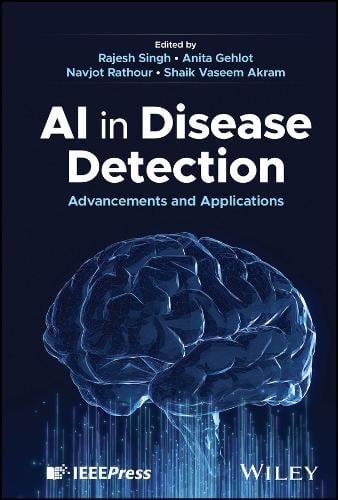
AI in disease detection : Advancements and applications
Discusses the integration of artificial intelligence to revolutionize disease detection approaches, with case studies of AI in disease detection as well as insight into the opportunities and challenges of AI in healthcare as a whole. The book explores a wide range of individual AI components such as computer vision, natural language processing, and machine learning as well as the development and implementation of AI systems for efficient practices in data collection, model training, and clinical validation.
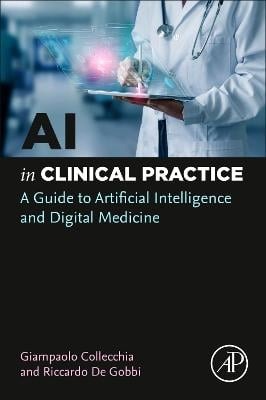
AI in clinical practice : A guide to artificial intelligence and digital medicine
Explains how artificial intelligence is applied to medicine, illustrating not only its enormous potential but also ancillary issues and the limits and risks inherent in its use on a large scale. The book focuses on the intersection between medicine and AI and its implications on the impact of human health care delivery. Topics discussed include wearable devices, health data, Internet of Things, virtual reality, robotic assistance system, and digital intelligence in the health sector. Additionally, sections discuss diagnostics and decision-making systems and machine/deep learning in clinical setting.
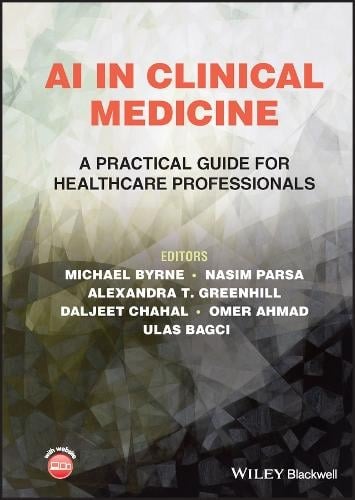
AI in clinical medicine : A practical guide for healthcare professionals
A Practical Guide for Healthcare Professionals is the definitive reference book for the emerging and exciting use of AI throughout clinical medicine. AI in Clinical Medicine: A Practical Guide for Healthcare Professionals is divided into four sections. Section 1 provides readers with the basic vocabulary that they require, a framework for AI, and highlights the importance of robust AI training for physicians. Section 2 reviews foundational ideas and concepts, including the history of AI. Section 3 explores how AI is applied to specific disciplines. Section 4 describes emerging trends, and applications of AI in medicine in the future.
AI in banking : Practical applications and case studies
Delves into the application of AI from theory to practice, offering detailed insights into AI project design and code implementation across eleven business scenarios in four major sectors: retail banking, e-banking, bank credit, and tech operations. it provides hands-on examples of various technologies, including automatic machine learning, integrated learning, graph computation, recommendation systems, causal inference, generative adversarial networks, supervised learning, unsupervised learning, computer vision, reinforcement learning, fuzzy control, automatic control, speech recognition, semantic understanding, bayesian networks, edge computing, and more. this book stands as a rare and practical guide to AI projects in the banking industry.
AI based Robot Safe Learning and Control
This book mainly focuses on the safe control of robot manipulators. The control schemes are mainly developed based on dynamic neural network, which is an important theoretical branch of deep reinforcement learning.

AI and the future of banking
Across its entire breadth and depth, the banking industry is at the forefront of investigating Advanced Analytics and AI technology for use in a broad range of applications, such as customer analytics and providing wealth advice for clients. AI and the Future of Banking provides new and established banking industry professionals with the essential information on the implications of data and analytics on their roles, responsibilities and personal career development.
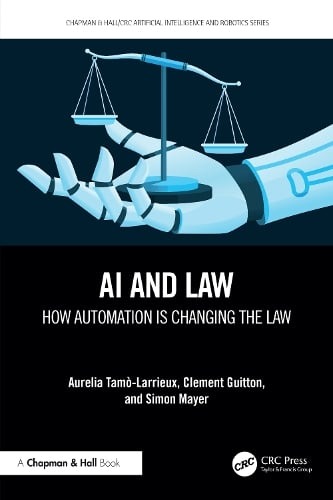
AI and law : How automation is changing the law
Provides insights into how AI is changing legal practice, government processes, and individuals’ access to those processes, encouraging each of us to consider how technological advances are changing the legal system. Particularly, and distinct from current debates on how to regulate AI, this books focuses on how the progressive merger between computational methods and legal rules changes the very structure and application of the law itself.
AI and IoT for smart city applications
Provides a valuable combination of relevant research works on developing smart city ecosystem from the artificial intelligence (AI) and Internet of things (IoT) perspective. The technical research works presented here are focused on a number of aspects of smart cities: smart mobility, smart living, smart environment, smart citizens, smart government, and smart waste management systems as well as related technologies and concepts. This edited book offers critical insight to the key underlying research themes within smart cities, highlighting the limitations of current developments and potential future directions.
AI 2008 : Advances in artificial intelligence ; 21st Australasian Joint Conference on Artificial Intelligence Auckland, New Zealand, December 1-5, 2008. Proceedings
This book constitutes the refereed proceedings of the 21th Australasian Joint Conference on Artificial Intelligence, AI 2008, held in Auckland, New Zealand, in December 2008.
AI 2007: Advances in artificial intelligence ; 20th Australian Joint Conference on Artificial Intelligence, Gold Coast, Australia, December 2-6, 2007, Proceedings
The book is organized in topical sections on machine learning, neural networks, evolutionary computing, constraint satisfaction, satisfiability, automated reasoning, knowledge discovery, robotics, social intelligence, ontologies and semanti.
Agroforestry in Europe : Current Status and Future Prospects
Brings together some of the most important current research in European agroforestry, and evaluates the current scope and future potential of agroforestry across the EU.While the majority of Europe’s agroforestry practices are currently focused in the Mediterranean, this volume draws together examples from a wide range of countries – including Greece, Spain, the UK, Hungary, Germany, Italy, the Netherlands, Switzerland, France and Slovenia. The book also covers a range of agroforestry types, including silvopastoralism – Europe’s predominant form of agroforestry – as well as alley cropping, forest farming, silvoarable systems and the use of trees for shelter. Through these examples the book also discusses the potential roles for these traditional land management systems in addressing both environmental issues such as water quality, biodiversity conservation, desertification, ecosystem services and socioeconomic issues such as rural population stabilization.
Agroecological transitions : From theory to practice in local participatory design
There is wide agreement on the need to change the prevalent agricultural models, given their negative impacts and their incompatibility with current societal issues. Agroecological transition has been promoted as a potential solution to the ecological, social and economic problems generated by these models. It however involves a systemic, multi-scale and transdisciplinary process. Due to this complexity, the overall picture of what farms and food systems “actually are” and “might be” may not be apparent at the individual level. Yet individuals’ knowledge and values provide complementary insights on how to proceed in deepening ecological modernisation. Expertise can also provide landmarks to be considered in that process. Because local stakeholders’ experience and skills are key resources in the adaptation and adoption of agroecological transition, new conceptual and methodological frameworks and tools have to be developed to support them in the design process of such a complex transition. This book presents feedback from the ‘Territorial Agroecological Transition in Action’- TATA-BOX research project, which was devoted to these specific issues.
Agrobacterium : From Biology to Biotechnology
Agrobacterium’ is a comprehensive book on Agrobacterium research, including its history, application, basic biology discoveries, and effects on human society. Although the book largely focuses on providing a detailed review of virtually all molecular events of the genetic transformation process, it also provides coverage of ethical and legal issues relevant to the use of Agrobacterium as a "genetic transformation machine". The result is an all-inclusive text which readers—including scientists and students involved in plant genetic engineering—will find useful as a reference source for all major aspects of the Agrobacterium-mediated genetic transformation of plant and non-plant organisms.

Agriculture for Economic Development in Africa : Evidence from Ethiopia
This book explores the role of agriculture in long-term economic growth. With a particular focus on Ethiopia, the role of the state in igniting agricultural growth and in sustaining economic growth is highlighted as essential for low-income countries. Taking ideas from both economic history and development economics, the ability of Ethiopia and the rest of Africa to sustain recent rapid growth into something that can tackle the development agenda is discussed, alongside policy suggestions.
Agriculture and Climate Beyond 2015 : A New Perspective on Future Land Use Patterns
Interactions between agriculture, climate and patterns of land use are complex. Major changes in agriculture, and land use patterns are foreseen in the next couple of decades in response to shifts in climate, greenhouse gas management initiatives, population growth and other forces. The book explores key interactions between changes in agriculture, patterns of land use and efforts to reduce greenhouse emissions from agriculture. The volume is based on inter-disciplinary science and policy interactions, exploring the way land use may aid in addressing or be affected by the onset of climate change and alterations in food demand. Future forces shaping land use decisions are examined, and its sensitivity to climate change is highlighted. Patterns of land use and the agricultural role in climate change mitigation are explored. Also, policy and social responses to the new perspectives on future land use patterns are identified. The perspective of the book is beyond the year 2015.

Agricultural value chains in India : Ensuring competitiveness, inclusiveness, sustainability, scalability, and improved finance
This book provides a clear holistic conceptual framework of CISS-F (competitiveness, inclusiveness, sustainability, scalability and access to finance) to analyse the efficiency of value chains of high value agricultural commodities in India. It is based on the understanding that agriculture is an integrated system that connects farming with logistics, processing and marketing. Farmer’s welfare being central to any agricultural policy makes it very pertinent to study how a value chain works and can be strengthened further to realize this policy goal.
Agricultural Implications of the Fukushima Nuclear Accident : The First Three Years
Consists of various topics, including radioactivity inspection of food products; decontamination trials for rice and livestock production; the state of contamination in wild animals and birds, trees, mushrooms, and timber; the dynamics of radioactivity distribution in mountain and paddy fields; damage incurred by the forestry and fishery industries; and the change in consumers’ minds. The last chapter introduces a real-time radioisotope imaging system, the forefront technique to visualize actual movement of cesium in soil and in plants. This is the only book to provide systematic data about the actual change of radioactivity, and thus is of great value for all researchers who wish to understand the effect of radioactive fallout on agriculture.

Agricultural Implications of the Fukushima Nuclear Accident (III)
Reports on studies undertaken at contaminated sites such as farmland, forests, and marine and freshwater environments, with a particular focus on livestock, wild plants and mushrooms, crops, and marine products in those environments. It also provides additional data collected in the subsequent years to show how the radioactivity levels in agricultural products and their growing environments have changed with time and the route by which radioactive materials entered agricultural products as well as their movement between different components (e.g., soil, water, and trees) within an environmental system (e.g., forests). The book covers various topics, including radioactivity testing of food products; decontamination trials for rice and livestock production; the state of contamination in, trees, mushrooms, and timber; the dynamics of radioactivity distribution in paddy fields and upland forests; damage incurred by the forestry and fishery industries; and the change in consumers’ attitudes. Chapter 19 introduces a real-time radioisotope imaging system, a pioneering technique to visualize the movement of cesium in soil and in plants.
